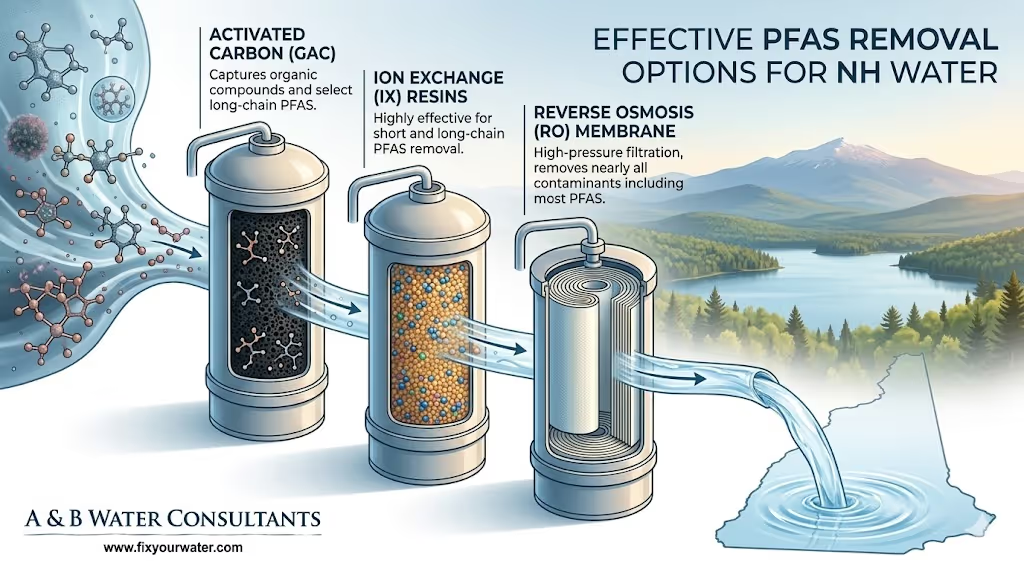
Testing of private wells and municipal supplies across New Hampshire increasingly identifies the presence of per- and polyfluoroalkyl substances, or PFAS, prompting homeowners to evaluate PFAS removal services options that actually work. This guide explains what PFAS are, which removal technologies are proven today, how to choose the right approach for homes in New Hampshire and Southern Maine and Massachusetts, and what to expect for installation, maintenance, and cost.
What Are PFAS and Why They Matter in New England
PFAS refers to a large group of synthetic chemicals used for decades in products like firefighting foams, nonstick cookware, stain-resistant fabrics, and many industrial processes. Their molecular structure makes them resistant to breaking down in the environment, so they persist in soil, groundwater, and drinking water. Several PFAS compounds such as PFOA and PFOS have been linked to health risks at elevated concentrations.
In New Hampshire, Southern Maine, and parts of Massachusetts, sources of PFAS include historic use of aqueous film-forming foam (AFFF) at airports and training sites, contamination from landfills and industrial facilities, and migration from biosolids applied to land. Homeowners on private wells near these sources are at particular risk. Because PFAS are resistant to conventional treatment, targeted PFAS removal options are necessary to protect household drinking water.
How PFAS Are Detected and Measured
Before choosing a PFAS removal option, accurate testing is essential. Local public water systems will report testing results to customers. Homeowners with private wells should arrange testing through certified laboratories that can measure PFAS at low parts-per-trillion concentrations.
Sampling and Labs
- Use a state-certified laboratory with experience in PFAS analysis.
- Follow sampling instructions exactly to avoid contamination: use PFAS-free sampling bottles, avoid Teflon-containing materials, and ship samples cold and fast.
- Decide which PFAS to test for. Labs often test a panel that includes PFOA, PFOS, PFHxS, PFNA, and others.
Interpreting Results
Regulatory guidance for PFAS is evolving. Homeowners should compare results against the latest state advisories and federal recommendations. Where standards exist, exceeding them will usually trigger action. Even if a value is below a regulatory limit, some families choose treatment to reduce exposure further, particularly for pregnant women and children.
Contact A&B Water Consultants for a free PFAS removal quote.
Overview of PFAS Removal Options
There is no single universal fix for PFAS. The optimal solution depends on the specific PFAS species present, their concentrations, overall water chemistry, household water use patterns, and budget. The technologies most commonly used for residential and small-community applications include granular activated carbon, ion exchange resins, membrane processes such as reverse osmosis, and emerging advanced treatment methods. Each has advantages and tradeoffs.
Granular Activated Carbon (GAC) Adsorption
How it works: GAC uses high-surface-area carbon to adsorb PFAS molecules from water as it passes through a carbon bed. It is widely used for PFAS like PFOA and PFOS and is a mature, proven technology for both point-of-entry and point-of-use systems.
Pros
- Proven track record and reliable for many long-chain PFAS.
- Relatively low energy use and simple operation.
- Can be sized for whole-house installations to treat all incoming water.
Cons
- Less effective on short-chain PFAS without specialized carbon.
- Media gets exhausted and must be replaced or regenerated on a schedule based on influent concentrations and water use.
- Spent carbon handling requires care; disposal options depend on local rules.
Practical notes: For New Hampshire households, GAC is often the first-line choice when testing shows moderate levels of PFOA and PFOS. Proper prefiltration for turbidity and iron is essential because fouling reduces carbon life. A professional sizing calculation will estimate when media replacement is needed.
Ion Exchange Resins
How it works: Ion exchange (IX) systems remove PFAS by exchanging PFAS anions with other anions on a resin. Newer selective resins are designed specifically to target PFAS compounds and can outperform generic strong-base anion resins, especially for short-chain PFAS.
Pros
- High removal efficiency for a broader range of PFAS, including some short-chain compounds.
- Lower footprint than GAC in many cases.
- Resins can sometimes be regenerated, reducing media replacement frequency.
Cons
- Regeneration produces a brine waste stream that must be handled properly.
- Upfront costs can be higher for selective resins and systems with regeneration features.
- Long-term performance depends on proper maintenance and monitoring.
Practical notes: Ion exchange is attractive for homeowners with short-chain PFAS or whose water chemistry reduces GAC's effectiveness. A&B Water Consultants has experience designing systems that use selective resins for private wells and small community applications in New Hampshire.
Reverse Osmosis and Nanofiltration
How it works: Reverse osmosis (RO) uses a semipermeable membrane to reject PFAS and other dissolved contaminants. Nanofiltration membranes can remove some PFAS depending on molecular size. RO is typically used as a point-of-use option under a kitchen sink for drinking and cooking water.
Pros
- High removal percentages for many PFAS, often 90 percent or higher for specific compounds.
- Also reduces many other contaminants, such as nitrates and some metals.
- Compact and relatively simple to install as POU systems.
Cons
- Produces a waste brine stream; water efficiency can be a concern without a permeate pump or an efficient system.
- Not practical for whole-house treatment unless combined with large-capacity systems and pretreatment.
- Membrane fouling requires prefiltration for sediment and iron.
Practical notes: For New Hampshire families who want treated water at the tap rather than whole-house treatment, RO is a reliable option. It pairs well with a GAC or IX prefilter to reduce membrane load and extend service life.
Combined and Pretreatment Strategies
Complex water chemistry commonly requires multi-barrier approaches. For example, combining GAC or IX with point-of-use RO gives redundancy and high overall removal. Pretreatment to remove iron, manganese, and suspended solids is vital because those constituents shorten media or membrane life.
Typical combination
- Sediment and iron removal (to protect downstream media)
- Primary PFAS removal by GAC or selective IX
- Point-of-use RO for additional assurance at drinking taps
Contact A&B Water Consultants for a free PFAS removal quote.
Emerging and Advanced Technologies
Research continues into destructive technologies that break PFAS molecules rather than concentrating them. These include electrochemical oxidation, advanced oxidation processes, thermal destruction, plasma, and specialized catalytic systems. While promising, many of these are still working their way from pilot to full-scale residential or community deployment.
Key considerations
- Destructive technologies can eliminate the need to manage contaminated media, but they require energy and careful operation.
- Availability for homeowners is limited; most applications are in industrial or municipal settings or in pilot projects.
- Homeowners should evaluate vendors' experience, request pilot data and disposal plans, and invest only after doing so.
Point-of-Use vs Point-of-Entry: Which Should a Homeowner Choose?
Homeowners must decide whether to treat only the water at the tap or treat all the water entering the house. The choice influences cost, complexity, and the household's exposure to PFAS through activities beyond drinking and cooking.
Point-of-Use (POU)
POU systems, typically an under-sink RO, treat water at a single tap. They are less expensive and easier to install. They reduce PFAS in drinking and cooking water but leave water used for bathing, laundry, and irrigation untreated. POU is appropriate when the primary exposure concern is ingestion and budgets are limited.
Point-of-Entry (POE)
POE systems treat all water entering the home, protecting bathing, dishwashing, and other exposures. Whole-house GAC or IX systems fall into this category. POE systems are larger and costlier to install and maintain, but they offer more comprehensive protection.
For homes with moderate-to-high PFAS levels or where residents are from sensitive populations, POE plus POU redundancy is often the best solution.
Contact A&B Water Consultants for a free PFAS removal services quote.
Disposal, Regeneration, and Environmental Responsibility
One of the most important but sometimes overlooked aspects of PFAS treatment is handling spent media and regeneration waste. GAC and IX capture PFAS, concentrating them in spent carbon or brine. Proper disposal or destruction is critical to avoid simply moving contamination from water to soil or landfill.
- Spent GAC may be classified as non-hazardous or hazardous depending on concentrations and local rules. Options include disposal to approved landfills or thermal destruction at licensed facilities.
- Ion exchange resins that are regenerated produce brine that contains concentrated PFAS. This brine must be managed according to state regulations and often requires disposal via licensed waste handlers or further treatment.
- Emerging destructive technologies aim to treat spent media or brine on-site, but these are not yet widely available for residential applications.
Homeowners should confirm a provider's waste-handling plan before installation and request documentation for disposal or destruction. A&B Water Consultants can help coordinate responsible media management and explain local options in New Hampshire and Southern Maine.
Operation, Maintenance, and Monitoring
Installing a PFAS removal system is only the first step. Ongoing maintenance and periodic testing ensure performance and protect health.
Maintenance Tasks
- Replace GAC or IX media according to a professional schedule based on influent concentrations and water use.
- Service RO membranes and replace prefilters as recommended by the manufacturer and installer.
- Monitor pressure differentials and flow rates to detect fouling or channeling early.
- Keep records of media changes, lab tests, and any system alarms.
Post-Installation Testing
After system start-up, perform confirmation sampling to verify PFAS reductions. Annual testing is commonly recommended, though the frequency may be higher if source conditions change or if the home is near an ongoing contamination source. A&B Water Consultants recommends a follow-up schedule tailored to each installation.
Costs and Practical Budgeting
Costs vary widely by technology, system size, and site-specific needs. A few general ranges help set expectations, but homeowners should request a site visit and a written estimate for an accurate price.
- Under-sink reverse osmosis systems: approximately $600 to $3,000 installed, depending on capacity and features.
- Whole-house GAC systems: typically $3,000 to $15,000 installed, depending on flow rate and media sizing.
- Ion exchange systems: $4,000 to $20,000 or more, depending on whether regeneration systems and brine handling are included.
- Annual maintenance and media replacement: typically several hundred to a few thousand dollars per year, depending on system size and contaminant load.
Grant and loan programs periodically become available to help households with PFAS remediation. Homeowners should check the New Hampshire Department of Environmental Services and the state health department resources for current funding opportunities. A&B Water Consultants can help identify potential programs and assemble documentation for funding applications.
Choosing a Contractor: What to Look For
Installing a PFAS treatment system is a long-term investment in family health. Choose a contractor with relevant experience, local references, and a clear plan for waste management and long-term support.
- Ask about specific PFAS experience and request case studies or references from New Hampshire installations.
- Confirm the contractor uses certified labs for sampling and can interpret results.
- Require a written maintenance schedule and service agreement options.
- Check for appropriate insurance, licensing where required, and transparent warranties on equipment and workmanship.
A&B Water Consultants brings over 25 years of hands-on water treatment experience in New England and specializes in custom arsenic and radon removal designs. That same design experience transfers to PFAS system design, especially when homes require combined solutions to address multiple contaminants.
Contact A&B Water Consultants for a free PFAS removal services quote.
Case Study: A New Hampshire Family Finds an Effective Solution
A family in southern New Hampshire tested their private well after learning about foam training at the nearby airport. Results showed PFOA and PFOS combined at concentrations above the household's comfort level. A&B Water Consultants performed confirmatory testing, reviewed water chemistry, and proposed a two-tier system: a whole-house GAC unit sized to the household flow plus an under-sink RO at the kitchen tap.
The GAC system reduced overall PFAS loading to household plumbing and served as the primary barrier for bathing and laundry. The under-sink RO system provided extra protection for drinking and cooking. The proposal included a media replacement schedule, annual confirmatory testing, and a plan for the responsible disposal of spent carbon through licensed thermal destruction. The family noticed peace of mind immediately after installation and continued to receive scheduled service visits to monitor system performance.
Decision Roadmap: Selecting the Right PFAS Removal Option
To move from test result to treatment, homeowners can follow this practical roadmap:
- Obtain certified lab PFAS testing for the well or service line water.
- Review the specific PFAS compounds and concentrations with a qualified consultant.
- Consider exposure pathways and decide whether POE, POU, or combined treatment is needed.
- Compare technologies based on removal effectiveness for the detected PFAS, required maintenance, and waste handling.
- Request site visits and written proposals from two to three experienced local contractors.
- Confirm a disposal plan for spent media and include it in the contract.
- Install, commission, and perform follow-up testing to confirm performance.
Every step benefits from local expertise. A&B Water Consultants offers site assessments and customized designs for homeowners in New Hampshire, Southern Maine, and Massachusetts, and can walk clients through this roadmap from sampling to long-term maintenance.
Contact A&B Water Consultants for a free PFAS removal services quote.
Common Misconceptions and Honest Advice
There are a few misconceptions that often confuse homeowners planning PFAS removal:
- Myth: Ordinary carbon filters at the faucet will remove PFAS. Reality: Many inexpensive pitcher or faucet filters do not effectively remove PFAS; look for certified systems designed for PFAS reduction.
- Myth: Boiling water removes PFAS. Reality: Boiling concentrates PFAS and does not destroy them.
- Myth: Once installed, systems are maintenance-free. Reality: Media exhaustion and membrane fouling can restore PFAS to the water if not monitored and serviced.
Homeowners should insist on verifiable performance data and plan for ongoing operation costs. Choosing a vendor who provides post-installation testing and clear documentation prevents surprises.
Conclusion
PFAS contamination presents a persistent challenge, but homeowners in New Hampshire, Southern Maine, and Massachusetts have practical PFAS removal options that can reduce exposure and restore confidence in household water. Granular activated carbon, ion exchange resins, and reverse osmosis are the primary residential technologies in use today, while advanced destructive methods are emerging for larger or industrial-scale needs. The right choice depends on precise testing, the specific PFAS present, water chemistry, and whether whole-house or point-of-use protection is desired.
Choosing a qualified local contractor ensures systems are sized correctly, maintained responsibly, and that spent media are handled in compliance with local rules. A&B Water Consultants combines long-standing expertise in arsenic and radon treatment with practical PFAS system design and installation experience across New England.
Contact A&B Water Consultants for a freePFAS removal services quote.
Frequently Asked Questions
How soon should a homeowner act after a positive PFAS test?
Homeowners should schedule a consultation soon after receiving test results. If concentrations exceed state advisories or if vulnerable individuals live in the home, consider immediate short-term actions such as switching to bottled water for drinking and cooking while evaluating treatment options.
Can a single system remove arsenic, radon, and PFAS simultaneously?
Often, these contaminants require different treatment strategies. PFAS are typically removed by adsorption, ion exchange, or membrane filtration, while arsenic and radon require targeted methods. A combined system can be designed by a qualified contractor to address multiple contaminants in sequence, minimizing footprint and maintenance.
Are there local regulations in New Hampshire that affect PFAS treatment choices?
State and local regulations for PFAS and disposal of treatment residuals vary and continue to change. Homeowners should consult the New Hampshire Department of Environmental Services guidance and work with installers who are familiar with state requirements for sampling, treatment, and media disposal.
How often should treated water be retested?
Annual testing is a common baseline after installation. Frequency may increase if the source contamination is changing or if there are operational issues. Discuss a monitoring schedule with the installation contractor.
What should a homeowner ask a contractor before hiring them?
Key questions include: How many PFAS systems have you installed locally? Can you provide references or case studies? What is your plan for media disposal or brine handling? Do you provide post-installation testing and service agreements? Are you insured and licensed where required?


