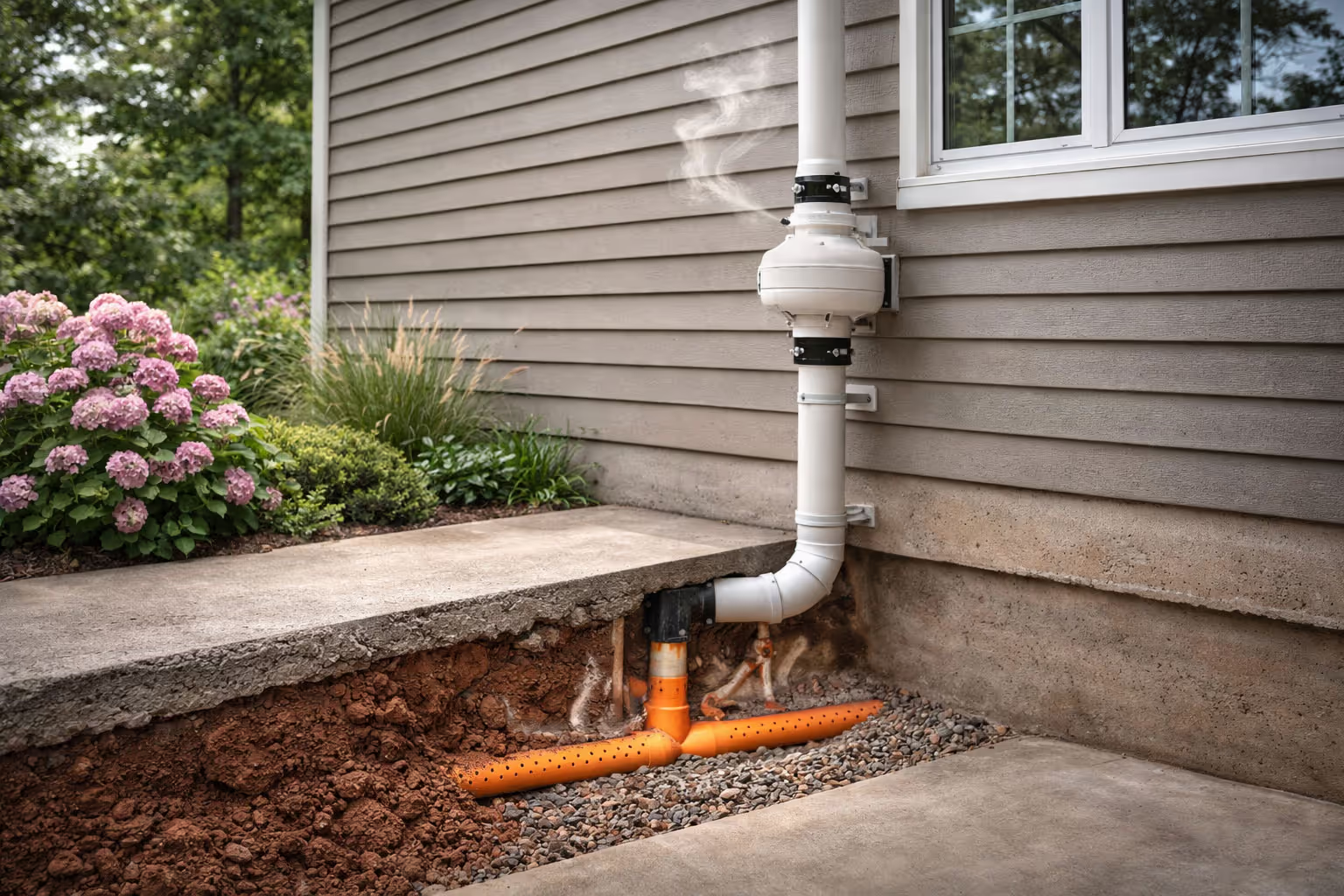
Radon mitigation methods are essential for homeowners who draw water from private wells in New Hampshire, Southern Maine, and Massachusetts. While many people associate radon with indoor air, radon dissolved in well water can pose a real health concern when it is released into the home during routine water use. This article explains how radon enters household water, describes the mitigation technologies available, and offers practical guidance for selecting, installing, and maintaining effective systems. It also connects homeowners with local expertise and services that customize solutions for New England geology and plumbing practices.
Why Radon in Water Matters
Radon is a naturally occurring, radioactive gas produced by the decay of uranium in soil and rock. In New England, certain geological formations and glacial deposits increase the likelihood that private wells will contain elevated radon concentrations. When water containing radon is used for showering, cooking, or washing dishes, the gas is released into indoor air and can be inhaled. Ingesting radon-laden water may also carry health risks, although inhalation is the primary concern.
Two points are important for homeowners to understand:
- Radon in air vs radon in water. Most radon exposure comes from air. Radon in water contributes to indoor air levels and, to a lesser extent, to direct ingestion risk.
- Well water vulnerability. Private wells are not regulated the same way public water systems are, so testing and mitigation are the homeowner's responsibility. In New Hampshire, Southern Maine, and Massachusetts, wells drilled through granite, schist, or glacial till are more likely to show higher radon levels.
How Radon Enters the Home Through Water
Understanding the pathways clarifies which radon mitigation methods work best. Radon gas dissolves in groundwater while it travels through uranium-bearing bedrock. When that water enters the home, activities that agitate or heat the water release radon into the indoor air. Common release points include showers, faucets, washing machines, and dishwashers. Even slow leaks and continuous trickles can contribute to elevated indoor radon concentrations over time.
Simple physics explains it: radon is less soluble in air than in water. As soon as water encounters air in a household fixture, the dissolved gas seeks equilibrium and escapes into the air. Homes with high water usage or poor ventilation in bathrooms and laundry rooms tend to experience greater indoor radon impacts from waterborne radon.
Testing: The First Step Before Any Mitigation
Before choosing among radon mitigation methods, proper testing must be performed. The testing strategy should include both water and indoor air measurements.
Water Testing
Homeowners should use a certified laboratory or an experienced water treatment company to measure radon in water. Test kits calibrated for dissolved radon are available, and professional sampling reduces the risk of false negatives caused by degassing during collection. In New England, A & B Water Consultants recommends sampling your well early in the home-buying process or as part of regular well maintenance, especially if the nearby geology is known to harbor uranium.
Air Testing
Because radon in water is released into household air, an air test is the second key measurement. Short-term and long-term radon air tests are available. Short-term tests run from a few days to 90 days and give an initial indication. Long-term tests, lasting 90 days to a year, offer a better picture of average exposure across seasonal variations, which can be significant in New England.
Regulatory thresholds vary slightly by agency and state, but the U.S. EPA recommends action when indoor air radon exceeds 4 pCi/L. For radon in water, the EPA has suggested a Multimedia Mitigation Goal of 4,000 pCi/L in water because of the combined water-to-air transfer effect, but health-conscious homeowners typically act at much lower levels when air testing shows elevated concentrations.
See our guide Should You Test for Radon? for more on when and how to test.
Overview of Radon Mitigation Methods for Water
Several proven radon mitigation methods exist for treating well water. The right choice depends on radon concentration, household water usage, plumbing configuration, space availability, budget, and whether the homeowner wants a combined solution for other contaminants like arsenic or PFAS. The most common approaches include:
- Granular activated carbon filters
- Vacuum aeration systems (also called packed-tower aeration or diffused aeration)
- Point-of-entry (whole-house) systems and point-of-use options
- Combination systems that address radon and other contaminants
Granular Activated Carbon (GAC) Filters
Granular activated carbon filters adsorb radon onto carbon media as water passes through the filter bed. GAC systems are relatively simple, cost-effective, and widely used for moderate radon levels. They are typically installed at the point where water enters the home so that all household water is treated.
Advantages of GAC:
- Lower upfront cost compared with aeration systems
- Simple maintenance that usually involves periodic media replacement
- Can also remove some organic contaminants and improve taste and odor
Limitations of GAC:
- Carbon becomes radioactive over time as it adsorbs radon decay products, so handling and disposal require care and compliance with local regulations
- Not recommended for very high radon levels because of rapid media saturation and safety concerns
- Requires larger units and more frequent change-outs when water usage is high
Vacuum Aeration Systems
Also known as packed-tower aeration or diffused aeration, vacuum aeration systems remove dissolved radon by forcing water through a contact chamber that exposes it to air. The system then draws the radon-laden air out and vents it safely above the roofline, keeping it out of the living space.
Advantages of aeration:
- Highly effective at removing radon, often achieving removal rates above 99 percent
- Avoids radioactive waste because radon is released to the atmosphere rather than being adsorbed
- Suitable for very high radon concentrations
Limitations of aeration:
- Higher initial cost and slightly more complex installation
- Requires electricity to operate the blower or vacuum pump
- Needs adequate space and proper venting above the roofline
Point-of-Entry Versus Point-of-Use Systems
Most radon mitigation methods for water are point-of-entry systems. Treating water as it enters the home protects the entire household, including showers, sinks, and appliances. Point-of-use options treat only a single fixture, such as a kitchen tap, and are generally not recommended for radon because they leave many radon release points untreated, and they do nothing to reduce the radon contribution to indoor air.
For homeowners primarily concerned about ingestion risk and who accept that air levels may remain unaffected, a point-of-use system could be a short-term choice. However, for comprehensive protection and to address the primary inhalation exposure route, whole-house treatment is the preferred radon mitigation method.
Comparing GAC and Aeration: Which Works Best for New England Homes?
Choosing between GAC and aeration depends on measured radon concentrations, household water use, budget, and local permitting. A & B Water Consultants approaches these decisions with a site-specific analysis that factors regional geology, well type, and family needs.
General guidance:
- For radon in water below about 1,000 to 2,000 pCi/L, a properly sized GAC system often provides an effective and economical solution.
- For radon above that range, especially when exceeding 4,000 pCi/L, aeration is typically recommended because it avoids large volumes of radioactive carbon waste and provides superior removal efficiency.
- Homes with high water demand or where frequent carbon replacement would be impractical should consider aeration for its consistent performance and lower ongoing handling concerns.
Local experience matters. In New Hampshire, where private wells commonly draw from fractured bedrock, radon levels can vary dramatically even between neighboring properties. Personalized testing and engineering ensure the selected radon mitigation methods perform as expected.
Installation Considerations for Radon Mitigation Systems
Proper installation directly affects performance and safety. Experienced contractors follow several best practices:
- Locate treatment equipment where it is accessible for maintenance yet protected from freezing and weather
- Size tanks and media beds based on peak daily water usage to avoid channeling and breakthrough
- Vent aeration systems above the roofline with properly routed piping that prevents re-entry of radon gas into the home
- Install monitoring ports or sample taps so ongoing testing is convenient
Permitting and codes can differ across New Hampshire, Maine, and Massachusetts. Homeowners should confirm local requirements for venting, electrical connections, and the disposal of radioactive media. A reputable company will handle these details and provide documentation for real estate transactions and insurance records.
Contact A&B Water Consultants for a free radon water mitigation services quote.
Maintenance and Monitoring: Keeping Systems Effective
All radon mitigation methods require some ongoing maintenance and periodic verification testing to ensure continued performance.
For GAC Systems
- Replace carbon media according to the schedule recommended by the designer, which depends on radon concentration and household water usage
- Dispose of used carbon following state guidance; it can be considered low-level radioactive waste in some jurisdictions
- Check pre-filters and sediment strainers regularly to prevent fouling that reduces contact efficiency
For Aeration Systems
- Service blowers, pumps, and seals at the intervals specified by the manufacturer
- Inspect vent piping and vents to ensure unobstructed exhaust
- Test post-treatment water periodically to confirm radon removal performance
Regardless of system type, annual or biannual water and indoor air testing is prudent. Radon concentrations can change over time due to well changes, seasonal shifts, or modifications to the home’s plumbing and ventilation. Routine checks ensure homeowners in New Hampshire, Southern Maine, and Massachusetts maintain safe living environments.
Contact A&B Water Consultants for a free radon water mitigation services quote.
Combining Radon Treatment with Other Water Concerns
Many New England homeowners face multiple water quality issues at once. Common co-contaminants include arsenic and PFAS. Combining treatment technologies can be efficient and space-saving, but integration must be engineered carefully so that one treatment does not degrade another's performance.
Examples of integrated approaches:
- Pairing a whole-house aeration system with a separate point-of-entry arsenic adsorption tank or reverse osmosis unit for the kitchen
- Using a GAC system sized and maintained to address organic contaminants while monitoring for radiological build-up and scheduling appropriate carbon change-outs
- Designing pre-treatment steps to remove iron or sediment so that radon mitigation equipment operates without premature fouling
A & B Water Consultants designs custom systems considering all contaminants present, household habits, and long-term maintenance. When radon and arsenic coexist, the firm often specifies complementary technologies that minimize waste handling and simplify service schedules.
Costs, Lifespan, and Return on Investment
Upfront costs vary widely. Simple GAC systems might cost a few thousand dollars to install. Aeration systems typically start higher due to pump, blower, and venting costs. Long-term expenses include replacement media, electricity, and periodic professional inspections. When calculating return on investment, homeowners should weigh immediate health protection, potential increase in home value, and peace of mind.
Financial considerations specific to New England:
- Seasonal energy usage and freeze protection can influence operating costs
- Local disposal or transport fees for spent carbon may add to the lifecycle cost
- Homes in areas with higher radon incidence may see stronger resale benefits from documented mitigation
A & B Water Consultants provides cost estimates and life-cycle comparisons so families can choose an approach that meets their budget and protection goals. The company also advises on financing options and timing, for example, installing mitigation at the time of other plumbing upgrades to reduce overall disruption.
Contact A&B Water Consultants for a free radon water mitigation services quote.
How to Choose a Qualified Radon Mitigation Contractor
Not every plumber or water treatment company has the expertise to design radon mitigation methods that perform well over time. Look for these qualities in a contractor:
- Experience with radon-specific equipment and local geology in New Hampshire, Maine, or Massachusetts
- Certifications and references from customers with similar systems
- Transparent, site-specific proposals with performance guarantees and post-installation testing
- Clear maintenance plans and an understanding of regulatory requirements for media disposal and ventilation
Ask prospective contractors for details on sizing calculations, expected removal efficiencies, maintenance intervals, and how they will handle disposal of radioactive media if applicable. Reputable firms will provide a written warranty and be willing to perform follow-up testing to verify system performance.
Real-Life Example: A New Hampshire Well Family
A family in southwestern New Hampshire tested their private well and found radon in water at 3,500 pCi/L. Indoor air tests showed elevated radon near 5 pCi/L during the winter, when windows were closed and the family used showers frequently. After an on-site evaluation, the contractor recommended a packed-tower aeration system sized for the household's 300-gallon-per-day peak usage. The unit was installed in a heated utility room with vent piping routed above the roofline. Post-installation tests showed treated water with radon below detection limits and indoor air reduced to 1.5 pCi/L. The family scheduled an annual inspection and quarterly carbon and sediment checks for the house's secondary filtration components.
This example highlights the benefits of choosing radon mitigation methods tailored to site-specific conditions and that integrate with the home's daily routines.
Regulatory and Safety Notes
Homeowners should remain aware of state and federal guidance. The EPA provides recommendations and technical resources on radon, while New Hampshire, Maine, and Massachusetts offer local testing and mitigation guidance through health departments and environmental agencies. When handling or disposing of spent GAC media, follow state regulations; some jurisdictions require special handling because of the radioactive decay products that accumulate on the media.
When venting aeration systems, proper routing and termination are critical to prevent radon re-entry into the home or nearby properties. Contractors must ensure compliance with local building codes and consider chimney, attic, or roofline characteristics to prevent unintended exposures.
Practical Tips for New England Homeowners
- Start with testing. Test both the water and the indoor air before investing in radon mitigation methods.
- Document everything. Keep sampling records, installation reports, and service logs. These records help with resale and regulatory questions.
- Plan for winter. Ensure equipment is in conditioned spaces or protected from freezing. New England winters require careful equipment placement and insulation.
- Think long-term. Choose systems that balance upfront costs with maintenance demands and disposal responsibilities.
- Coordinate treatments. If arsenic, PFAS, or sediment are present, plan for integrated solutions that protect system performance.
Contact A&B Water Consultants for a free radon water mitigation services quote.
Conclusion
Radon mitigation methods for water are a critical part of protecting family health in New Hampshire, Southern Maine, and Massachusetts. Effective choices depend on accurate testing, a clear understanding of household water usage, and the right technology for the measured radon levels. Granular activated carbon and aeration systems each play a role. Aeration offers high removal efficiency and avoids radioactive waste, while GAC can be an economical option for moderate radon concentrations when managed carefully. Whole-house, point-of-entry treatment is typically the best approach to prevent radon release into indoor air.
Homeowners benefit from working with experienced local professionals who understand New England geology, permitting, and long-term maintenance needs. With over 25 years of experience customizing solutions for arsenic and radon in private wells, A & B Water Consultants in Portsmouth, N.H. helps families design and maintain systems that keep drinking water safe and reduce indoor radon exposure. Whether the choice is GAC, aeration, or a combined approach, a tailored plan provides the best protection and the most predictable results.
Contact A&B Water Consultants for a free radon water mitigation services quote.
Frequently Asked Questions
What radon level in well water requires action?
There is no mandatory federal limit for radon in private well water. The EPA has suggested a Multimedia Mitigation Goal of 4,000 pCi/L in water when considering combined air and water impacts. However, homeowners should act whenever radon in water contributes to indoor air above 4 pCi/L, or when water concentrations are high enough that reasonable mitigation can meaningfully reduce air levels. Local health departments in New Hampshire, Maine, and Massachusetts can offer guidance tailored to regional conditions.
How long does an aeration system take to remove radon?
A properly sized aeration system removes a large fraction of dissolved radon during the water residence time in the contact chamber. Practically, systems are designed so that treated water leaving the unit meets target removal efficiencies before entering household plumbing. The process happens in seconds to minutes inside the chamber, but the system's performance is validated through post-treatment sampling.
Is it safe to dispose of used GAC media from radon treatment?
Spent GAC can contain mildly radioactive decay products. Disposal requirements vary by state. In New Hampshire and neighboring states, contractors typically follow specific handling and disposal protocols to comply with environmental and radiological safety rules. Homeowners should rely on their service provider to manage disposal correctly.
Can a water softener or iron filter affect radon mitigation?
Certain pre-treatment devices can help or hinder radon systems. For example, iron and sediment can foul GAC media, reducing its life, so pre-filtration is often recommended. Water softeners generally have minimal impact on radon removal, but system designers need to account for all treatment steps so radon mitigation methods work efficiently.
How often should a treated water supply be retested for radon?
Retesting frequency depends on the mitigation method and local recommendations. Annual or biennial retesting of both water and indoor air is common practice, with immediate retesting after system maintenance, modification, or changes in well performance. A & B Water Consultants advises customers on a testing schedule suited to their systems and local conditions.