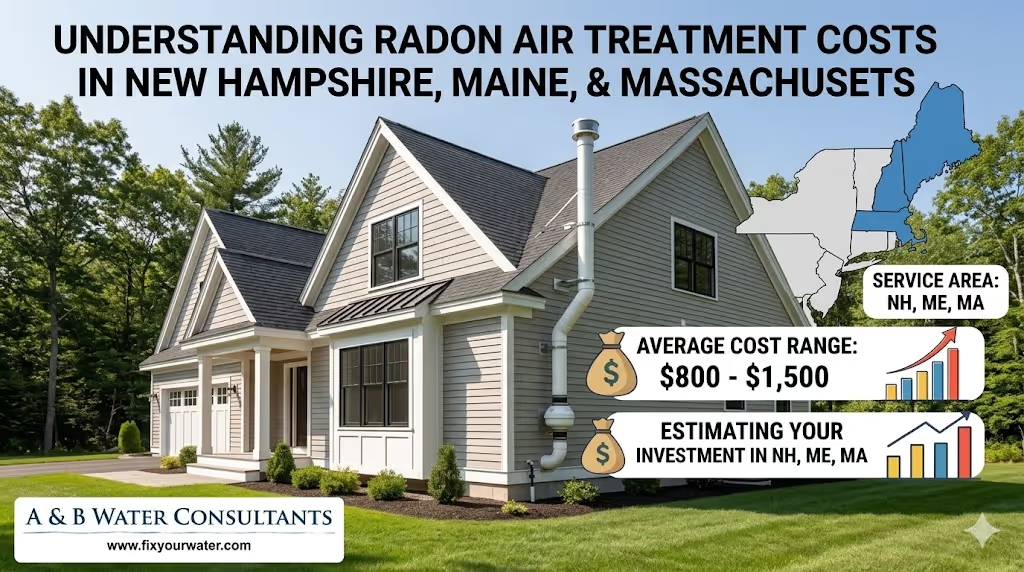
A typical radon mitigation system for a New England home ranges widely in price, making the cost of radon air treatment a top concern for homeowners. In New Hampshire, southern Maine, and Massachusetts, where geology and wintertime sealing can push indoor radon levels higher, knowing what to expect in testing, mitigation, and maintenance helps families protect their health without surprises. Contact A&B Water Consultants for a free water treatment quote.
What Is Radon and Why It Matters in New England
Radon is a radioactive gas produced by the natural breakdown of uranium in soil and rock. It has no color, smell, or taste, so it can accumulate indoors without anyone realizing it. The U.S. Environmental Protection Agency recommends action when indoor radon concentrations reach 4 picocuries per liter (pCi/L) or higher because long-term exposure increases the risk of lung cancer.
New England sits on bedrock and glacial deposits that can create pathways for radon. Older homes with basements or crawlspaces, tight winter weatherization, and certain foundation types tend to be most affected. For families in New Hampshire, southern Maine, and Massachusetts, that means radon is not a distant concern; it is an issue that shows up in many homes across the region.
Radon in Air Versus Radon in Water
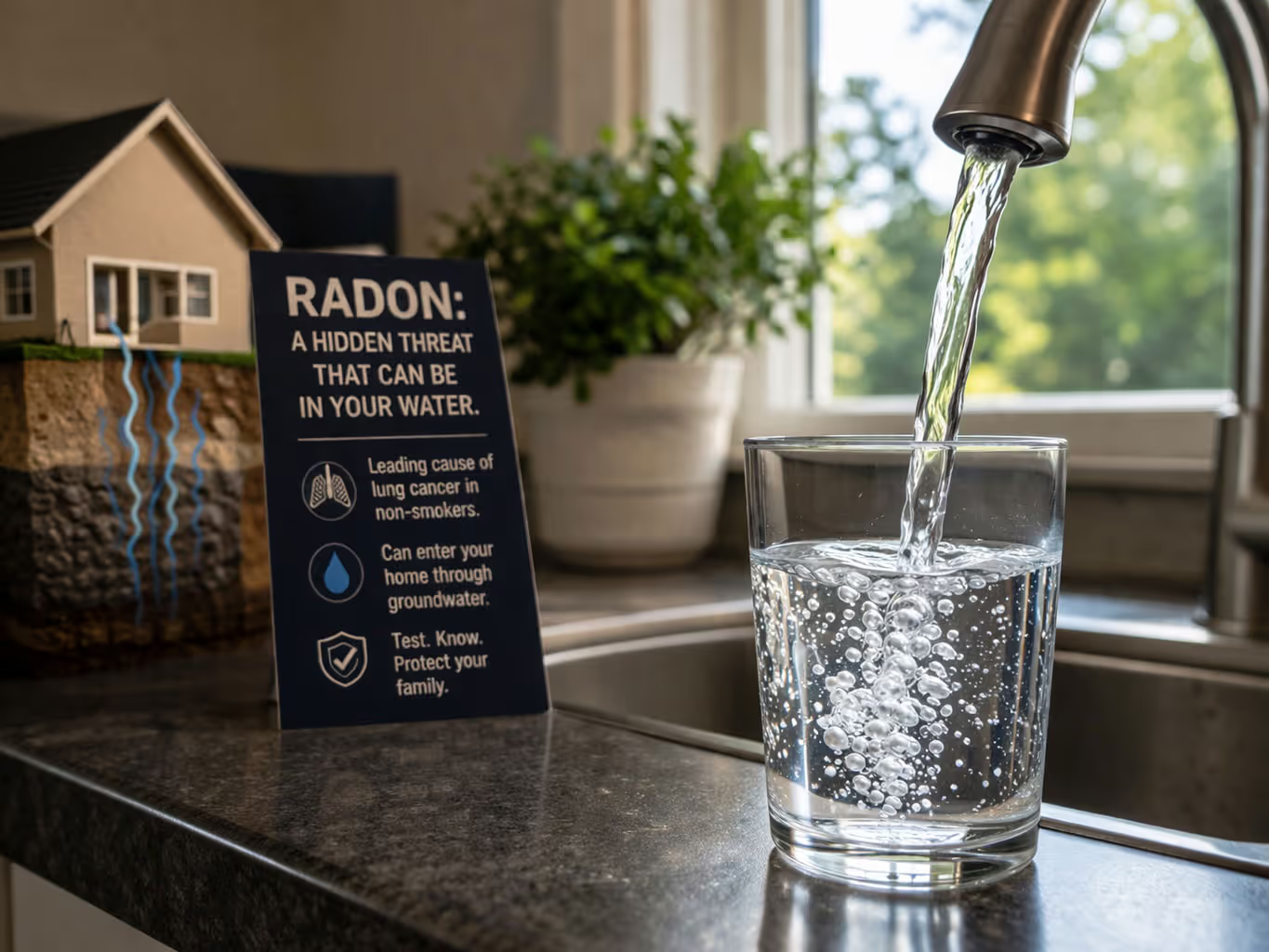
Radon can enter a home through two main routes. The far more common and concerning source is soil gas migrating into living spaces. Less frequently, radon in water dissolves into groundwater and appears in the indoor air when that water is used for showering, cooking, and other household tasks.
- Radon in air is usually the biggest exposure route and the primary focus for air treatment systems.
- Radon in water is generally a secondary source, but for private well owners it can contribute a meaningful portion of indoor radon when groundwater has elevated levels. Treating radon in water often involves different systems than air mitigation.
A homeowner in a rural New Hampshire well community should consider testing both air and water. A & B Water Consultants specializes in radon and arsenic solutions tied to household water, so they often see combined issues where both air mitigation and water treatment are appropriate. Contact A&B Water Consultants for a free radon air treatment quote.
How Radon Is Measured and What Levels Mean
Radon testing methods vary by duration and accuracy. Understanding options helps homeowners budget properly for testing and, if needed, mitigation.
- Short-term test kits measure radon over a few days to a week. They are affordable and useful for initial screening. Typical cost: $10 to $30 for do-it-yourself kits.
- Long-term test kits measure over 90 days to a year and give a better picture of average exposure through seasonal changes. Typical cost: $20 to $50.
- Professional air testing uses continuous monitors or charcoal canisters managed by certified testers to provide defensible results required in real estate transactions. Typical cost: $150 to $400, depending on location and test length.
- Water testing for radon requires laboratory analysis. For private wells, a water radon test typically costs $100 to $300, depending on the lab and turnaround time.
If a short-term test shows a reading near or above the EPA action guideline of 4 pCi/L, a follow-up long-term or professional test is recommended before committing to major work. In New England, where seasonal variation can be large, long-term testing provides the most reliable basis for estimating the true average.
Typical Costs to Test for Radon
Breaking out testing costs helps homeowners understand the initial expense before any mitigation work begins.
- DIY short-term test kit: $10 to $30 plus postage to the lab.
- DIY long-term test kit: $20 to $50.
- Professional home radon test (2 to 7 days or continuous monitor): $150 to $400. Real estate-related tests may cost more for certified documentation.
- Water radon test for private wells: $100 to $300.
Many homeowners in New Hampshire rely on professional testers for accurate, traceable results. A & B Water Consultants can arrange testing and interpret results as part of a comprehensive consultation. Contact A&B Water Consultants for a free radon air treatment quote.
Primary Methods of Radon Air Treatment and Their Costs
When tests show elevated radon, the most common and reliable remedy for airborne radon is an active soil depressurization system. Costs depend on the home’s foundation type, layout, and local labor rates.
Sub-Slab Depressurization (SSD)
Sub-slab depressurization pulls soil gases away from the foundation and vents them safely above the roofline. It is the go-to method for slab-on-grade and basement foundations.
- Typical cost range: $1,200 to $3,500 for most single-family homes in New England.
- Factors increasing cost: complex layouts, multiple slab openings, long vent pipe runs, structural modifications, or high attic access difficulty. In challenging cases costs can reach $4,500 or higher.
- Components: suction point(s), PVC vent piping, a continuously running radon-rated fan, exterior flashing and termination, and system labeling.
Installation often takes a day or two. Once installed, most homeowners see radon levels drop dramatically, often below 2 pCi/L.
Sump Hole Depressurization
Many New England homes already have a sump pit. Converting a sump to a radon mitigation suction point can save labor and materials.
- Typical cost range: $900 to $2,200, depending on fan selection and pipe routing.
- Less invasive than drilling slab holes but may require sealing and retrofitting the sump cover.
Crawlspace Ventilation and Sub-Membrane Depressurization
Homes with crawlspaces benefit from sealing and installing a sub-membrane system that depressurizes the crawlspace and vents it outdoors.
- Typical cost range: $1,500 to $4,000 depending on crawlspace size, access issues, and membrane type.
- Includes vapor barrier installation, sealing, a fan and piping, and sometimes insulation upgrades.
Heat Recovery Ventilators and Whole-House Ventilation
In tightly sealed homes, increased ventilation reduces radon concentration by diluting indoor air. HRVs and energy recovery ventilators, or simple balanced ventilation, can complement depressurization systems.
- Typical cost for HRV installation: $2,000 to $5,000, depending on ductwork and integration with existing HVAC.
- Often used alongside active soil systems when basement sealing alone fails to achieve target levels.
Sealing and Local Repairs
Sealing obvious cracks and sealing around utility penetrations reduces radon entry and improves mitigation efficiency. Sealing alone rarely solves high radon but reduces the scope of active systems.
- Typical cost for sealing only: $200 to $1,000, depending on the number and size of penetrations and cracks.
Maintenance costs for air mitigation systems are modest. Expect $75 to $250 per year for periodic fan checks, pressure monitoring, and occasional fan replacement (fans usually last 5 to 10 years). Homeowners should plan for a fan replacement budget of $200 to $500 every decade.
Radon in Water Treatment Options and Costs
When radon shows up in well water, water treatment becomes part of the mitigation strategy. Treating radon in water also reduces the amount of radon released into indoor air from daily water use.
Aeration (Packed-Tower Aeration or Spray Aeration)
Aeration transfers radon from water into a contained air stream and vents that air safely outdoors. It is the preferred choice for higher radon levels because it avoids the radioactive carbon waste issues associated with carbon filters.
- Typical cost: $4,000 to $12,000 installed, depending on system size, complexity, and whether the unit requires a small tower or contactor tank.
- Operating costs are low: routine checks and occasional blower maintenance, typically under $200 per year.
Granular Activated Carbon (GAC) Filters
Granular activated carbon systems can remove radon by adsorption. GAC tends to be cheaper up front than aeration but creates radioactive spent carbon that requires careful disposal once accumulated radon reaches regulated levels.
- Typical cost: $1,200 to $4,000 for point-of-entry systems, depending on capacity.
- Maintenance: carbon replacement frequency depends on radon concentration and water usage. Disposal may be regulated and can be costly.
- Many New England water professionals prefer aeration for high radon because of disposal and safety concerns with GAC.
Combination Solutions
In some situations, the best solution is a combination of air mitigation and water treatment, particularly if the well contributes significantly to indoor radon or if the homeowner wants to reduce overall radon exposure from both routes.
- Combined system costs vary widely. A realistic range for both air mitigation and an aeration water system is $6,000 to $15,000 for many New England homes.
Local factors in New Hampshire, Maine, and Massachusetts such as labor rates, permitting, and winter installation challenges influence final pricing. A & B Water Consultants brings over 25 years of experience evaluating combined air and water radon issues and designing tailored systems for families. Contact A&B Water Consultants for a free radon air treatment quote.
Factors That Influence the Cost of Radon Air Treatment
Several variables change the price tag for radon mitigation.
- Foundation type: Basements, slabs, and crawlspaces each need different approaches and equipment.
- House size and layout: More square footage and complex floor plans can mean extra penetrations and longer vent runs.
- Soil conditions: Highly permeable soil may make depressurization easier and cheaper, while dense or ledge-filled soil increases complexity.
- Accessibility: Tight attics, finished basements, and aesthetic routing requirements add labor and materials cost.
- Local labor costs: Urban parts of Massachusetts may be pricier than rural New Hampshire and southern Maine, but availability of certified contractors also varies.
- Permitting and inspection: Some towns require permits and post-installation testing, which adds fees and time.
- Whether water mitigation is also needed: Treating radon in water increases overall project cost and coordination.
Real-World Cost Examples for New Hampshire, Southern Maine, and Massachusetts Homes
Concrete examples make planning easier. These are typical scenarios, not guarantees, but they reflect common regional outcomes.
- Small Cape with Basement - Rural New Hampshire Air test: 6 pCi/L. Solution: Single-point sub-slab depressurization using one suction point and an attic-mounted fan. Cost: $1,400. Follow-up testing: $175.
- Older Farmhouse - Southern Maine Air test: 8 pCi/L, private well water radon 1,500 pCi/L. Solution: Basement SSD plus packed-tower aeration for water. Cost: $2,800 for air plus $8,500 for aeration. Total: $11,300. Annual maintenance: $200 to $400.
- Colonial in Massachusetts Suburb Air test: 5 pCi/L. Solution: Sump conversion to mitigation suction plus professional sealing and HRV integration to balance ventilation. Cost: $3,200. Homeowner opted for yearly fan check and HRV filter changes.
- Ranch on Slab - Coastal New Hampshire Air test: 3.8 pCi/L but homeowner wanted margin below 2 pCi/L. Solution: Sub-slab system tuned for low-pressure differential and HRV. Cost: $2,400.
These examples demonstrate the range. A & B Water Consultants often provides bundled options and explains long-term costs so homeowners can weigh upfront investment against health benefits and resale value. Contact A&B Water Consultants for a free radon air treatment quote.
Financing, Incentives, and Insurance Considerations
Many homeowners worry about upfront costs. Several strategies can help:
- Financing: Some mitigation companies offer payment plans. Home improvement loans or lines of credit are other options.
- Real estate negotiations: If radon appears during a sale, buyers and sellers can negotiate mitigation costs.
- Local incentives: Occasionally local health departments or community programs provide subsidies or low-cost testing. Homeowners should check with state and county public health offices in New Hampshire, Maine, and Massachusetts.
- Insurance: Standard homeowners insurance typically does not cover radon mitigation. However, disclosure of a professionally mitigated system and documentation can improve buyer confidence and property value.
Practical advice: get at least two written estimates, ask about warranties and performance testing, and consider the long-term value of a reliable mitigation system. A & B Water Consultants can discuss financing options and help identify any local assistance programs available to families in New England.
Choosing the Right Contractor
Poor installation affects system performance. Homeowners should vet contractors carefully.
- Look for certification by recognized bodies such as the National Radon Proficiency Program or similar organizations.
- Ask for references and real project photos from similar homes in the region.
- Request a detailed written estimate that lists components, fan specifications, warranty terms, and expected post-installation radon levels.
- Expect to see a labeled system with a manometer or other pressure indicator to monitor ongoing performance.
- Confirm the company will perform follow-up testing after installation and provide documentation for real estate transactions if needed.
A & B Water Consultants recommends homeowners keep a record of installation details and follow the maintenance schedule. They provide clear documentation and service plans tailored to New England conditions.
Step-by-Step for New England Homeowners
A clear plan reduces hassle and cost surprises. Here is a practical sequence homeowners typically follow:
- Purchase a short-term test kit or hire a certified tester for a professional screening.
- If levels approach or exceed 4 pCi/L, arrange a professional follow-up test, preferably long-term or continuous monitoring.
- For private well owners, test water for radon as part of the evaluation.
- Get 2 to 3 written mitigation proposals from reputable contractors. Compare system types, warranties, and follow-up testing policies.
- Install the chosen mitigation system and conduct post-installation testing to confirm performance.
- Set up a maintenance schedule for annual checks, fan and filter replacements, and water system service if installed.
For homeowners who need both air and water solutions, coordinating both teams early in the process often saves time and money. Contact A&B Water Consultants for a free water treatment quote.
Common Misconceptions About Radon Treatment
Clearing up myths helps homeowners make better decisions.
- Myth: Opening windows fixes radon. Fact: Temporary ventilation may reduce levels short-term but is not a reliable long-term solution, especially in winter.
- Myth: Only old or poorly maintained homes have radon. Fact: Radon affects new and old homes alike. Tight-building practices that improve energy efficiency can actually increase indoor radon if not addressed.
- Myth: Radon in water is always negligible. Fact: For private wells with very high radon, water can be a significant contributor and should be tested and treated if needed.
- Myth: One mitigation approach fits all homes. Fact: Each home’s geology and construction are unique, so custom system design produces the best, most cost-effective outcome.
How A & B Water Consultants Approaches Radon Mitigation
With over 25 years serving New England families, A & B Water Consultants brings a specialty focus on water-related contaminants including radon, arsenic, and PFAS. Their approach blends home assessment, defensible testing, and tailored system design so homeowners get the proven outcome they need.
- Initial evaluation and testing coordination for both air and water.
- Custom design based on foundation type, home layout, and water chemistry.
- Professional installation with labeled systems, monitoring gauges, and clear maintenance instructions.
- Follow-up testing and long-term service options to keep systems performing through New England seasons.
Families in New Hampshire, southern Maine, and Massachusetts benefit from A & B Water Consultants’ local experience and practical knowledge of regional geology and permitting. Contact A&B Water Consultants for a free radon air treatment quote.
Frequently Asked Questions
How much does a basic radon mitigation system cost in New Hampshire?
A typical sub-slab depressurization system in New Hampshire runs between $1,200 and $3,500, with most installations falling near the middle of that range. Unique foundation challenges or aesthetic routing can increase costs.
Is it necessary to treat radon in well water if indoor air levels are already below 4 pCi/L?
Not always. If air tests are below 4 pCi/L and water radon is low, homeowners may opt for regular monitoring. However, when well water radon is high and household water use is significant, treating water reduces the amount of radon added to indoor air and lowers overall exposure. An expert assessment helps weigh the trade-offs.
How long does it take to install a radon mitigation system?
Most residential sub-slab or sump-based systems are installed in one to two days. Crawlspace membrane systems or integrated HVAC ventilation can take longer depending on scope. Scheduling around weather and access in New England’s winter months can affect timing.
Will mitigation systems affect home resale value?
Properly installed and documented radon mitigation systems generally reassure buyers and can be neutral or positive for resale. Clear paperwork showing post-installation test results and warranties helps preserve property value.
Are there maintenance costs after installation?
Yes. Routine checks like confirming the fan is running and inspecting the pressure gauge are inexpensive. Expect $75 to $250 per year for periodic professional checks, and plan for fan replacement costs roughly every 5 to 10 years.
Conclusion
Estimating the cost of radon air treatment depends on test results, foundation type, home layout, and whether radon in water is also an issue. For many New England homeowners a single-family sub-slab depressurization system solves airborne radon for a modest investment, while private well owners may need to budget for aeration or GAC systems for water treatment. The most cost-effective path starts with reliable testing and a professional, site-specific plan.
A & B Water Consultants combines regional experience, water and radon expertise, and transparent pricing to help families in New Hampshire, southern Maine, and Massachusetts decide what’s best for their homes. For homeowners who want clear next steps and an honest cost estimate, Contact A&B Water Consultants for a free radon air treatment quote.
Taking action sooner rather than later reduces long-term health risk and often lowers overall costs. For a clear, tailored plan that addresses both air and water risks, Contact A&B Water Consultants for a free radon air treatment quote.