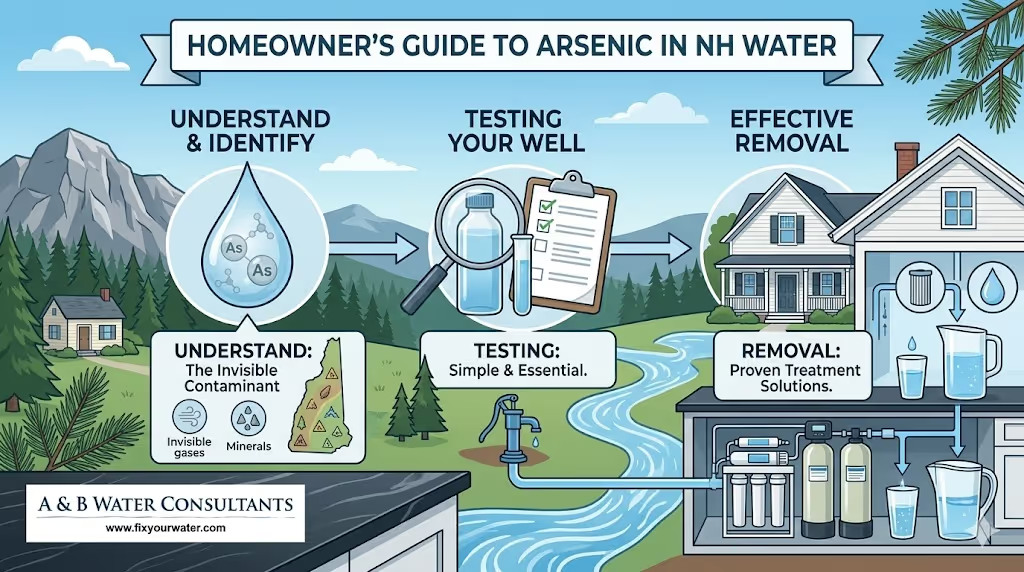
Arsenic shows up in private wells across New Hampshire, Southern Maine, and parts of Massachusetts more often than many homeowners expect. This homeowner guide to arsenic explains what arsenic is, why it matters for families on private wells, how to test for it, and which treatment options actually work for New England geology. The goal is to give practical, local-first advice so a homeowner can make informed decisions and keep drinking water safe. Contact A&B Water Consultants for a free arsenic removal services quote.
Why Arsenic Matters for Homeowners in New England
Arsenic is a naturally occurring element found in rocks and soils. When groundwater flows through arsenic-bearing bedrock or sediments, arsenic can dissolve and enter private wells. In much of New Hampshire, parts of Maine, and some areas of Massachusetts, bedrock wells are common and the risk of arsenic is higher than in regions supplied by glacial deposits or surface water.
Long-term exposure to inorganic arsenic in drinking water is associated with increased risks of certain cancers, skin changes, cardiovascular disease, and developmental impacts in children. The Environmental Protection Agency has set a public water standard at 10 parts per billion, or 10 ppb, but private wells are not regulated by the EPA. That means homeowners are responsible for testing and treating their water.
Common Misconceptions
- It is not always obvious when arsenic is present. Arsenic typically has no taste, smell, or color.
- Water softeners do not remove arsenic. A softener may even change the water chemistry and influence arsenic behavior.
- Bottled water is not an automatic long-term solution unless it is from a verified source and used consistently for drinking and cooking.
How Arsenic Gets Into Well Water
The most common route in New England is natural geological leaching. Bedrock types such as schist, gneiss, and some granites can contain arsenic-bearing minerals. Factors that influence arsenic release include the rock composition, groundwater flow, oxygen levels, and the presence of iron and sulfur compounds.
Arsenic exists in multiple chemical forms. For homeowners, the important distinction is between As III and As V. As III is arsenite, often more mobile and harder to remove. As V is arsenate, which is easier to treat with conventional adsorption or ion exchange systems. The existing chemistry of a well — pH, dissolved oxygen, iron, manganese, and sulfate — determines which arsenic species predominates and which treatment is most effective.
Testing: The First Step Every Homeowner Should Take
Testing is the only reliable way to know whether a well contains arsenic. The typical process for homeowners in New Hampshire, Southern Maine, and Massachusetts looks like this.
- Find an accredited lab. State public health or environmental departments list certified laboratories that analyze well water for arsenic. For New Hampshire, the Department of Environmental Services is a helpful resource. Southern Maine and Massachusetts have similar laboratory certification lists.
- Collect a proper sample. Labs provide sample bottles and instructions. Follow those steps exactly. For arsenic, the sample must usually be unpreserved and shipped quickly, or preserved per lab instructions.
- Ask for a full water chemistry panel. In addition to arsenic concentration, have the lab measure pH, iron, manganese, conductivity, and dissolved solids. These parameters influence treatment selection.
- Interpret results. Anything above 10 ppb should raise concern. Results below 1 ppb are generally considered very low. If a result is near the detection limit or close to 10 ppb, retesting or duplicate samples are reasonable steps.
- Retest periodically. Test once per year for arsenic, and immediately after well repairs or new construction nearby. If treatment is installed, test influent and treated water to confirm the system is functioning.
What if the Lab Report Is Confusing?
Lab reports can seem technical. A homeowner should look for the arsenic concentration (reported in micrograms per liter or parts per billion), the method used, and the lab accreditation. If a homeowner is unsure, calling the lab, the local health department, or a trusted water treatment professional can clarify results and next steps.
How to Choose the Right Treatment
Treatment selection depends on the arsenic concentration, arsenic species, and the overall water chemistry. A one-size-fits-all approach rarely works for New England wells because of the variety in geology and well construction. Here are the common options and when they make sense.
Reverse Osmosis
How it works Reverse osmosis, RO, forces water through a semipermeable membrane that rejects dissolved impurities, including arsenic, especially As V. RO systems are typically point-of-use units installed under the kitchen sink and provide excellent arsenic reduction for drinking and cooking water.
Pros
- High removal efficiency, often greater than 95 percent for arsenic.
- Relatively compact and proven technology.
Cons
- Point-of-use only, so whole-house arsenic exposure from showers or other taps is not addressed.
- Produces wastewater at a reject ratio that depends on the system.
- Requires routine filter and membrane replacement.
Adsorptive Media (Iron-Based Media, Activated Alumina)
How it works Adsorptive media systems pass water through granular media that bind arsenic. Granular ferric hydroxide and activated alumina are common. These systems can be configured for continuous flow and provide whole-house treatment if sized appropriately.
Pros
- Can treat larger volumes for whole-house use.
- Many media are effective for As V and, with proper pretreatment, As III.
Cons
- Media need periodic replacement or regeneration based on arsenic load and flow.
- Pretreatment may be required if iron or manganese levels are high, because fouling shortens media life.
Ion Exchange
How it works Ion exchange removes arsenic by swapping arsenic anions for chloride or other ions on a resin. It can be effective for As V after oxidizing any As III.
Pros
- Good for higher flow whole-house applications.
- Regenerable with salt, offering lower ongoing media replacement cost.
Cons
- Less effective for As III without oxidation pretreatment.
- Regeneration produces brine waste, which may have disposal restrictions.
Oxidation Followed by Filtration
How it works Oxidants such as chlorination, permanganate, or aeration convert As III to As V, which can then be removed by filtration or adsorption. This two-step approach is common when arsenic is present alongside iron and manganese.
Pros
- Transforms difficult-to-remove As III into treatable As V.
- Often integrates well with iron removal systems.
Cons
- Requires careful control of oxidant dosing and contact time.
- Can increase maintenance if residual oxidant must be removed downstream.
Coagulation and Filtration
In larger or more complex systems, coagulation with chemicals such as ferric chloride followed by sediment filtration can remove arsenic. This approach is common for small community systems but is less often used for single-family homes because of the operational requirements.
Practical Steps for a Homeowner Choosing Treatment
- Start with a complete water analysis. The lab results will guide whether oxidation, adsorption, RO, or a combination is required.
- Ask for a site visit and a custom plan. A professional should measure flow rates, examine water softeners and other appliances, and check well depth and pump details. A & B Water Consultants offers on-site assessments tailored to New Hampshire bedrock wells.
- Confirm certifications. Choose treatment equipment certified to NSF/ANSI standards for arsenic reduction, typically Standard 53 for health effects or Standard 58 for reverse osmosis.
- Get a clear estimate of life cycle costs. That includes equipment, installation, annual maintenance, replacement media or membranes, and any disposal fees for backwash or brine.
- Ensure monitoring. Installed systems should include simple testing points so the homeowner can sample influent and treated water. Many installers offer monitoring plans.
If a homeowner wants expert help, local, experienced companies such as A & B Water Consultants can design and install arsenic systems engineered for New England conditions.Contact A&B Water Consultants for a free arsenic removal services quote.
Costs and Lifespan: What Homeowners Should Expect
Costs vary widely based on system type, flow rate, and pretreatment needs. Here are ballpark ranges to set expectations for New Hampshire-area homeowners.
- Point-of-use RO systems: $400 to $2,000 installed, plus annual filter and membrane costs of $100 to $300.
- Whole-house adsorptive media systems: $2,000 to $7,000 installed, with media replacement every 3 to 7 years depending on arsenic load and flow.
- Ion exchange systems for whole-house use: $2,000 to $6,000 installed, plus regeneration salt and periodic resin replacement.
- Oxidation plus filtration systems: costs vary widely because of chemical feed equipment and contactors; typically $2,500 and up.
Lifespan and operating costs depend on how much arsenic the system must remove, the presence of iron or manganese, and how well the system is maintained. Proper pretreatment often extends service life and reduces total cost of ownership.
Installation and Maintenance Best Practices
Professional installation is strongly recommended. A homeowner should expect the following during and after installation.
During Installation
- Verification of lab results and system sizing to meet peak flow needs.
- Proper placement of prefilters, oxidation contactors, and the treatment unit to avoid back-pressure or cross-connections.
- Plumbing to isolate treated water for drinking and cooking if the system is point-of-use.
- Clear instructions on drain lines, reject water disposal, and required electrical or chemical storage.
Ongoing Maintenance
- Regular replacement of filters and media as recommended by the manufacturer or installer.
- Backwashing where required, with proper disposal of backwash water to avoid local contamination.
- Annual or semiannual testing of treated water to ensure arsenic remains below target levels.
- Record keeping of service dates, media replacements, and test results.
Failing to maintain systems is the most common reason homeowners see arsenic reappear in their tap water. For assistance with maintenance schedules or monitoring plans, homeowners can reach out to local experts. Contact A&B Water Consultants for a free arsenic removal services quote.
Special Considerations for New Hampshire, Southern Maine, and Massachusetts
New England has unique features that affect arsenic risk and treatment choices.
- Bedrock wells are common in New Hampshire and parts of Maine and Massachusetts. These wells tap fractures where arsenic can be concentrated.
- Iron and manganese often co-occur with arsenic. Systems that remove iron and manganese help improve arsenic treatment performance and reduce media fouling.
- Colder temperatures can affect chemical dosing and equipment performance. Installers should select equipment rated for local winter conditions.
- Local regulations and disposal rules vary. Homeowners should consult their town or county health department regarding backwash or chemical disposal, particularly for ion exchange regeneration brine.
Homeowners in New Hampshire who suspect arsenic should check NHDES resources for private well guidance. Similarly, Maine and Massachusetts have state agencies and local health departments with helpful information and lists of certified labs and contractors.
Common Pitfalls and How to Avoid Them
Here are mistakes that homeowners often make and how to avoid them.
- Skipping a full water analysis. Only testing for arsenic without checking iron, pH, and other parameters can lead to the wrong treatment choice.
- Choosing equipment based on cost alone. A cheap system that fails in a year costs more in the long run. Look at life cycle costs and warranties.
- Ignoring maintenance. Media and membranes have finite lifespans. Schedule and budget for replacements.
- Assuming bottled water covers all exposure. Tap water is used for cooking and making infant formula. If tap water is used at any point, it should be safe.
Real-World Example
A family in Concord, New Hampshire discovered arsenic levels of 15 ppb during a routine well test. They also had 0.8 mg/L of iron and pH 6.8. A & B Water Consultants performed a site assessment and recommended an oxidation step to convert any As III to As V, followed by granular ferric hydroxide adsorption for whole-house treatment, and a dedicated reverse osmosis point-of-use system for the kitchen for extra safety. After installation and a three-month monitoring period, treated water consistently measured below 3 ppb. The homeowner kept a maintenance log, replaced the adsorption media after 4.5 years, and continued annual testing. Real-world planning like this reduces risk and keeps costs predictable.
Working with a Qualified Professional
Choosing a contractor who understands local bedrock wells and New England water chemistry is essential. Ask potential contractors about:
- Their experience with arsenic removal in New Hampshire, Southern Maine, and Massachusetts.
- References from recent local installations.
- Whether they perform a pre-installation water analysis and a site visit.
- The certifications of the equipment they install and whether they provide warranties and maintenance plans.
A & B Water Consultants has over 25 years of experience designing arsenic and radon filtration systems for New England homes. They offer customized systems, clear maintenance plans, and local knowledge about common regional water chemistry challenges. For families who want a reliable, professional partner, that experience can save time and money. Contact A&B Water Consultants for a free arsenic removal services quote.
Financial Assistance and Community Resources
Some state programs and local grants can help homeowners offset the cost of testing and treatment, particularly for low-income households or those with health vulnerabilities. The best first step is to contact a local health department or state environmental agency to ask about current assistance programs. Additionally, local universities or extension services sometimes offer testing clinics or discounted rates.
Homeowners should also inquire whether their chosen contractor offers financing options, maintenance agreements, or payment plans. Spreading the cost of a higher-quality installation over time can be a practical route for many families.
Summary and Next Steps
Arsenic in private well water is a real, manageable risk in New Hampshire and parts of Southern Maine and Massachusetts. The safe path for any homeowner is straightforward:
- Test the well through a certified lab and request a full water chemistry panel.
- Work with a qualified local professional to interpret results and design a treatment plan tailored to the well and household needs.
- Install certified equipment, and follow a documented maintenance schedule.
- Retest regularly and after any well work or system servicing.
Proactive testing and properly selected treatment keep a household safe and provide peace of mind. For hands-on assistance and systems built for New England conditions, homeowners can turn to experienced local firms. Contact A&B Water Consultants for a free arsenic removal services quote.
Frequently Asked Questions
How often should a homeowner test for arsenic?
Annual testing is a good rule of thumb for private wells. Test immediately after any well work, pump replacement, or if a household member is pregnant or immunocompromised. After installing a treatment system, test both influent and treated water according to the installer’s recommendations, typically every 6 to 12 months.
Can a water softener remove arsenic?
No. Conventional cation-exchange water softeners do not remove inorganic arsenic. In some cases, softeners can change water chemistry in ways that complicate arsenic removal, so treatment should be planned in coordination with any existing softeners.
Is bottled water safer than a treated well?
Bottled water can be safe but is not a convenient or cost-effective long-term solution for household use. Properly installed and maintained treatment systems provide consistent protection for drinking and cooking at the tap. If a homeowner uses bottled water temporarily, they should continue the process of testing and installing a long-term treatment solution.
What if arsenic levels are just under 10 ppb?
Even levels slightly below 10 ppb are worth monitoring. Some families choose to install treatment for an added margin of safety, especially if there are children, pregnant members, or other health concerns. Discuss options with a water treatment professional and consider more frequent testing.
How long do arsenic treatment systems last?
System lifespan depends on the technology and maintenance. Point-of-use RO systems often last a decade or more with timely membrane replacement. Adsorptive media systems may need media replacement every 3 to 7 years, depending on arsenic load. Proper pretreatment and scheduled maintenance extend system life and reliability.
Protecting a home from arsenic starts with testing and continues with thoughtful system design and maintenance. For homeowners in New Hampshire, Southern Maine, and Massachusetts who want expert guidance and local experience, A & B Water Consultants can help assess the situation and deliver custom solutions. Contact A&B Water Consultants for a free arsenic removal services quote.