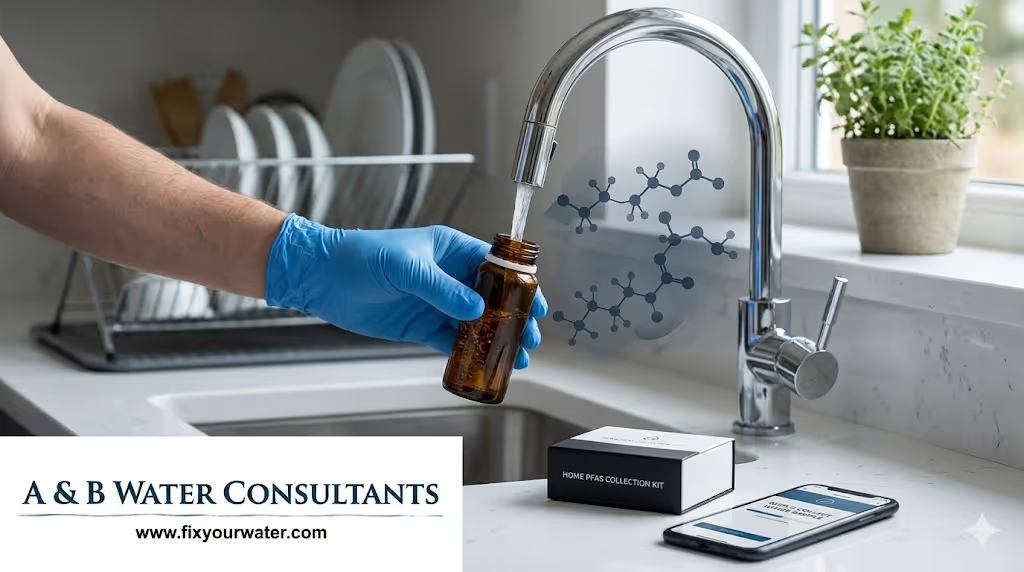
Filtration systems for contaminants are essential for homeowners who rely on private wells or municipal supplies that might carry unwanted substances. In New Hampshire, Southern Maine, and parts of Massachusetts, geology and local land use mean that families face specific risks such as arsenic in bedrock wells, radon migrating from fractured granite, and PFAS contamination near industrial sites or firefighting training areas. This guide explains how different filtration systems work, what contaminants they treat best, and how a homeowner can choose and maintain the right solution for a healthy home.
Why Filtration Matters in New Hampshire and Southern New England
New England homeowners often assume tap water is safe, but water quality varies dramatically from one property to the next. In New Hampshire, private wells tap into fractured bedrock that can contain naturally occurring arsenic and elevated radon levels. Southern Maine and Massachusetts face similar concerns, and both regions have seen localized PFAS contamination from historical industrial activities and firefighting foam use.
Even when water looks clear and tastes fine, contaminants can be present at levels that affect long-term health. Filtration systems for contaminants remove, reduce, or neutralize these substances so the water used for drinking, cooking, and bathing is safer for the whole family.
The team at A & B Water Consultants has more than 25 years of experience designing tailored systems for homeowners across New Hampshire, Southern Maine, and Massachusetts. They emphasize thorough testing and systems that match household water use, plumbing layout, and the specific contaminants identified in a home’s water sample. Contact A&B Water Consultants for a free water treatment quote.
Common Contaminants in New England Homes
Before choosing a filtration system, it helps to know which contaminants are most relevant locally.
- Arsenic — Often naturally occurring in bedrock, can be present in private well water at levels above health-based standards.
- Radon — A radioactive gas that can dissolve into well water and outgas into indoor air during household use, increasing lung cancer risk.
- PFAS — A class of persistent chemicals used in industrial processes and firefighting foams; some areas have surface or groundwater impacts.
- Iron and Manganese — Cause staining and taste issues; can foul filters and media if not addressed first.
- Hardness (Calcium, Magnesium) — Affects soap performance and scale buildup, and influences the performance of some treatment systems.
- Microbial Contaminants — Bacteria, viruses, and protozoa may be present in well water; require disinfection or point-of-use barriers.
- Nitrate/Nitrite — Especially in agricultural areas, can be a significant health concern for infants and pregnant women.
Point-of-Entry Versus Point-of-Use: What Homeowners Should Know
Filtration systems for contaminants come in two basic installation styles. Choosing the right one depends on the contaminant and how the household uses water.
- Point-of-Entry (POE) — Installed where water enters the home. Treats the entire supply, protecting showers, washing machines, and all taps. Ideal for contaminants that affect health through inhalation or skin contact, such as radon or for whole-house PFAS removal.
- Point-of-Use (POU) — Installed at a single tap, usually the kitchen sink. Best for contaminants that primarily affect ingestion like arsenic or PFAS where a homeowner wants a high-purity drinking water source without treating the entire house.
Overview of Filtration Technologies and Their Uses
Each filtration technology targets contaminants differently. The sections below describe the main technologies, how they work, and their pros and cons for New England homes.
Granular Activated Carbon (GAC) and Catalytic Carbon
How it works - Carbon media adsorb organic compounds and some inorganic compounds. Catalytic carbon is treated to catalyze chemical reactions, improving removal of chloramines and certain PFAS precursors.
Best for: PFAS (some types), taste and odor, chlorine, VOCs, some pesticides.
Limitations: Not all PFAS are equally removed. Performance depends on contact time, flow rate, and total organic load. Media needs periodic replacement; clogged carbon can harbor bacteria if not properly maintained.
Ideal use: Whole-house GAC vessels or POU cartridges depending on contaminant levels. Frequently combined with prefilters to remove sediment.
Reverse Osmosis (RO)
How it works - High-pressure forcing of water through a semipermeable membrane that rejects dissolved ions and many organic molecules.
Best for: Arsenic (both As III and As V with proper pretreatment), nitrates, fluoride, many PFAS, salts and hardness when used with appropriate membranes.
Limitations: Produces wastewater, requires adequate water pressure and a storage tank, not practical for whole-house treatment without specialized large-scale systems. Prefiltration is essential to prevent membrane fouling.
Ideal use: Point-of-use drinking water systems at the kitchen sink for families wanting very low contaminant levels. RO paired with a remineralization stage keeps taste pleasant and avoids corrosivity.
Ion Exchange
How it works - Resins swap undesirable ions in the water with benign ions such as sodium or chloride. Specialized resins can be used for nitrate removal or for specific anions like arsenic V.
Best for: Nitrates, hardness (water softeners), select arsenic removal with appropriate media, some PFAS using specialty resins.
Limitations: Not effective for uncharged molecules. Requires periodic regeneration with brine or chemical solutions, which has operational costs and discharge considerations.
Ideal use: Whole-house systems where ion-specific removal is needed and when homeowners can manage regeneration logistics. In PFAS-affected homes, specialty ion exchange resins can be a good option when GAC is less effective.
Adsorptive Iron-Oxide Media (For Arsenic)
How it works - Iron oxide coated granules attract and bind arsenic species through adsorption and surface complexation.
Best for: Arsenic, particularly arsenic V. Some media are designed to oxidize arsenic III to V as part of the treatment.
Limitations: Performance depends on pH and competing ions. Iron and manganese may need to be managed first, and media will need replacement or regeneration as it becomes exhausted.
Ideal use: Whole-house treatment on private wells with elevated arsenic. Often the most cost-effective long-term solution when sized correctly.
Aeration and Packed Tower Aeration (For Radon)
How it works - Water is exposed to air in a tank or packed column, allowing dissolved radon to transfer into the air stream and then vented safely outdoors.
Best for: Radon in well water. Aeration removes a high percentage of dissolved radon without generating radioactivity-laden media to dispose of.
Limitations: Requires space for an aeration tower and an exhaust path. The vented air must be directed outdoors and away from occupied spaces.
Ideal use: Point-of-entry systems treating the whole house when radon levels in water are significant contributors to indoor air radon exposure.
Granular Activated Carbon for Radon
How it works - GAC adsorbs radon, but the radon decays within the media producing radioactive daughter products. Over time the media becomes a low-level radioactive waste that requires safe disposal.
Best for: Low to moderate radon levels where aeration is not feasible.
Limitations: Media disposal and regulatory requirements can complicate long-term use. Not always the best choice in New Hampshire where radon in water can be elevated.
Ultraviolet (UV) Disinfection
How it works - UV light inactivates bacteria, viruses, and protozoa by damaging their DNA or RNA.
Best for: Microbial contamination in well water, including coliforms and Giardia.
Limitations: Does not remove chemical contaminants. Water must be clear for effective UV penetration, so prefiltration is typically needed.
Ideal use: Combined with sediment filters and possibly chlorination for persistent microbial problems.
Choosing the Right System: A Practical Decision Guide
Choosing a filtration system for contaminants requires careful planning. The most common mistakes are picking a system based on anecdote rather than data and ignoring preconditioning steps that protect the primary treatment media.
- Test the Water - Start with a comprehensive lab test tailored to regional risks. In New Hampshire, a typical panel includes arsenic, radon (if concerned), PFAS if there is known local risk, nitrate, iron, manganese, hardness, pH, and bacteria.
- Identify Primary Targets - Decide which contaminants present the greatest health or aesthetic concern. A system that tackles everything rarely fits the budget or the plumbing layout.
- Assess Water Chemistry - pH, hardness, and iron influence media life and chemistry of removal. For example, arsenic adsorption performs best at certain pH levels.
- Evaluate Flow and Household Needs - Determine peak flow rates for showers and washing machines and flow demand at kitchen taps when sizing whole-house media vessels or POU RO units.
- Design a Multi-Stage System if Needed - Often the best performance comes from staging pretreatment and final polishing, for example: sediment prefilter, iron removal or softening, GAC or RO for PFAS and arsenic, and UV for microbes.
- Confirm Certifications and Testing - Look for NSF/ANSI certifications relevant to the contaminants of concern, such as NSF/ANSI 53, 58, 401 or product-specific certifications for PFAS reduction.
- Plan for Maintenance and Waste Disposal - Understand media replacement intervals, pressure drop monitoring, and how any regeneration or waste streams are handled.
- Use Local Expertise - Local NH companies like A & B Water Consultants understand New Hampshire’s geology and regulatory landscape and can recommend systems that work well in practice. Contact A&B Water Consultants for a free water treatment quote.
Real-World Examples and System Combinations
Practical systems often combine technologies to manage mixed problems efficiently. The team at A & B Water Consultants frequently sees the following scenarios in New Hampshire and Southern Maine.
Case 1: Private Well with Arsenic and Iron
Situation: A lakeside home in central New Hampshire reports a low metallic taste, orange staining, and lab results showing arsenic at 12 parts per billion.
Recommended approach:
- Sediment prefilter to protect downstream media.
- Oxidation and iron removal unit or greensand media to remove iron and manganese and reduce biofouling risks.
- Adsorptive iron-oxide media or RO for arsenic polishing depending on household flow and budget.
- Periodic sample testing and media replacement schedule.
Result: Staining stops, water taste improves, and arsenic is reduced below the state action level. Contact A&B Water Consultants for a free water treatment quote.
Case 2: New Hampshire Home with High Radon in Water
Situation: A home built on fractured granite reports elevated indoor air radon. Water testing reveals dissolved radon in the well water contributing to indoor levels.
Recommended approach:
- Install a point-of-entry aeration system with a packed tower and sealed venting system to safely release radon outdoors.
- Place the exhaust vent away from windows and air intakes.
- Maintain and test indoor air radon after installation to confirm overall reduction.
Note: GAC was considered but rejected because aeration avoids creating radioactive media that needs specialized disposal. Contact A&B Water Consultants for a free water treatment quote.
Case 3: Suburban Home Near an Airport with PFAS Concerns
Situation: A homeowner in Southern Maine is concerned after municipal testing found PFAS in a nearby sewer outfall.
Recommended approach:
- Comprehensive PFAS test panel at the wellhead or incoming service line.
- Whole-house GAC vessels sized for contact time to reduce PFAS load to the home’s taps, combined with a POU reverse osmosis system at the kitchen sink for drinking water.
- Ongoing monitoring and schedule for GAC changeouts based on measured breakthrough or conservative media life estimates.
Combining technologies gives higher confidence for the whole household while ensuring the drinking water receives additional polishing. Contact A&B Water Consultants for a free water treatment quote.
Maintenance, Monitoring, and Longevity
Filtration systems are not set-it-and-forget-it. Proper maintenance ensures safety and system longevity.
- Regular Testing - Run a full water test at least every year for private wells, and more often when new systems are installed or after events like flooding or heavy local construction.
- Media Replacement and Regeneration - Keep records of installation dates, media volumes, and replacement intervals. A typical GAC cartridge may last 6 to 12 months, while whole-house GAC vessels last 1 to 5 years depending on load and water quality.
- Monitor Pressure Drop - A steady increase in pressure drop across a filter indicates media fouling or a clogged prefilter and needs attention.
- Follow Manufacturer Guidelines - For RO membranes, UV lamp replacement, and resin regenerations follow recommended schedules to maintain performance and certifications.
- Safe Disposal - If media becomes contaminated with hazardous substances or radionuclides, follow state guidance for disposal.
Regulatory and Health Guidance
Homeowners should be aware of applicable standards and guidance. The U.S. EPA and state agencies publish health advisories and maximum contaminant levels for many substances, though private wells are not regulated in the same way municipal systems are. In New Hampshire, the Department of Environmental Services provides resources and testing recommendations for well owners.
When evaluating systems, look for credible certifications. NSF/ANSI standards provide third-party validation, including:
- NSF/ANSI 53 - Health effects related contaminant reduction.
- NSF/ANSI 58 - Reverse osmosis systems.
- NSF/ANSI 401 - Emerging compounds and incidental contaminants.
- Product-specific certifications for PFAS - Some manufacturers hold P473 or other verification for PFAS reduction.
Local codes may require permits for equipment that affects plumbing or produces discharge. Experienced local professionals can help navigate permitting and installation to ensure systems are compliant and safe.
Budgeting and Long-Term Value
Costs vary widely based on system complexity, house size, and contaminant load. Rough cost categories:
- Basic cartridge filters and UV POU units - Lower up-front cost but need frequent cartridge changes. Good for microbial or sediment issues and as a first line of defense.
- Whole-house GAC and iron-oxide media systems - Mid-range initial investment with moderate ongoing media replacement costs. Effective for PFAS, taste/odor, and arsenic when sized and maintained correctly.
- RO systems - POU RO is relatively affordable and offers very high removal rates for many contaminants, but produces wastewater and requires tank space. Whole-house RO is expensive and rarely necessary.
- Aeration systems for radon - Higher upfront cost but low waste disposal requirements and excellent performance.
Homeowners should weigh not only up-front costs but service reliability, maintenance needs, and long-term health benefits. Investing in the right filtration systems for contaminants protects household health and adds value to the property.
Why Local Expertise Matters
Local firms bring practical advantages. In New Hampshire and the surrounding counties of Southern Maine and Massachusetts, understanding local geology, common contamination sources, and typical household plumbing layouts accelerates finding the right solution. A & B Water Consultants specializes in arsenic and radon treatment and offers custom-designed solutions that start with laboratory testing and end with a system tailored to the property’s needs.
Experienced installers preempt issues like improper pretreatment, which can shorten media life or reduce contaminant removal. They also size systems to match household peak demand so showers, dishwashers, and faucets perform without pressure loss. Contact A&B Water Consultants for a free water treatment quote.
Checklist for Homeowners Considering Filtration Systems
Before scheduling an installation, homeowners should have the following in order:
- Recent comprehensive water test results from an accredited lab.
- List of primary contaminants to remove and the target reduction levels.
- Estimated household peak flow rate and daily water usage.
- Space available for equipment installation and venting if required (aeration).
- Budget range including annual maintenance expectations.
- Questions for the installer about certifications, warranties, and service plans.
When in doubt, schedule a home visit with a local expert who can take on-site measurements, observe plumbing configuration, and recommend a system that fits life and budgets. Contact A&B Water Consultants for a free water treatment quote.
Conclusion
Filtration systems for contaminants are a practical, proven way to protect family health and improve the home environment. In New Hampshire, Southern Maine, and parts of Massachusetts, private wells and regional contamination patterns make careful testing and tailored solutions especially important. Whether the goal is removing arsenic from a bedrock well, reducing radon contributions from water, or addressing PFAS near an industrial site, the right combination of technologies and ongoing maintenance ensures safe water for drinking, cooking, and bathing.
Homeowners benefit from local, experienced professionals who understand the nuances of New England water quality. A & B Water Consultants combines lab-based testing, custom system design, and hands-on installation experience to deliver reliable, long-lasting solutions. Contact A&B Water Consultants for a free water treatment quote.
Frequently Asked Questions
How often should private well water be tested?
For most private wells, a comprehensive test every 12 months is recommended. After installing treatment or if there are changes in taste, odor, plumbing, or nearby land use, test more frequently. Tests should include contaminants relevant to the area, such as arsenic, radon (if suspect), PFAS if local sources are a concern, nitrates, iron, and bacteria.
Can one system remove both PFAS and arsenic?
Some multi-stage systems can address both, but removal efficiencies differ by technology. Reverse osmosis typically reduces both arsenic and many PFAS. Whole-house GAC can reduce many PFAS but may not reliably remove arsenic. Often the best approach pairs whole-house treatment for high-flow needs with a point-of-use RO system for drinking water.
Is aeration always better than carbon for radon?
Aeration is preferred when radon in water is a major contributor to indoor air levels because it removes radon without producing radioactive waste. GAC can work for lower radon concentrations or when space limits aeration installations, but media disposal and regulatory implications must be considered.
What maintenance should homeowners expect with a GAC system?
Maintenance includes periodic media replacement or changeout based on breakthrough monitoring, replacing prefilters as needed, and annual inspections. Whole-house GAC vessels may need media changeouts from one to several years depending on contaminant load. Regular testing confirms performance.
How can homeowners find out if PFAS affect their property?
Begin with a targeted PFAS lab test of the well or incoming water supply. Check local news and municipal testing reports for nearby contamination sources. If local airports, military bases, or industrial sites have used firefighting foam, those areas warrant closer attention. A & B Water Consultants can help interpret results and recommend treatment. Contact A&B Water Consultants for a free water treatment quote.