PFAS testing for homeowners is the first practical step toward protecting family health when private wells or local supplies may be affected by synthetic chemicals that persist in the environment. This guide explains what PFAS are, where they come from, how homeowners in New Hampshire, southern Maine, and Massachusetts can test for them, how to interpret results, and what pfas removal services treatment options work best for private homes. It also offers clear, local-minded guidance on choosing labs and service providers and outlines next steps after a positive result.
What Are PFAS and Why Should Homeowners Care?
PFAS stands for per- and polyfluoroalkyl substances, a large family of man-made chemicals used for decades in nonstick cookware, stain-resistant fabrics, firefighting foams, industrial processes, and more. They resist heat, water, and oil and therefore persist in the environment and build up in people and animals. Some PFAS have been linked to health concerns including increased cholesterol, immune system effects, thyroid disruption, and certain cancers according to public health studies.
For a homeowner, the concern is straightforward. If PFAS enter drinking water — through contaminated groundwater, runoff from industrial sites, or legacy uses such as aqueous film forming foam used at airports and military bases — families may be exposed every day. Private well owners in New Hampshire, southern Maine, and Massachusetts are responsible for their own water quality. Municipal water systems sample on regular schedules, but homeowners should still know the history of their water and request additional testing when necessary.
How PFAS Get Into Drinking Water
- Industrial discharges and manufacturing sites
- Use of firefighting foam, particularly at military bases, airports, and training areas
- Landfills and wastewater treatment plant biosolids spreading
- Stormwater runoff from roads, parking lots, and treated surfaces
- Legacy consumer products that break down over time
In New England, PFAS hotspots are often associated with military training areas, airports, industrial sites, and places where biosolids have been applied. Local health departments and state environmental agencies publish maps and lists of known contamination sites, which homeowners should consult when assessing potential risk.
Who Should Test for PFAS?
Testing makes sense when there is reason to suspect contamination. Typical triggers include:
- Living near a known or potential PFAS source such as an airport, military site, industrial plant, landfill, or wastewater treatment facility
- Known PFAS detections in nearby municipal or private wells
- Buying a home on a private well in New Hampshire, southern Maine, or Massachusetts
- Unexplained health issues in the household that might be linked to long-term chemical exposure
- Desire for peace of mind
Because PFAS are not removed by typical home water systems like basic carbon filters or boiling, testing is the only reliable way to know whether PFAS are present and at what concentrations.
PFAS Testing Basics: Methods and What to Ask the Lab
Not all PFAS tests are created equal. Homeowners should look for labs that use reliable analytical methods and can report low detection limits. Key points to know:
Analytical Methods
- EPA Method 537.1 and EPA Method 533 are common methods for measuring PFAS in drinking water. They rely on liquid chromatography tandem mass spectrometry (LC-MS/MS).
- Different methods measure different suites of PFAS compounds. Some labs report a narrow list (commonly PFOA and PFOS and a handful of others); others provide expanded panels that test for many more compounds.
Important Questions for the Lab
- Is the lab state-certified or ISO 17025 accredited for PFAS testing?
- Which method will the lab use and which PFAS compounds are included?
- What is the reporting limit or method detection limit (MDL) in parts per trillion (ppt)?
- How will samples be collected and shipped? Does the lab provide PFAS-free sampling bottles?
- What is the turnaround time and total cost, including shipping and chain-of-custody paperwork?
Homeowners should expect results reported in parts per trillion. For comparison, one part per trillion is roughly one drop of water in 20 Olympic-sized swimming pools.
Sampling Protocols: How to Get a Valid Test
Proper sampling is essential. Contamination during sampling can invalidate a test or produce false positives. Labs and certified field samplers follow strict procedures.
Homeowner Sampling vs. Professional Sampling
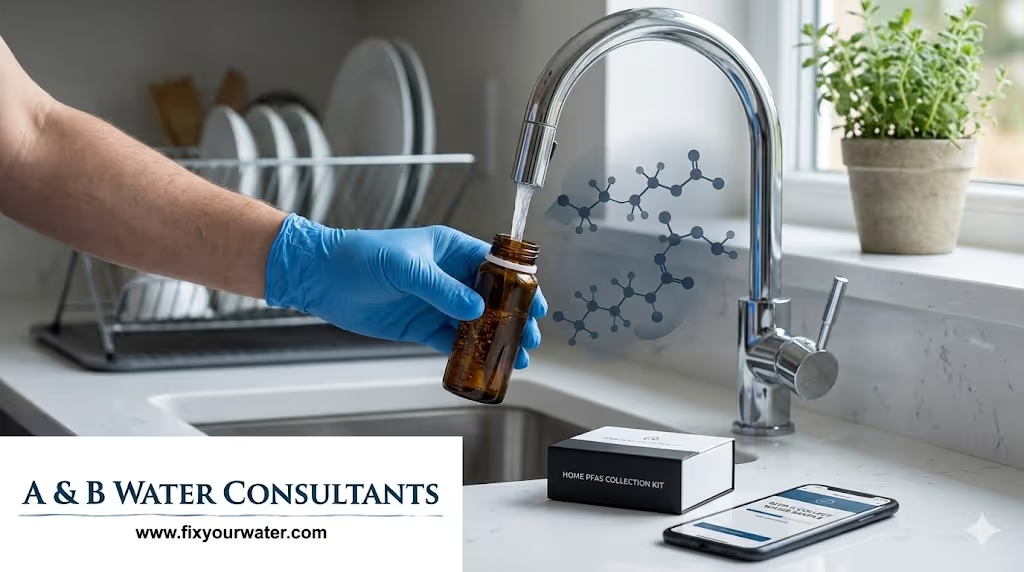
Homeowners can sometimes collect samples themselves using lab-provided kits, but certain precautions apply. Many homeowners prefer having a certified sampler do the job to avoid errors. A professional sampler will control for contamination, follow chain of custody, and ensure samples are chilled and shipped promptly to the lab.
Key Sampling Steps
- Use only PFAS-free containers. Many labs supply pre-cleaned bottles made of polypropylene or polyethylene.
- Avoid Teflon or other fluoropolymer materials when sampling. Even Teflon tape on plumbing can be a contamination source.
- Flush taps according to lab instructions. Some labs ask for first-draw samples, others for flushed samples depending on the objective.
- Chill the sample immediately and maintain the cold chain during transport to the lab.
- Complete chain-of-custody paperwork to document sample handling.
Homes with private wells should sample at the kitchen cold-water tap unless the homeowner wants to test a different outlet, such as a whole-house line or a point-of-use treated tap.
Choosing a Lab and Understanding Results
When results come back, homeowners face technical numbers. A lab report will list individual PFAS compounds and their concentrations in ppt. Labs also state whether a result is below the reporting limit as "ND" or "not detected."
Interpreting Concentrations
- Any detection of PFAS indicates presence, but whether it requires action depends on concentration, which compounds are present, and regulatory or health advisory levels.
- Regulatory standards are evolving. State guidance in New Hampshire, Maine, and Massachusetts differs and updates over time. Refer to state agencies for the most current advisory levels and regulations.
- Discuss results with a qualified consultant who understands local standards and treatment implications. A & B Water Consultants can help interpret laboratory reports and recommend appropriate remediation strategies based on site-specific data and 25 years of experience in New England water quality issues.
PFAS removal services quote information is available for homeowners who need help moving from testing to treatment.
Treatment Options That Work in Homes
Once PFAS are confirmed, treatment can reduce or eliminate those compounds from drinking water. Treatment selection depends on the homeowner’s goals, budget, house plumbing configuration, and which PFAS compounds are present. Common, effective approaches for homeowners include:
Point-of-Entry (Whole-House) Solutions
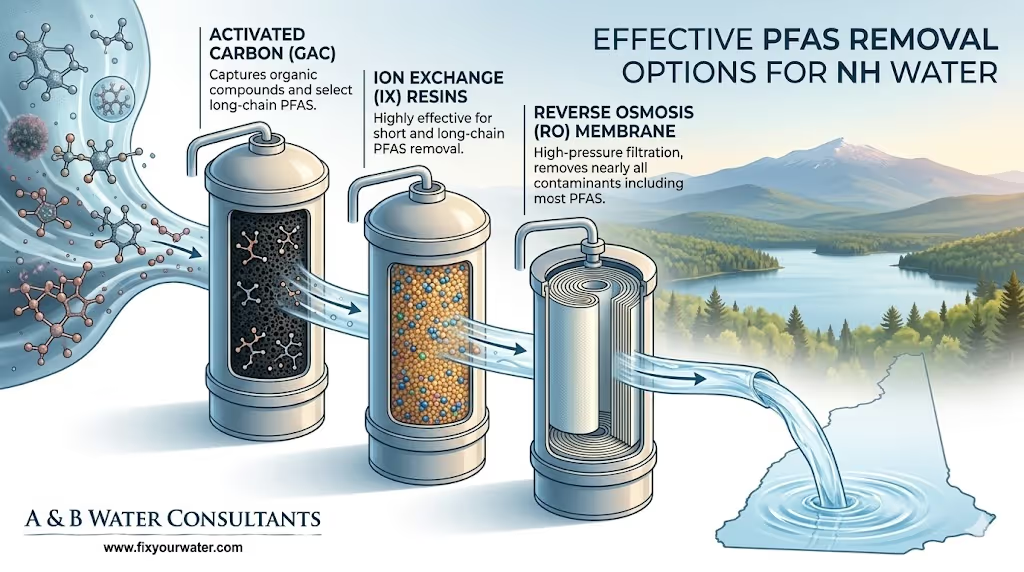
- Granular Activated Carbon (GAC) — GAC filters are widely used to remove longer-chain PFAS such as PFOA and PFOS. They are installed where water enters the home and protect all taps. GAC performance depends on contact time, flow rate, and the presence of other contaminants that reduce capacity.
- Anion Exchange Resins — These can target a broader range of PFAS and are sometimes more effective for short-chain PFAS than GAC. Anion exchange systems may require periodic regeneration or cartridge replacement.
- Combination Systems — Some designs use staged treatment such as sediment pre-filtration, followed by ion exchange or GAC to extend media life and maintain performance.
Point-of-Use Solutions
- Reverse Osmosis (RO) — RO systems at the kitchen tap can remove a wide range of PFAS, especially when used with activated carbon prefilters. RO is a popular choice when homeowners want very low PFAS at the drinking source rather than treating the whole house.
- Under-Sink GAC — Smaller carbon filters are available for under-sink use but require frequent monitoring and replacement to remain effective.
Important Considerations
- System sizing and flow rates must match household demand. Undersized systems will underperform and may give a false sense of security.
- Maintenance matters. Media exhaustion leads to breakthrough. Homeowners should establish a monitoring schedule and replace media on time.
- Spent media concentrates PFAS. Disposal or regeneration requires handling by companies that follow environmental regulations and safe disposal protocols.
- Combination contamination: If water contains arsenic, radon, iron, or high organic matter, treatment must be designed to address those issues too. A & B Water Consultants specializes in designing custom systems that treat PFAS along with arsenic or radon when needed.
PFAS removal services quotes are available from regional providers for homeowners ready to move forward.
Designing a System: Practical Steps for Homeowners
Designing an effective PFAS removal system starts with good data and ends with verification sampling. The general sequence is:
- Obtain an initial PFAS test from a qualified lab using an appropriate panel and method.
- Interpret results and review other water quality parameters including pH, hardness, iron, manganese, and total organic carbon.
- Select a treatment approach: whole-house GAC or ion exchange, point-of-use RO, or a combination.
- Design the system for the household flow rates and contaminant loading with safety factors for media life.
- Install the system with proper plumbing, bypass valves, and sampling ports.
- Perform post-installation sampling to verify removal to target levels.
- Set a maintenance and testing schedule to ensure continued performance.
A & B Water Consultants uses this stepwise approach on every job. Their technicians size systems based on real household patterns and local water chemistry. Homeowners in New Hampshire, southern Maine, and Massachusetts benefit from on-the-ground knowledge that reduces surprises and ongoing costs.
PFAS removal services quotes can help homeowners budget and plan installations.
Costs, Funding, and Practical Budgeting
Costs vary widely depending on testing scope and treatment selection. Typical ranges are:
- Testing: Basic panels for a few PFAS can start around $100 to $300. Expanded panels and certified field sampling may raise costs to $300 to $600 or more.
- Point-of-use RO: Installed under-sink RO systems typically range from $400 to $2,000 depending on features and installation complexity.
- Whole-house GAC or ion exchange: These installations commonly cost $2,000 to $8,000 or more. Larger homes with high flow demands or additional contaminants such as arsenic alter the price.
- Ongoing maintenance: Media replacement and periodic post-treatment testing add annual costs. Expect anywhere from $200 to $1,000 per year depending on system type and water quality.
State and federal funding opportunities may offset costs. New Hampshire, Maine, and Massachusetts have initiatives and grants at times to support PFAS mitigation for private well owners and community systems. Homeowners should check state agency websites and local conservation districts. Companies like A & B Water Consultants can help document needs for grant applications and advise on cost-effective system choices.
Common Pitfalls and How to Avoid Them
- Buying the Wrong System: Choosing a non-certified or undersized filter will not protect the household. Work with consultants who size systems to real household demand.
- Ignoring Other Contaminants: Iron, manganese, organic matter, and hardness shorten media life. Design systems that address relevant co-contaminants first.
- Not Verifying Performance: Installers should provide post-installation sampling to confirm removal. Do not assume the system works without verification.
- Poor Maintenance: Skipping media changes is the most common reason systems fail. Set reminders and service contracts if needed.
- Improper Disposal: Spent GAC and resin media must be managed safely. Ask your service provider how media will be handled at end of life.
Case Study: A New Hampshire Well Owner
Consider a family in southern New Hampshire on a private well near a small municipal airport. They noticed quarterly testing data from the town showing low-level PFAS detections. Concerned, they ordered a certified PFAS panel from a state-accredited lab, using a professional sampler to avoid contamination.
The lab reported detectable PFOA and PFOS at levels that exceeded the homeowner's risk tolerance. The family consulted A & B Water Consultants, which performed a full water chemistry analysis and recommended a whole-house GAC system followed by a point-of-use RO for drinking and cooking. The installation included bypass valves and a sampling port after the GAC and after the RO.
Post-installation testing confirmed PFAS concentrations below the reporting limits at the kitchen tap, and near-zero at the post-GAC outlet for long-chain PFAS. The family set a maintenance schedule, arranged semiannual sampling for the first two years to monitor breakthrough, and registered for local health department updates about the nearby airport’s remediation steps. The family's peace of mind returned, and the system design accounted for local groundwater iron that could have reduced media life if unaddressed.
When Buying or Selling a Home
Buyers should request recent PFAS test results when considering homes with private wells in New Hampshire, southern Maine, and Massachusetts, especially if the property is near a high-risk site. Sellers may choose to test preemptively and address problems before listing. Either way, test results influence negotiation, and documented remediation adds value and certainty.
Working with Consultants and Installers
Choose consultants and installers who:
- Have regional experience in New England and understand local contamination patterns.
- Can design systems that address multiple contaminants including arsenic and radon when present.
- Provide written system specifications, maintenance schedules, and verification sampling plans.
- Follow up with monitoring and support after installation.
A & B Water Consultants brings more than 25 years of experience in water quality improvement and custom treatment designs for families across New Hampshire, southern Maine, and Massachusetts. Their team designs systems that treat PFAS alongside arsenic and radon, when necessary, and helps homeowners at every step, from testing to final verification.
Contact A&B Water Consultants for a free PFAS removal services quote.
Regulatory Landscape: What Homeowners Need to Know
Regulations and health advisories around PFAS continue to evolve. Municipal systems are subject to state and federal monitoring and possible remediation requirements, while private wells remain the homeowner's responsibility. Homeowners should track guidance from the New Hampshire Department of Environmental Services, Maine CDC, and Massachusetts Department of Environmental Protection. Professional water experts in N.H. can interpret regulatory changes and recommend proactive testing strategies to stay ahead of new standards.
Practical Testing and Maintenance Schedule Recommendations
- Initial testing: Test as soon as there is any reason to suspect PFAS exposure or when purchasing a home.
- Confirmatory test: If an initial result shows PFAS, run a confirmatory sample, ideally collected by a professional sampler.
- Post-installation verification: After any treatment installation, run a confirmation sample at the outlet used for drinking water.
- Routine monitoring: For treated systems, sample at least annually. For systems near known contamination or with high usage, consider semiannual sampling for the first two years.
- Pre-purchase: Buyers should request recent tests or perform their own pre-closing test. If PFAS are detected, ask for remediation documentation or negotiate remediation into the sale.
Disposal and Environmental Responsibility
Spent carbon and ion exchange resins may concentrate PFAS. Reputable installers will manage spent media in compliance with environmental regulations and use licensed waste handlers. Homeowners should ensure their service provider documents responsible disposal or regeneration arrangements.
Common Myths About PFAS and Drinking Water
- Myth: Boiling water removes PFAS. Fact: Boiling does not remove PFAS and can concentrate them.
- Myth: Regular water filters always remove PFAS. Fact: Most small pitcher filters and faucet attachments do not remove PFAS effectively. Look for certified systems designed for PFAS removal.
- Myth: If municipal water tests are clear, private wells are safe. Fact: Private wells can be contaminated independently of municipal supplies. Testing private wells is the only reliable way to know.
Local Resources and Next Steps
Homeowners in New Hampshire, southern Maine, and Massachusetts should consult state environmental and public health agencies for local advisories, maps of known contamination sites, and information about grant programs. Local health departments and county conservation districts can also direct homeowners to certified sampling resources and state-funded testing events that sometimes offer low-cost or free testing.
For homeowners who prefer a hands-on partner, A & B Water Consultants offers local expertise, testing coordination, system design, installation, and verification sampling. They tailor solutions for New England water chemistry and for homes where arsenic or radon are also concerns.
Contact A&B Water Consultants for a free PFAS removal services quote.
Summary
PFAS testing for homeowners is a practical, actionable step to protect household health. Testing determines whether PFAS are present and at what levels. When PFAS are detected, effective treatment options exist including whole-house GAC and ion exchange systems or point-of-use reverse osmosis. Proper sampling, choosing an accredited lab, and working with experienced consultants reduce risk and ensure treatments perform as intended. Homeowners in New Hampshire, southern Maine, and Massachusetts should test when there is potential exposure, especially when living near known sources, buying a home, or if local municipal data suggests a problem.
For a clear pathway from testing to long-term protection, homeowners can work with experienced regional professionals. A & B Water Consultants combines over 25 years of New England experience in water quality and custom treatment design to help families resolve PFAS, arsenic, and radon issues comprehensively. Contact A&B Water Consultants for a free PFAS removal services quote.
Frequently Asked Questions
What exactly does a PFAS test measure?
A PFAS test measures the concentration of specific PFAS compounds in water, typically reported in parts per trillion. Labs report individual compounds such as PFOA and PFOS and may also report a combined total. The panel chosen determines which specific PFAS are measured.
How much does PFAS testing cost for a homeowner?
Costs vary by the test panel and whether a professional sampler is used. Expect basic panels to start around $100 to $300. Expanded panels and certified sampling may increase costs. Laboratories and consultants in New Hampshire, Maine, and Massachusetts can provide itemized quotes.
If PFAS are detected, how quickly can a treatment system be installed?
Smaller point-of-use systems can be installed within days. Whole-house systems require design, equipment procurement, and installation and typically take one to several weeks. Post-installation verification sampling usually follows within a few weeks to confirm performance.
Will municipal water testing protect private well owners?
No. Municipal testing applies to the public distribution system. Private well owners must test their own water. If in doubt, a targeted PFAS test is the best way to know water quality at the tap.
How long do GAC and resin systems last before replacement?
Media life depends on PFAS concentration, water chemistry, flow rate, and system design. It can range from months to several years. Proper design and routine monitoring help maximize media life. Licensed service providers can provide realistic replacement schedules based on local experience.
Contact A&B Water Consultants for a free PFAS removal services quote.