PFAS remediation strategies require a blend of science, engineering, and practical decision making to protect household water supplies. Per- and polyfluoroalkyl substances are persistent chemicals that resist breakdown and can move through soil and groundwater, so addressing them at the property level demands careful testing, targeted treatment, and ongoing monitoring. Homeowners in New Hampshire, Southern Maine, and Massachusetts face unique exposure risks because of local industrial sources and legacy contamination. This article explains the remediation options that work for private wells and small community systems, highlights what to watch for when choosing a solution, and outlines how experienced professionals can simplify the process.
What Are PFAS and Why They Matter
Per- and polyfluoroalkyl substances, commonly called PFAS, are a large family of synthetic chemicals used for their stain, grease, and water-resistant properties. PFOS, PFOA, and a number of related compounds have been used in firefighting foams, nonstick cookware, stain-resistant fabrics, and numerous industrial processes.
PFAS are often called "forever chemicals" because many of them are extremely persistent in the environment. Some key facts homeowners should know:
- PFAS do not readily biodegrade and can remain in soil and groundwater for decades.
- Different PFAS behave differently. Long-chain PFAS tend to sorb to carbon and organic matter, while short-chain PFAS are more mobile in groundwater and harder to remove.
- Exposure pathways include drinking water, food, and in rare cases inhalation of contaminated dust. For most households with private wells, drinking water is the primary concern.
- Health agencies link certain PFAS to increased cholesterol, thyroid disruption, immune effects, and possible links to certain cancers. Risk levels are continually refined as research progresses.
Where PFAS Come From in New Hampshire, Southern Maine, and Massachusetts
PFAS contamination in New England has been associated with specific types of sources that homeowners should recognize:
- Firefighting foam used at military bases, airports, and training facilities. Legacy military airfields such as Pease in New Hampshire, Brunswick in Maine, and other former bases have been identified as contributing to local plumes.
- Industrial sites that manufactured or used PFAS-containing products.
- Landfills and wastewater treatment plants that accept PFAS-containing wastes and biosolids.
- Small businesses and commercial facilities such as metal plating shops or textile treatment operations.
Private wells located downgradient from these sources are at higher risk. Homeowners with wells near airports, former military sites, industrial zones, or large municipal wastewater facilities should prioritize PFAS testing.
How PFAS Move and Why Private Wells Are Vulnerable
Understanding movement helps explain remediation choices. PFAS mobility depends on chemical structure and soil conditions. Short-chain PFAS are more soluble and travel faster in groundwater. Coarse-grained soils like sand and gravel allow faster plume migration than fine silts and clays that slow movement.
Private wells draw water from around the well screen and can intersect PFAS plumes. Because many New England wells are shallow, even small plumes can affect household water. Municipal systems often have monitoring and treatment programs that private wells do not, so testing is essential for homeowners.
Overview of PFAS Remediation Strategies
PFAS remediation strategies fall into five broad categories:
- Source control such as eliminating ongoing discharges and remediating contaminated soil.
- Containment and hydraulic control including pump-and-treat and hydraulic barriers to stop plume migration.
- Ex situ treatment where contaminated water is pumped out and treated above ground.
- In situ treatment aimed at immobilizing or destroying PFAS in place; at present, effective destruction of PFAS in groundwater at field scale is limited but developing.
- Point-of-entry and point-of-use systems for homes and small systems to prevent contaminated water from entering household plumbing or to treat drinking water at the faucet.
Each approach has advantages and limits. For homeowners, point-of-entry and point-of-use systems are the most commonly practical solutions, while larger source control and containment measures are handled by regulatory agencies and specialized remediation contractors. Contact A&B Water Consultants for a free PFAS removal services quote.
Granular Activated Carbon (GAC)
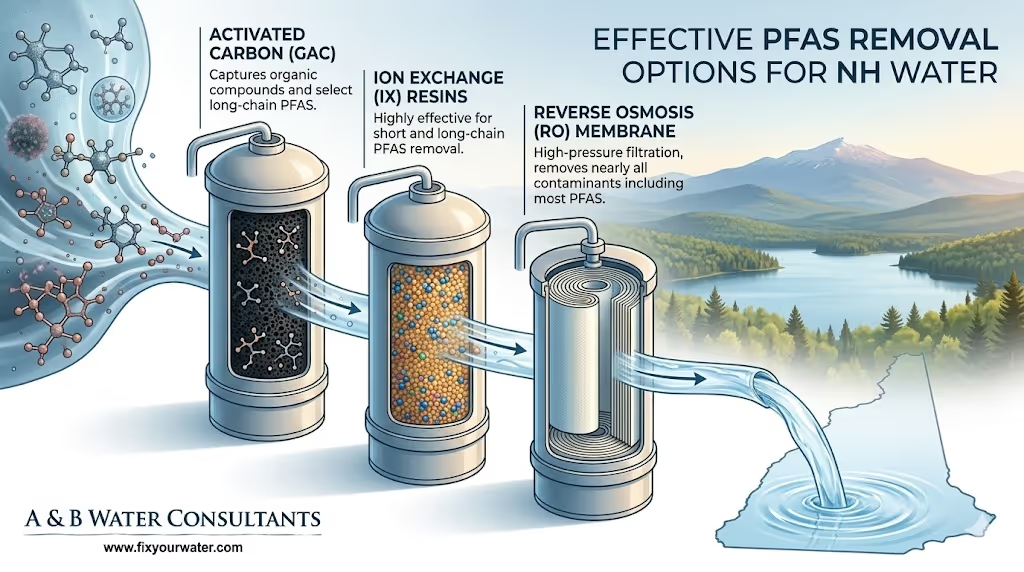
Granular activated carbon is one of the most widely used and proven technologies for PFAS removal, especially for long-chain compounds. GAC works by adsorbing PFAS molecules onto the surface of carbon media. It is commonly used in whole-house (point-of-entry) systems for private wells and in municipal pump-and-treat systems.
Benefits and considerations:
- Effective for many PFAS, particularly long-chain PFAS such as PFOA and PFOS.
- Media eventually becomes saturated and requires regeneration or replacement.
- Performance is influenced by co-contaminants like organic carbon and iron; pre-treatment may be necessary.
- Used media must be managed as a concentrated waste stream and disposed of according to regulations.
Anion Exchange Resins
Anion exchange resins are engineered polymers that selectively remove negatively charged PFAS molecules. They often perform better than GAC for short-chain PFAS and can be used in column systems for homes and small community systems.
Benefits and considerations:
- High affinity for a range of PFAS, including some short-chain compounds.
- Resins are typically more expensive but offer higher capacity in challenging water matrices.
- Replacement frequency and disposal of spent resin need planning; some resins can be regenerated onsite by trained technicians.
Reverse Osmosis and Membrane Filtration
Reverse osmosis (RO) systems provide robust removal of PFAS by physically rejecting dissolved compounds. Point-of-use RO units under sinks are common choices for households seeking drinking water protection.
Benefits and considerations:
- RO effectively removes a broad spectrum of PFAS, including many short-chain compounds.
- RO is a point-of-use technology; it produces a concentrate waste stream that must be managed.
- Under-sink RO systems reduce the volume of treated water compared with whole-house solutions, so households often combine RO for drinking and GAC for whole-house to protect plumbing.
Membrane Filtration at Larger Scale and Nanofiltration
At the system level, nanofiltration and ultrafiltration can be used as part of a treatment train for PFAS, often followed by RO or further polishing. These are more typical for community systems rather than individual homes.
Treatment Trains and Combined Approaches
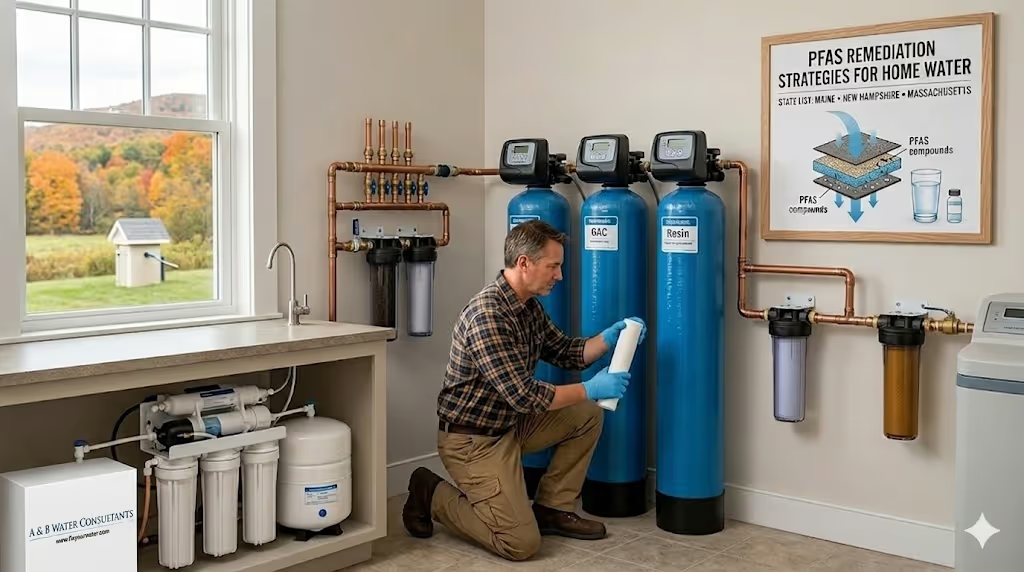
Because PFAS exist in mixtures and water quality varies, the best remediation strategies often use multiple technologies in sequence. For example, a typical design for a private well could be pre-filtration to remove iron and sediment, followed by a GAC or resin bed sized for household flow, and a point-of-use RO system for drinking and cooking water.
Ex Situ Destruction and Disposal
Concentrated PFAS wastes from media replacement or RO concentrate require secure disposal. Thermal destruction at high temperatures in proper incinerators or advanced processes such as plasma-based systems are used at commercial scale. For homeowners, the practical takeaway is that spent media and concentrate must be handled by licensed waste contractors to avoid re-releasing PFAS into the environment.
Choosing the Right System for a Home
Selecting the optimal PFAS remediation strategy for a single-family home begins with a clear sequence:
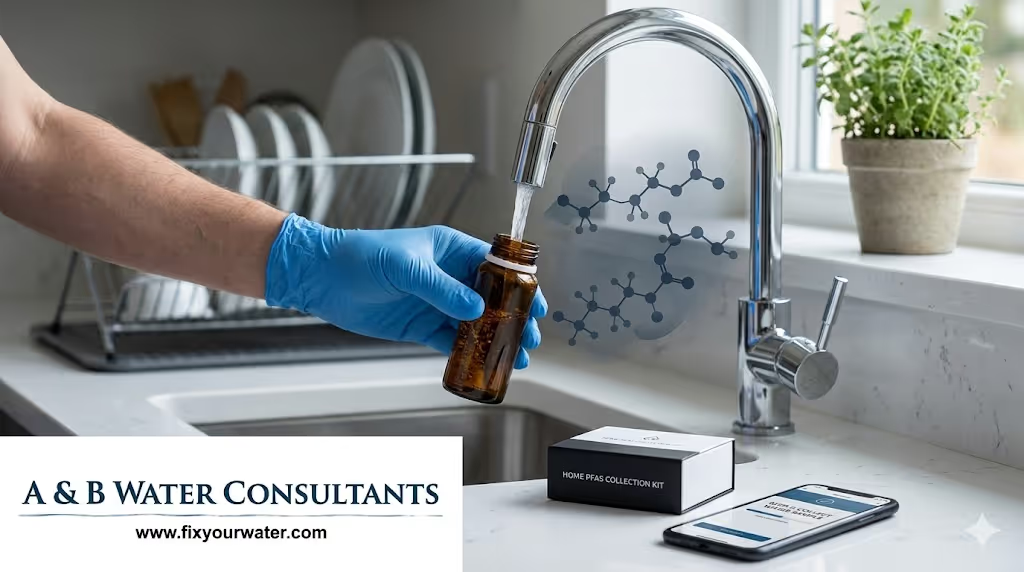
- Confirm contamination by testing the well with a laboratory that uses validated PFAS methods.
- Characterize the PFAS mix and concentrations to determine whether long-chain, short-chain, or a complex mixture is present.
- Assess household needs such as flow rates, number of bathrooms, and whether whole-house treatment is required for bathing and laundry or a point-of-use system is sufficient for drinking water.
- Design a treatment train that addresses co-contaminants and minimizes operational burdens.
- Plan for ongoing monitoring to detect breakthrough and verify performance.
Because PFAS chemistry is complex, professional guidance will reduce risk and long-term costs. Contact A&B Water Consultants for a free PFAS removal services quote.
Design Considerations and Best Practices
Several design factors influence performance and cost:
- Media Sizing and Contact Time matter. GAC works better with adequate contact time and properly sized vessels to prevent rapid breakthrough.
- Pre-treatment for iron, manganese, and high turbidity preserves media life and avoids fouling.
- Flow Distribution in the vessel prevents channeling and ensures uniform contact with media.
- Monitoring is essential. Periodic PFAS testing of treated water is the only reliable way to confirm system performance.
- Maintenance Plans should be in place before installation. Homeowners should understand media replacement schedules, backwashing needs if applicable, and how to recognize system failures.
Another practical point is plumbing integration. If whole-house GAC is installed, it protects fixtures and appliances but will not replace the need for RO if the goal is very low PFAS for drinking and cooking. Conversely, point-of-use RO provides high-quality drinking water but leaves household water for laundry and showering untreated. Many homeowners choose a hybrid approach for balanced cost and convenience.
Costs, Lifespan, and Maintenance
Costs vary widely depending on contamination level, technology, and household water use. Typical ranges for homeowners include:
- Under-sink RO systems: $800 to $3,000 installed, plus replacement membranes and filters annually or every few years.
- Whole-house GAC systems: $3,000 to $12,000 or more, depending on vessel size and complexity. Media replacement intervals can range from 6 months to multiple years depending on PFAS load and co-contaminants.
- Anion exchange systems: higher upfront cost than GAC and periodic resin regeneration or replacement.
Lifespan depends on contaminant levels and maintenance. For example, a GAC bed treating water with low PFAS concentrations may last two to three years, while the same system in heavily contaminated water might need media replacement in months. Regular testing and maintenance contracts with an experienced service provider reduce surprises.
Homeowners should budget for periodic laboratory PFAS testing of treated water to confirm that the system continues to meet the treatment goals. Contact A&B Water Consultants for a free PFAS removal services quote.
Regulatory Landscape and Local Resources
Federal and state actions on PFAS are evolving. The EPA has issued health advisories and is moving toward national standards. New Hampshire, Maine, and Massachusetts have all taken steps to monitor and regulate PFAS in drinking water, and local health departments provide guidance for private well owners. Homeowners should consult state resources such as the New Hampshire Department of Environmental Services, Maine CDC, and Massachusetts Department of Environmental Protection for current advisories and recommended actions.
Local municipalities may also have testing programs or notification systems for contamination events. When contamination stems from a known source such as a former military base or industrial facility, responsible parties and state agencies often engage in larger-scale remediation. Nevertheless, many private well owners will need point-of-entry or point-of-use treatment as an immediate protective step.
Practical Case Studies and Examples
Realistic, local-focused examples help illustrate how PFAS remediation strategies translate into action for homeowners.
Case Study 1: Suburban New Hampshire Well Near Airport
A family in Strafford County discovered PFAS at levels above state guidance during a routine water test. The well sits downgradient of an old training area used for firefighting foam. After confirmatory testing and a site assessment, a two-stage solution was implemented: a pre-filter to remove iron and sediment, followed by a GAC point-of-entry system sized to household flow. For drinking water, an under-sink RO system was installed for additional assurance. Annual PFAS testing verifies system performance and media replacement is scheduled based on measured breakthrough rates. The homeowner now has low-PFAS water for all uses and additional RO-treated drinking water.
Case Study 2: Coastal Maine Summer Home
A seasonal property in southern Maine used a well with intermittent flow and low-level PFAS detections. Because the house is occupied part-time, an under-sink RO system was chosen as the most practical approach to ensure safe drinking water without the higher cost of a full-time GAC system. The homeowner arranged winterization procedures and scheduled PFAS testing each season start to confirm ongoing performance.
Case Study 3: Massachusetts Home Near Former Industrial Site
A homeowner in Eastern Massachusetts had mixed contamination, including arsenic and PFAS. A&B Water Consultants provided a custom design that combined specialty media for arsenic removal with anion exchange resin for PFAS in a single point-of-entry system. Integrating expertise across contaminants avoided multiple standalone systems and reduced plumbing complexity. Regular service contracts covered media replacement and annual lab testing.
These examples underscore the value of tailored solutions. Contact A&B Water Consultants for a free PFAS removal services quote.
Common Pitfalls and How to Avoid Them
Homeowners should be wary of several common mistakes:
- Relying on consumer "filter pitchers" that are not certified for PFAS removal. Many household filters do not remove PFAS effectively.
- Assuming water softeners help PFAS removal. Typical ion exchange water softeners are not designed to remove PFAS and can complicate treatment trains.
- Neglecting proper disposal of spent media or RO concentrate. Improper handling can reintroduce PFAS to the environment.
- Buying systems without testing to define the PFAS mix and concentration. Treatment efficacy depends on knowing what needs to be removed.
- Overlooking maintenance intervals. Media breakthrough can go unnoticed without periodic testing and a service plan.
Avoiding these pitfalls requires a methodical approach: test, plan, install, and monitor. Professional partners like A&B Water Consultants can guide homeowners through each step. Contact A&B Water Consultants for a free PFAS removal services quote.
How Experienced Professionals Help Homeowners
Experienced water treatment professionals bring several advantages to PFAS remediation strategies for homes:
- Accurate testing coordination with certified labs to provide defensible PFAS analyses.
- Site-specific design that considers well construction, water chemistry, and household needs.
- Regulatory navigation including guidance on reporting obligations and available state resources.
- Safe disposal logistics for spent media and concentrates.
- Long-term service and monitoring through maintenance plans.
Water treatment professionals bring more than 25 years of regional experience in water treatment, offering custom-designed solutions that often integrate PFAS removal with arsenic and radon treatment where needed. Their local knowledge of New Hampshire, Southern Maine, and Massachusetts helps homeowners get practical, code-compliant installations and reliable ongoing support.
Frequently Asked Questions
How common is PFAS in private wells in New Hampshire and neighboring states?
PFAS detections are increasingly reported in parts of New England near known sources such as airports and military sites. While many private wells are not impacted, households downgradient of legacy contamination or near industrial areas should consider testing. State programs often publish maps and advisories to help prioritize testing.
Can a household water softener remove PFAS?
No. Standard water softeners are designed to remove hardness ions and are not effective for PFAS removal. In some cases they may interfere with subsequent PFAS treatment steps. A properly designed treatment train that includes GAC, anion exchange, or RO is necessary to reduce PFAS concentrations.
What is the difference between point-of-entry and point-of-use systems?
Point-of-entry systems treat all water entering the house and protect plumbing, appliances, and all household uses. Point-of-use systems treat water at a single faucet, typically the kitchen sink, to provide high-quality drinking and cooking water. Many homeowners combine both approaches for comprehensive protection and cost efficiency.
How often should treated water be tested?
Testing frequency depends on contamination levels and system design. For many systems, annual PFAS testing of treated water is a prudent baseline. If influent concentrations are high or if media is near expected change-out, more frequent testing is advisable. A qualified consultant will propose a monitoring schedule tailored to the system.
What should homeowners do if PFAS is detected in their well?
First, confirm results with a certified laboratory and obtain a complete PFAS profile. Next, consult a water treatment professional to evaluate treatment options based on concentrations and household needs. Temporary measures such as using bottled water for drinking may be recommended until a treatment system is installed. Homeowners should also check state resources for guidance and potential assistance programs.
Conclusion
PFAS remediation strategies for private homes in New Hampshire, Southern Maine, and Massachusetts require careful testing, technology selection, and ongoing maintenance. Granular activated carbon, anion exchange resins, and reverse osmosis are the primary tools a homeowner can rely on today, often used in combination to address a wider range of compounds and water use patterns. Successful outcomes depend on accurate lab analysis, professional system design, and a commitment to routine monitoring and proper disposal of spent media.
A & B Water Consultants offers regionally focused expertise that combines PFAS remediation with the company’s long-standing work on arsenic and radon. For homeowners looking for reliable, custom solutions and local experience, professional guidance reduces uncertainty and protects family health.
For New Hampshire and neighboring homeowners concerned about PFAS, the most practical first step is to test and assess. Professional partners can translate lab numbers into action, recommend effective PFAS remediation strategies, and keep the system working for years to come. Contact A&B Water Consultants for a free PFAS removal services quote.