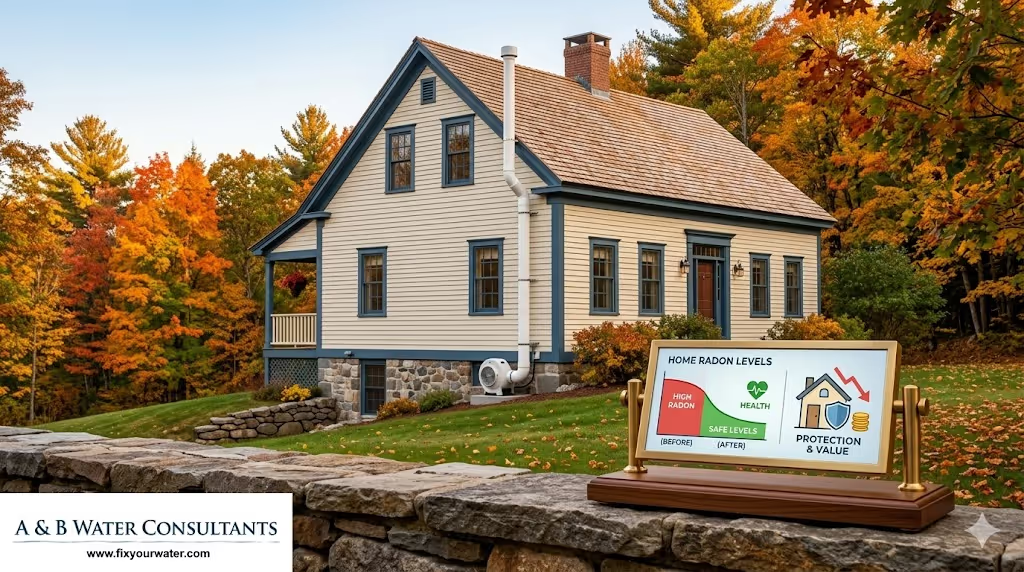
Radon mitigation services protect families by reducing dangerous radon levels in both air and water, and homeowners in New Hampshire, southern Maine, and Massachusetts are increasingly prioritizing those services. A clear testing strategy, an experienced mitigation plan, and the right team make the difference between an uncertain risk and a safe living space. Contact A&B Water Consultants for a free radon mitigation quote.
Why Radon Matters in New England Homes
Radon is a naturally occurring, radioactive gas produced by the decay of uranium in soil, rock, and groundwater. It is colorless, odorless, and tasteless. When it accumulates in homes it becomes a leading cause of lung cancer after smoking. New England states, especially parts of New Hampshire and Maine, sit on geology that can produce higher radon levels. That regional reality makes radon mitigation services particularly relevant for homeowners here.
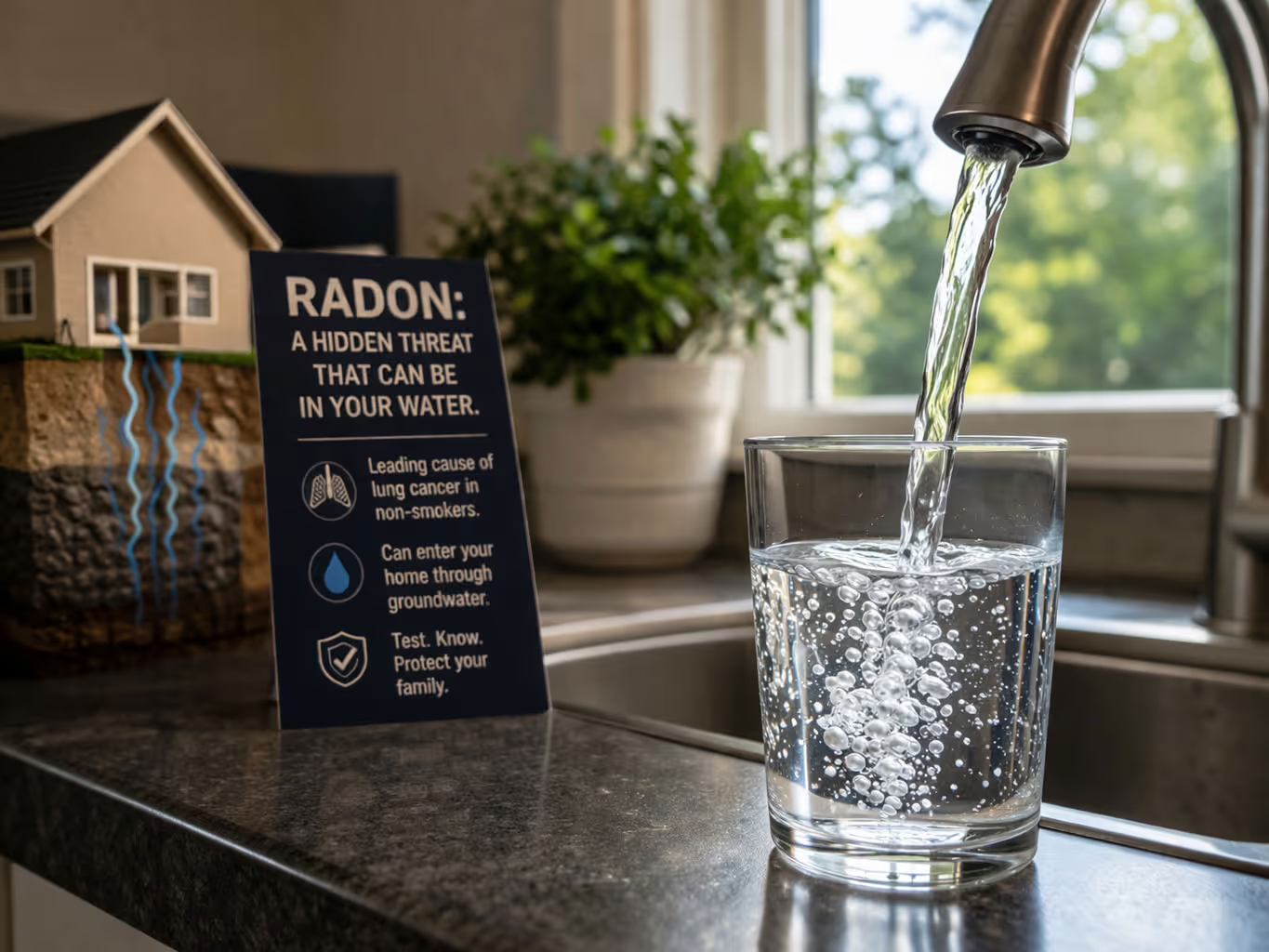
Radon can enter a house through foundation cracks, gaps around pipes, sump pumps, and even through well water. That dual route means homeowners need a strategy that can address both indoor air radon and radon dissolved in private well water.
What Is Radon?
Radon is a radioactive inert gas produced by the decay chain of uranium and radium in soil and rock. Because it’s a gas, it moves through pore spaces in soils and can migrate into buildings. When inhaled, radon decay products (also called radon daughters) attach to lung tissue and emit alpha particles, which damage DNA and raise the risk of lung cancer.
Key facts every homeowner should know:
- Primary health risk: lung cancer from inhalation of radon decay products.
- Air standard: the U.S. Environmental Protection Agency (EPA) recommends action when indoor air radon levels reach 4 picocuries per liter (pCi/L) or higher.
- Water connection: radon in private well water can add to indoor air radon when water is used (showering, cooking). It can also pose a small ingestion risk.
How Radon Enters the Home
Understanding pathways helps homeowners appreciate why professional radon mitigation services are structured the way they are.
Soil Gas Entry
Most radon in homes comes from soil gas moving from the ground into the living space. Negative pressure inside a home (created by exhaust fans, furnaces, and stack effect) draws this soil gas through foundation openings.
Waterborne Radon
Private wells can contain dissolved radon. When that water is aerosolized during showers or faucet use, radon transfers to indoor air. In homes with high radon in well water, treating the water often reduces indoor air levels as well.
Building Factors
Cracks in slabs, block walls, utility penetrations, and sump pits are common entry points. Older homes with multiple foundation issues or homes built over fractured bedrock have greater vulnerability.
Testing: The Critical First Step
Before any system is installed, accurate testing is essential. Homeowners often reach for over-the-counter test kits, and those can be fine for screening. For a definitive plan and to qualify for certified mitigation, professional testing is preferred. If a private well is present, both water and air should be tested.
Air Testing Options
- Short-term tests (2 to 7 days): charcoal canisters or continuous monitors. Good for quick screening.
- Long-term tests (90 days to 1 year): alpha track detectors give a more representative annual average and are better at capturing seasonal variations.
- Continuous radon monitors: provide hourly readings and are used by mitigation professionals for detailed diagnostics and post-installation verification.
Water Testing Options
Testing water for radon requires collecting a sample in a specific way to prevent outgassing. Certified laboratories use methods such as liquid scintillation counting or professional field instruments like the RAD7 to measure radon in water. Because handling and sampling technique matter, many homeowners have professionals handle well testing.
Recognizing When to Test
Homeowners should consider testing when any of these apply:
- They live in New Hampshire, southern Maine, or parts of Massachusetts with elevated radon potential.
- They are buying or selling a home.
- They have a private well and suspect waterborne radon or have had recent health concerns in the household.
- They notice unexplained health issues that warrant a precautionary approach.
After testing, if indoor air radon exceeds 4 pCi/L or water radon is elevated, homeowners should consult radon mitigation services experienced with both air systems and water treatment.
Radon Mitigation Services: What Professionals Do
Radon mitigation experts design, install, and verify systems that reduce radon exposure. The right professional will tailor a plan to the home’s foundation type, construction details, and the source of radon (soil gas, well water, or both).
Air Mitigation Techniques
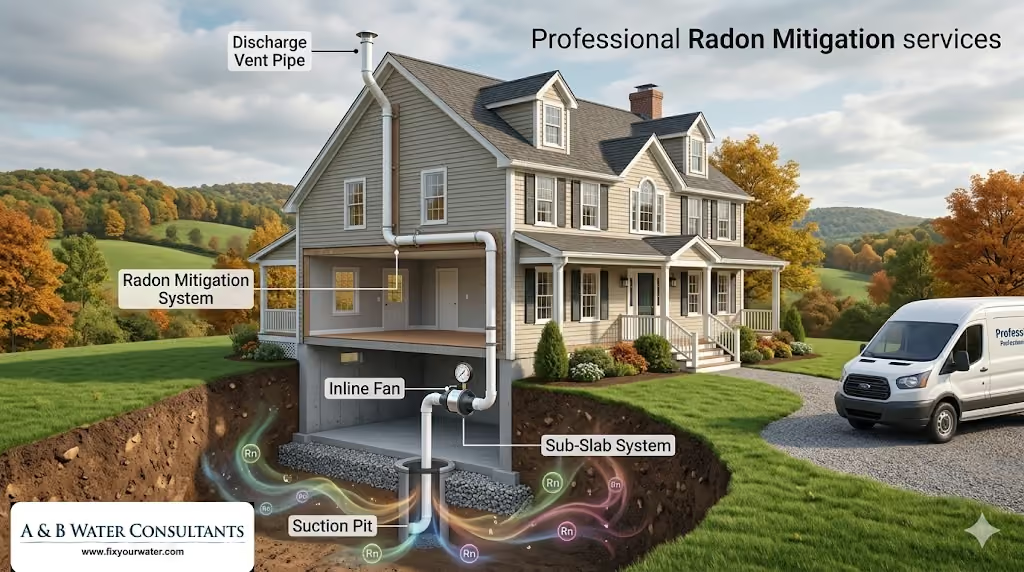
- Sub-slab depressurization (SSD) (also called active soil depressurization): a suction pipe is installed through the slab to draw soil gas up and vent it safely above the roof. SSD is the gold standard for slab-on-grade and basement foundations.
- Crawlspace ventilation: conditioning the crawlspace by sealing and ventilating, or sealing and pressurizing the space to prevent radon entry into the living areas.
- Sump cover seals: if a sump pump acts as a conduit, professionals will install sealed, vented sump covers or integrate the sump into a depressurization system.
- Heat recovery ventilators (HRVs) or energy recovery ventilators: these can help reduce radon by increasing fresh-air exchange while preserving energy efficiency, though they are rarely a stand-alone solution for high radon levels.
Water Radon Mitigation Options
Treating radon in water focuses on removing dissolved gas before it reaches household air. Common approaches include:
- Aeration systems (spray aeration, packed tower, or bubbler systems). These force air through the water and vent the radon outdoors. Aeration is highly effective and often recommended when water radon contributes significantly to indoor air levels.
- Granular activated carbon (GAC) filters. GAC can reduce radon but accumulates radioactive radon daughters over time and can require special handling or disposal. GAC is sometimes used where aeration is impractical, but professional guidance is important.
- Combined systems for homes with both air and water radon issues: professionals often design a coordinated solution that manages both sources efficiently.
Why Professional Installation Matters
Radon mitigation services are more than installing a fan and a pipe. Effective systems require diagnostic testing, careful placement of suction points, proper sealing of pathways, electrical work, and code-compliant venting. For water systems, sizing, contact time, and venting of aeration systems must be done correctly. Improper installations can reduce performance or even create hazards.
Costs and What Influences Price
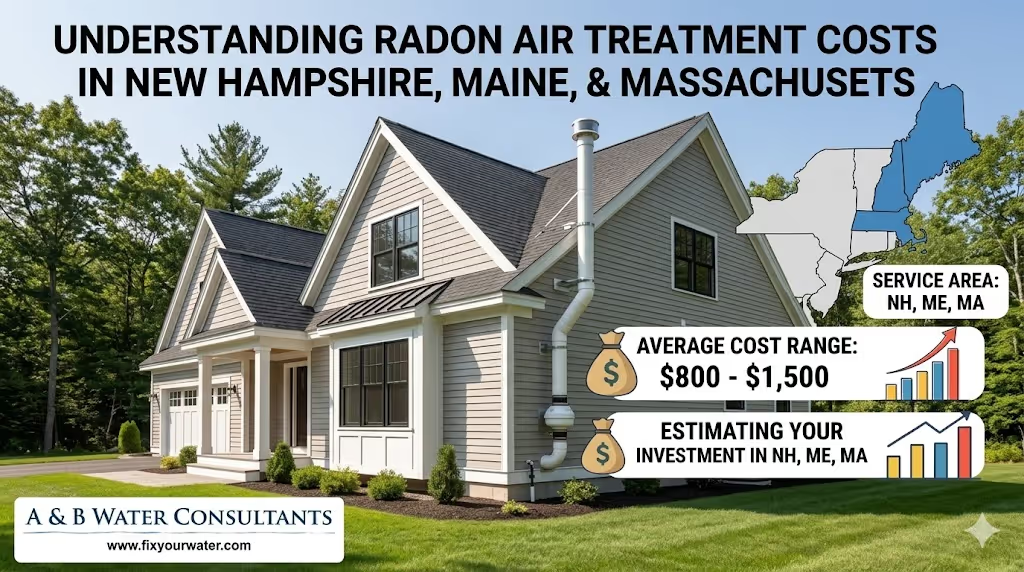
Radon mitigation costs vary by complexity, foundation type, and whether water treatment is needed. Typical ranges in New England are:
- Air mitigation (sub-slab depressurization): roughly $1,000 to $3,000 for a standard single-family home. Complex foundations, multiple suction points, or difficult access can increase cost to $4,000 or more.
- Water aeration systems: commonly between $3,000 and $12,000 depending on capacity, system type, and installation complexity.
- GAC systems for water: $800 to $3,000, plus ongoing carbon disposal and replacement costs.
- Ongoing maintenance: annual testing, fan replacement every 5 to 15 years, and periodic checks or media replacement all create small recurring costs.
Costs are influenced by:
- Foundation type and size
- Accessibility for excavation or piping
- Local labor rates and permitting requirements
- Whether the home has a private well that requires water treatment
Homeowners should request itemized quotes from at least two certified providers. That helps compare components, warranties, and maintenance responsibilities.
Choosing the Right Radon Experts
Finding a qualified contractor matters. Homeowners should focus on experience, certifications, and local knowledge when they choose a radon mitigation expert. The keyword here is choose radon mitigation expert carefully. The process looks like this:
- Check credentials: Look for professionals certified by recognized organizations such as the National Radon Proficiency Program (NRPP) or the National Radon Safety Board (NRSB). Certification indicates training in testing and mitigation best practices.
- Ask about experience: How many systems has the contractor installed in homes similar to yours? Regional experience matters because New England foundations and soil types differ from other regions.
- Request references and test results: Reputable firms will share before-and-after test reports and customer references.
- Look for design and diagnostics: The contractor should use continuous monitors for diagnostics and design custom suction layouts, not a one-size-fits-all approach.
- Verify insurance and warranty: Confirm liability insurance, and request written warranties for labor and parts.
- Compare proposals: Evaluate price, system components, ongoing maintenance expectations, and whether the company performs post-installation testing.
For radon in water, finding radon professionals with water treatment experience is crucial. Not all air mitigation contractors have the technical knowledge for aeration systems or GAC handling and disposal. A & B Water Consultants combines water treatment and radon expertise, offering custom-designed solutions that consider groundwater chemistry and household demands. Contact A&B Water Consultants for a free radon mitigation quote.
Hiring Process: From Test to Clearance
A clear hiring and implementation process reduces surprises. A typical flow for professional radon mitigation services looks like this:
- Initial consultation: The contractor reviews test results, inspects the foundation and any wells, and discusses homeowner priorities.
- Diagnostic testing: Detailed diagnostics with continuous radon monitors show how radon levels change and identify the most effective suction points.
- Written proposal: An itemized plan outlines the system type, components, expected performance, costs, and timeline. It should also include maintenance recommendations and warranty terms.
- Permits and scheduling: The contractor handles local permits if required and schedules installation.
- Installation: Typical air system installations take a few hours to a day. Water systems take longer due to plumbing integrations and potential need for tanks or aeration towers.
- Post-installation testing: After the system is running, the contractor performs follow-up testing to verify performance. A proper mitigation should reduce indoor radon well below the EPA action level.
- Maintenance and monitoring: The system should be inspected periodically and re-tested annually or after significant structural changes.
Maintenance and Long-Term Care
Radon systems require occasional care. For air systems, homeowners should listen for unusual fan noise and watch for changes in indoor pressure or radon monitor readings. Fans generally run continuously and may last 5 to 15 years depending on quality.
For water systems, aeration systems need regular checks of aeration components and venting plenums. GAC systems require media replacement and safe disposal of spent carbon because radioactive progeny may accumulate. A reputable mitigation service will offer maintenance plans and reminders.
Comparing Solutions: Practical Examples
Here are two practical examples reflecting typical scenarios in New England. They show how radon mitigation services adapt to different circumstances.
Example 1: Basement Air Radon in a New Hampshire Home
A family in the Lakes Region of New Hampshire tested their basement and recorded 12 pCi/L on a short-term test. A certified contractor performed diagnostics and designed a sub-slab depressurization system with two suction points and a sealed sump cover. After installation the continuous monitor showed radon dropped to 1.8 pCi/L. The family kept an annual testing plan and a two-year maintenance check for the fan.
Example 2: Private Well Radon Affecting Indoor Air
A home in southern Maine had moderate air radon readings near 5 pCi/L and a private well that tested at 4,000 pCi/L for water radon. A combined approach was recommended: a single-point sub-slab depressurization for the basement and an aeration system for the well water. After installation, indoor air readings fell to 1.2 pCi/L and water radon dropped to below lab detection limits. The homeowner enrolled in an annual water test schedule and routine aerator maintenance.
A & B Water Consultants has over 25 years of experience designing treatment systems that handle radon and arsenic in drinking water. They custom size aeration and filtration systems to match household water usage and groundwater chemistry. Contact A&B Water Consultants for a free radon mitigation quote.
How to Evaluate Proposals and Avoid Common Pitfalls
When comparing bids, homeowners should look beyond price. The cheapest option may not include necessary components or may use undersized systems that fail within months. Here are practical tips for evaluating proposals:
- Request a detailed list of materials and manufacturer names for fans, piping, and aeration equipment.
- Ask whether post-installation testing is included and for how long a performance guarantee applies.
- Confirm who will handle permits and whether local building inspectors will be involved.
- For water systems, require information about disposal procedures for spent GAC and air emissions from aeration systems.
- Verify the installer’s training in both air and water radon mitigation if your home needs both.
Financing and Financial Assistance
Because mitigation can be an unexpected expense, homeowners should ask contractors about financing options. Many professional radon mitigation services work with lenders or offer in-house financing. Additionally, state and local health departments sometimes have information on assistance programs for radon mitigation. Homeowners should request documentation and look for any local rebate programs that could offset costs.
Regulatory and Health Considerations
The EPA recommends action at 4 pCi/L for indoor air but also emphasizes that lower is better. Some states have additional guidance or building code requirements for new construction in high-radon areas. Contractors should be familiar with local regulations and any required inspections or permits.
For water systems, disposal of radioactive GAC media may be regulated. A qualified radon mitigation service will follow safe, legal disposal practices and advise on handling procedures.
Finding Radon Professionals Locally
Finding radon professionals who understand New England geology and local building practices is critical. Homeowners should seek providers that have demonstrable experience in New Hampshire, southern Maine, and Massachusetts. Ask for local references and look for contractors who partner with public health agencies or participate in local outreach.
When looking locally, try these steps:
- Ask friends, neighbors, or your real estate agent for recommendations.
- Check certification directories from NRPP or NRSB.
- Request local before-and-after test reports.
- Confirm the contractor’s familiarity with private well issues in the region if water radon is a concern.
When homeowners need a reliable team for water-centered radon problems, A & B Water Consultants is an option to consider. Their long history in New England water treatment makes them a valuable partner for households that need coordinated air and water solutions. Contact A&B Water Consultants for a free radon mitigation quote.
Questions to Ask Potential Radon Mitigation Contractors
- Are you certified through NRPP or NRSB?
- Can you provide local references and documented post-installation test results?
- Do you offer both air and water radon mitigation services?
- What warranty and maintenance services do you provide?
- Do you handle permits and inspections?
- Can you provide an itemized proposal and an estimated timeline?
Summary: Practical Steps for Homeowners
- Test both air and water if you have a private well or live in a high-risk area.
- If results are elevated, request diagnostic testing from a certified mitigation professional.
- Get multiple, itemized quotes and compare system designs and warranties.
- Choose a contractor with local experience, certifications, and a track record of post-installation verification.
- Schedule regular maintenance and yearly testing to ensure continued protection.
Taking those steps helps families in New Hampshire, southern Maine, and Massachusetts move from uncertainty to a measurable reduction in exposure. If a homeowner is ready to take action on radon in water or air, professional help streamlines the process and protects what matters most — family health.
Contact A&B Water Consultants for a free radon mitigation quote.
Frequently Asked Questions
How common is high radon in New Hampshire and neighboring states?
New Hampshire and many parts of Maine and Massachusetts show elevated radon potential because of regional geology. That does not mean every home has high radon, but it does mean testing is especially important for homeowners in these states.
Should a homeowner treat both air and water radon?
Treat both if tests show elevated levels in each. Air is the primary pathway for radon-related lung cancer, but radon in well water can significantly contribute to indoor air levels. A combined mitigation approach is common and often necessary for a permanent solution.
How long does installation take?
Air mitigation installations typically take a few hours to a day. Water systems, particularly aeration units, may require a day or multiple days depending on plumbing complexity and system type. The timeline varies by home and system scope.
What maintenance is required for radon mitigation systems?
Air systems require periodic fan checks and occasional fan replacement. Water aeration systems need routine inspections and occasional mechanical maintenance. GAC systems require media replacement and proper disposal. Annual testing is recommended to ensure systems continue to perform.
How can homeowners find trustworthy radon professionals?
Look for NRPP or NRSB certification, local references, documented before-and-after test results, and experience with both air and water systems if needed. Request an itemized proposal and verify insurance and warranties.
Final Thoughts and Next Steps
Radon is a hidden risk that deserves a clear, professional response. Homeowners in New Hampshire, southern Maine, and Massachusetts can achieve significant reductions in exposure by combining accurate testing, thoughtful system design, and qualified installation. Choosing the right radon mitigation expert will get a homeowner from a worrying test result to verified safety.
For homeowners ready to take action on radon in their water or air, start by scheduling a professional assessment. A & B Water Consultants brings long-term water treatment experience and custom-designed solutions for radon and arsenic. They understand local groundwater and foundation issues and design systems that fit each family's needs. Contact A&B Water Consultants for a free radon mitigation quote.