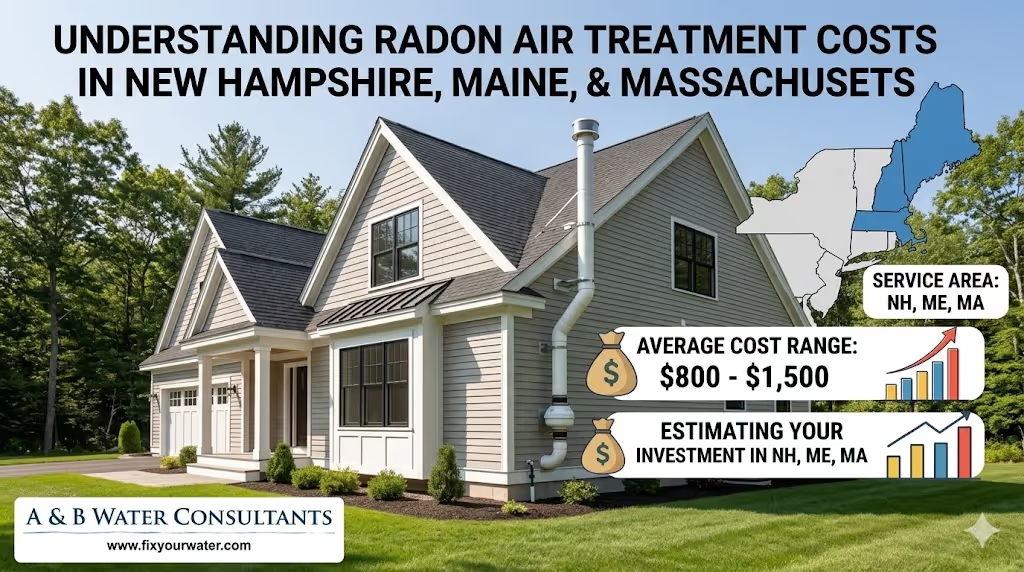
Understanding radon system installation cost is a pivotal step for homeowners in New Hampshire, Southern Maine, and Massachusetts who want to protect their families from this invisible threat. Radon shows up in both air and water, and the right mitigation approach depends on where it originates, how severe the levels are, and the layout of the home. This guide breaks down realistic price ranges, the factors that drive cost, common system types, ongoing expenses, and how to choose a qualified contractor. Contact A&B Water Consultants for a free radon mitigation treatment quote.
What Is Radon and Why It Matters in New England
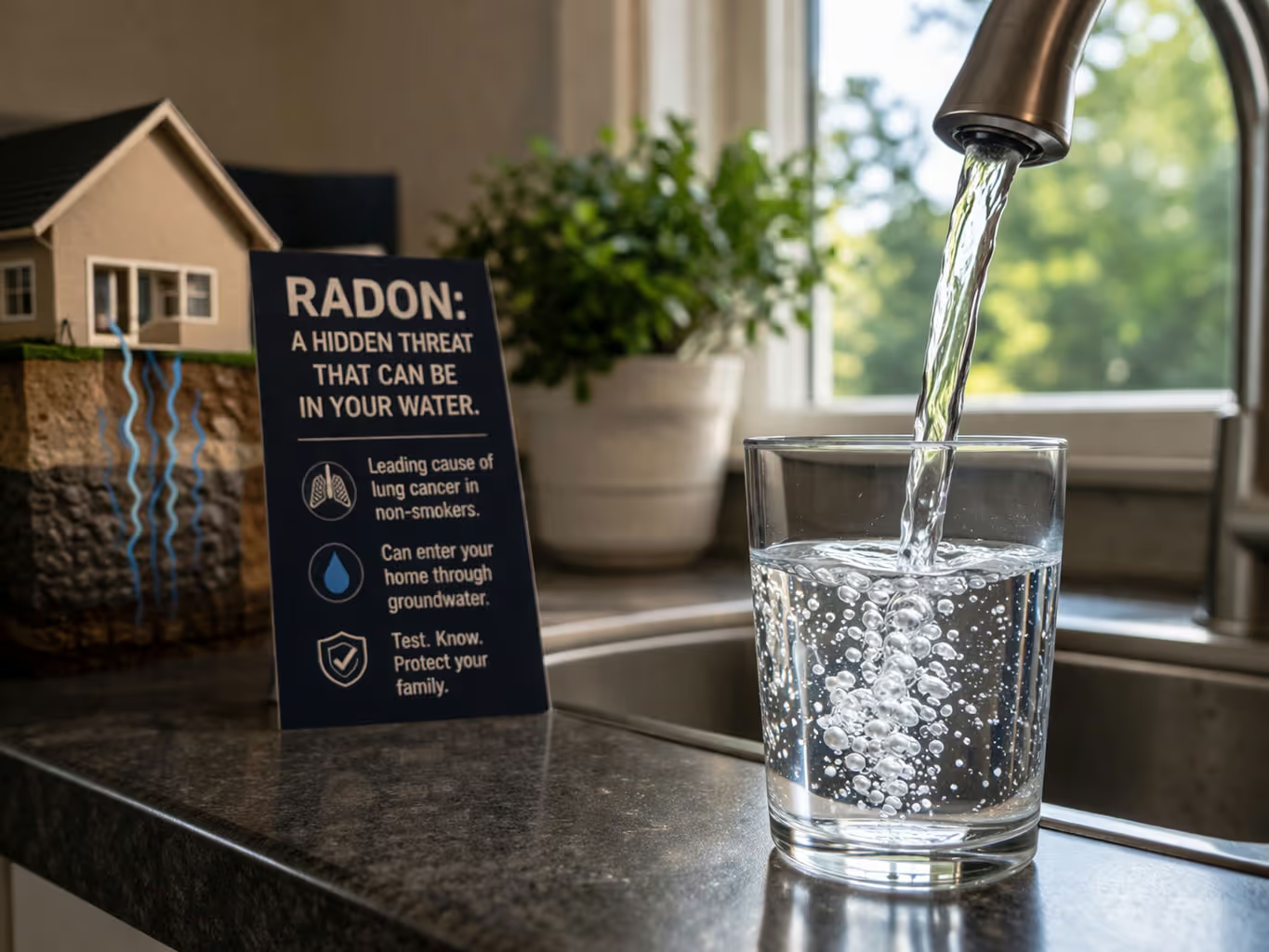
Radon is a radioactive gas produced by the natural decay of uranium in soil and rock. It has no color, smell, or taste, which is why testing is essential. When radon accumulates in indoor air at elevated levels, long-term exposure increases the risk of lung cancer. Radon can also dissolve into groundwater, which becomes another pathway of exposure when the water is aerated during household use.
New England sits on a patchwork of geological conditions that can produce higher radon levels in both air and well water. Rural areas with private wells are particularly vulnerable to radon in water. For homeowners in New Hampshire, Southern Maine, and Massachusetts, assessing both air and water is the prudent route. Contact A&B Water Consultants for a free radon mitigation treatment quote.
Radon Entry Paths and System Types
Before estimating radon system installation cost it helps to understand the two main source pathways and the solutions typically used.
Radon in Air
When radon seeps from the ground into living spaces through foundation cracks, gaps around pipes, and other openings, mitigation focuses on reducing indoor air concentrations. Common systems include:
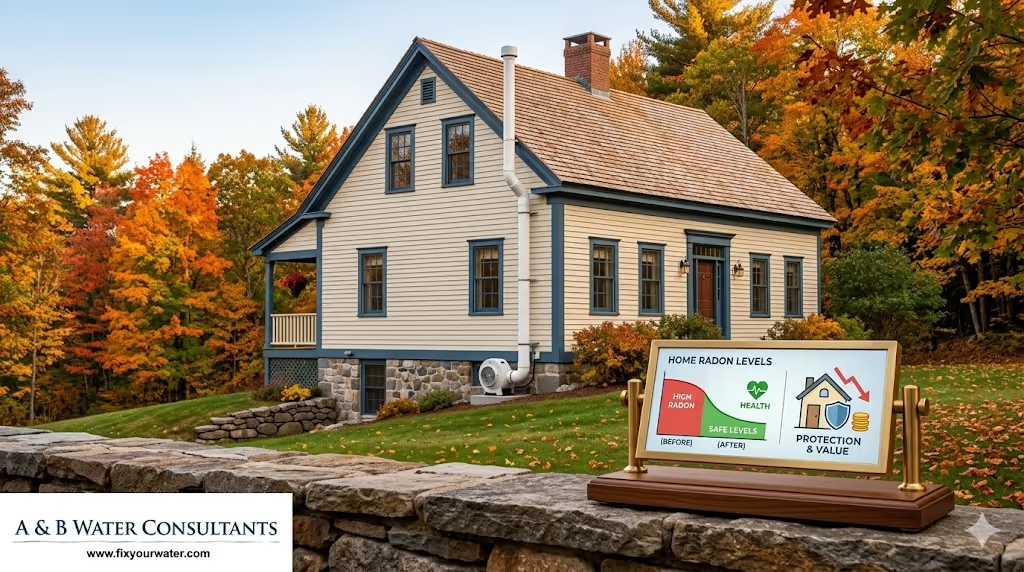
- Sub-slab depressurization or sub-slab suction — a fan and piping system that draws radon-laden soil gas from under the slab and exhausts it above the roofline.
- Crawlspace suction — similar principle adapted for homes with crawlspaces.
- Sealing and ventilation enhancements — used with active systems to optimize performance.
Radon in Water
Radon dissolved in well water becomes an exposure risk when the water is used for showering, cooking, or washing, because aeration releases gas into indoor air. Two industry-standard options remove radon from water:
- Granular activated carbon or GAC systems — water passes through carbon media that adsorbs radon. GAC is often used for low to moderate radon concentrations and is attractive when budgets are tight.
- Aeration systems — these strip radon out of water by bringing it in contact with air and venting the radon-laden air safely outdoors. Aeration is the most effective method for higher radon levels and avoids radioactive carbon waste.
Typical Radon System Installation Cost Ranges
Radon system installation cost varies widely depending on whether the problem is air, water, or both, the severity, and the structure. Below are realistic ranges tailored to New England conditions and contractor experience levels.
Air Mitigation Systems
- Basic sub-slab depressurization: $1,200 to $3,000 for straightforward slab-on-grade or small homes. This includes the fan, PVC piping, sealing work, and a post-installation test.
- More complex homes: $2,500 to $5,000 for large foundations, multiple suction points, or intricate routing through finished basements.
- High-end or multi-unit properties: $5,000+ when multiple systems, specialized fan placement, or structural repairs are required.
In New Hampshire and Southern Maine, expect labor and winter access challenges to push the higher end of these ranges. Customer preferences for discreet routing or sound-dampened fans also add cost.
Water Radon Removal Systems
- Point-of-entry GAC systems: $800 to $4,000. Price depends on flow rate, radon concentration, and carbon volume required. Ongoing media disposal or replacement must be considered.
- Aeration systems: $6,000 to $20,000. Packed tower or spray aeration units are more complex and typically costlier to install. They are recommended for high radon levels or when radioactive waste from GAC would be a disposal problem.
- Combined solutions: $7,000 to $25,000+ for homes that need both air and water remediation or customized setups for large flow demands.
These ranges are meant as guidelines. Radon system installation cost in New England can be higher than national averages because of colder climates, permitting nuances, and contractor availability. Contact A&B Water Consultants for a free radon mitigation treatment quote.
Factors That Drive Radon System Installation Cost
Several variables influence the final price. Understanding these helps homeowners evaluate quotes and avoid surprises.
- Type and severity of contamination — higher radon concentrations generally require larger or more robust systems.
- Home foundation and construction — slab, poured foundation, block foundation, or crawlspace each present distinct challenges and suction point needs.
- House size and layout — larger basements and complicated floor plans require more material and labor.
- Water flow demand — for water systems, the household peak flow sets the required treatment capacity, which affects tank and media size.
- Access and weather — New England winters can increase labor time or delay exterior exhaust work, adding to cost.
- Electrical and plumbing modifications — new outlets, trenching, pumps, or bypass plumbing add expenses.
- Local permit and inspection fees — municipalities vary; some towns require building permits or notifications for radon mitigation work.
- Disposal and regulatory handling — GAC media can become slightly radioactive and may require special disposal, which raises lifecycle costs.
Sample Cost Scenarios: Localized Examples
Realistic examples help translate ranges into tangible expectations. Here are three common New England scenarios with estimated totals and rationale.
Scenario 1: Cape-Style Home in Southern New Hampshire — Air Radon
- Issue: Basement air test shows 6.8 pCi/L.
- Solution: Single-point sub-slab depressurization routing to roof, sealing of major foundation penetrations, and post-installation testing.
- Estimated cost: $1,800 to $3,200.
- Why: Modest foundation and relatively easy access. Higher end reflects winter scheduling and a desire for a quiet fan enclosure.
Scenario 2: Rural Maine Well Home — Radon in Water
- Issue: Well water tests at 3,000 pCi/L, which is high enough to warrant treatment.
- Solution: Certified packed tower aeration system sized for the household flow to remove 95 percent plus of radon from the water.
- Estimated cost: $9,000 to $16,000.
- Why: Severe water radon levels make GAC undesirable due to radioactive media accumulation. Aeration requires venting, larger footprint, and electrical work.
Scenario 3: Older Massachusetts Home — Combined Air and Water
- Issue: Air radon at 5.5 pCi/L, water radon at 500 pCi/L.
- Solution: Sub-slab depressurization plus a point-of-entry GAC unit with periodic monitoring and scheduled media replacement.
- Estimated cost: $3,500 to $8,000.
- Why: Combined approach costs more upfront but prevents long-term health risk from both pathways. Disposal and media replacement are recurring expenses.
Installation Process and Typical Timeline
Knowing what to expect reduces stress and helps homeowners plan. A professional mitigator follows a predictable process.
- Initial testing and consultation. Short-term and long-term tests for air. Standard lab water testing for radon in well water.
- Site inspection and system design. The mitigator maps suction points, exhaust routing, and water treatment placement.
- Permitting if required. Many towns in New England require a building permit; experienced contractors handle applications.
- Installation. Air systems often take one day. Water systems, especially aeration, may require multiple days and coordination with plumbers and electricians.
- Post-installation testing. A follow-up test confirms the system reduced radon below recommended levels.
- Maintenance handoff and documentation. Homeowner receives operation instructions and maintenance schedule.
For a typical air mitigation the timeline is one to three days from site visit to final testing. Water systems may extend over a week for complex installations. Contact A&B Water Consultants for a free radon mitigation treatment quote.
Maintenance and Long-Term Costs
Installation is only part of the expense. Ongoing costs vary by system type and local regulations.
Radon Air Mitigation Maintenance
- Electricity for fan operation: $10 to $50 per month, depending on fan size and local electricity rates.
- Annual inspection and manometer check: $100 to $200.
- Replacement fan after 5 to 10 years: $150 to $600, installed.
Radon Water Treatment Maintenance
- GAC media replacement and disposal: $200 to $1,000 every 6 to 24 months, depending on radon concentration and carbon capacity.
- Aeration upkeep: routine inspections and occasional mechanical parts service $200 to $600 per year.
- Annual water testing to confirm system performance: $100 to $250.
Because GAC accumulates radioactivity, disposal costs and rules can be significant. Aeration avoids radioactive media but has higher upfront cost. Homeowners should discuss lifecycle costs with their contractor rather than basing decisions on installation price alone.
Permits, Certifications, and Local Regulations
Permitting expectations vary by town in New Hampshire, Southern Maine, and Massachusetts. Many municipalities require a building permit for systems that penetrate roofs or alter plumbing. In addition, hiring a mitigator certified by a recognized body is important. Look for contractors certified through programs such as the National Radon Proficiency Program or the National Radon Safety Board. Some state radon programs offer additional guidance, training, and lists of certified mitigators.
Homeowners should also be aware of state resources. The New Hampshire Department of Environmental Services, Maine Center for Disease Control and Prevention, and the Massachusetts Department of Public Health all provide local information on testing, treatment options, and referrals to qualified mitigators.
Financing, Grants, and Cost Assistance
Radon system installation cost can be a financial hurdle. Options to reduce sticker shock include:
- Home improvement loans or lines of credit. Many homeowners use small personal loans or home equity lines to spread payments.
- Local or state grants. Some counties or public health programs offer limited assistance or low-interest loans for environmental health improvements. Availability changes over time so check current programs with local health departments.
- Bundling work. If a homeowner is already doing basement remodeling or HVAC upgrades, bundling radon mitigation can reduce total labor costs.
- Manufacturer promotions or contractor financing. Ask contractors if flexible payment plans are available.
Contractors can often suggest the right financing route; it pays to ask. Contact A&B Water Consultants for a free radon mitigation treatment quote.
How to Choose the Right Radon Mitigation Contractor
Price matters, but selecting a contractor based only on the lowest bid can backfire. These steps help pick a reliable, experienced professional.
- Verify certifications and membership with reputable radon organizations.
- Request references and examples of recent installations in New Hampshire, Southern Maine, or Massachusetts.
- Ask for a detailed written estimate that lists materials, labor, permits, post-test, and warranties.
- Confirm post-install testing is included and that the contractor provides documentation showing results.
- Discuss maintenance plans and costs so there are no surprises later.
- Check insurance and bonding to ensure the contractor is covered for property damage.
Radon Mitigation Contractor experience matters. A & B Water Consultants has over 25 years of experience designing and installing radon and arsenic treatment systems tailored to New England homes. Their local expertise helps anticipate seasonal challenges and streamline permitting. Contact A&B Water Consultants for a free radon mitigation treatment quote.
Cost-Saving Tips That Don’t Sacrifice Safety
Homeowners can reduce the overall financial impact while still achieving safe indoor air and water.
- Get simultaneous testing of air and water. Combining diagnostics is more efficient and helps determine the most cost-effective strategy.
- Use existing mechanical rooms or utility closets for water equipment to avoid construction and finishing costs.
- Schedule work during milder months when contractors have more availability and exterior work is easier.
- Consider system sizing carefully. Oversizing a water system increases cost without proportional benefit; undersizing hurts performance.
- Bundle radon mitigation with other necessary plumbing or HVAC upgrades to reduce labor overlap.
Why Local Experience Matters
New England homeowners benefit from working with contractors who understand local geology, weather impacts, building stock, and permitting processes. A company that has provided radon and arsenic treatment solutions in New Hampshire, Southern Maine, and Massachusetts for decades brings practical insights into routing exhausts through complex roofs, protecting systems from freezing, and designing equipment rooms that fit small basements.
A & B Water Consultants brings that regional experience to each project. They specialize in waterborne contaminants and radon treatment for private wells and municipal connections, offering custom-designed solutions that reflect real-world New England conditions.
Common Misconceptions About Radon System Installation Cost
Several myths lead homeowners to delay mitigation or choose the wrong option.
- “Radon systems are prohibitively expensive.” Many air mitigation systems are in a surprisingly affordable range. Water treatments vary, but practical solutions exist for most budgets.
- “Sealing a basement fixes radon.” Sealing helps but is rarely enough by itself to get levels below recommended thresholds. Active systems are usually required.
- “GAC is always cheaper.” Initial cost may be lower, but disposal and replacement add up, and GAC isn’t appropriate for very high water radon levels.
- “If a neighbor is fine, my home is fine.” Radon is localized. Tests are the only reliable way to know household levels.
Putting Price in Perspective: Health, Home Value, and Peace of Mind
Though the radon system installation cost can look high, it is an investment in health and home value. Lowering indoor radon reduces long-term lung cancer risk, and documented mitigation can be a selling point in real estate transactions. For families in New Hampshire, Southern Maine, and Massachusetts, addressing radon and other water contaminants like arsenic treatment or PFAS removal demonstrates responsible stewardship of home safety.
Contact A&B Water Consultants for a free radon mitigation treatment quote.
Frequently Asked Questions
How much should I budget for a typical radon mitigation system in New Hampshire?
Budgeting depends on whether the issue is air or water. For typical air mitigation via sub-slab depressurization expect $1,200 to $3,000 for most single-family homes. If water treatment is needed, GAC systems start around $800, while aeration systems typically run from $6,000 upward. Local conditions and home complexity will move you up or down within these ranges.
Do water radon systems require special disposal for carbon media?
Yes. GAC media adsorbs radioactive radon progeny and can become slightly radioactive over time. Disposal must follow state and local regulations, and costs vary. Aeration systems do not produce radioactive media, which is why they are preferred for high radon concentrations despite higher initial cost.
Will installing a radon mitigation system affect my home insurance or property value?
Mitigation itself doesn’t typically increase insurance premiums. It can add value or reduce buyer concern during a sale because it documents a known hazard has been addressed. Providing test results and a mitigation certificate helps maintain buyer confidence.
How do I know whether to treat air, water, or both?
Testing is the only way to know. Air tests identify indoor air concentration. Water tests show radon levels in the supply. If water testing shows significant radon, treatment may be needed because water can elevate indoor air radon when used. A comprehensive approach often begins with simultaneous air and water testing to guide design.
Are there low-cost testing options for homeowners in Southern Maine and Massachusetts?
Yes. Short-term test kits for air are inexpensive and available through state radon programs, local hardware stores, or certified mitigators. Water testing typically requires laboratory analysis; local health departments often provide guidance and certified labs for water radon testing.
Conclusion
Radon system installation cost is an important factor, but it should be weighed alongside health benefits, long-term maintenance, and local expertise. For New Hampshire, Southern Maine, and Massachusetts homeowners, the most cost-effective approach starts with proper testing, a certified contractor, and a system chosen to match the home’s specific needs. Whether the solution is an air mitigation fan, a GAC unit, or a full aeration system, informed decisions result in safer indoor air and water for families.
For a professional assessment tailored to New England homes, Contact A&B Water Consultants for a free radon mitigation treatment quote. Their 25 years of local experience in radon and arsenic treatment can help homeowners pick the right system, understand radon system installation cost, and plan for long-term safety and affordability.