Testing well water is the single most practical step homeowners can take to know what is actually coming out of their taps. For families in New Hampshire, Southern Maine, and Massachusetts, where bedrock geology, old wells, and localized contamination like arsenic, radon, and PFAS create unique risks, regular well water quality testing gives clarity and a path to safer drinking water.
Why Testing Well Water Matters
Private wells are not regulated by public utilities, so the homeowner is the primary steward of water safety. The importance of well water tests lies in detecting invisible hazards before they cause illness, long-term health problems, or damage to plumbing and appliances. A routine test can reveal bacterial contamination that causes acute sickness, or slower-acting issues such as arsenic exposure and radon in water which increase cancer risk over time.
Well water quality testing also protects household investments. Hard water, iron, manganese, and high total dissolved solids wear out appliances faster and clog plumbing. Early detection through testing lets homeowners choose targeted treatment rather than guesswork.
Local Concerns in New England
- New Hampshire: Bedrock wells in parts of the state often show naturally occurring arsenic. Radon in air and water is also common in some communities.
- Southern Maine: Coastal and inland wells can face bacterial contamination from septic systems, and emerging PFAS hotspots have been detected near certain industrial or firefighting training sites.
- Massachusetts: Urban and suburban legacy contamination can include PFAS, while private wells in rural areas often show nitrate or bacterial issues.
Because risks vary locally, well water quality testing tailored to regional issues makes the most sense.
What to Test For
Not all tests are created equal. Prioritize tests based on local geology, nearby land uses, and household vulnerability (pregnant women, infants, immunocompromised residents). Below are the most important parameters for homeowners to consider.
- Bacteria (total coliform and Escherichia coli): Indicates fecal contamination and immediate health risk.
- Nitrates: Dangerous for infants; high values commonly come from fertilizer runoff or septic systems.
- Arsenic: Naturally occurring in some New England bedrock; long-term exposure raises cancer risk.
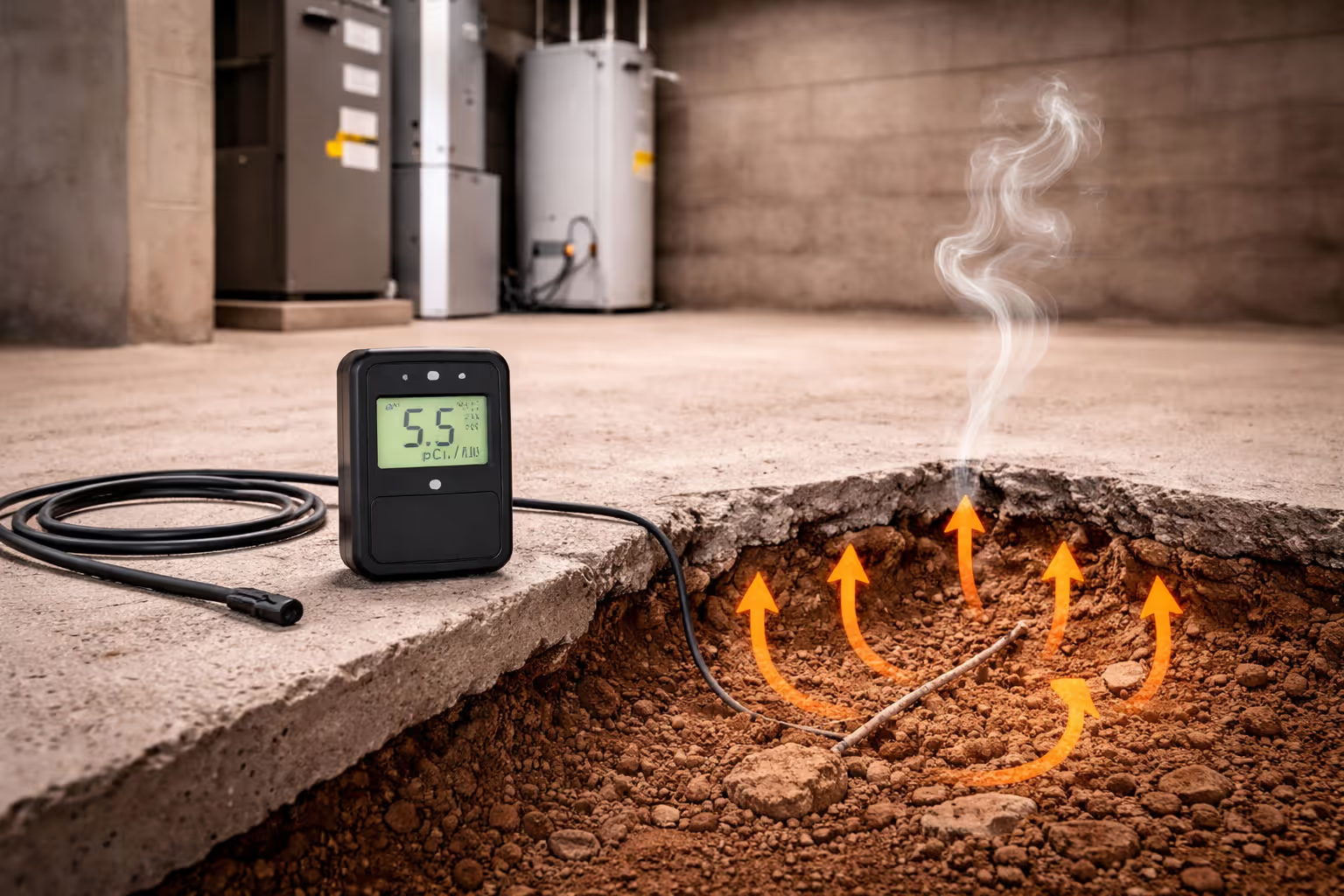
- Radon in water: An inhalation and ingestion risk that can add to airborne radon levels when water is aerated.
- PFAS (per- and polyfluoroalkyl substances): Persistent "forever chemicals" linked to health effects; testing is specialized and often more expensive.
- Lead: Usually from plumbing rather than well source water, but testing is still important for older homes.
- Iron and Manganese: Cause staining and off-tastes; affect appliances.
- pH, Hardness, and Total Dissolved Solids (TDS): Affect corrosion, soap performance, and scaling.
Homeowners should ask a testing provider for a recommended panel based on local conditions. For many New England homes, a bacterial test, nitrate, arsenic, and basic chemistry panel form a sensible baseline.
How Often Should Well Water Be Tested?
Frequency depends on the contaminant type and circumstances, but general guidance is:
- At least once a year: Bacteria, and basic chemistry (pH, hardness, TDS).
- Every 2–3 years: Arsenic and radon if local geology or previous tests suggest presence.
- When triggered: Test for nitrate, PFAS, or other contaminants after nearby construction, flooding, a change in taste or odor, or if a neighbor tests positive.
- After treatment: Test immediately after installing any treatment system and then annually to ensure ongoing performance.
Expect more frequent testing for households with infants, pregnant family members, or immunocompromised people.
Testing Methods: DIY Kits, Certified Labs, and Professional Services
There are three main routes for well water quality testing: DIY home kits, certified laboratory testing, and professional in-field testing by trained technicians. Each has pros and cons.
DIY Test Kits
DIY kits are widely available in stores and online. They can be useful for quick screening but come with limitations.
- Pros: Fast results for basic parameters, low cost, convenient.
- Cons: Less reliable for regulatory decisions or complex contaminants like PFAS or radon. Some kits provide only semi-quantitative results or color comparisons that are open to interpretation.
DIY kits can detect bacteria, pH, hardness, iron, and chlorine in some cases. For bacteria, any positive DIY result should be confirmed by a certified lab because public health actions are based on certified results.
Certified Laboratory Testing
For accurate, legally defensible results, send samples to a state-certified laboratory. Labs use standardized methods and offer quantitative numbers for contaminants including arsenic, nitrates, metals, and PFAS.
- Pros: High accuracy, accepted by health departments, covers a wide range of analytes including PFAS and radon with proper methods.
- Cons: Requires careful sample collection and sometimes a chain-of-custody form, higher cost, and turnaround time for results.
Homeowners in New Hampshire, Maine, and Massachusetts can find certified lab lists on their state environmental or public health websites. Certified labs provide instructions and sample bottles to ensure valid results.
Field Meters and Professional Testing Services
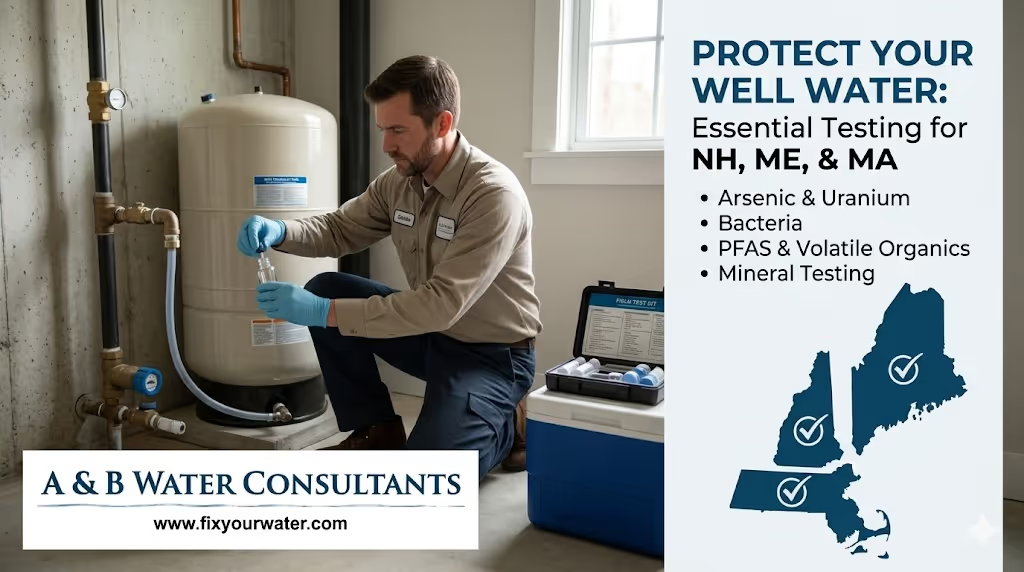
Trained technicians bring portable meters and field kits to measure pH, conductivity, temperature, and sometimes bacteria using more advanced in-field methods. For contaminants like radon and arsenic, professionals coordinate lab testing but can handle sampling to reduce user error.
A & B Water Consultants offers professional testing coordination and on-site water treatment evaluations. Their technicians combine field measurements with lab sampling to create a clear picture of water quality and recommend treatments that fit the household and local conditions. Contact A&B Water Consultants for a free water treatment and filtration quote.
Specialized Testing: PFAS and Radon
PFAS testing uses advanced laboratory methods like liquid chromatography coupled with mass spectrometry and generally costs more than routine tests. Radon in water requires specific collection and analysis to measure concentrations accurately.
Because these contaminants have significant health implications and complex testing needs, professional guidance is often the best route. A & B Water Consultants can help identify whether localized PFAS or radon testing is necessary and coordinate analysis with certified labs. Contact A&B Water Consultants for a free water treatment and filtration quote.
How to Collect a Valid Sample
Sample quality matters. Improper collection can give misleading results and a false sense of security. Certified labs provide instructions and bottles, but here are general best practices:
- Use the sample bottle given by the lab and follow their preservation instructions.
- Collect water from a faucet with minimal aeration. If sampling for bacteria, do not use a faucet with a screen or aerator unless it is removed and the area is disinfected.
- Run the water for a specific time if the lab requests it. For some tests, a "first draw" sample is needed, while for others, a flushed sample is necessary.
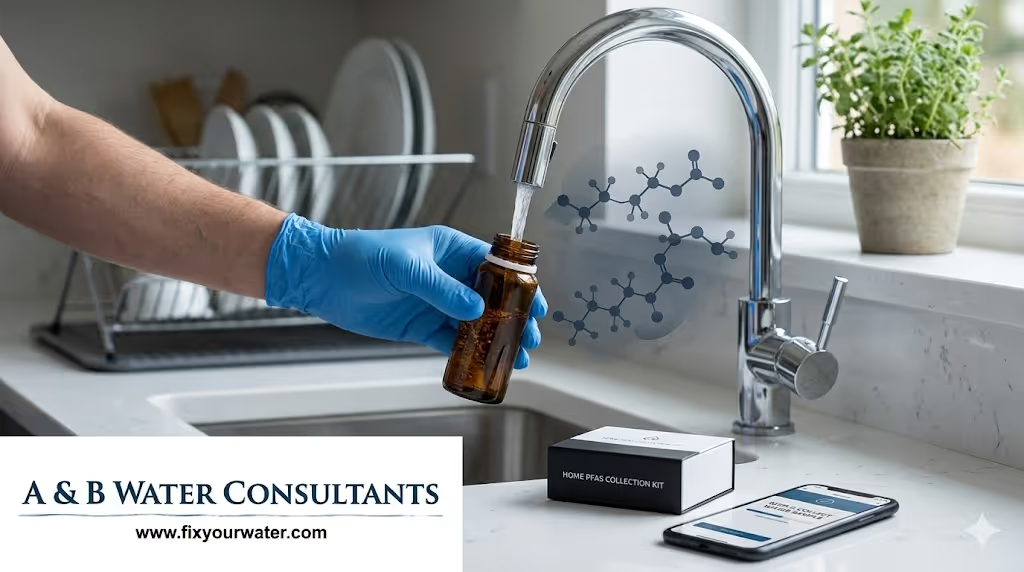
- Use clean hands or gloves, do not touch the inside of the bottle or cap, and keep the cap sterile.
- Return the sample to the lab promptly, keeping it cool if required. Bacterial samples often need to be processed within 24 hours.
When in doubt, homeowners should hire a professional sampler. Professional sampling reduces the chance of contamination or shipping errors and may be required for official documentation. Contact A&B Water Consultants for a free water treatment and filtration quote.
Interpreting Test Results
Laboratory reports can be intimidating. A typical report lists contaminants detected, measured concentrations, and the laboratory method used. Understanding what those numbers mean is critical.
- Maximum Contaminant Level (MCL): A regulatory limit used for public water systems. While private wells are not bound by MCLs, MCLs are a useful benchmark.
- Action Level: A level at which treatment or corrective measures are recommended. For some contaminants, there may not be a clear regulatory action level for private wells.
- Detection Limit: The smallest concentration the lab can reliably measure. Values reported as below detection limits are usually safe within laboratory sensitivity.
- Units: Common units are milligrams per liter (mg/L) or micrograms per liter (µg/L), and picocuries per liter (pCi/L) for radon in air. PFAS values are often reported in parts per trillion (ppt).
Example interpretation: If a report shows arsenic at 12 µg/L, that exceeds the EPA MCL of 10 µg/L. For a private well, this indicates a need for treatment. Arsenic can be removed through specific filtration methods like adsorption media or reverse osmosis. A & B Water Consultants designs custom arsenic treatment systems based on test results and household needs.
Treatment Options When Tests Show Problems
Treatment selection depends on which contaminant is present, its concentration, household water usage, and budget. Two general categories are point-of-entry (whole-house) and point-of-use (tap-level) systems.
Common Treatments
- Arsenic: Adsorptive media (iron-based filters), reverse osmosis, and coagulation/filtration systems. A & B Water Consultants has long experience designing arsenic filtration systems for New England homes.
- Radon: Aeration systems are typically most effective; granular activated carbon can also be used but may create radioactive waste that requires careful handling.
- PFAS: Granular activated carbon, ion exchange, and high-rejection reverse osmosis are commonly used. PFAS treatment is complex because different PFAS compounds respond differently to technologies.
- Bacteria: Shock chlorination of the well and distribution system, UV disinfection, and ongoing chlorination systems.
- Nitrate: Ion exchange, reverse osmosis, or blending with low-nitrate water if feasible.
- Lead: Point-of-use filters certified to remove lead, and replacement of lead-bearing plumbing where possible.
- Iron and Manganese: Oxidation and filtration systems, water softeners for certain cases, and aeration/oxidizing filters.
Choosing the right system requires interpreting lab data, assessing water use, and sizing equipment correctly. A & B Water Consultants offers custom design and installation for arsenic and radon treatment and can advise on PFAS approaches and other contaminant solutions. Contact A&B Water Consultants for a free water treatment and filtration quote.
Cost Considerations for Testing and Treatment
Costs vary widely.
- Basic tests: Bacterial kits or single-parameter lab tests might run from $25 to $100.
- Comprehensive lab panels: Multi-parameter testing including metals and nitrates can be several hundred dollars.
- PFAS testing: Often $200 to $1,000 per sample depending on the panel and lab method.
- Treatment systems: Point-of-use filters like reverse osmosis units can range from a few hundred to a few thousand dollars. Whole-house systems for arsenic, radon aeration, or PFAS can cost several thousand to tens of thousands depending on complexity, flow rates, and disposal needs.
While professional installation and certified testing increase upfront costs, they reduce long-term risk and ensure compliance with health guidance. When treatment is necessary, working with an experienced provider helps avoid undersized equipment or inadequate media choices. Contact A&B Water Consultants for a free water treatment and filtration quote.
Choosing a Testing or Treatment Provider
Homeowners should vet laboratories and contractors carefully.
- Ask labs if they are state certified for the parameters of interest.
- Request references and examples of similar projects from contractors.
- Confirm technicians will handle sampling to state lab standards if needed for official testing.
- Ask about warranties, ongoing maintenance, and monitoring for installed equipment.
- Make sure proposals include a clear description of what's removed, system lifespan, and routine service needs.
A & B Water Consultants brings more than 25 years of experience designing and installing arsenic and radon solutions specifically tailored to New England geology and household needs. Their team works with homeowners to interpret lab results and create a treatment plan that balances effectiveness and cost. Contact A&B Water Consultants for a free water treatment and filtration quote.
Real-World Examples
Practical stories help explain how testing and treatment come together.
Case Study: Arsenic in a New Hampshire Bedrock Well
A family in central New Hampshire tested their well as part of a school-age child’s homecoming routine. The lab returned an arsenic concentration of 15 µg/L. The family opted for a whole-house adsorptive media system backed by point-of-use polishing for drinking water. The system design considered their 3-bedroom household flow rates and annual service schedule. Follow-up testing confirmed arsenic levels well below 10 µg/L.
When a professional approach was taken from testing through installation, the family avoided trial-and-error and unnecessary expense.
Case Study: Rural Maine Well with Bacterial Contamination
A homeowner in Southern Maine noticed a rotten egg smell and an intermittent stomach upset among family members. Bacterial testing through a certified lab confirmed total coliform and E. coli. Shock chlorination of the well and plumbing solved the immediate issue. A subsequent evaluation showed the septic system required repair; once addressed, repeat testing stayed negative. The family instituted annual bacterial checks and installed a simple UV system as added protection.
Both examples illustrate the sequence: test, interpret, remediate, and retest. Contact A&B Water Consultants for a free water treatment and filtration quote.
Maintenance and Ongoing Monitoring
Treatment is not a one-and-done step. Filters clog, media exhausts, and system performance changes over time. Homeowners should set a maintenance schedule:
- Annual lab testing for bacteria and basic chemistry.
- Media replacement as manufacturer recommends, often annually to every few years depending on contaminant load.
- System inspections and flow checks every 6 to 12 months.
- Immediate testing if taste, color, or odor change, or if household health symptoms suggest contamination.
Routine maintenance preserves health benefits and protects the investment in treatment equipment. A & B Water Consultants provides service contracts and maintenance plans so homeowners in New Hampshire, Southern Maine, and Massachusetts can stay confident their systems are working as intended.
Where to Find Help and State Resources
State agencies provide guidance and lists of certified labs. Homeowners should consult these resources for region-specific advice:
- New Hampshire Department of Environmental Services (NHDES) for guidance on private wells, local contaminant concerns like arsenic, and certified labs.
- Maine Center for Disease Control and Prevention (Maine CDC) for private well recommendations and PFAS updates.
- Massachusetts Department of Environmental Protection (MassDEP) for well owner resources, local alerts, and laboratory lists.
Local health departments can also help interpret results and suggest next steps. For hands-on assistance with water treatment design and installation, many homeowners rely on experienced local contractors who understand New England geology and regulatory expectations. A & B Water Consultants specializes in regional needs and can help navigate testing, treatment selection, and installation logistics.
Summary and Next Steps
Testing well water is essential for protecting family health, preserving home plumbing, and making smart, cost-effective treatment decisions. Homeowners in New Hampshire, Southern Maine, and Massachusetts should start with a baseline test covering bacteria, nitrates, basic chemistry, and regionally relevant risks such as arsenic and radon. For specialized contaminants such as PFAS, work with a certified lab and experienced consultants to plan sampling and treatment.
When tests reveal problems, homeowners benefit from professional assessment and system design. A & B Water Consultants brings decades of experience in arsenic and radon treatment design and can help interpret test reports and install reliable solutions that fit the home’s needs.
Frequently Asked Questions
How long does it take to get lab results for well water testing?
Turnaround time varies by test and lab workload. Routine bacterial results may come back within 24 to 48 hours. Metals, nitrates, and general chemistry panels usually return in a few days to a week. Specialized tests such as PFAS can take several weeks. Homeowners should ask the lab for expected turnaround times when submitting samples.
Can a DIY test kit be trusted for deciding treatment actions?
DIY kits are useful for screening and early warning. However, for treatment decisions—especially for contaminants like arsenic, PFAS, or radon—certified lab results are the reliable basis for action. Positive DIY bacterial tests should be confirmed by a lab before making major decisions.
What should a homeowner do if a well test shows contamination?
First, avoid using the water for drinking or cooking if tests indicate bacterial contamination or high levels of a health-risk contaminant. Use bottled water for drinking and prepare infant formula with safe water. Contact a certified lab for confirmation if needed and consult an experienced water treatment professional to design a remediation plan. In many cases, treatment systems plus source repairs or septic fixes are required.
Do private wells need to meet EPA standards?
Private wells are not regulated by the EPA the same way public water systems are, but EPA standards, such as Maximum Contaminant Levels, are widely used as benchmarks for safety. Homeowners should treat EPA MCLs and state guidance as action thresholds to guide treatment and risk reduction.
How much does it cost to install a whole-house arsenic or radon system?
Costs depend on contaminant concentrations, household flow rates, and system complexity. Whole-house arsenic systems typically range from several thousand dollars upward. Radon aeration systems often fall in a similar range depending on aeration tower size and necessary wastewater handling. A & B Water Consultants provides tailored quotes based on on-site evaluation and test results. Contact A&B Water Consultants for a free water treatment and filtration quote.