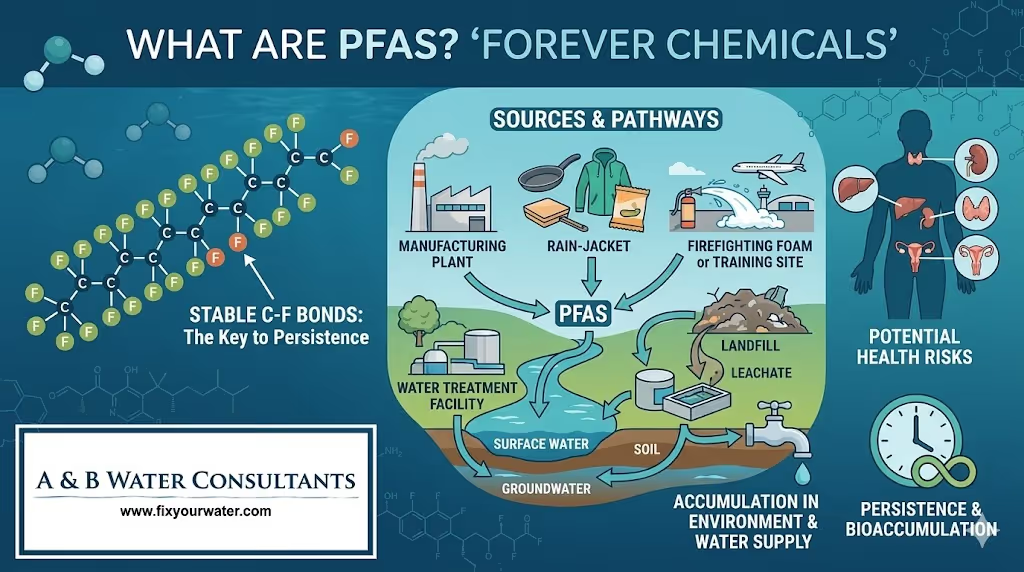
Understanding what are PFAS is the first step for homeowners who want safe drinking water. PFAS are a large family of man-made chemicals that resist heat, water, and oil. Those same properties make them useful in everyday products and industrial processes, but they also mean PFAS persist in the environment and can contaminate drinking water supplies. For families in New Hampshire, Southern Maine, and Massachusetts, learning how PFAS get into water and which pfas removal services and methods work best is essential.
What Are PFAS?
PFAS stands for per- and polyfluoroalkyl substances. These are synthetic chemicals with carbon-fluorine bonds that are exceptionally strong. That bond gives PFAS durability but also causes them to persist in the environment and in people. Because they break down very slowly, PFAS are often called "forever chemicals".
There are thousands of PFAS compounds. Some of the most widely known include PFOA, PFOS, PFHxS, PFNA, PFBS, and GenX (HFPO-DA). Not all PFAS behave the same. Long-chain PFAS tend to stick to organic material and are easier to capture with some filters. Short-chain PFAS are more mobile in water and harder to remove with conventional approaches.
Where Do PFAS Come From?
Knowing common PFAS sources helps homeowners spot potential risks. PFAS sources and effects are closely linked because where PFAS originate often determines how likely water supplies are to be contaminated.
- Industrial sites that manufactured or used PFAS.
- Firefighting foam, especially aqueous film-forming foam (AFFF) used at airports, military bases, municipal fire training areas, and some industrial facilities.
- Wastewater treatment plants that receive PFAS from industrial discharges and consumer products.
- Landfills and sites where PFAS-containing products were disposed, or where biosolids from wastewater treatment are applied to land.
- Household items such as nonstick cookware, stain-resistant fabrics, food packaging, and some cleaning products.
In New England, legacy contamination from AFFF at airports and municipal fire training grounds is a frequent culprit. Agricultural sites that receive biosolids or sludge can also show elevated PFAS levels, which is important for private well users in rural parts of New Hampshire and Southern Maine.
How Do PFAS Get Into Drinking Water?
PFAS enter groundwater and surface water through runoff, leaching from landfills, discharge from industrial sites, and infiltration from firefighting foam usage. From there, they can make their way into municipal supplies or private wells. That matters for New Hampshire homeowners because a significant portion of residences rely on private wells that are not regulated the same way as public water systems.
Several characteristics make PFAS a water contamination problem:
- They dissolve easily in water, allowing them to travel through soil and groundwater.
- They do not break down under typical environmental conditions.
- They can accumulate in sediments and biological tissues.
Why PFAS in Water Is a Concern
Public health agencies and researchers have linked PFAS exposure to a range of potential health effects. Studies suggest long-term exposure may affect immune response, cholesterol levels, liver enzymes, and developmental outcomes in children, among other endpoints. Many health agencies advise minimizing exposure, particularly for pregnant women, infants, and other vulnerable populations.
Because PFAS persist and can accumulate, the importance of PFAS removal from drinking water is both a health issue and a long-term stewardship concern. For homeowners, removing PFAS reduces daily exposure and provides peace of mind for families handling potentially contaminated water at home.
How Are PFAS Tested in Water?
Testing is the only reliable way to know whether PFAS are present in a well or municipal supply and at what concentration. Homeowners should follow these steps when testing:
- Identify a certified laboratory experienced with PFAS analysis. State health departments often publish lists of approved labs.
- Collect samples using the lab-provided bottles and instructions. Proper sample handling matters because PFAS are everywhere and contamination can happen during sampling.
- Request analyses for a PFAS suite rather than just one or two compounds. Labs often have methods that detect multiple PFAS at very low concentrations.
- Review results with a qualified water treatment professional who can recommend treatment options tailored to the detected PFAS.
Homeowners in New Hampshire, Maine, and Massachusetts can consult state resources such as the New Hampshire Department of Environmental Services, the Maine Center for Disease Control and Prevention, and the Massachusetts Department of Environmental Protection for guidance and lab referrals. For regional guidance on testing, many homeowners begin with PFAS testing for homeowners resources.
Which Treatment Methods Remove PFAS?
The PFAS removal landscape includes several proven technologies for drinking water treatment. No single method is perfect for all PFAS compounds. An effective approach depends on the specific PFAS detected, concentration levels, household water use patterns, and budget. Here are the most widely used methods:
Granular Activated Carbon (GAC)
What it is: GAC uses porous carbon media that adsorbs organic compounds, including many PFAS.
How it works: PFAS molecules stick to the carbon surface. Over time the media becomes saturated and must be replaced or reactivated.
Pros:
- Well-proven technology for many long-chain PFAS such as PFOA and PFOS.
- Available in whole-house (point-of-entry) systems and in smaller units.
- Relatively low operating complexity.
Cons:
- Less effective against short-chain PFAS; removal efficiency varies by compound.
- Media life depends on concentration and water chemistry; replacement costs can be significant.
- Spent media requires proper handling or disposal to avoid environmental release.
Ion Exchange (IX)
What it is: IX uses synthetic resins that exchange counter-ions to capture PFAS from water.
How it works: Anion exchange resins attract and bind negatively charged PFAS molecules. Some resins are specifically tailored for PFAS removal.
Pros:
- Highly effective for a broad range of PFAS, including some short-chain types.
- Smaller footprint than GAC for similar capacity.
- Often regenerable, extending operational life when managed by professionals.
Cons:
- Regeneration involves chemicals and produces concentrated waste that needs proper disposal.
- Not all resins capture every PFAS; resin choice matters.
Reverse Osmosis (RO)
What it is: RO forces water through a semipermeable membrane, leaving many contaminants behind.
How it works: RO membranes reject PFAS molecules based on size and charge, typically at the point of use, such as a kitchen sink.
Pros:
- Very high removal rates for many PFAS compounds, including some short-chain types when properly maintained.
- Delivers high-quality drinking water for consumption and cooking.
Cons:
- Usually installed as a point-of-use system, not for whole-house treatment.
- Produces wastewater; requires storage tank and periodic membrane and filter replacement.
Advanced Oxidation and Destructive Technologies
What it is: These are emerging or specialized technologies designed to destroy PFAS molecules rather than simply capture them. Examples include advanced oxidation processes, electrochemical oxidation, plasma, and high-temperature treatments.
How it works: Specialized processes break carbon-fluorine bonds to transform PFAS into less harmful components.
Pros:
- Potential to permanently destroy PFAS rather than transfer them to a secondary waste stream.
- Useful at treatment plants or for concentrated waste and spent media.
Cons:
- Many destructive technologies are still being scaled for small systems and households.
- Costs and operational complexity can be high.
Point-of-Entry vs Point-of-Use: Which to Choose?
Homeowners often wonder whether to treat water at the entry to the house (whole-home, point-of-entry, POE) or just at the drinking water tap (point-of-use, POU). Each approach has trade-offs.
- Point-of-Entry (Whole House) treats all water entering the home, so it protects showers, laundry, and appliances and prevents ingestion and dermal exposure. GAC and IX systems are commonly used as POE solutions for PFAS.
- Point-of-Use treatment such as RO at the kitchen sink focuses on drinking and cooking water and is more affordable for targeting ingestion. It does not protect other household uses.
Many homeowners choose a hybrid approach: a POE system to reduce PFAS throughout the house coupled with a POE or POU RO system at the kitchen sink for maximum assurance at the point of consumption. Contact A&B Water Consultants for a free PFAS removal services quote.
Practical Design Considerations for New England Homes
Designing an effective PFAS treatment system for homes in New Hampshire, Southern Maine, and Massachusetts requires an eye for regional specifics. Cold water temperatures, well water characteristics, and the prevalence of private wells in rural areas change system sizing and media selection.
Key design steps include:
- Analyze the full water chemistry. High iron, manganese, or sediment can foul GAC or RO membranes quickly. Pre-filters for sediment and iron removal are often essential.
- Estimate water usage so media is sized correctly and replacement intervals are reasonable.
- Consider combined contaminant problems. It is common to see PFAS together with arsenic, radon, or microbial issues. Multi-stage systems can address several contaminants in series.
- Plan for maintenance access and media disposal logistics, especially for remote or rural properties.
Filtration systems and multi-stage designs are common solutions for the mixed-contaminant scenarios many New England homes face. A & B Water Consultants brings more than 25 years of regional experience designing custom systems. Their teams build systems that fit New England plumbing and seasonal considerations while targeting the specific PFAS profile discovered in tests. Contact A&B Water Consultants for a freePFAS removal services quote.
Maintenance, Lifespan, and Costs
Costs and maintenance depend on the chosen technology and the contamination level.
- GAC media life can range from several months to a few years depending on PFAS concentration and competing organics. Expect periodic media replacement or reactivation expenses.
- IX resins may be regenerable, but regeneration requires management by a qualified service provider due to the waste stream created.
- RO membranes and sediment pre-filters have predictable replacement intervals, often annually for pre-filters and every 2 to 5 years for RO membranes based on use and feed water quality.
For many homeowners, initial costs for whole-house PFAS systems can range from a few thousand dollars to significantly higher depending on system size and complexity. POU RO units are generally less expensive upfront but treat only drinking water. Long-term ownership costs include replacement media, service visits, and periodic testing to confirm continued performance.
Professional installation and scheduled testing is the most reliable way to ensure a system performs as intended. Contact A&B Water Consultants for a free PFAS removal services quote.
Disposal of Spent Media
One critical aspect sometimes overlooked is how to handle spent media that has captured PFAS. Because PFAS are persistent, spent GAC, IX resin, and brine from regeneration often contain concentrated PFAS and may be considered hazardous waste in some jurisdictions.
Proper disposal options usually include:
- Handling by a licensed hazardous waste contractor.
- Thermal destruction or chemically destructive processes at approved facilities.
- Following state-level guidance on concentrated PFAS waste streams.
Disposing of spent media in household trash or simply flushing regenerant solutions is not acceptable. A qualified water treatment provider should include spent media management in the system plan.
What Homeowners Can Do Now
Homeowners who suspect PFAS contamination or simply want to be cautious can take practical steps right away.
- Get your water tested by a certified lab for a comprehensive PFAS panel.
- Use bottled water or a certified point-of-use device for drinking and cooking until a treatment plan is in place, especially for infants and pregnant people.
- Talk with a local water treatment professional who understands regional PFAS sources and disposal regulations.
- If you have a private well, post a sign or otherwise inform visitors that the source is untreated until a solution is installed.
Simple actions like avoiding disposal of PFAS-containing products down the drain and checking local advisories can reduce future risks. Contact A&B Water Consultants for a free PFAS removal services quote.
Regulation and Local Resources
Regulatory attention to PFAS has increased dramatically. Federal and state agencies are developing and updating drinking water standards, guidance values, and cleanup programs. Homeowners should watch for advisories from:
- New Hampshire Department of Environmental Services (NHDES)
- Maine Center for Disease Control and Prevention
- Massachusetts Department of Environmental Protection (MassDEP)
- U.S. Environmental Protection Agency (EPA)
Local public water systems may publish test results and treatment plans, and municipal officials can advise about nearby sources such as airports, industrial sites, and fire training areas. For private well users, state agencies often offer guidance and sometimes financial assistance or testing programs for lower-income households.
How A & B Water Consultants Approaches PFAS
A & B Water Consultants applies a practical, site-specific process to PFAS challenges:
- They start with careful testing and interpretation of analytical results.
- They design treatment systems that fit each home, considering other contaminants like arsenic and radon when necessary.
- They size media appropriately, plan for maintenance and disposal, and perform professional installation.
- They provide follow-up testing to confirm system performance and offer long-term service plans.
With more than 25 years helping New England families with arsenic and radon filtration, A & B Water Consultants brings regional experience that matters when selecting PFAS removal strategies. PFAS remediation planning and PFAS removal options should be tailored to each property. Contact A&B Water Consultants for a free PFAS removal services quote.
Realistic Expectations and Common Misconceptions
PFAS remediation is not a one-size-fits-all problem. Homeowners should be wary of claims that any single product removes all PFAS under every condition. Common misconceptions include:
- Boiling water will remove PFAS. Boiling concentrates PFAS and will not remove them.
- Water softeners remove PFAS. Most conventional softeners do not remove PFAS because the ion exchange process targets hardness ions, not PFAS molecules.
- Filter cartridges in pitchers always remove PFAS. Many simple pitcher filters are not designed or certified to remove PFAS at meaningful levels.
A sound approach is to combine accurate testing with professionally designed systems and ongoing verification. That combination ensures the homeowner isn’t investing in ineffective solutions.
Case Example: A New Hampshire Well and Airport Runoff
A homeowner in a small town outside Manchester, New Hampshire, discovered elevated PFAS after routine testing triggered by a nearby airport upgrade. The family relied on a private well for all domestic needs. A & B Water Consultants evaluated the well water and recommended a phased solution:
- Immediate use of bottled water for drinking and cooking while installing a temporary POU RO unit at the kitchen sink.
- Installation of a whole-house GAC system with pre-sediment filtration to treat the entire water supply and protect plumbing fixtures.
- Follow-up sampling to confirm PFAS reduction and scheduled media replacement every 12 to 18 months based on usage and test results.
The combined POE and POU approach balanced cost, convenience, and health concerns for the family. It also allowed the homeowners to address other issues such as seasonal iron staining with pre-treatment, illustrating how PFAS solutions fit into a broader water quality plan.
Looking Ahead: Emerging Trends in PFAS Treatment
Research into PFAS destruction and management continues to progress. Expect to see more scalable destruction technologies that target spent media and concentrated waste streams. At the household level, improvements in resin chemistry, hybrid systems, and smart monitoring will offer homeowners more reliable and lower-maintenance choices over time.
For now, established options like GAC, ion exchange, and RO remain the most practical solutions for homeowners. Combining these technologies and working with experienced local providers yields the best results.
Conclusion
Knowing what are PFAS and how they behave in water equips homeowners to take informed action. The key steps are testing, choosing the right treatment methods, planning for maintenance and disposal, and working with experienced professionals familiar with New England conditions. The importance of PFAS removal is clear for families who want to limit exposure and protect their household health.
A & B Water Consultants has the local expertise and practical experience to guide homeowners through testing, system selection, and long-term maintenance, integrating PFAS removal with arsenic and radon solutions when needed. Contact A&B Water Consultants for a free PFAS removal services quote.
Frequently Asked Questions
What exactly are PFAS and why are they called forever chemicals?
PFAS are synthetic chemicals with very strong carbon-fluorine bonds. Those bonds make PFAS resistant to environmental breakdown, so they persist for long periods and can accumulate. That persistence is why they are often referred to as forever chemicals.
Can boiling water remove PFAS?
No. Boiling does not remove PFAS. In fact, boiling can concentrate PFAS in water because some water evaporates while PFAS remains.
Will my household water softener remove PFAS?
Most conventional salt-based softeners do not remove PFAS. Specialized ion exchange resins that target PFAS are a different technology and must be specified for that purpose.
How often should PFAS treatment media be replaced?
Replacement frequency depends on PFAS concentration, water usage, and competing contaminants. GAC might need replacement from months to a few years. RO membranes and pre-filters have predictable intervals. A qualified installer should set a replacement schedule and monitor performance with periodic testing.
How can homeowners in New Hampshire, Southern Maine, and Massachusetts start?
Begin with certified water testing to identify which PFAS are present and at what levels. Then consult a regional water treatment professional to design an appropriate solution.
Contact A&B Water Consultants for a free PFAS removal services quote.