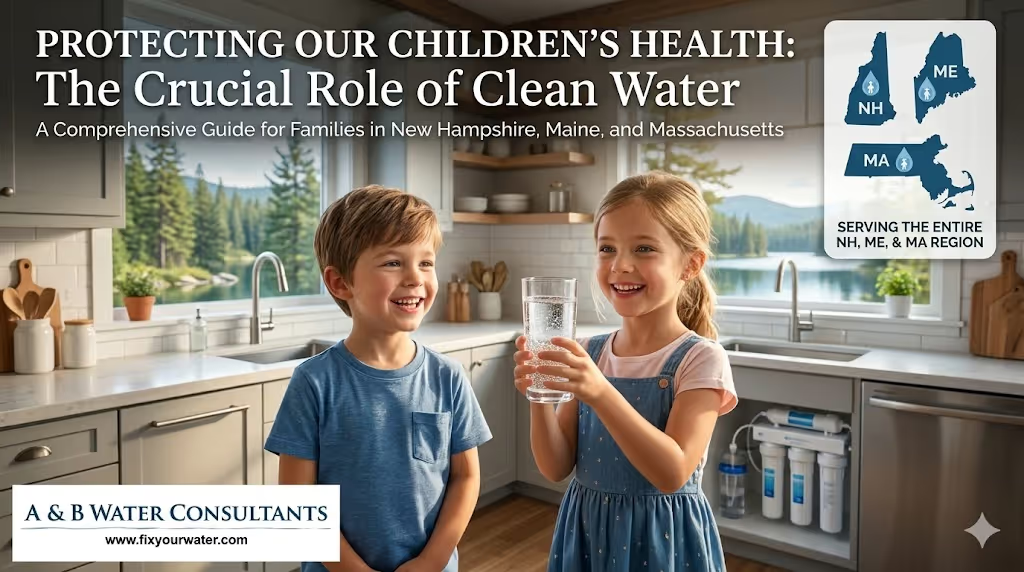
Children are uniquely sensitive to water contaminants, and understanding water quality effects on children is essential for parents who want to protect their family’s health. In New Hampshire and surrounding New England communities, private wells and regional contamination issues make testing and treatment especially important. This article explains how contaminants affect kids, what homeowners should test for, and practical steps families can take to reduce risk.
Why Children Are More Vulnerable
Physiology and behavior make children more susceptible to the effects of contaminated water. Compared with adults, kids drink more water per pound of body weight, absorb some chemicals more readily, and are still developing neurologically and physically. Those developmental periods are windows of increased vulnerability. Even low-level exposure to certain contaminants can have disproportionate consequences for growth, cognitive development, and long-term health.
- Higher intake relative to body weight. Infants and young children consume more water and food relative to their size, which increases their effective dose of any contaminant.
- Developing organs and systems. The brain, immune system, and endocrine system are still forming, making them more sensitive to toxic insult.
- Longer lifetime risk. Early-life exposures accumulate over time and can raise lifetime risk for chronic diseases, including some cancers.
Common Contaminants in New Hampshire, Southern Maine, and Massachusetts
New England has a mix of private wells, bedrock aquifers, and industrial and agricultural sources that create particular concerns for families. Below are contaminants frequently encountered in New Hampshire and neighboring areas, with a focus on how they relate to children’s health.
Arsenic
Arsenic occurs naturally in many New England bedrock aquifers and can be present in private wells. Chronic exposure is linked to developmental effects, reduced IQ in children, skin lesions, and increased cancer risk. Arsenic exists in two main forms in water. Arsenite (As III) is more difficult to remove than arsenate (As V), and some treatment methods require pre-oxidation.
Radon
Radon is a radioactive gas that originates in soil and bedrock. In New Hampshire, radon in indoor air is a well-known hazard, but radon can also dissolve into groundwater and enter homes through water use. When radon-containing water is used for showering and cooking, some of that radon releases into indoor air, increasing inhalation exposure. Long-term exposure is linked to lung cancer risk.
PFAS (Per- and Polyfluoroalkyl Substances)
PFAS are a family of persistent chemicals historically used in firefighting foams, textiles, and nonstick coatings. They have been detected in New England groundwater near industrial sites, airports, and firefighting training areas. PFAS can affect the immune system, interfere with growth and development, and may alter hormone functions. Their persistence makes removal and prevention a priority.
Lead
Lead usually gets into drinking water from household plumbing rather than source water. Old pipes, solder, and fixtures are common sources. Lead exposure in children can cause irreversible neurological damage and learning and behavioral problems even at low levels.
Nitrates
Nitrates often come from fertilizer runoff and septic systems. High nitrate levels are particularly dangerous for infants because of the risk of methemoglobinemia, or "blue baby syndrome," which reduces oxygen delivery in the blood.
Microbial Contaminants
Coliform bacteria, E. coli, and other pathogens may contaminate wells, especially after flooding or seasonal recharge. These can cause acute gastrointestinal illness in children, who are more likely to become dehydrated.
Chlorine Byproducts and Volatile Organic Compounds
Disinfection byproducts and VOCs can enter water from industrial sources or treated municipal supplies. Some are linked to developmental and reproductive effects and may increase cancer risk over long exposure periods.
How Contaminants Affect Child Development and Water Safety
Understanding the link between child development and water safety helps families prioritize tests and treatments. Effects differ by contaminant, exposure level, and the child’s age, but several patterns are important to recognize.
- Neurodevelopmental effects. Lead and some organic contaminants are known to impair cognitive development, attention, and behavior. Even small impacts on IQ can have lifelong consequences.
- Endocrine disruption. PFAS and certain organic chemicals can mimic or interfere with hormones, potentially altering growth and metabolic development.
- Immune system impacts. PFAS can reduce vaccine response and weaken immune defense, increasing susceptibility to infections.
- Acute gastrointestinal illness. Pathogens produce immediate illness in kids, which can be severe and require medical attention, especially in young infants.
- Long-term chronic disease risk. Arsenic, certain VOCs, and radon-related exposure are associated with increased lifetime cancer risks.
Short-term Versus Long-term Effects: What Parents Should Know
Short-term effects are usually easier to recognize. Foul taste or odor, stomach upset, or an outbreak of gastrointestinal illness in a household points to an immediate water problem. Long-term effects are subtler and often only appear years after exposure.
- Short-term: Diarrhea, vomiting, rashes, sudden changes in taste or smell, and acute respiratory irritation after showering if volatile chemicals are present.
- Long-term: Reduced cognitive scores, delayed development, hormone disruption, and elevated cancer risk.
Because long-term impacts are harder to trace back to a single source, routine testing and early intervention are essential tools to protect children.
Signs Parents Should Watch For
Many signs are non-specific, but certain red flags should prompt immediate water testing and a medical review.
- Children with unexplained developmental delays or learning difficulties
- Infants with blue-tinged skin or poor feeding that could indicate nitrate exposure
- Household members with frequent stomach illnesses after water use
- Older homes with lead plumbing or fixtures
- Recent well contamination events, flooding, or nearby industrial activity
- Noticeable changes in water color, odor, or taste
If any of these signs appear, families should test their water and consult a pediatrician if health symptoms are present.
Testing Water: What Homeowners in New Hampshire Should Do
Many New Hampshire homes rely on private wells, and state regulations do not routinely test private supplies. That makes homeowner-initiated testing the primary defense. Testing frequency depends on the contaminant and the well history.
- Annual or biennial testing. Basic testing for bacteria and nitrates is recommended at least once a year for private wells; more frequent testing is wise if problems are suspected.
- Test after events. Test after flooding, pump work, or nearby land use changes.
- Test for specific contaminants. If the property is on bedrock or near known contamination sources, add arsenic, radon, PFAS, and VOC tests as appropriate.
- Use certified labs. Samples should go to state-certified labs to ensure reliable results.
A & B Water Consultants helps New Hampshire families design a testing plan tailored to local geology and potential sources of contamination, and helps interpret lab results. Contact A&B Water Consultants for a free water treatment quote.
Treatment Options: Filtration and Remediation That Protect Kids
Treatment choice depends on the contaminant, household needs, and budget. Systems can be installed at the point of entry to treat all water coming into the home or at point of use for drinking and cooking taps only.
Point-of-Use Versus Whole-House Systems
- Point-of-use (POU). These systems, such as reverse osmosis under the kitchen sink, treat water used for drinking and cooking. They are cost-effective when contaminants primarily affect ingestion.
- Whole-house (point-of-entry). These treat water used throughout the home, including for bathing and laundry. Whole-house systems are preferable when contaminants evaporate into air during showering, as with radon, or when skin exposure matters.
Specific Technologies
- Reverse osmosis (RO). Highly effective at removing arsenic, lead, PFAS, nitrates, and many VOCs at POU. RO requires regular maintenance and produces a reject stream.
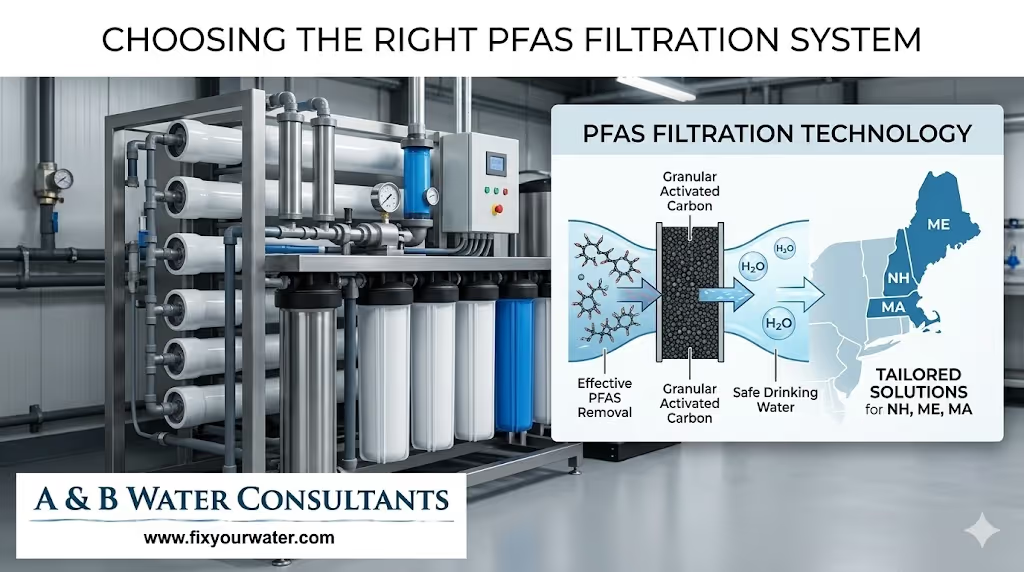
- Granular activated carbon (GAC). Often used for PFAS and organic chemicals. Performance varies with the type of PFAS and water chemistry.
- Ion exchange resins. Effective for certain PFAS and nitrates. Resins may require regeneration and disposal considerations.
- Media filtration for arsenic. Specialized iron-based media or adsorption media are used for arsenic removal. Some systems require pre-oxidation for arsenite removal.
- Aeration systems for radon. Aeration removes radon from water by transferring it to air that is vented outside. This is generally the preferred method for waterborne radon because it avoids accumulating radioactivity in filter media.
- Point-of-use carbon filters certified for lead. NSF-certified filters can reduce lead at the tap, which is crucial in homes with older plumbing.
Because every well and household is different, a tailored system is the most effective solution. A & B Water Consultants designs custom solutions focused on arsenic and radon filtration and offers guidance on PFAS removal. Contact A&B Water Consultants for a free water treatment quote.
Practical Steps Families Can Take Right Now
While testing and professional remediation are arranged, several immediate actions reduce exposure.
- Use cold water for drinking and cooking. Hot water is more likely to leach metals from plumbing and dissolve certain contaminants more readily.
- For infants, use bottled water or water known to be low in nitrates and other contaminants for formula preparation, until testing confirms safety.
- Flush taps for a minute or so in the morning if lead from plumbing is suspected. Do not use hot water for baby formula.
- Install a certified point-of-use filter for lead reduction if plumbing is old and immediate remediation is needed.
- After heavy rain or flooding, test wells for bacteria before using water for drinking or cooking.
- Maintain systems. Replace filters on schedule and service whole-house systems according to manufacturer and installer guidance.
For families in New Hampshire, Southern Maine, and Massachusetts, local conditions may require additional precautions. A&B Water Consultants provides specific advice tailored to New England geology and local contamination sources. Contact A&B Water Consultants for a free water treatment quote.
Addressing PFAS: A New England Priority
PFAS contamination has been a persistent concern in New England because of historical industrial use and military firefighting training sites. Health agencies increasingly recognize potential impacts on child development and immune response.
- Sources. Airports, military sites, industrial facilities, and certain landfills.
- Health concerns. Potential effects include immune suppression, altered growth, and changes in cholesterol and liver enzymes. Evidence for developmental impacts in children is growing.
- Treatment. GAC and ion exchange can be effective, and RO can remove many PFAS when installed at the point of use. Choice depends on which PFAS are present and at what concentrations.
Because PFAS chemistry varies across dozens of compounds, A&B Water Consultants evaluates lab data and recommends appropriate media and system design for families in New Hampshire, Southern Maine, and Massachusetts. Contact A&B Water Consultants for a free water treatment quote.
Radon in Water and Air: Dual Concern for New England Homes
New Hampshire has one of the highest residential radon potentials in the country. Radon in groundwater adds a second pathway of exposure. When radon-rich water is used for showering, cooking, or laundry, radon gas transfers to indoor air, raising inhalation exposure.
- Testing. Radon testing in air is standard; water testing is advised for private wells in high-radon areas.
- Mitigation. Aeration systems are the preferred water treatment because they vent radon outdoors rather than accumulate it in carbon media.
- Dual systems. Homes with high air radon may still need water treatment to reduce additional exposure from water use.
A & B Water Consultants specializes in radon filtration solutions and offers experience with aeration systems appropriate for New England well water.
How A & B Water Consultants Helps New Hampshire Families
With over 25 years of experience serving New England homeowners, A & B Water Consultants focuses on practical, proven solutions for arsenic and radon filtration and broader water quality concerns. The company starts by assessing local geology, reviewing lab results, and understanding family needs to design a system that protects drinking water and the home environment.
- Custom designs. Systems are tailored to the specific contaminant profile and household usage patterns.
- Local expertise. Familiarity with New Hampshire bedrock aquifers and regional contamination helps prioritize the right tests and treatments.
- Full-service approach. From testing recommendations to installation and maintenance schedules, the focus is on reliable long-term protection for children and families.
Homeowners in New Hampshire, Southern Maine, and Massachusetts can get expert guidance and detailed system proposals.
Cost, Maintenance, and What to Expect
Costs vary widely depending on contaminant, system complexity, and whether treatment is point-of-use or whole-house. Typical considerations include:
- Upfront costs. Point-of-use RO systems are often less expensive initially than whole-house systems, but whole-house systems protect skin exposure and inhalation risks.
- Operating costs. Filters, media replacements, electricity, and occasional service calls. Aeration systems have different maintenance compared to media filters.
- Follow-up testing. After installation, retesting verifies system performance and ensures children are no longer exposed.
- Warranty and service plans. Reputable installers offer warranties, annual maintenance plans, and clear replacement schedules.
Families should budget not just for the initial system but for ongoing service to keep protection effective. A & B Water Consultants outlines realistic costs and maintenance expectations before installation so homeowners can plan accordingly. Contact A&B Water Consultants for a free water treatment quote.
Policy, Regulation, and Local Resources in New England
Regulatory guidance helps set priorities but does not replace testing for private wells. The U.S. EPA sets maximum contaminant levels for certain contaminants in public water systems. Many private well owners rely on state resources and local health departments for guidance.
- New Hampshire Department of Environmental Services (NHDES). Offers well testing guidance and lists of certified laboratories.
- Maine CDC and Maine Drinking Water Program. Provide regional resources for testing and health guidance.
- Massachusetts Department of Environmental Protection. Oversees public system standards and provides fact sheets for homeowners.
Families should consult local resources for current advisories, especially regarding PFAS levels from industrial releases or public supply notices. A & B Water Consultants works with homeowners to comply with state guidance and complements public resources with practical treatment solutions.
Case Study: A Rural New Hampshire Family
A family living on a private well in the Seacoast area of New Hampshire noticed a persistent metallic taste in their drinking water. Routine testing revealed arsenic levels above the recommended guideline and low-level radon in the well. The children had recurring stomach complaints and one child had been struggling in school with attention issues that parents wanted to investigate further.
A & B Water Consultants recommended a dual approach: a whole-house aeration system to reduce radon off-gassing during showers and laundry, and a point-of-use reverse osmosis system at the kitchen sink to ensure arsenic and other dissolved metals were removed from drinking and cooking water. After installation and follow-up testing, arsenic and radon levels were reduced to safe levels. The family reported the water taste improved, gastrointestinal symptoms decreased, and they felt reassured about the long-term health of their children.
Practical Checklist for Parents
Parents in New Hampshire and nearby regions can follow this concise checklist to keep children's water exposure low.
- Test private well water annually for bacteria and nitrates.
- If bedrock or local testing history suggests it, add arsenic, radon, PFAS, and VOCs to the testing panel.
- Use point-of-use filters certified for lead if plumbing is old or uncertain.
- Consider whole-house treatment if contaminants volatilize or if bathing exposure is a concern.
- Keep records of tests and treatments and retest after system installation or repairs.
- Talk to an experienced regional water professional to get a tailored plan.
For homeowners who want a straightforward way to start, Contact A&B Water Consultants for a free water treatment quote.
Conclusion
Protecting children from harmful water contaminants starts with awareness, testing, and informed action. The specific geology of New Hampshire and the broader New England region creates exposure patterns that make private well testing and targeted treatment essential for many families. From arsenic and radon to PFAS and lead, contaminants can affect child development and long-term health if left unaddressed.
Parents should prioritize reliable testing, consult local experts for interpretation, and choose proven treatment solutions that match the household’s needs. A & B Water Consultants brings more than 25 years of regional experience in arsenic and radon filtration and custom water treatment system design tailored to families in New Hampshire, Southern Maine, and Massachusetts. For homes where children’s health is a top priority, professional assessment and properly maintained systems are a sound investment.
Contact A&B Water Consultants for a free water treatment quote.
Frequently Asked Questions
How often should a private well be tested for contaminants affecting children?
Basic testing for bacteria and nitrates should be done at least once a year. Additional testing for arsenic, radon, PFAS, and VOCs should be performed if local geology, land use, or prior results indicate risk. Test after flooding, well repair, or changes in nearby land use.
What contaminants are most dangerous to children?
Lead, arsenic, nitrates, certain PFAS, and pathogens are among the most concerning. Lead and arsenic can affect neurological development and long-term health. Nitrates are dangerous to infants. PFAS can interfere with growth and immune function. Pathogens cause acute illness that is particularly risky for very young children.
Are home water filters effective for protecting children?
Yes, when chosen and maintained correctly. Filters and systems must be certified for the specific contaminants of concern and properly installed. Point-of-use reverse osmosis systems work well for many dissolved contaminants, while whole-house systems are better for volatile contaminants and broader protection. Regular maintenance and retesting are essential.
Can boiling water remove PFAS or lead?
No. Boiling water does not remove PFAS or lead and can actually concentrate some contaminants through evaporation. Boiling is effective against microbes, but it is not a solution for chemical contaminants.
How quickly will children recover after removing contaminated water exposure?
Recovery timelines vary. Some acute effects, like bacterial gastroenteritis, can resolve in days with appropriate care. Neurodevelopmental impacts from lead or chronic exposures may not be reversible, which is why prevention is critical. Early detection and reducing ongoing exposure provide the best chances for improved outcomes.
Families ready to take the next step can Contact A&B Water Consultants for a free water treatment quote.