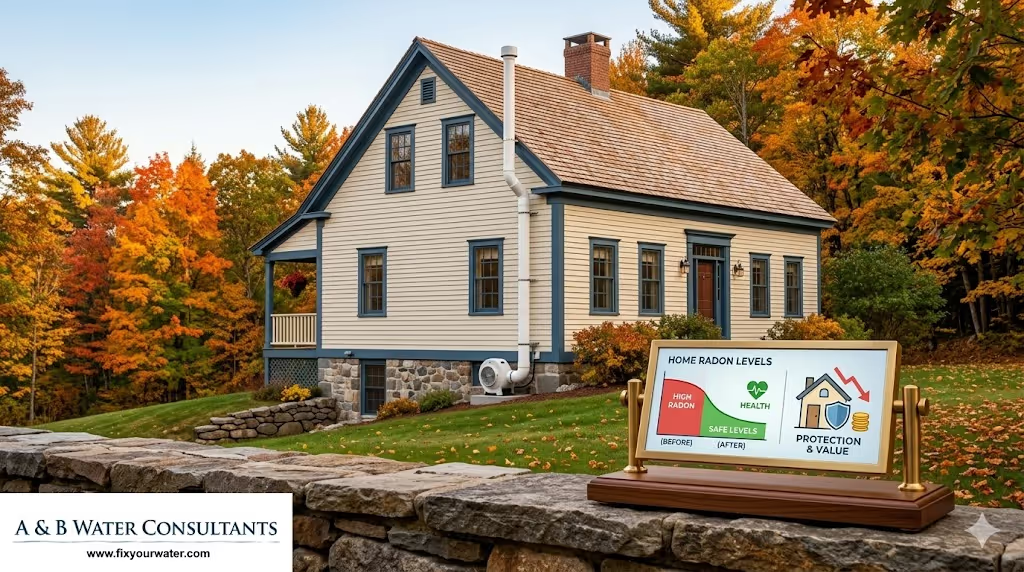
Radon is a colorless, odorless radioactive gas that forms naturally from the decay of uranium in rock and soil. For homeowners in New Hampshire, southern Maine, and Massachusetts, radon is not a distant concern. It is a measurable, present risk driven by the region's granite-rich geology. Understanding the cost of radon mitigation is the first step toward protecting your family and your investment, but in New England, that conversation must include both air and water exposure pathways. This guide breaks down what mitigation actually costs here, why local factors matter, and how to move forward with confidence.
Why New Hampshire Homes Face Higher Radon Risk Than the National Average
New Hampshire consistently ranks among the highest-risk states in the country for radon exposure, and the reason is geological. The state sits on some of the oldest and most uranium-rich granite bedrock in North America. As uranium slowly decays, it produces radium, which in turn produces radon gas. That gas migrates upward through soil and fractured rock, entering homes through foundation cracks, slab penetrations, and private well water drawn from bedrock aquifers.
The EPA estimates that about one in every 15 homes nationwide has radon levels at or above the action level of 4 picocuries per liter (pCi/L). In New Hampshire, that figure is significantly higher. Some county surveys have found elevated radon in more than half of tested homes. Southern Maine and parts of Massachusetts, particularly communities near the White Mountain granite formations and the Merrimack Valley, share similar geological characteristics and comparable risk profiles.
Older housing stock compounds the problem. Many New England homes were built before radon was a recognized hazard, with full basements and minimal vapor barriers that allow easy gas entry. This regional context is why national cost estimates often fall short when applied to New Hampshire homeowners.
What Radon Mitigation Actually Costs in New Hampshire and Southern New England
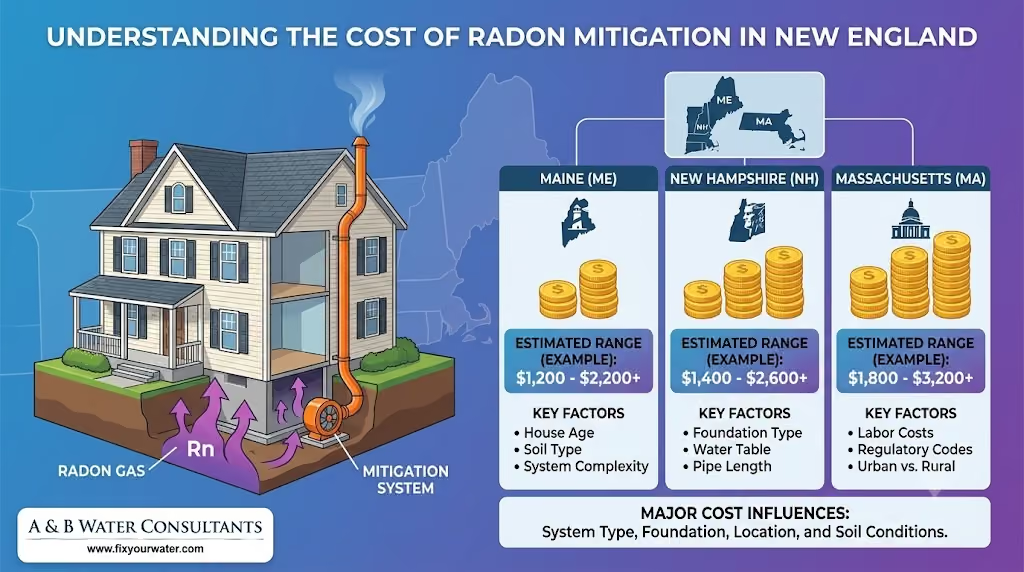
National guides typically quote radon mitigation costs between $800 and $2,500 for a standard sub-slab depressurization system. In New Hampshire, southern Maine, and Massachusetts, homeowners should budget more realistically within a range of $1,200 to $3,500 for air-based mitigation, with complex installations running higher.
These ranges reflect regional labor costs, the complexity of New England home construction, and the added logistics of working in older homes with unconventional layouts. Contact A&B Water Consultants for a free radon treatment quote specific to your property and water source.
Key Factors That Affect the Cost of Radon Mitigation
Foundation Type
Foundation type is one of the most significant cost drivers. New England homes predominantly have full basements, which generally respond well to sub-slab depressurization (SSD). A single suction point through the basement slab is often sufficient, keeping costs toward the lower end of the range. Homes with crawl spaces require encapsulation of the crawl space floor with a vapor barrier before depressurization can be effective, adding both materials and labor. Slab-on-grade construction, while less common in New Hampshire, requires careful pipe routing and can increase installation complexity.
Number of Suction Points and Pipe Routing
Some homes require multiple suction points to achieve adequate pressure field extension beneath the slab. Segmented or filled-in foundations, additions with separate slabs, or homes with very low sub-slab permeability may need two, three, or more suction points, each adding to the total radon water treatment cost and installation price for radon systems. Pipe routing through finished living spaces or exterior walls also affects labor time and overall price.
Pre-Mitigation Radon Levels and Home Size
Homes with very high radon concentrations, sometimes 20 to 40 pCi/L or more in New Hampshire, may require more aggressive system configurations. Larger homes with greater square footage and more complex floor plans also tend to require more extensive systems.
Radon in Your Well Water: A Hidden Cost New England Homeowners Often Miss
Most national radon guides focus exclusively on radon entering homes through the foundation. In New England, that is only half the story. A large percentage of homes in New Hampshire, rural Maine, and parts of Massachusetts rely on private bedrock wells. Those wells draw water directly from the same granite formations that produce elevated soil and air radon. As a result, radon dissolves into the groundwater and enters the home through every tap, shower, and appliance connected to the water supply.
When radon-laden water is agitated, such as during showering or running a dishwasher, it off-gases into the indoor air. The EPA estimates that approximately 10,000 pCi/L of radon in water contributes about 1 pCi/L to indoor air radon levels. Some New Hampshire wells test at 50,000 pCi/L or higher, making water-borne radon a meaningful contributor to overall household exposure.
The two primary treatment approaches for radon in well water are granular activated carbon (GAC) filtration and aeration systems. GAC systems use a carbon media bed to adsorb radon before water enters the home's plumbing. They are effective for moderate radon levels and are installed as point-of-entry systems, treating all household water. Aeration systems actively strip radon from water using air injection or spray aeration and are preferred for very high radon concentrations. Both require professional installation and periodic maintenance.
Because no competitor in this space specifically addresses radon water treatment cost for New England well-water homes, many homeowners are caught off guard by this additional expense. Contact A&B Water Consultants for a free radon treatment quote that accounts for both your air and water radon exposure.
When You Need Both: Budgeting for Air and Water Radon Mitigation Together
For New Hampshire homeowners on private wells, the realistic scenario is often needing both an air-based mitigation system and a water treatment system. This combined approach is more common in this region than most guides acknowledge, yet it is rarely discussed in cost breakdowns found elsewhere.
When both systems are needed, homeowners should plan for a total investment ranging from approximately $4,500 to $9,000 or more, depending on system complexity. Some contractors and water treatment specialists can coordinate both scopes of work, reducing scheduling friction and ensuring the systems are designed to complement each other. In some cases, addressing water-borne radon first can meaningfully reduce indoor air radon levels, which may simplify or reduce the scope of air-based mitigation needed.
A thorough initial assessment, including both an air radon test and a water radon test, is essential before any mitigation spending begins. This prevents over-spending on air systems when water is the primary exposure source, and vice versa.
What a Professional Radon Mitigation Installation Should Include
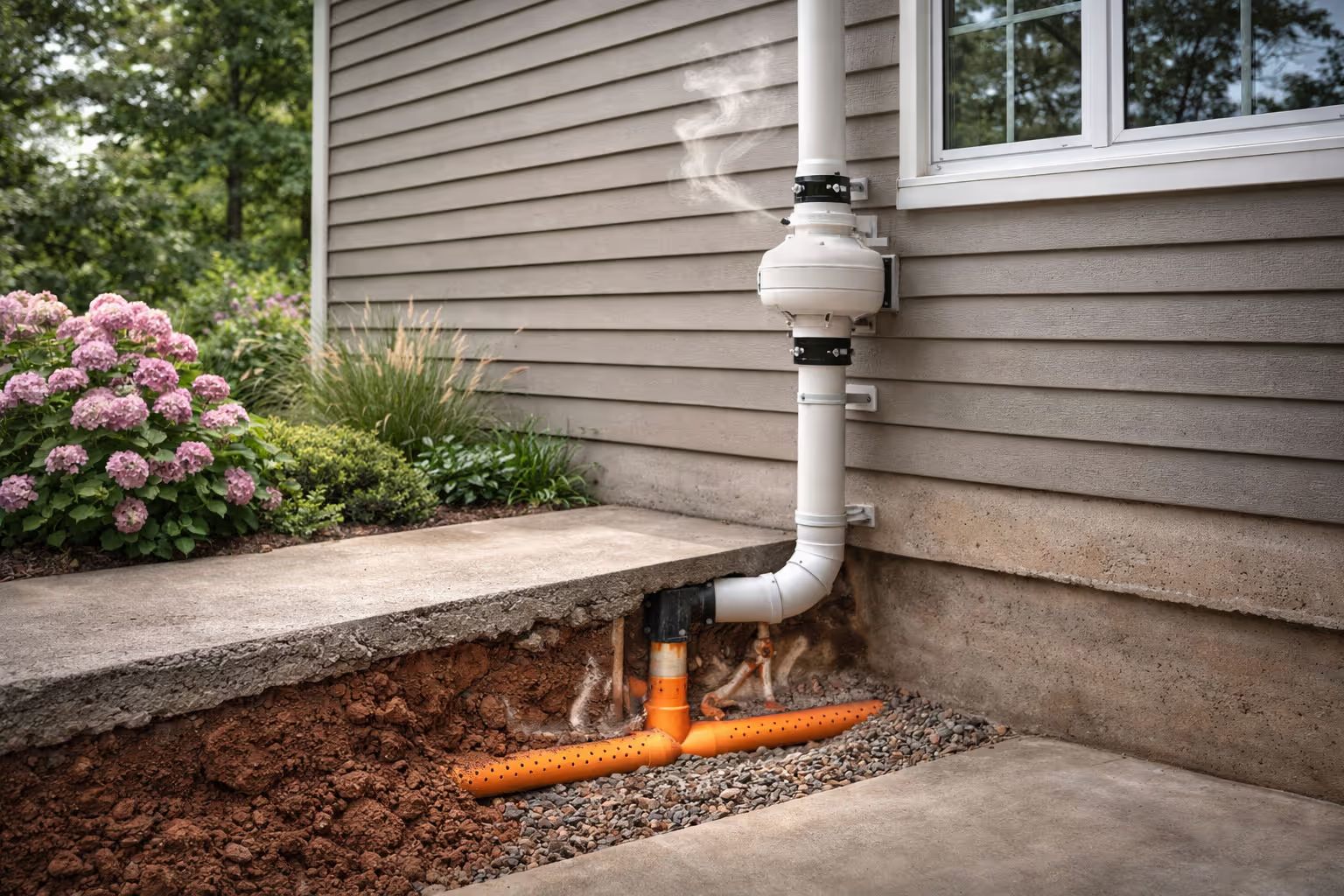
A properly scoped radon mitigation installation is not simply drilling a hole and installing a fan. For sub-slab depressurization, the work should include a diagnostic inspection of the foundation, a sub-slab communication test to verify soil permeability, installation of PVC pipe through the slab, connection to a continuously operating radon fan, proper sealing of the slab penetration, exterior or interior pipe routing to discharge above the roofline, and a clearly labeled system with a visual indicator showing the fan is operating.
For water treatment systems, professional installation includes sizing the system appropriately for the home's water usage, ensuring proper bypass valving for maintenance, and confirming the system meets NSF/ANSI standards for radon reduction. Post-installation water testing should verify that radon levels have been reduced to acceptable concentrations.
Post-mitigation air testing should be performed no sooner than 24 hours after installation and ideally within 30 days. This confirms the system is achieving the expected reduction. Reputable contractors include this testing in their quoted price or provide clear documentation of what post-installation verification is included.
The True Long-Term Cost of Radon Mitigation
The installation price for radon systems is the largest single expense, but it is not the only cost to consider over a 10 to 20 year ownership horizon.
Radon fan electricity consumption is modest but ongoing. Most residential radon fans draw between 20 and 90 watts continuously. At average New Hampshire electricity rates, annual operating costs typically fall between $20 and $90 per year, a minor expense relative to the health protection provided. Fan replacement, which may be needed every 10 to 15 years, typically costs $200 to $400 including labor.
For water treatment systems, GAC media requires periodic replacement, generally every two to five years depending on water volume and radon concentration. Media replacement costs typically range from $300 to $700. Aeration systems have lower consumable costs but may require more complex maintenance.
Periodic retesting is also recommended. The EPA and New Hampshire Department of Environmental Services suggest retesting every two years after mitigation, or any time the home undergoes significant structural changes. Professional short-term tests cost $100 to $300; certified DIY kits are available for $15 to $50.
The cost of not mitigating is far greater. Radon is the second leading cause of lung cancer in the United States, responsible for approximately 21,000 deaths annually. Prolonged exposure above 4 pCi/L carries compounding health risks. Beyond health, an unmeasured or unmitigated radon problem can derail a home sale, trigger price reductions, or create disclosure liability in New Hampshire and Maine real estate transactions.
Radon Testing Costs and Why Testing Comes First
No mitigation decision should be made without a confirmed test result. Testing is the essential first step, and it is the least expensive part of the entire process.
Short-term radon tests run for two to seven days and provide a quick snapshot of radon levels. Professional short-term tests, conducted and analyzed by a certified provider, typically cost $100 to $200 in the New Hampshire market. Certified DIY test kits are available from hardware stores and online for $15 to $50, though professional testing is recommended for real estate transactions or when initial results are borderline.
Long-term tests run for 90 days or more and provide a more accurate annual average, which is particularly useful in New England where seasonal variations can be significant. Radon levels tend to be highest in winter months when homes are closed up and heating systems create negative pressure that draws more soil gas indoors.
Water radon testing is a separate and equally important step for homes on private wells. A water sample sent to a certified laboratory typically costs $25 to $75. This test should be completed before any mitigation system is specified, as the results directly influence system selection and sizing.
Does Homeowners Insurance Cover Radon Mitigation?
In nearly all cases, standard homeowners insurance policies do not cover radon mitigation costs. Radon is treated as a pre-existing environmental condition rather than a sudden or accidental loss, placing it outside the scope of typical coverage. Riders or endorsements specifically covering radon are not commonly available.
New Hampshire and Maine do not currently offer statewide radon mitigation grant programs for private homeowners, though this can change as public health priorities evolve. Some municipalities and regional health organizations periodically offer subsidized testing or mitigation assistance; checking with the New Hampshire Department of Environmental Services or the Maine Center for Disease Control is worthwhile.
For most homeowners, mitigation is best approached as a planned home health investment. Financing through a home equity line of credit or a personal home improvement loan is a practical option. Some radon mitigation contractors and water treatment specialists offer payment plans. Contact A&B Water Consultants for a free radon treatment quote and to discuss financing options that fit your situation.
How to Choose a Qualified Radon Mitigation Contractor in New Hampshire
Contractor qualifications matter significantly in radon mitigation. An improperly installed system can fail to reduce radon levels, create negative pressure imbalances, or introduce new air quality concerns. In New Hampshire, Maine, and Massachusetts, look for contractors and water treatment specialists who hold current certification from the National Radon Proficiency Program (NRPP) or the National Environmental Health Association (NEHA-NRPP). These certifications require demonstrated knowledge, continuing education, and adherence to EPA standards.
For water-borne radon specifically, look for water treatment professionals with WQA (Water Quality Association) certification and documented experience with radon filtration systems in New England's well-water environment.
Red flags to watch for include contractors who skip the diagnostic phase and proceed directly to installation, quotes that do not include post-installation testing, no written warranty on workmanship or system performance, and pressure to install a system before test results are confirmed.
What to Look for in a Radon Mitigation Quote: A Homeowner Checklist
When evaluating quotes for radon mitigation, use this checklist to compare contractors and ensure you are getting a complete, professional scope of work:
- Contractor holds current NRPP or NEHA-NRPP certification
- Quote is based on an in-person or documented site assessment, not a phone estimate alone
- Scope of work specifies the number of suction points and pipe routing plan
- Fan model and specifications are listed
- Post-installation radon testing is included or clearly priced separately
- Written warranty covers both workmanship and system performance (typically a guarantee to reduce radon below 4 pCi/L)
- For water systems: media type, system capacity, and replacement schedule are documented
- For water systems: post-installation water test is included
- Permit requirements (where applicable) are addressed
- References or documentation of prior New England installations are available upon request
A thorough, itemized quote from a certified contractor is the baseline expectation. Be cautious of unusually low quotes that omit post-installation verification or lack a performance guarantee. Contact A&B Water Consultants for a free radon treatment quote that includes all of the above elements and is specific to New Hampshire and New England conditions.
Frequently Asked Questions
Are radon mitigation systems worth it?
Yes, without qualification. Radon is the second leading cause of lung cancer in the United States. In New Hampshire and New England, where geological conditions elevate risk above the national average, mitigation is one of the highest-value health investments a homeowner can make. The cost of installation is modest compared to the long-term health and financial consequences of inaction.
Will homeowners insurance cover radon mitigation?
Standard homeowners insurance policies do not cover radon mitigation. Radon is classified as an environmental condition rather than a covered loss event. Homeowners should plan for mitigation as an out-of-pocket home improvement expense, with financing options available through home equity products or contractor payment plans.
Is it hard to sell a house with a radon mitigation system?
A properly installed and documented radon mitigation system is generally viewed as a positive by buyers, not a liability. It demonstrates that the homeowner identified a problem and addressed it professionally. In New Hampshire and Maine real estate transactions, buyers increasingly expect radon testing and disclosure. A functioning system with documented post-mitigation test results showing levels below 4 pCi/L typically supports the sale rather than complicating it.
Does radon mitigation increase the electric bill?
Yes, but minimally. Most residential radon fans consume between 20 and 90 watts continuously. At current New Hampshire electricity rates, the annual operating cost is typically between $20 and $90, well within the range of routine household expenses.
What are the downsides of using a radon mitigation system?
A properly installed system has very few downsides. The fan produces a low-level hum that most homeowners do not notice. There is a modest ongoing electricity cost. In colder climates, exterior pipe routing requires attention to prevent frost-related issues. Periodic maintenance and retesting add minor ongoing costs. These considerations are far outweighed by the health and safety benefits.
What time of year is radon highest?
Radon levels tend to be highest in winter months in New England. Closed windows, increased negative pressure from heating systems, and reduced air exchange all contribute to higher indoor radon concentrations from November through March. Testing during this period provides a more conservative and protective measurement for annual exposure assessment.
Take the Next Step for Your Family's Safety
For New Hampshire, southern Maine, and Massachusetts homeowners on private wells, radon is a two-pathway problem that requires a two-pathway solution. The cost of radon mitigation, when understood fully and addressed professionally, is a manageable investment compared to the health risks and financial consequences of leaving it unaddressed. A&B Water Consultants brings over 25 years of experience designing and installing custom radon treatment systems for New England families, with deep expertise in both air and water-borne radon specific to this region's geology and housing stock.
Do not wait for a real estate transaction or a health concern to prompt action. Contact A&B Water Consultants for a free radon treatment quote and take the first concrete step toward a safer, healthier home.