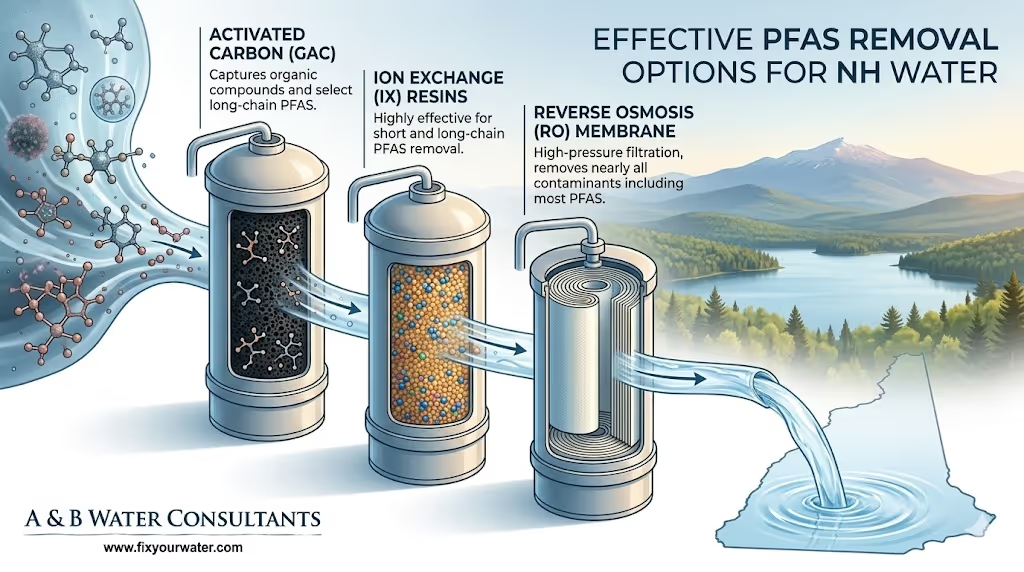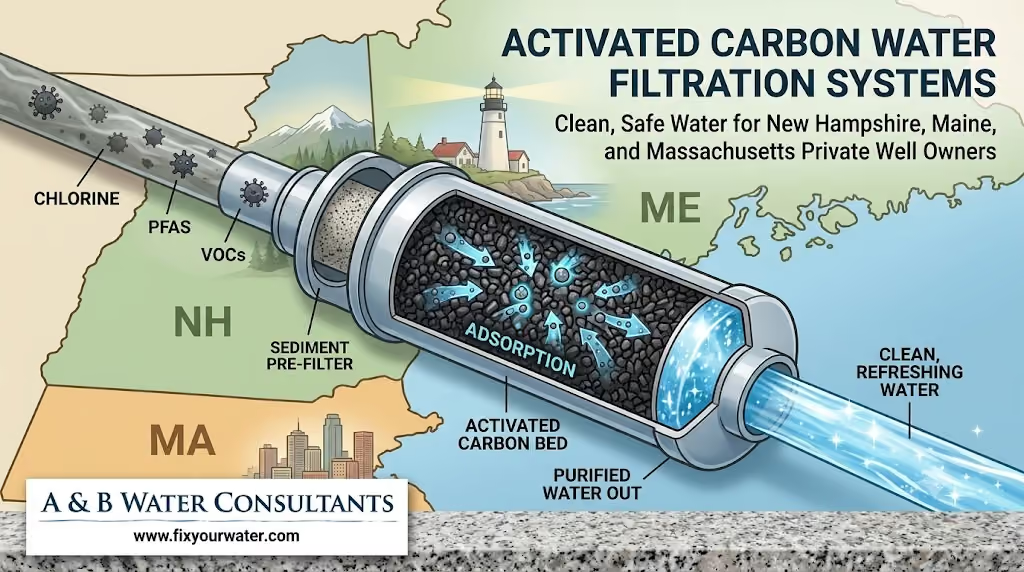
Activated carbon water filters are a widely used, cost effective method for improving drinking water taste, removing chlorine and many organic contaminants, and addressing certain emerging pollutants like PFAS. Homeowners in New Hampshire, Southern Maine, and Massachusetts often encounter a mix of contaminants in well and municipal supplies, and activated carbon frequently plays a central role in practical, professional treatment strategies. This article explains how activated carbon works, where it shines, where it falls short, and how it compares with other types of water filtration systems — including reverse osmosis systems — so families can make sound decisions backed by experienced local water tratment professionals.
How Activated Carbon Works
Activated carbon is a highly porous material made from carbon-rich sources such as coconut shells, bituminous coal, or wood. The manufacturing process creates a huge internal surface area that attracts and holds molecules through a process called adsorption. Adsorption is not the same as absorption. With adsorption, contaminants adhere to the surface of the carbon granules or blocks rather than being taken into the material.
There are a few common forms of activated carbon used in household water systems:
- Granular Activated Carbon (GAC) — loose granules in cartridges or tanks. Good for whole-house and point-of-entry use where bulk capacity and flow are needed.
- Carbon Block — compressed carbon that creates a denser media with consistent pore structure and better particulate filtration. Common in under-sink and point-of-use filters.
- Catalytic Carbon — specially treated carbon that speeds up chemical reactions; particularly effective for treating chloramines and some PFAS compounds that are harder to remove with regular GAC.
- Impregnated Carbon — carbon treated with additional chemicals or metals to target specific contaminants, for example to improve reduction of hydrogen sulfide or mercury.
What Activated Carbon Excels At
Activated carbon water filters have several strengths that make them a mainstay of household water treatment:
- Taste and Odor Improvement. Carbon removes chlorine, chloramine byproducts, and many organic compounds that cause unpleasant taste and smell.
- Volatile Organic Compounds (VOCs). Many VOCs from industrial or residential sources respond well to carbon adsorption.
- Some Metals and Organics. Certain organic contaminants and some lead reduction certified carbon blocks can lower lead concentrations when properly tested and installed.
- PFAS Reduction. Granular and catalytic carbon are commonly used to reduce a range of PFAS compounds, particularly long-chain PFAS. Carbon is often the first-line treatment for PFAS at the household level.
- Flexible Applications. Carbon can be used in point-of-use filters, under-sink systems, whole-house filters, and as a polishing stage after treatment like reverse osmosis systems.
Limitations: What Carbon Does Not Remove Well
Despite many advantages, activated carbon is not a universal solution. It has clear limits that homeowners should understand when evaluating treatment options for contaminants such as arsenic, radon, nitrates, and certain metals.
- Arsenic. Standard activated carbon is not an effective solution for arsenic removal. Arsenic typically requires ion exchange, activated alumina, iron-based media, or reverse osmosis, depending on the type of arsenic present.
- Radon. Radon is best addressed with aeration systems that strip gas out of water. GAC can adsorb radon, but that creates a small amount of radioactive waste that needs careful disposal and may not be suitable as a long-term solution for high radon levels.
- Hardness, Nitrates, and Fluoride. These dissolved minerals and ions generally need ion exchange water softeners or reverse osmosis systems for effective reduction.
- Bacteria and Viruses. Carbon alone does not reliably remove microbial contamination. If bacterial contamination is suspected in well water, disinfection or filtration technologies like UV are required.
How Effective Is Activated Carbon Against PFAS, Arsenic, and Radon?
These three contaminants are among the highest concern for New England homeowners. The right answer for treatment depends on the contaminant chemistry, concentration, and household priorities.
PFAS
Activated carbon — particularly granular activated carbon and catalytic carbon — is effective at adsorbing many PFAS compounds, especially long-chain PFAS such as PFOA and PFOS. However, effectiveness varies by PFAS species, influent concentration, contact time, and the carbon type. Catalytic carbons and specially treated carbons can extend service life and improve removal for shorter-chain PFAS that are harder to capture.
Key considerations for PFAS treatment with carbon include:
- Contact time and bed depth. Longer contact increases removal efficiency.
- Breakthrough. Once media saturates, PFAS will pass through. Frequent testing and scheduled media replacement are essential.
- Certification. Some products undergo protocols for PFAS reduction. Look for relevant testing documentation when selecting systems.
Arsenic
Activated carbon is not considered an effective or reliable treatment for arsenic. For arsenic removal, A & B Water Consultants typically evaluates whether arsenic is present as arsenite (arsenic III) or arsenate (arsenic V) and recommends targeted solutions such as:
- Oxidation followed by filtration to convert arsenite to arsenate then remove with adsorption media.
- Iron-based adsorptive media designed specifically for arsenic.
- Ion exchange systems or reverse osmosis systems for point-of-use removal of arsenic where appropriate.
For families dealing with well water that tests positive for arsenic, a professional evaluation is essential. Contact A&B Water Consultants for a free water filtration treatment system quote.
Radon
Radon in water presents a different challenge because it is a gas that can off-gas into indoor air as water is used, creating an inhalation risk. The most effective solutions are:
- Aeration Systems that strip radon from water and vent it outdoors safely.
- GAC Systems can remove radon in lower concentration situations, but they accumulate radioactivity in the media over time. That spent media must be handled and disposed of according to regulations, and it may not be appropriate for high radon levels in water.
Because of the safety and disposal implications, professionals generally prefer aeration for moderate to high radon concentrations. A & B Water Consultants has experience evaluating radon-in-water scenarios and designing tailored aeration or GAC solutions when appropriate. Contact A&B Water Consultants for a free water filtration treatment system quote.
Types of Home Water Filtration Systems Compared
Homeowners encounter a range of options when choosing water treatment. Each system has strengths, weaknesses, and appropriate applications. Here is a practical comparison focused on what matters to families in New Hampshire, Southern Maine, and Massachusetts.
Point-of-Use Carbon Filters
Examples: faucet-mounted units, pitcher filters, under-sink carbon block systems.
- Best for: improving taste, reducing chlorine, VOCs, and some PFAS at the drinking water tap.
- Limitations: do not protect water throughout the house; limited capacity and may require frequent cartridge changes.
- Cost: low to moderate initial cost; recurring cartridge replacements.
Whole-House (Point-of-Entry) Carbon Systems
Examples: large GAC tanks installed where water enters the home.
- Best for: removing chlorine, taste and odor, and many VOCs for all taps and appliances; helpful for laundry and showers.
- Limitations: larger footprint; may require backwashing or scheduled media replacement; not a standalone solution for arsenic or high PFAS without proper design.
- Cost: moderate to high upfront cost; periodic media replacement.
Reverse Osmosis Systems
Examples: under-sink RO with pre- and post-filters, point-of-use RO units.
- Best for: broad contaminant reduction including many PFAS, nitrates, fluoride, arsenic, and dissolved solids. RO membranes provide a high level of treatment for drinking water.
- Limitations: produces wastewater, lower flow rate, may require a storage tank; prefiltration is necessary to protect RO membranes.
- Cost: moderate to high initial cost; filter and membrane replacements required periodically.
Ion Exchange and Water Softeners
Examples: cation exchange softeners, anion exchange systems for arsenic.
- Best for: softening hard water, addressing specific ionic contaminants such as arsenic through tailored resins.
- Limitations: brine discharge from salt-based softeners, requires proper sizing and resin selection for arsenic.
UV Disinfection
Examples: UV chambers installed after filtration.
- Best for: killing bacteria and viruses in well water when microbial contamination is present.
- Limitations: does not remove chemical contaminants; requires clear water upstream to work effectively.
Aeration Systems for Radon
Examples: packed tower aeration, spray aeration units.
- Best for: removing radon from water and safely venting it outdoors. Often the recommended choice in New England where groundwater radon is common.
- Limitations: higher initial cost and requires mechanical equipment and ventilation.
When Combining Systems Makes Sense
Many homeowners get the best results by combining technologies. Activated carbon often serves as a complementary element rather than a complete solution on its own.
- Carbon + Reverse Osmosis. Carbon can act as a prefilter to protect an RO membrane from chlorine and organics, while the RO membrane handles dissolved ions like arsenic and nitrates. A carbon postfilter can then polish taste.
- Carbon + Aeration. For PFAS and volatile organics, whole-house carbon followed by point-of-use RO gives both comprehensive coverage and extra drinking-water protection.
- Carbon + UV. UV takes care of microbial risks while carbon addresses taste and organic contaminants.
For families who face multiple contaminants, professional design ensures the right sequence and media are used. A & B Water Consultants specializes in custom systems that combine media and technologies to meet local water challenges. Contact A&B Water Consultants for a free water filtration treatment system quote.
Design Considerations: Flow Rate, Contact Time, and Media Life
Activated carbon performance is not just about the media type. Design parameters have a large impact:
- Contact Time. Adsorption improves with more time for water to contact the carbon. Whole-house tanks with deeper beds generally provide better removal than thin cartridges at high flow rates.
- Flow Rate. Higher flow can reduce contact efficiency. Systems must be sized for household peak flows.
- Bed Depth and Surface Area. Deeper beds and high-quality carbon with strong micropore volume improve long-term performance.
- Water Quality. High levels of particulate, iron, or organics can foul carbon and shorten life. Pretreatment like sediment filters and iron removal may be necessary.
These design choices are why professional assessment matters. Sizing errors or wrong media selection can mean premature breakthrough of contaminants or unnecessarily high operating costs.
Installation, Maintenance, and Costs
Installation and ongoing upkeep differ widely across systems.
- Point-of-use carbon filters are relatively inexpensive to install but require cartridge replacements every 2 to 12 months, depending on use.
- Whole-house carbon systems cost more up front. GAC tanks may need media replacement every 1 to 5 years depending on contaminant load. Some GAC tanks are designed to be reactivated or replaced professionally.
- Reverse osmosis systems have filter changes every 6 to 12 months and membrane replacement every 2 to 5 years, with regular sanitation recommended.
- Aeration and ion exchange systems require more sophisticated maintenance, occasional media or resin replacement, and periodic performance checks by a qualified technician.
For New England homeowners, seasonal factors and hard water levels can influence service intervals. A & B Water Consultants provides ongoing service agreements and maintenance plans tailored to local conditions and regulatory requirements. Contact A&B Water Consultants for a free water filtration treatment system quote.
Local Considerations for New Hampshire, Southern Maine, and Massachusetts
Geology and land use in the region shape the most common water quality problems:
- Arsenic often appears in bedrock well supplies in New Hampshire and parts of Maine. This requires targeted treatment beyond simple carbon filtration.
- Radon is widespread in groundwater across New England. Families with elevated radon in air should also test water. Aeration is often the best technical and regulatory choice for water radon mitigation.
- PFAS contamination has been identified near certain former military, firefighting training, and industrial sites in New Hampshire and Massachusetts. Point-of-use and whole-house carbon systems are commonly used to reduce PFAS exposure pending larger remediation efforts.
- Iron and Manganese are frequent in private wells and can foul carbon if not treated with oxidizing and filtration steps first.
A & B Water Consultants uses local experience and lab partnerships to design solutions that match regional water chemistry and household goals. They specialize in arsenic and radon treatment and can integrate activated carbon into broader systems where it adds value. Contact A&B Water Consultants for a free water filtration treatment system quote.
Environmental and Safety Considerations
Activated carbon media must be handled and disposed of responsibly, particularly when it removes radioactive radon or concentrated contaminants like PFAS over time. Some important notes:
- Spent Carbon Disposal. If carbon has adsorbed radioactive radon daughters, it may require special disposal. Professionals will follow state and federal guidance.
- Regulations and Certifications. Look for NSF/ANSI testing where applicable. There are protocols that address specific reductions such as taste and odor, VOCs, and select PFAS removal tests. A consultant can review lab data and manufacturer test results to verify performance claims.
- Monitoring. Regular testing is the only reliable way to know if carbon media is saturated and no longer removing a contaminant effectively. Scheduled testing is part of an effective maintenance plan.
How to Test Water and What to Ask a Professional
Good decisions start with accurate testing. Homeowners should order a comprehensive water analysis that includes:
- PFAS panel if the property is near known contamination sources or if the homeowner wants reassurance.
- Arsenic speciation to determine whether arsenite or arsenate is present.
- Radon in water if radon is known in indoor air or if living in high-risk geology.
- Standard tests for bacteria, nitrates, lead, iron, manganese, pH, and hardness.
When meeting a professional, useful questions include:
- Which contaminants are most concerning for this location, and why?
- What treatment combinations are recommended and why?
- How often will filters and media need replacement, and what are the associated costs?
- Are there certifications, test results, or references that demonstrate the system's real-world performance?
Given the complexity of regional water issues, A & B Water Consultants recommends lab testing through certified labs and offers professional interpretation and system proposals tailored to local conditions.
Real-World Examples
Example 1: A family in central New Hampshire discovered arsenic in their private well. A & B Water Consultants performed speciation testing and designed a multi-stage system: oxidation to convert arsenite to arsenate, an iron-based adsorptive media for whole-house removal, and a point-of-use reverse osmosis system under the kitchen sink for added assurance on drinking water. This combination reduced arsenic to below detection and improved overall taste and appliance longevity.
Example 2: A coastal Maine homeowner found PFAS in well water at low parts-per-trillion levels. A point-of-entry GAC system was installed to treat water entering the home and an under-sink reverse osmosis system provided additional protection for drinking water. Regular testing and scheduled carbon replacement ensured continued performance.
Example 3: A Massachusetts house had high radon in air and measurable radon in water. The consultant team recommended an aeration system for the water, which reduced waterborne radon and helped lower indoor air radon contributions during water use. Aeration was preferred over GAC because of the higher radon levels and the long term disposal issues associated with radioactive carbon.
Choosing a Partner
For homeowners who want professional design, transparent costs, and local knowledge, a specialist with deep experience in arsenic and radon systems is invaluable. A & B Water Consultants offers more than 25 years of experience across New Hampshire, Southern Maine, and Massachusetts, focusing on proven, code-compliant solutions and ongoing service.
Contact A&B Water Consultants for a free water filtration treatment system quote.
Conclusion
Activated carbon water filters are a powerful and flexible tool in the homeowner's water quality toolbox. They excel at improving taste, removing chlorine and many organic contaminants, and reducing certain PFAS compounds when properly designed and maintained. However, activated carbon is not a cure-all. Arsenic, high radon, and dissolved inorganic contaminants typically need other specialized treatments such as arsenic media, aeration systems, or reverse osmosis systems.
Families in New Hampshire, Southern Maine, and Massachusetts benefit most from a professional approach that begins with accurate testing, continues with tailored system design, and includes responsible maintenance. A & B Water Consultants brings regional experience and practical solutions for arsenic and radon in particular, and knows how to integrate activated carbon with other technologies when it makes sense.
Contact A&B Water Consultants for a free water filtration treatment system quote.
Frequently Asked Questions
Can activated carbon remove PFAS from household water?
Yes, activated carbon, especially granular activated carbon and catalytic carbon, can remove many PFAS compounds. Effectiveness varies by PFAS species, influent concentration, and contact time. For some PFAS types and higher concentrations, carbon may need to be combined with other treatments like reverse osmosis systems or specialized media.
Will an activated carbon filter remove arsenic?
No. Standard activated carbon is not reliable for arsenic removal. Arsenic usually requires targeted treatments such as oxidation followed by adsorption on arsenic-specific media, ion exchange, or reverse osmosis. A professional water test and design are essential for effective arsenic mitigation.
Is granular activated carbon safe for radon removal?
GAC can remove radon at low concentrations, but it accumulates radioactivity in the carbon. This creates disposal and safety considerations. For moderate or high radon in water, aeration systems are typically recommended as the preferred solution.
How often should carbon filters be replaced?
Replacement frequency depends on the filter type and local water quality. Point-of-use cartridges may be replaced every 2 to 12 months. Whole-house GAC media may need replacement or reactivation every 1 to 5 years. Regular testing and vendor guidance help set the right schedule.
Who should homeowners call for a water treatment assessment?
Homeowners should work with a qualified, locally experienced water treatment professional who can run proper lab tests, interpret results, and design systems to meet the household's needs. A & B Water Consultants offers region-specific expertise and can provide tailored proposals. Contact A&B Water Consultants for a free water filtration treatment system quote.