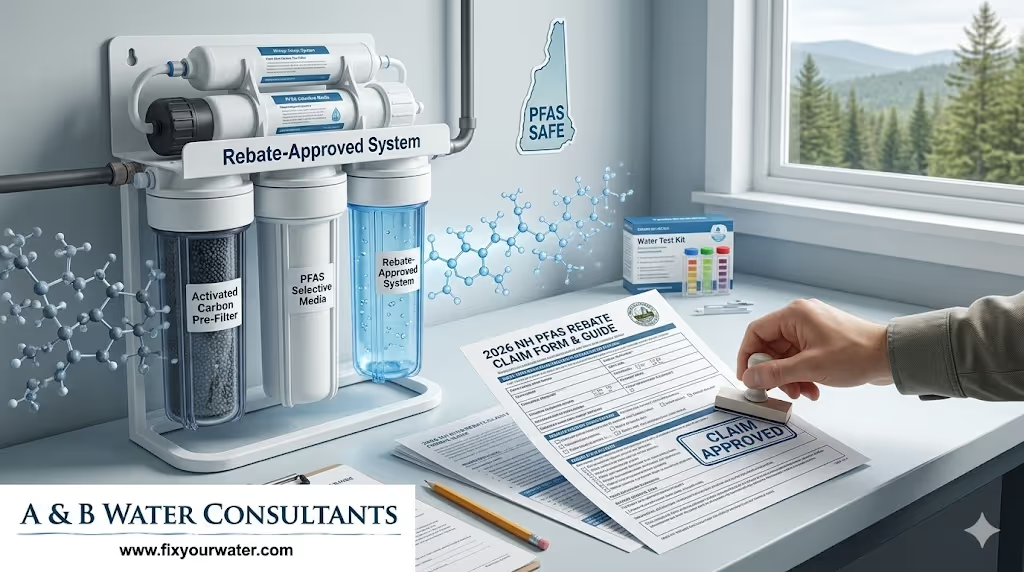
Water filtration systems are an essential investment for homeowners who want reliable, safe drinking water. For families in New Hampshire, southern Maine, and Massachusetts, concerns about arsenic, radon, and PFAS contamination are common. A&B Water Consultants brings more than 25 years of experience designing targeted treatment solutions for these specific problems, and homeowners will find practical guidance here on choosing, sizing, and maintaining systems that produce healthy water for the household.
Contact A&B Water Consultants for a free water treatment quote.
Why Water Filtration Systems Matter in New England
Many New England homes rely on private wells or legacy public systems that can be affected by regional geology, past industrial activity, and aging infrastructure. That combination makes certain contaminants more likely than others. Arsenic often shows up in bedrock wells, radon enters water from fractured rock and then transfers into indoor air, and PFAS come from firefighting foam, industrial discharges, and landfill leachate. Beyond those, homeowners may face iron staining, manganese, hardness, and bacterial issues.
Water filtration systems reduce or remove targeted contaminants, protect plumbing and appliances, and improve taste and odor. Choosing the right technology begins with accurate testing and ends with ongoing maintenance. A&B Water Consultants customizes designs for New Hampshire and Greater Seacoast homes so families get solutions matched to their water profile and lifestyle.
Common Contaminants and How They Affect Health and Home
Arsenic
Arsenic is a naturally occurring element that can leach from bedrock into groundwater. Chronic exposure to arsenic in drinking water is associated with increased risks of certain cancers and other long term health effects. Arsenic occurs in two forms in water, arsenite and arsenate, and their chemistry affects how they are removed. Arsenite is neutral and harder to capture; arsenate carries a negative charge and responds well to adsorption and ion exchange when pre-oxidized.
Radon
Radon is a radioactive gas that enters homes from soil and can also occur dissolved in well water. When radon-laden water is used for showering and laundry, it releases radon gas into indoor air where it increases lung cancer risk. Although most attention focuses on airborne radon, waterborne radon can contribute a measurable fraction of household air concentration if the water contains high radon levels.
PFAS
PFAS stands for per- and polyfluoroalkyl substances, a class of persistent chemicals used in many consumer and industrial products. Some PFAS are linked to developmental, immune, and metabolic effects. They resist breakdown, so removal from water requires adsorption, ion exchange, or membrane technologies. PFAS occurrence is patchy and often tied to local contamination sources, so testing is essential. Learn more about these compounds in our What Are PFAS? overview.
Other Problem Solids and Microbial Concerns
Iron and manganese cause staining and taste problems. Hardness, primarily calcium and magnesium, shortens appliance life and affects soap performance. Bacteria and coliforms represent acute health risks and require disinfection or corrective action on the source or distribution system. A water filtration system must be selected with a full understanding of all these factors, not just one contaminant.
How Water Filtration Systems Work: Technologies Explained
Water filtration systems use different mechanisms depending on the contaminant. Professionals typically combine methods to achieve compliance and long term performance. The most common mechanisms include physical filtration, adsorption, ion exchange, oxidation plus removal, aeration, and membrane separation.
Activated Carbon Adsorption
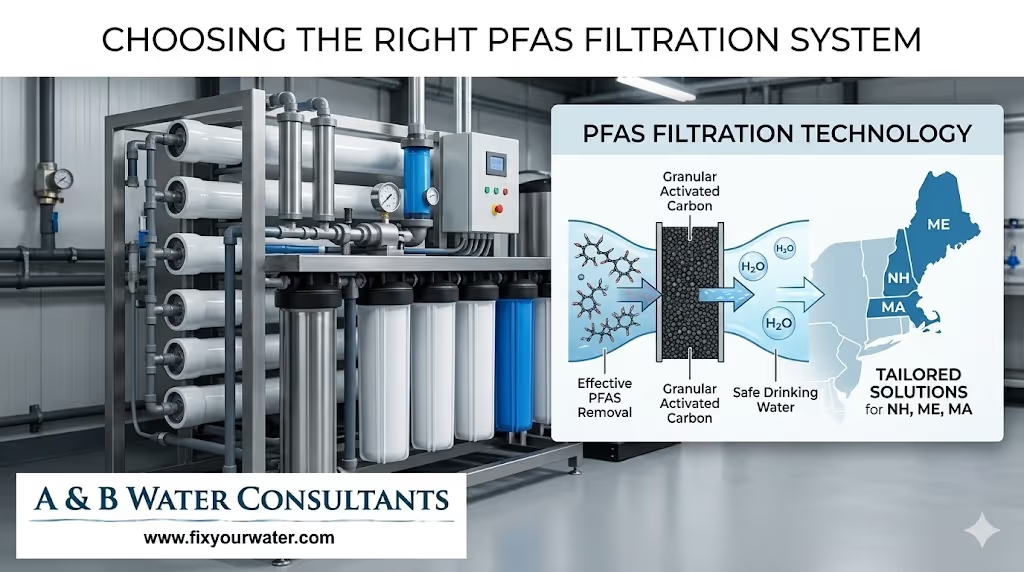
Granular activated carbon or GAC removes organic compounds, taste and odor, and many PFAS chemicals. GAC adsorbs contaminants onto its surface; when the media is exhausted, breakthrough occurs and the media must be replaced. For PFAS, service life depends on concentration, flow, and which PFAS are present.
Ion Exchange
Ion exchange replaces unwanted ions with more benign ions on a resin bed. It is effective for removing certain PFAS, nitrate, and hardness when configured for softening. For arsenic, specialized anion exchange resins can capture arsenate after oxidation. Resins require periodic regeneration or replacement.
Reverse Osmosis
Reverse osmosis or RO pushes water through a semipermeable membrane to remove dissolved solids, including many PFAS, arsenic, and other inorganics. RO systems are commonly used at the point of use for drinking and cooking water. They generate a wastewater stream and require prefiltration and membrane changes on schedule.
Adsorptive Media for Arsenic
For arsenic, specially engineered media such as ferric oxide coated sands, granular ferric hydroxide, and hybrid adsorbents bind arsenic effectively. Because arsenite is less reactive, treatment commonly includes an oxidation step upfront. Adsorptive media is often used in point-of-entry systems to protect all taps.
Aeration and Granular Activated Carbon for Radon
Radon removal relies on two primary approaches. Packed tower aeration or spray aeration physically transfers radon from water to air and vents it safely outdoors. Granular activated carbon adsorbs radon and is a compact option where aeration is impractical, but it concentrates radioactivity in the media and requires careful disposal. Professionals assess airborne radon risks when choosing the solution.
Ultraviolet Disinfection
UV disinfection inactivates bacteria and viruses without chemicals. It is commonly paired with filtration to address microbiological risks in wells. UV does not remove dissolved metals or chemicals, so it is rarely used as a stand alone solution for chemical contamination.
Types of Water Filtration Systems for Homes
Homewater treatment options divide into two practical categories: point-of-entry and point-of-use. Each has pros and cons depending on the household needs and the nature of contamination.
Point-of-Entry Systems
These systems treat all water entering the home. For arsenic and radon, whole-house treatments are critical because they reduce exposure from all taps and prevent scale or staining downstream. Typical point-of-entry solutions include arsenic adsorption tanks, whole-house GAC for PFAS and organics, aeration systems for radon, and water softeners for hardness.
Point-of-Use Systems
Point-of-use systems focus on a single tap, usually the kitchen sink. Under-sink reverse osmosis units and countertop carbon filters are common. Point-of-use is cost effective when only drinking water requires treatment and when the main concern is taste, odor, or low-level PFAS. For radon, point-of-entry is preferable because the risk comes from air release during household water use.
Hybrid Approaches
Often a hybrid approach is best. For example, a point-of-entry adsorption system can protect plumbing and control widespread contamination, and a point-of-use RO system can provide an extra layer for drinking water. A&B Water Consultants routinely designs multi-stage systems for New England households to balance cost, convenience, and safety.
Design Considerations for New Hampshire, Southern Maine, and Massachusetts Homes
Designing water filtration systems for the New England region requires taking local geology, climate, and water use patterns into account.
- Well or municipal source. Private wells in the Granite State often tap fractured bedrock, increasing the likelihood of arsenic and radon. Southern Maine and parts of Massachusetts may have more glacial deposits and varied risk profiles. Knowing the source is the first step.
- Seasonal variations. Cold winters influence system selection and installation. Tanks must be protected from freezing and service schedules adjusted for lower water use during vacation periods.
- Flow rates and household size. Whole-house systems must be sized to match peak demand so water pressure and delivery are not compromised. A home with a family of four and an on-demand hot water system will need higher capacity than a vacation home.
- Plumbing layout. Older homes may have lead solder or antiquated piping. Filtration planning should coordinate with plumbing upgrades to ensure systems work as intended and contaminants aren’t reintroduced downstream.
- Space and access. Aeration systems and large media tanks require space and ventilation. Basements in New England are typical installation locations, but homeowners should consider access for service.
Contact A&B Water Consultants for a free water treatment quote.
Testing First: The Nonnegotiable Step
Professional water testing is the starting point for any filtration project. A comprehensive test shows which contaminants are present and in what concentrations. For New England homeowners, tests should include arsenic speciation if arsenic is detected, PFAS panels that cover relevant compounds, volatile organic compounds if there is a suspected source, bacterial indicators, iron and manganese, hardness, and radon in water when geology suggests risk. For guidance on sampling and methods, see our guide on How to Test for PFAS.
Testing frequency varies. Private wells should be tested annually for bacteria and every two to three years for inorganic contaminants, or immediately after an event such as flooding. When a filtration system is installed, test again to confirm performance and periodically thereafter. A&B Water Consultants helps homeowners interpret results and recommends an appropriate treatment and monitoring schedule.
Selecting the Right System: Questions a Homeowner Should Ask
- What contaminants are present and at what concentration?
- Is treatment needed at the tap only or for the whole house?
- What are the expected operating costs and media replacement schedules?
- How will backwash or waste streams be handled?
- Does the system carry third party certifications such as NSF/ANSI for specific claims?
- Who will service the system and guarantee performance?
Answers to these questions determine whether an RO under-sink unit, a whole-house arsenic adsorption tank, a packed tower aeration unit for radon, or a combination will be most effective. A&B Water Consultants assesses each property and creates a tailored recommendation so homeowners make informed decisions.
Installation, Permits, and Compliance
Professional installation ensures the system works safely and meets local plumbing codes. Some towns in New Hampshire and Massachusetts require permits for large equipment installations or changes to wastewater handling. Disposal of spent media or carbon containing concentrated contaminants sometimes falls under local hazardous waste rules. Licensed installers will secure necessary permits and advise on proper disposal.
Maintenance and Long Term Performance
All water filtration systems require ongoing attention. Regular maintenance preserves performance, protects plumbing, and keeps warranties valid.
- Filter cartridge replacement. Point-of-use filters often need replacement every 6 to 12 months.
- GAC media change. For systems treating PFAS or organics, media replacement frequency depends on loading but commonly ranges from 1 to 5 years.
- Arsenic media replacement. Adsorptive media is replaced when breakthrough occurs, often every 3 to 7 years depending on concentration and flow.
- RO membrane changes. Typically every 2 to 5 years depending on feed water quality and prefiltration.
- Aeration equipment service. Mechanical aeration systems require fans and controls maintenance annually.
- Post-install testing. After installation and at regular intervals, retesting verifies treatment goals are met.
Homeowners should budget for replacement media, parts, and annual service. A&B Water Consultants offers scheduled maintenance plans tailored to New England homes and maintains documentation for health inspections and resale purposes.
Cost Considerations and Typical Price Ranges
Costs vary with technology, capacity, and installation complexity. The following ranges reflect typical projects for New England homes but are estimates only. An on-site evaluation provides accurate pricing.
- Under-sink reverse osmosis: $500 to $2,000 installed.
- Point-of-entry arsenic adsorption systems: $1,500 to $6,000 depending on media and capacity.
- Whole-house GAC systems for PFAS: $2,000 to $8,000 installed with media replacement costs later.
- Packed tower aeration for radon: $3,000 to $10,000 depending on size and venting requirements.
- Comprehensive multi-stage systems combining whole-house and point-of-use treatment: $4,000 to $15,000.
Operating costs include electricity for pumps and aeration, water for backwash in some systems, and media or cartridge replacement. A&B Water Consultants helps homeowners understand lifecycle costs and selects solutions that fit budgets and performance goals.
Real-World Examples: Case Studies from New England
Arsenic Reduction for a Granite State Well
A family in central New Hampshire discovered arsenic at 25 parts per billion on a routine test. A&B Water Consultants developed a two-step solution: oxidation through controlled chlorination followed by a point-of-entry adsorption tank filled with ferric oxide media. The system brought arsenic below detectable limits and eliminated staining. Media replacement was scheduled every five years based on measured loading.
Radon Control in a Coastal Maine Home
A seaside property in southern Maine had moderate airborne radon and elevated radon in its well water. A packed tower aeration system was installed in the basement to strip radon from incoming water and vent it to the exterior. After installation, follow-up testing showed a significant drop in airborne radon attributable to water use, and the homeowner gained peace of mind.
PFAS Mitigation for a Massachusetts Suburban Home
A family outside Boston had PFAS detected at low levels in their water supply. A two-part strategy was chosen: a whole-house GAC system to reduce organics and a dedicated under-sink RO for drinking and cooking water. The homeowners appreciated the layered protection and the minimal change to household routines. A&B Water Consultants scheduled more frequent GAC media checks to catch potential PFAS breakthrough.
Contact A&B Water Consultants for a free water treatment quote.
Choosing a Qualified Professional
Selecting a qualified contractor matters. Homeowners should look for experience with the specific contaminants of concern, familiarity with New Hampshire and nearby state regulations, and a clear maintenance and warranty plan. Certifications such as NSF/ANSI standards for claimed contaminant reductions are important, and independent test results should be available for similar system installations.
A&B Water Consultants brings decades of local experience, specialty expertise in arsenic and radon treatment, and practical designs for PFAS removal. Their approach emphasizes proven technologies tailored to the region’s hydrology and homeowner priorities.
Frequently Asked Questions
How often should a home’s water be tested?
For private wells, annual testing for bacteria is recommended, and testing for inorganics like arsenic or metals every two to three years unless there is a reason to test sooner. If contamination is suspected or a treatment system is installed, retesting after installation and periodically thereafter ensures continued protection. Local conditions in New Hampshire and southern Maine may warrant more frequent testing in areas with known contamination history. Homeowners concerned about radon in water can review our guidance on Should You Test for Radon?
Can a single system remove arsenic, radon, and PFAS?
There is no single universal filter that removes all three optimally. Radon is best handled with aeration or specific GAC systems, arsenic requires oxidation plus adsorption or an RO approach, and PFAS respond to GAC, ion exchange, or RO. Effective strategies often combine point-of-entry and point-of-use systems so each contaminant is addressed with the appropriate technology.
Are water filtration systems guaranteed to eliminate health risk?
Properly designed and maintained systems significantly reduce contamination and lower health risks. However, no system is effective without correct sizing, installation, and maintenance. Regular testing confirms performance. For homeowners with serious or complex contamination, combining treatment with source controls and ventilation improvements for airborne radon may be necessary.
How long do filtration systems last?
Longevity depends on technology and maintenance. Tanks and housings can last decades, while cartridges, membranes, and adsorption media require periodic replacement. With routine service, many systems perform reliably for 10 to 20 years, though key components will need replacement during that time.
What certifications or standards should homeowners look for?
NSF/ANSI certifications indicate a product has been tested for specific contaminant reduction claims. Look for NSF/ANSI 53 for health effects-related contaminants and NSF/ANSI 58 for reverse osmosis systems. Certification does not substitute for site specific design, so combine product certification with professional testing and system sizing.
Contact A&B Water Consultants for a free water treatment quote.
Conclusion: Making a Safe, Cost-Effective Choice
Water filtration systems are an essential part of protecting family health and home investment in New Hampshire, southern Maine, and Massachusetts. The right solution depends on accurate testing, an understanding of local conditions, and professional design that matches technology to the contaminant profile. For arsenic, radon, and PFAS, targeted approaches using adsorption, aeration, ion exchange, and membranes are often combined for the best results.
Homeowners should prioritize certified equipment, reputable installers, and a clear maintenance plan. A&B Water Consultants applies local expertise and decades of experience to design systems that meet regulatory expectations and household needs. Whether the goal is whole-house protection or drinking-water polishing, a custom plan reduces risk and provides long term value.
Contact A&B Water Consultants for a free water treatment quote.