Many New England homeowners wonder how to test for PFAS and whether their private well or municipal water could be affected. PFAS are a group of persistent chemicals that are now a routine part of conversations about regional water quality issues, especially across New Hampshire, Southern Maine, and Massachusetts. This guide walks through what PFAS are, how testing works, what results mean, pfas removal services and practical next steps for homeowners who want to protect their families.
What Are PFAS and Why Homeowners Should Care
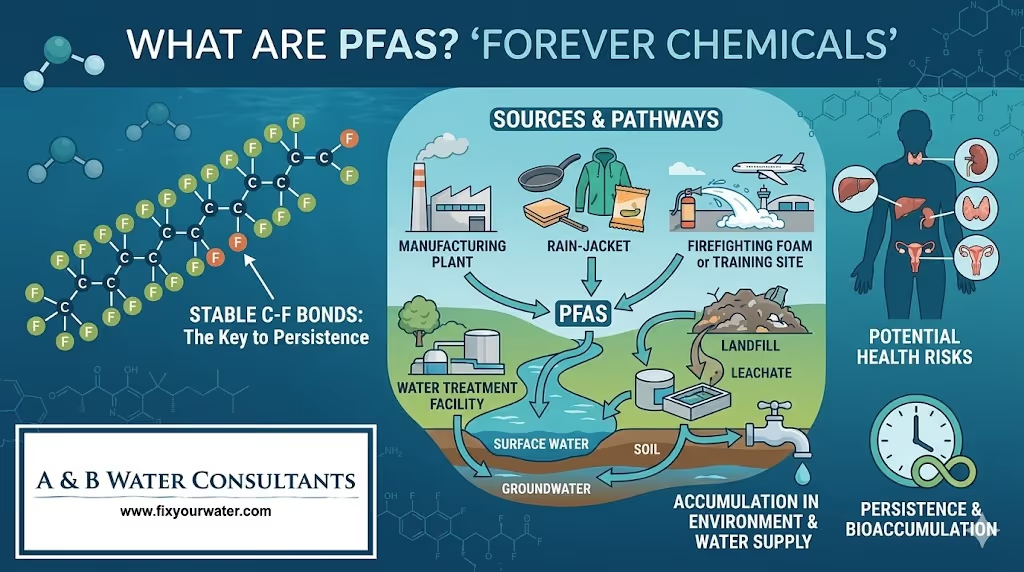
PFAS, or per- and polyfluoroalkyl substances, are man-made chemicals used for decades in products that resist heat, oil, stains, and water. They show up in nonstick cookware, stain-resistant fabrics, firefighting foams, and many industrial applications. The issue for homeowners is that PFAS do not break down easily. They can travel in groundwater and end up in private wells and public supplies.
PFAS health risks include potential effects on the liver, immune system, fetal and child development, and certain cancers. For readers searching for more detail on pfas health risks, public health agencies have published studies and advisories summarizing the science. Because guidance and regulatory standards evolve, it helps to be proactive about testing and understanding local context.
PFAS in New England: Where the Concern Is Greatest
New England has a mix of potential PFAS sources. Fire training areas, airports, military bases, landfills, and industrial sites are common contributors. In New Hampshire, community water supplies and private wells near former industrial sites have been shown to contain PFAS above advisory levels in some locations. Southern Maine and parts of Massachusetts have seen similar local contamination events.
Private well owners are often the most vulnerable because private wells are not regulated the same way municipal supplies are. That makes testing a crucial first step for many families across New Hampshire, Southern Maine, and Massachusetts.
How to Test for PFAS: Step-by-Step
Testing for PFAS is more complex than a typical bacteria test. It requires specific sample containers, careful handling to avoid contamination, and specialized labs. Here is a clear, practical process homeowners can follow.
1. Decide Which PFAS Compounds to Test For
There are thousands of PFAS, but most testing panels focus on a set of commonly found compounds, including PFOA, PFOS, PFHxS, PFBS, PFNA, and newer alternatives like GenX. Many labs offer a 24 or 36 compound panel, which is a sensible choice for homeowners who want a thorough snapshot.
2. Choose a Certified Laboratory
Pick a lab that is accredited for PFAS analysis, ideally ISO 17025 or state-certified. Look for labs that use LC-MS/MS (liquid chromatography tandem mass spectrometry) and report method detection limits and quantitation limits. Local or regional labs often understand New England’s specific concerns and can advise on sampling protocols.
- Ask the lab which EPA method they use, commonly EPA 537.1 or EPA 533 for drinking water.
- Confirm the list of PFAS included, the reporting limits, and turnaround time.
3. Prepare for Sampling: Avoiding Contamination
PFAS are everywhere. Teflon, grease-resistant paper, waterproof jackets, and certain personal-care products can contaminate samples. To avoid false positives, follow these rules when collecting water:
- Use the lab-provided sample containers only. They are pre-cleaned and often come with preservatives.
- Do not touch the inside of the bottle or cap. Wear nitrile gloves if available.
- Do not use nonstick cookware, waterproof clothing, or PFAS-treated surfaces near the sampling area.
- Sample from the kitchen tap used for drinking water. Remove aerators, run cold water to flush pipes if the lab instructs, or collect a first-draw sample as directed.
- Label samples and complete any chain-of-custody forms the lab provides.
4. Follow the Lab’s Sampling Protocol Exactly
Some labs want a first-draw sample, which measures the water sitting in household plumbing. Others prefer a flushed sample to capture source water. Follow the lab’s written instructions for:
- Which tap to use
- Whether to flush or take first draw
- How much water to collect
- Preservation and refrigeration requirements
Time matters. PFAS samples may need to be refrigerated and transported cold to the lab, with holding times often less than 14 days depending on method. The lab will outline shipping and handling guidelines.
5. Chain of Custody and Documentation
For homeowner peace of mind and any possible regulatory follow-up, complete the chain-of-custody forms and keep copies. Record the time, date, tap location, and any conditions like recent plumbing work. This documentation adds credibility to results and helps interpret anomalies.
6. Understand Costs and Turnaround
Cost varies depending on the panel and lab. Expect basic single-compound tests to be cheaper, while comprehensive 24–36 PFAS panels commonly range from roughly $150 to $500 or more. Turnaround is typically 1–3 weeks, though rush services are sometimes available for extra cost.
Interpreting PFAS Test Results
Getting results can feel like reading a different language. Labs report concentrations in parts per trillion (ppt) and include method detection limits (MDL) and reporting limits. Here are practical tips for interpretation.
- Non-detect means the lab did not find the compound above its reporting limit. That is not the same as zero, but it is a useful starting point.
- Detected below advisory or limit indicates presence but below a health advisory or regulatory threshold.
- Detected above advisory or limit triggers action steps, like retesting and considering treatment.
The United States Environmental Protection Agency issued health advisories for certain PFAS in 2022. State agencies in New Hampshire, Maine, and Massachusetts may have additional guidance or regulatory measures. Because advisory numbers and regulatory levels evolve, use results as a basis for conversation with a trusted expert and local health department.
What If PFAS Are Detected? Treatment Options for Homeowners
Finding PFAS in a well or tap is stressful, but effective options exist. Treatment selection depends on the types and concentrations of PFAS, household water use, and cost considerations.
Treatment Technologies
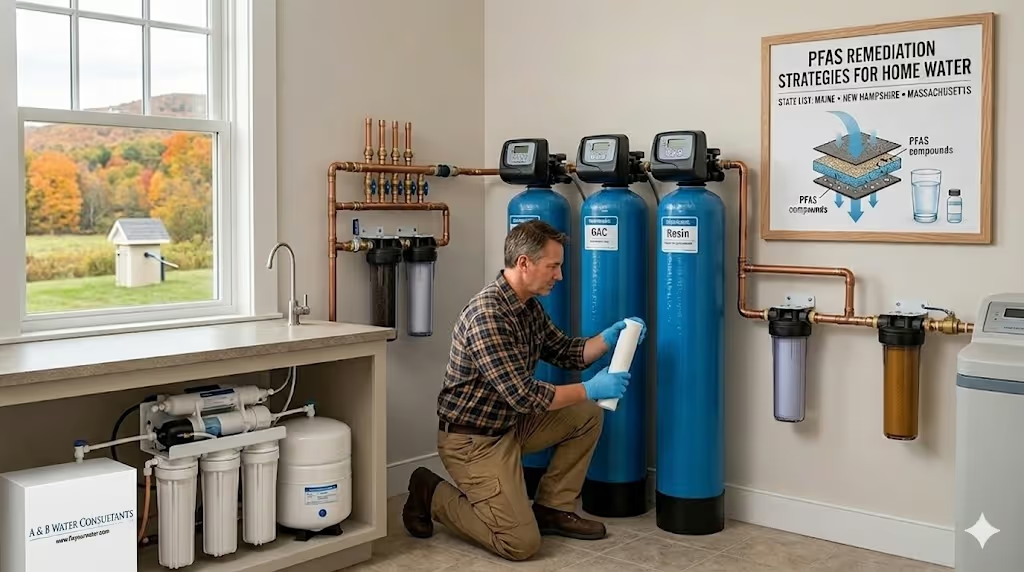
- Granular Activated Carbon (GAC): GAC filters are commonly used for whole-house PFAS reduction. They are effective for many long-chain PFAS compounds like PFOA and PFOS. GAC requires proper sizing and scheduled media replacement. Performance drops as the media becomes exhausted, so monitoring and maintenance are essential.
- Ion Exchange (IX): IX resins designed for PFAS removal can be very effective and provide high removal rates for a broader range of PFAS. They often need professional regeneration or disposal of spent resin.
- Reverse Osmosis (RO): RO systems at the point of use (typically under the kitchen sink) can remove many PFAS compounds. RO is popular for drinking and cooking water because it delivers high-quality water right at the tap, but it does not treat whole-house water.
- Advanced Options: Combining technologies or installing point-of-entry systems with proven media may be necessary for complex contamination patterns.
Each option has pros and cons. For example, RO provides excellent point-of-use protection but is more expensive per treated gallon and wastes some water. GAC can treat whole-house supply yet needs consistent maintenance and waste management. A local, experienced water treatment provider can match technology to the homeowner’s goals and budget.
Contact A&B Water Consultants for a free free PFAS removal services quote.
Maintenance and Monitoring
Treatment is not a set-and-forget solution. For example, GAC columns need periodic replacement based on flow, contaminant load, and system sizing. Ion exchange resins require regeneration or replacement. RO membranes last several years depending on feed water quality and prefiltration.
After installing a treatment system, homeowners should retest water within a few months to confirm performance. Long-term monitoring every 6 to 12 months is a smart plan, and A & B Water Consultants can help design that schedule.
Contact A&B Water Consultants for a free water treatment quote.
Special Considerations for New Hampshire, Southern Maine, and Massachusetts
Local geography, land use, and regulatory activity shape PFAS risks across the region. Here are practical, localized considerations.
New Hampshire
Private wells in New Hampshire have been impacted by nearby contamination sites. The New Hampshire Department of Environmental Services provides resources and sometimes coordinates community testing events. Well owners near airports, fire training areas, or industrial sites should consider testing sooner rather than later.
Southern Maine
Southern Maine has agricultural zones, small industrial hubs, and municipal sites where PFAS have been identified. Regional labs often support municipalities conducting broader investigations, and homeowner testing helps fill data gaps where municipal testing is limited.
Massachusetts
Massachusetts has taken several actions on PFAS detection and mitigation. Many towns keep public advisories when local water supplies are affected. Homeowners in the Bay State should check MassDEP resources and any local public notices.
Whether the issue is a private well in rural New Hampshire or a residential tap in coastal Maine, a clear path is the same: test, interpret, and act. Local expertise matters. A & B Water Consultants has over 25 years of experience designing and installing customized water treatment systems in New England. Their regional knowledge can guide homeowners through testing and treatment choices that fit local conditions and local regulations.
Contact A&B Water Consultants for a free PFAS removal services quote.
Practical Preventive Measures: Reduce Your Household Exposure
While testing and treatment are essential when PFAS are present, homeowners can also take preventive steps to reduce exposure:
- Use certified point-of-use filters for drinking and cooking water until source water is confirmed safe.
- Avoid nonstick cookware with damaged coatings and replace stain-resistant fabrics when possible.
- Limit consumption of food packaged in grease-resistant paper or coated cardboard.
- Keep an eye on local public notices. If a nearby contamination site is identified, consider short-term alternatives while pursuing testing.
Sample Scenario: How a New Hampshire Homeowner Handled PFAS Detection
A homeowner in southern New Hampshire requested a routine private well test after hearing about nearby PFAS detections. The steps that followed are a practical model:
- The homeowner contacted a certified lab and ordered a 24-compound PFAS panel.
- Following the lab instructions, they collected a first-draw sample from the kitchen tap in the lab-supplied bottle and shipped it overnight to maintain cold chain.
- The lab reported low-level detections of PFOA and PFOS above the EPA 2022 advisory but below state action levels for some compounds. The homeowner shared the results with their town health department and A & B Water Consultants.
- A & B Water Consultants recommended a combined approach: a whole-house GAC system sized for the well flow, plus an under-sink RO for drinking water as added security. They provided a quote and installation timeline.
- After installation, the homeowner retested three months later. Results showed PFAS below reporting limits at the kitchen tap, confirming treatment performance.
This stepwise approach—test, seek expert guidance, install appropriately sized treatment, and retest—is the model recommended for many homeowners. If someone finds PFAS in their water, they should also notify local public health authorities to help map and manage regional risks.
Contact A&B Water Consultants for a free free PFAS removal services quote.
Costs, Testing Frequency, and Ongoing Monitoring
Homeowners often ask how often they should test and how much it will cost long term. A practical plan might look like this:
- Initial test: Comprehensive 24–36 compound panel, $150 to $500 depending on the lab and region.
- Follow-up: If results are non-detect, retest every 2 to 3 years or after any change in nearby land use. If results are positive and no treatment is installed, retest within 6 to 12 months to check trends.
- After treatment: Test 1 to 3 months post-install to confirm removal, then annually or biannually depending on system and concentration.
Treatment costs vary. Point-of-use RO systems can cost $400 to $2,000 installed with periodic filter and membrane replacement. Whole-house GAC systems typically cost several thousand dollars installed with regular media replacement costs. Ion exchange systems and larger custom systems are more expensive and may be cost-effective in heavy contamination scenarios.
Working With Professionals: What to Expect
When homeowners seek help from a local N.H. firm like A & B Water Consultants, they can expect a sequence of professional water filtration and treatment services:
- Assessment of test results and site conditions
- Recommendation of treatment technologies and sizing
- Transparent cost estimates and timelines
- Installation by trained technicians
- Post-installation testing and long-term service options
A & B Water Consultants specialize in arsenic and radon filtration systems and has expanded regional expertise to support homeowners concerned about PFAS and other local contaminants. Their technicians understand New Hampshire well hydraulics, local regulations, and practical installation challenges that are common across Southern Maine and Massachusetts.
Frequently Asked Questions
How long does PFAS testing take?
From sample collection to final report, most laboratories deliver results in one to three weeks. Rush analysis may be available at an extra cost.
Can a home water softener remove PFAS?
Standard salt-based water softeners do not remove PFAS. They address hardness minerals, not synthetic organic contaminants. Specialized GAC, ion exchange, or RO systems are required for PFAS reduction.
What should a homeowner test first if they suspect PFAS contamination?
Start with a broad PFAS panel (24–36 compounds) from an accredited lab. That gives a good picture of likely compounds and concentrations and helps guide treatment decisions.
Are home test kits reliable for PFAS?
Some consumer kits offer screening-level information, but they can lack the sensitivity and specificity of accredited labs. For definitive results, use a certified lab that follows EPA methods and provides clear detection limits.
Who pays for testing if PFAS are found in a municipal supply?
If a public water system detects PFAS above regulatory limits, the water utility or responsible authority typically handles notification and remediation. For private wells, the homeowner is usually responsible for testing and treatment costs, though state programs or grants sometimes help for eligible households.
Conclusion
Knowing how to test for PFAS empowers homeowners in New Hampshire, Southern Maine, and Massachusetts to protect their families and make informed decisions. The process requires careful sampling, accredited labs, and a clear interpretation of results. If PFAS are detected, effective treatment options exist, but they must be matched to the contamination profile and household needs.
For homeowners who prefer expert guidance, local firms such as A & B Water Consultants provide regional experience, design expertise, and installation support. They can help navigate testing choices, interpret results, and specify treatment systems tailored to New England conditions.
Contact A&B Water Consultants for a free free PFAS removal services quote.
Taking the step to test is practical and responsible. If a family is worried about private well water or has learned of local PFAS detections, testing is the first and most important action to protect health. Armed with good data, an informed plan, and local expertise, homeowners can reduce risk and enjoy safer water at home.