Arsenic water treatment is a critical concern for many homeowners across New Hampshire, Southern Maine, and Massachusetts. When a private well or municipal source tests above the EPA limit of 10 parts per billion for arsenic, families need clear, effective options to remove arsenic from drinking water and protect their household. This article explains what arsenic is, why it matters, and which arsenic treatment options and arsenic filtration systems work best for different situations. It also outlines how a professional firm like A & B Water Consultants designs and installs reliable systems for local families. Contact A&B Water Consultants for a free arsenic water treatment quote.
What Is Arsenic and Why Should Homeowners Care?
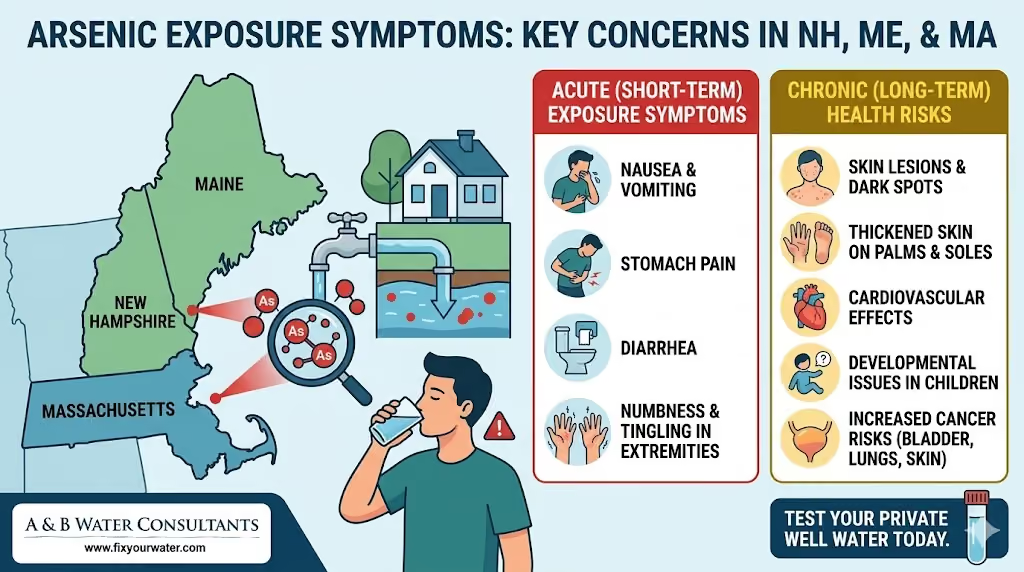
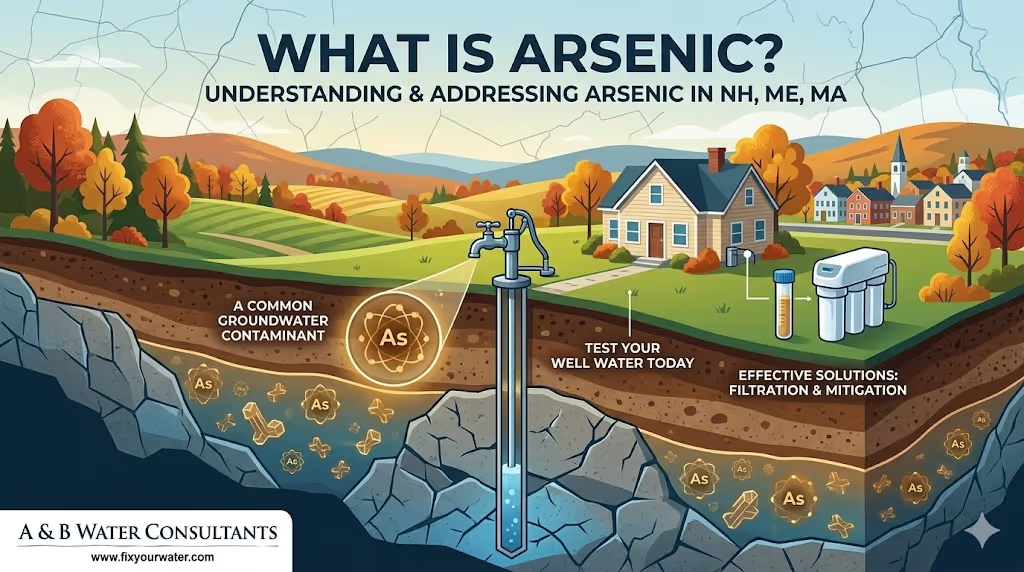
Arsenic is a naturally occurring element found in soil and rock. In many parts of New England, especially in bedrock aquifers and glacial deposits, arsenic can leach into groundwater. There are two common forms in water: arsenite (As(III)) and arsenate (As(V)). Arsenite is more mobile and harder to remove than arsenate. Long term exposure to arsenic in drinking water is linked to increased risks of cancer, cardiovascular disease, skin changes, and neurological effects.
The U.S. Environmental Protection Agency sets the maximum contaminant level, or MCL, for arsenic in public water systems at 10 micrograms per liter, commonly stated as 10 parts per billion. Private wells are not regulated by the EPA, so it is the homeowner's responsibility to test and treat if needed. For families in New Hampshire, Southern Maine, and Massachusetts, the combination of geology and numerous private wells makes awareness and testing essential.
How Arsenic Gets Into Household Water
Arsenic enters water through natural weathering of arsenic-bearing minerals in bedrock and soils. Other contributors include:
- Old industrial sites or historical pesticide use near a well
- Agricultural runoff in some regions, though less common in New England than in other areas
- Municipal systems drawing from contaminated sources, though this is rare because treatment is mandated
In New Hampshire, many private bedrock wells tap aquifers with naturally elevated arsenic. That is why routine testing is recommended for all wells. Contact A&B Water Consultants for a free arsenic water treatment quote.
Testing: The First Step to Effective Arsenic Water Treatment
Before evaluating arsenic treatment options, homeowners must confirm arsenic levels and the form of arsenic. A few practical testing steps follow:
- Collect a sample using an accredited lab. State-certified labs in New Hampshire, Maine, and Massachusetts can analyze total arsenic and sometimes speciation for As(III) and As(V).
- Test for related water chemistry parameters. Factors such as pH, iron, manganese, turbidity, and hardness affect which arsenic filtration systems will work best.
- Repeat testing annually after installing a treatment system, or immediately after any well repair or work near the well.
Many homeowners assume a single test is enough. It is not. Seasonal changes, pump age, or new nearby construction can alter arsenic concentrations. Professional consultants like A & B Water Consultants offer sampling assistance and interpret results to recommend the right arsenic treatment options. Contact A&B Water Consultants for a free arsenic water treatment quote.
Key Principles of Arsenic Removal
Different technologies remove arsenic in different ways, but these principles are central:
- Speciation matters. As(III) must be oxidized to As(V) in many systems because As(V) binds to media and resin more readily.
- Pre-treatment may be required. High iron, manganese, or turbidity can foul adsorption media or ion exchange systems. Oxidation and sediment filtration are common pre-treatment steps.
- Point-of-entry versus point-of-use. Treating all water entering the home prevents arsenic exposure during bathing, cooking, and laundry, but costs more. Under-sink reverse osmosis systems treat drinking water at a single tap and are cheaper and easier to maintain.
Arsenic Treatment Options and How They Work
This section compares the main arsenic treatment options and arsenic filtration systems, with an emphasis on benefits, limitations, and applicability for New England homes.
1. Reverse Osmosis (RO)
How it works: RO pushes water through a semipermeable membrane that rejects dissolved solids including arsenic. Most residential RO systems are point-of-use, installed under a kitchen sink.
Pros
- Very effective for both As(III) and As(V) when combined with proper pre-treatment and membranes designed for arsenic reduction
- Compact and affordable for drinking and cooking water needs
- Produces consistent, high-quality drinking water
Cons
- Produces wastewater at a ratio that depends on the system; higher recovery models reduce waste but cost more
- Requires pre-filtration if iron or sediment is present, and may not be practical as a whole-house solution
RO is a common choice for homeowners who want to remove arsenic from drinking water only. When arsenic treatment options are discussed, RO often appears as a reliable point-of-use choice.
2. Ion Exchange
How it works: Specialized anion exchange resins exchange chloride or other ions for arsenic species, effectively trapping arsenic in the resin. Resins are generally more effective for As(V). For As(III), pre-oxidation is usually needed.
Pros
- Good capacity and effective for moderate arsenic concentrations
- Can be configured as whole-house systems
- Fast flow rates and compact footprint
Cons
- Regeneration requires brine (salt), and disposal of regeneration waste must comply with local regulations
- Less effective with high competing anion concentrations like sulfate or nitrate
- Pre-oxidation and pre-filtration often necessary
Ion exchange is a solid choice where homeowners need point-of-entry arsenic filtration systems and can handle regeneration logistics. A & B Water Consultants evaluates site-specific water chemistry to determine if ion exchange is the right fit.
3. Adsorptive Media (Iron Oxide, Activated Alumina, Specialty Media)
How it works: Media such as granular ferric oxide, iron-coated media, or activated alumina adsorb arsenic onto the media surface. Many of these media target As(V), so oxidizing As(III) first is crucial for optimal removal.
Pros
- Effective for a wide range of concentrations when designed correctly
- Simple operation and no frequent chemical additions required
- Can be used in point-of-entry systems to treat all incoming water
Cons
- Media has a finite capacity and requires replacement or regeneration
- Iron, manganese, and organics can reduce media life
- Disposal of spent media may require handling as contaminated waste depending on local rules
For many New England homes, adsorptive media in a whole-house configuration provides a practical balance of effectiveness and maintenance. A & B Water Consultants commonly installs iron-based arsenic filtration systems that are sized and maintained for local well conditions.
4. Coagulation and Filtration
How it works: Adding a coagulant, typically ferric chloride or alum, causes arsenic and other particulates to form flocs that can be removed by filtration. This is common in municipal and larger community systems rather than single-family homes.
Pros
- Highly effective at larger scales and adaptable to varying arsenic species
- Can simultaneously reduce turbidity, iron, and other contaminants
Cons
- Not practical for most private homes due to chemical handling and equipment complexity
- Requires operator expertise and regular sludge handling
Coagulation and filtration are typically used by public water systems but may be available through point-of-entry commercial systems for large properties or multi-family buildings. Homeowners seeking whole-house treatment for high-capacity usage might consider consultation with professionals like A & B Water Consultants for scaled solutions.
5. Oxidation Followed by Filtration
How it works: Because As(III) is difficult to remove directly, it is commonly oxidized to As(V) using chlorine, hydrogen peroxide, ozone, or permanganate. The As(V) is then removed by filtration media or adsorption.
Pros
- Makes other arsenic filtration systems more effective
- Often necessary for reliable long-term performance
Cons
- Chemical handling and contact tank space needed
- Careful control required to avoid byproducts or taste issues
This two-step strategy is common in New England homes with As(III) dominance. A & B Water Consultants designs systems with proper oxidation contact and downstream filtration tailored to local water chemistry.
Point-of-Use vs Point-of-Entry: Which Is Right?
Homeowners often weigh whether to install a whole-house solution or just a drinking-water device. Here are practical comparisons:
- Point-of-use (POU) systems, like under-sink RO, focus on the tap used for drinking and cooking. They cost less up front and generate less maintenance overhead. They do not protect against arsenic exposure from bathing or laundry, though ingestion remains the primary health concern.
- Point-of-entry (POE) systems treat all water entering the home. They are the choice when homeowners want full protection and when arsenic levels are very high. POE systems are larger, cost more, and typically require more complex maintenance.
For many New England homeowners, a combined approach works well: a POE adsorptive media or ion exchange system to reduce arsenic in all water, paired with a POU RO system for an extra layer of protection at the kitchen sink. A & B Water Consultants helps homeowners evaluate this hybrid approach by analyzing household water usage, arsenic levels, and water chemistry. Contact A&B Water Consultants for a free arsenic water treatment quote.
Design Considerations for New England Wells
Local geology and common well characteristics in New Hampshire, Southern Maine, and Massachusetts affect system design. Important considerations include:
- Iron and manganese are often present and can clog adsorption media and foul RO membranes. Pre-oxidation and sediment filtration are standard requirements.
- Low pH can affect media life and resin performance. Adjusting pH may be necessary before arsenic filtration.
- Hardness influences scale formation on RO membranes. Water softening or anti-scalant dosing might be needed.
- Seasonal fluctuations in water quality in shallower wells can change arsenic concentrations. Designing with a safety margin and arranging for periodic testing is prudent.
A professional consultant can pull these threads together into a system that minimizes future surprises. A & B Water Consultants brings 25 years of regional experience to ensure systems work reliably in local conditions. Contact A&B Water Consultants for a free arsenic water treatment quote.
Operation, Maintenance, and Monitoring
Even the best arsenic filtration systems require regular care. Common maintenance tasks include:
- Replacing or regenerating media or resin at manufacturer-specified intervals
- Changing pre-filters and RO membranes according to use and feed-water quality
- Annual water testing to confirm arsenic remains below target levels
- Monitoring pressure drops across media beds to detect clogging
Homeowners often underestimate maintenance. Poorly maintained systems fail to protect health. That is why many homeowners in New England choose professional installation with service agreements. A & B Water Consultants offers scheduled maintenance plans, performance testing, and emergency support to keep arsenic filtration systems working as intended.
Costs and Expected Lifespan
Costs vary widely depending on technology, capacity, and home layout. Rough ranges for residential projects are:
- Under-sink RO systems: $400 to $2,500 installed, depending on features and plumbing complexity
- Whole-house adsorptive media systems: $2,000 to $10,000 installed, depending on flow rate and media choice
- Ion exchange systems with regeneration: $3,000 to $8,000 installed plus ongoing salt and regeneration cost
- More complex oxidation and coagulation systems for high arsenic: $5,000 to $20,000 for larger properties or multi-family buildings
These figures are general. A site visit and water analysis are necessary for an accurate quote. Lifespans vary: media may last a few years up to 10 years, RO membranes 2 to 5 years, and resin life depends on influent quality and regeneration practices. Factoring in maintenance, media replacement, and annual testing is essential when comparing arsenic treatment options.
Regulatory and Disposal Considerations
When media is spent or ion exchange resins are regenerated, handling and disposal must meet state and local rules. In New Hampshire, Maine, and Massachusetts, homeowners should confirm the right disposal route because waste media can sometimes be classified as hazardous, depending on contaminant levels. Professional installers typically handle media disposal or advise on approved methods as part of their service package.
Choosing a Professional: What to Look For
Because arsenic removal involves health risks, choosing an experienced contractor matters. Homeowners should look for the following when evaluating potential providers:
- Local experience with arsenic treatment in New Hampshire, Southern Maine, or Massachusetts
- Ability to perform or coordinate certified lab testing and interpret results
- Custom system design rather than one-size-fits-all solutions
- Clear maintenance plans and transparent pricing for media replacement, regeneration, and service calls
- References or case studies from similar local projects
A & B Water Consultants meets these criteria by offering region-specific expertise, certified testing coordination, and custom-designed arsenic filtration systems backed by 25 years of experience. Prospective clients can request a site visit and system recommendation. Contact A&B Water Consultants for a free arsenic water treatment quote.
Real-World Example: A New Hampshire Well Treatment
A homeowner in rural New Hampshire discovered arsenic at 25 parts per billion in a routine well test. The water also contained moderate iron and mildly acidic pH. A & B Water Consultants conducted a site assessment and recommended a combined approach:
- Pre-oxidation using a low-dose chlorine injection to convert As(III) to As(V) and precipitate iron
- Sediment and iron filtration to remove particulates and oxidized iron
- An iron-oxide media point-of-entry bed sized for the household flow to remove arsenic and residual iron
- An under-sink RO unit for the kitchen as a final barrier for drinking and cooking water
After installation, arsenic tests at the kitchen tap dropped to below 2 parts per billion. The media required replacement every four years given the influent concentrations. The family chose a maintenance agreement to ensure annual testing and timely media replacement. This blended solution minimized whole-house impact while providing high-quality drinking water.
How A & B Water Consultants Approaches Arsenic Water Treatment
A & B Water Consultants specializes in practical, long-lasting solutions for arsenic and other residential water quality problems. Their approach typically includes:
- Comprehensive sampling and lab coordination to determine arsenic levels and water chemistry
- Site visits to assess plumbing layout, flow demands, and space for equipment
- Custom system design that balances point-of-entry and point-of-use needs
- Professional installation with local code compliance
- Service and maintenance plans, including annual testing and media replacement scheduling
They also offer solutions for radon and PFAS removal, so homeowners facing multiple contaminants can receive integrated system design. For families concerned about arsenic in New Hampshire, Southern Maine, and Massachusetts, A & B Water Consultants provides experienced, locally informed guidance. Contact A&B Water Consultants for a free arsenic water treatment quote.
Common Mistakes to Avoid
Homeowners should avoid these pitfalls:
- Relying on a single water test taken years ago. Regular testing is essential.
- Installing a system without addressing pre-treatment needs like iron or high turbidity.
- Choosing a generic off-the-shelf system without professional sizing and chemistry checks.
- Skipping maintenance or delaying media replacement, which reduces performance over time.
Working with an experienced local consultant helps prevent these mistakes and keeps systems performing as designed.
Financing Options and Value Considerations
The expense of arsenic treatment can feel significant, but think of it as an investment in health and property value. Some homeowners finance systems through personal loans or home equity lines. In certain cases, local programs offer grants or loans for water quality improvements, especially in rural communities. A & B Water Consultants can advise on cost-effective system choices and point clients toward local resources when available.
Looking Ahead: Emerging Technologies
Research continues into more efficient and lower-waste arsenic filtration systems. Promising advances include improved adsorptive media with higher capacity, hybrid systems that lower regeneration frequency, and membrane technologies with higher recovery and lower wastewater. While some newer technologies are still in pilot stages, A & B Water Consultants stays current with innovations and advises homeowners when emerging options become practical and cost-effective.
Next Steps for Concerned Homeowners
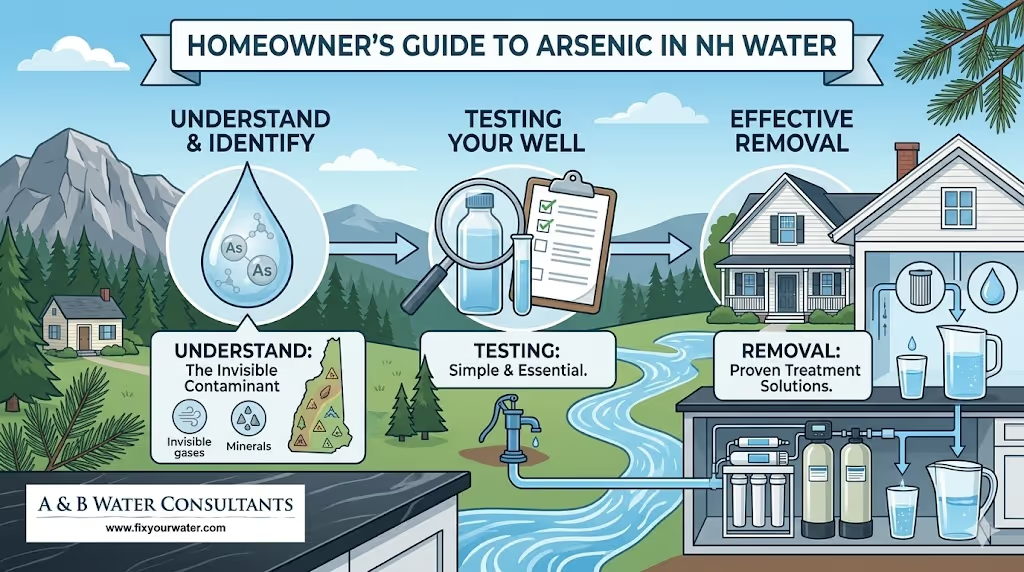
Homeowners who suspect arsenic contamination should follow a simple plan:
- Test the water through a state-certified lab and include speciation if possible.
- Contact a regional water treatment professional to review results and water chemistry.
- Discuss desired outcomes: drinking water protection only, or whole-house treatment.
- Obtain a written proposal that outlines technology, maintenance, and lifecycle costs.
- Schedule installation and set up a maintenance and testing schedule.
For residents of New Hampshire, Southern Maine, and Massachusetts, A & B Water Consultants offers local expertise, thorough testing coordination, and custom-designed arsenic filtration systems. Contact A&B Water Consultants for a free arsenic water treatment quote.
Frequently Asked Questions
How often should a well be tested for arsenic?
For private wells, test at least once a year for arsenic, and after any major work on the well, wellhead, or nearby construction. If previous results were near the EPA limit, testing twice a year is a good precaution. Seasonal variability and changes in water use can change arsenic levels.
Can an under-sink RO system remove all arsenic?
Yes, a properly sized and maintained reverse osmosis system with suitable pre-filtration can remove both As(III) and As(V). However, if the source water has high iron, manganese, or turbidity, pre-treatment is needed to protect the RO membrane. RO treats only the water at the point-of-use, not the entire house.
Which arsenic filtration systems are best for whole-house treatment?
Adsorptive media systems, appropriately sized ion exchange systems, and multi-stage systems with oxidation followed by filtration are common for whole-house arsenic removal. The best choice depends on arsenic concentration, iron and manganese levels, pH, and household flow demands.
Is it safe to use shower water if the well has arsenic?
Dermal absorption of arsenic through bathing is minimal compared to ingestion. The primary health risk is drinking contaminated water. Many homeowners choose point-of-use treatment for drinking water while monitoring whole-house levels. Still, some households opt for point-of-entry systems for added peace of mind.
How do homeowners dispose of spent arsenic media?
Disposal rules vary by state and the contaminant levels in the spent media. Often professional installers handle disposal or recommend approved methods. Homeowners should not dispose of spent media in regular household trash without confirming local regulations. A & B Water Consultants can guide proper disposal and compliance.
Conclusion
Arsenic water treatment is a manageable challenge when homeowners take the right steps: test water regularly, understand water chemistry, and choose the treatment option that fits their needs. Whether the solution is a point-of-use reverse osmosis system, a whole-house adsorptive media bed, ion exchange, or a hybrid design, a professional, local approach leads to the best long-term results. For homeowners in New Hampshire, Southern Maine, and Massachusetts, professional consultation ensures systems are sized and maintained for local well conditions and family needs.
A & B Water Consultants brings regional experience, custom system design, and ongoing service to keep families safe from arsenic and other contaminants.
Taking action now protects health and peace of mind. For a personalized assessment and reliable, professionally installed arsenic filtration systems, reach out to the experts and get a tailored plan for clean, safe water at home. Contact A&B Water Consultants for a free arsenic water treatment quote.