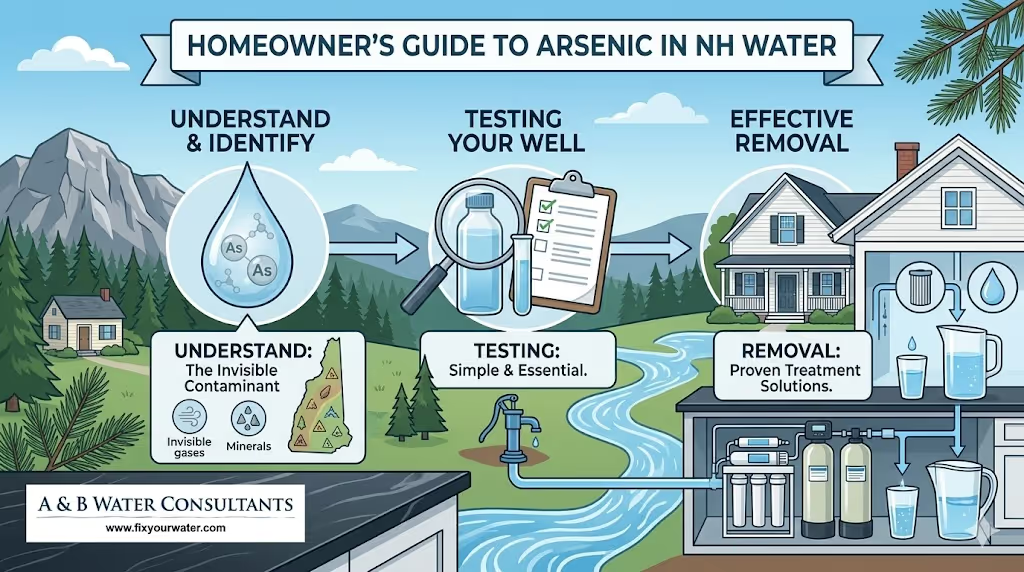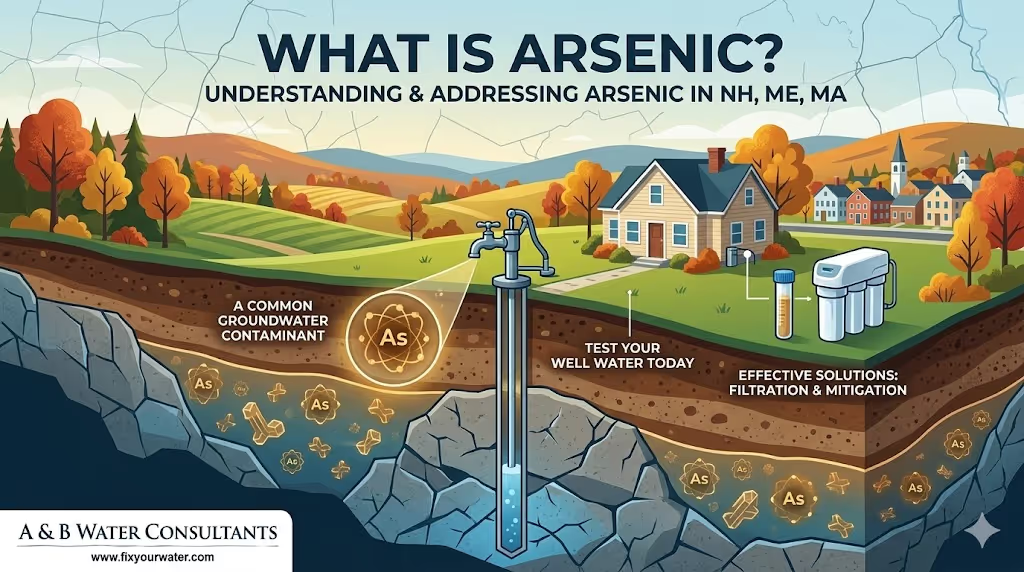
Arsenic quietly affects thousands of private wells across New England, often without any taste, odor, or visible sign. When homeowners ask what is arsenic, they usually mean the toxic element that can dissolve into groundwater from natural rock formations or enter water supplies through human activity. Understanding arsenic, where it comes from, how it affects health, and what treatment options are available is essential for families who depend on private wells or small community systems in New Hampshire, southern Maine, and Massachusetts. Contact A&B Water Consultants for a free arsenic treatment quote.
What Is Arsenic?
Arsenic is a chemical element with symbol As and atomic number 33. It occurs in the environment in several forms that vary in toxicity and behavior in water. For purposes of water quality and human health, arsenic is most important in two broad categories: inorganic arsenic and organic arsenic.
Inorganic Arsenic Versus Organic Arsenic
- Inorganic arsenic includes arsenite (As(III)) and arsenate (As(V)). These species are typically far more toxic to humans and are the forms most commonly found in groundwater that threatens drinking water supplies.
- Organic arsenic occurs when arsenic bonds to carbon, as in some seafood compounds. Those organic forms are usually less toxic and are handled differently by the body.
From a treatment standpoint, speciation matters. Arsenite (As(III)) is neutrally charged under many groundwater conditions and is harder to remove with standard adsorption or ion exchange. Arsenate (As(V)) is negatively charged and more amenable to conventional removal methods. That difference affects the choice of remediation: systems often need an oxidation step to convert As(III) to As(V) before effective removal.
Where Does Arsenic in Water Come From?
Understanding sources of arsenic in water helps homeowners decide how to test and what treatment makes sense. Arsenic contamination sources fall into two main groups: natural geological sources and human activities.
Natural Geological Sources
- Arsenic is a natural component of many bedrock formations and glacial sediments. In New England, bedrock and glacial deposits can release arsenic into groundwater slowly as water reacts with minerals.
- Private bedrock wells and shallow fractured rock wells are particularly vulnerable because they draw directly from rock formations with little dilution.
Human-Caused Sources
- Mining and smelting operations, both historic and ongoing, can leave arsenic-bearing waste that contaminates nearby groundwater and surface water when not properly contained.
- Agricultural chemicals, legacy pesticide use, and some industrial discharges have contributed to localized arsenic contamination.
- Wood preservatives such as chromated copper arsenate, used historically, can be a source if treated wood was stored or disposed of near water supplies.
When assessing a property, it's important to consider both natural geology and any nearby industrial or agricultural history. These combined arsenic contamination sources determine risk and often the best remediation pathway.
How Arsenic Enters the Home
For most homeowners in New Hampshire, southern Maine, and Massachusetts, arsenic enters the household through a private well or, less commonly, through a small community water system. Homes on municipal water are less likely to encounter arsenic above regulatory limits because public systems are required to monitor and treat their supply. Private wells, however, are the responsibility of the homeowner and require proactive testing and treatment when arsenic is present.
Health Risks and Exposure
Exposure to arsenic through drinking water is primarily a concern from long-term ingestion. Unlike chlorine or iron, arsenic has no taste or smell, so the only reliable way to detect it is through testing.
Short-Term and Long-Term Effects
- Short-term high-dose exposure can cause nausea, vomiting, abdominal pain, and sometimes severe neurologic symptoms. These situations are uncommon in household drinking water and more likely in accidental poisonings or acute industrial exposures.
- Long-term exposure, even at low levels, is associated with serious chronic health problems. The best-documented risks include increased rates of skin lesions, cancers (particularly skin, lung, bladder, and kidney), cardiovascular disease, diabetes, and adverse pregnancy outcomes.
Vulnerable Populations
Some people face higher risk from arsenic exposure: children, pregnant and nursing women, and people with certain genetic or health conditions. Because arsenic can affect development and long-term health, families with infants and children should pay particular attention to testing and treatment.
Regulations and Standards
Federal and state rules guide safe drinking water levels and testing. The U.S. Environmental Protection Agency set a maximum contaminant level (MCL) for arsenic in public drinking water at 10 micrograms per liter, often expressed as 10 parts per billion, in 2001. Many states adhere to this standard for public systems. Private wells are not regulated by the EPA, but the same 10 ppb benchmark is widely recommended by public health agencies.
Homeowners should check state resources for additional guidance. New Hampshire, Maine, and Massachusetts environmental or public health departments offer local recommendations and lists of certified laboratories for arsenic testing.
How to Test Your Water for Arsenic
Testing is the only reliable way to answer the question what is arsenic doing in a particular well or home. Here are steps homeowners should follow to get accurate, actionable results.
- Use a state-certified laboratory. State health departments maintain lists of labs that perform EPA-approved methods for arsenic testing.
- Collect samples properly. Labs provide sample bottles and instructions. Typically, water must be collected after letting the tap run for a certain period and taken from the appropriate faucet to represent the drinking supply.
- Request total arsenic and, when needed, speciation. Total arsenic tells whether arsenic is present. If treatment planning is involved, speciation (identifying As(III) versus As(V)) helps choose the right system.
- Test frequency. For private wells, test a private well for arsenic initially when buying a property or installing a new well, then test at least once every 3 to 5 years. If arsenic has been detected or a treatment system is in place, annual testing is often recommended.
Interpreting results is straightforward against the 10 ppb benchmark. However, even results below 10 ppb may prompt action for vulnerable household members. For interpretation and next steps, seek professional guidance. Contact A&B Water Consultants for a free arsenic treatment quote.
Treatment Options for Homeowners
Once arsenic is confirmed in drinking water, homeowners need treatment options tailored to their water chemistry, household needs, and budget. A water professional will evaluate arsenic concentration, pH, iron and manganese levels, total dissolved solids, and flow requirements before recommending a system.
Point-of-Use Versus Point-of-Entry Systems
- Point-of-Use (POU) systems treat water at a single tap, typically the kitchen sink. Under-sink reverse osmosis units are a common POU solution for arsenic removal and provide treated water for drinking and cooking.
- Point-of-Entry (POE) systems treat water at the home’s main supply line, providing treated water to the whole house. Whole-house treatment is important when arsenic might affect appliances, ice makers, or when homeowners want consistent water quality throughout the home.
Common Treatment Technologies
Here are the technologies professionals most often recommend, with practical considerations for New England homeowners.
- Activated Alumina - This adsorption media selectively binds arsenic, particularly As(V). It requires periodic regeneration or replacement and functions best when iron and turbidity are low. pH affects performance; pre-adjustment may be necessary.
- Granular Ferric Hydroxide and Other Specialized Adsorptive Media - These materials have high arsenic capacity and are often used in point-of-entry or cartridge systems. They can remove arsenic effectively but need scheduled media replacement.
- Ion Exchange - Ion exchange resins can remove arsenate effectively but often need pretreatment if iron or manganese is present. Some resins are designed specifically for arsenic removal.
- Reverse Osmosis (RO) - RO under-sink systems remove arsenic (both As(III) with pre-oxidation and As(V)) along with many other contaminants. They produce high-quality drinking water but waste some water and require regular membrane replacement.
- Oxidation Followed by Filtration or Adsorption - Since As(III) resists many adsorptive processes, oxidants such as chlorine, hydrogen peroxide, or potassium permanganate are used to convert it to As(V), which is easier to remove.
- Coagulation/Filtration - Larger systems can use coagulation followed by rapid-sand filtration for arsenic removal, generally found in community treatment systems rather than single-family homes.
- Distillation - Distillers remove arsenic but are energy intensive and slow, so they are rarely used for whole-house applications.
Each option has trade-offs. For example, a private well with 50 ppb total arsenic and significant iron may need staged treatment: an oxidizer to convert As(III) to As(V), an iron filter to remove iron, then adsorption media or an RO unit for final polishing. A professional assessment helps avoid expensive mismatches.
Homeowners looking for tailored solutions should seek a certified water treatment specialist. Contact A&B Water Consultants for a free arsenic removal services quote.
Choosing the Right System
Several factors guide the selection of an arsenic treatment system:
- Arsenic concentration and speciation determines which technologies are feasible.
- Water chemistry including pH, iron, manganese, and hardness affects media life and pre-treatment needs.
- Flow rate and household size influence system sizing and whether a POE or POU solution is appropriate.
- Budget and lifecycle cost because media replacement, system maintenance, and disposal of spent media all add to long-term cost.
- Regulatory and certification requirements for systems used in rental properties or schools may require certified equipment and documentation.
Example scenarios help illustrate common choices.
Example 1: Private Well in a Rural New Hampshire Home
When arsenic measures 30 to 100 ppb and the household wants safe water for drinking, cooking, and bathing, a whole-house POE system with staged treatment is often recommended. It might include oxidation to convert As(III) to As(V), a multi-media iron filter if iron is present, and a final adsorptive media bed with monitored replacement schedules. This approach protects fixtures and supplies treated water to every tap.
Example 2: Town Water Slightly Above 10 ppb in Massachusetts
If municipal water tests 12 to 15 ppb, many homeowners opt for a point-of-use reverse osmosis under the kitchen sink. It treats drinking and cooking water without altering the whole-house supply, which may be adequate when only small reductions are needed and household plumbing is not at risk.
Maintenance, Media Disposal, and Long-Term Monitoring
Treatment is not a one-time expense. Proper maintenance ensures ongoing protection.
- Media replacement and regeneration schedules vary by system and household water use. Adsorptive media may last from 1 to 5 years depending on arsenic load. Ion exchange resins need regeneration with salt or replacement when exhausted.
- Membrane and filter replacement for RO units typically runs every 1 to 3 years for pre-filters and 3 to 7 years for membranes, depending on feed water quality and usage.
- Disposal of spent media must follow local regulations. Some spent media classified as hazardous requires special handling; professionals handle disposal and documentation.
- Annual testing is recommended when a treatment system is in place to verify performance. Lab testing confirms that arsenic levels remain under the desired threshold.
For homeowners who prefer a hands-off approach, professional service contracts provide scheduled maintenance, performance checks, and replacement management. A&B Water Consultants offers full-service options with documented results and local support for homeowners throughout New Hampshire, southern Maine, and Massachusetts. Contact A&B Water Consultants for a free arsenic removal services quote.
Cost Considerations
Costs vary widely based on technology, system size, and installation complexity. Basic under-sink RO units start at lower upfront costs but have ongoing filter and membrane expenses. Whole-house staged systems require larger upfront investment and site-specific engineering, but they protect plumbing and provide peace of mind for the entire household. Homeowners should weigh upfront cost, long-term maintenance, and the value of whole-house protection when making decisions.
Financing options, local grants, and home improvement loans may help offset costs. Homeowners should consult state health departments and local conservation programs for potential assistance or incentives. For accurate pricing and a system recommendation based on water test results, professionals like A & B Water Consultants provide cost estimates and financing guidance. Contact A&B Water Consultants for a free water treatment quote.
Local Considerations for New Hampshire, Southern Maine, and Massachusetts
New England geology contributes to arsenic in many private wells. In New Hampshire, fractured bedrock wells are common and can draw water directly from arsenic-bearing formations. Southern Maine and eastern Massachusetts have similar risks where glacial sediments and local bedrock interact with groundwater flow.
Homebuyers and homeowners in these states should do the following:
- Test private wells for arsenic before buying property.
- Review well logs and local geologic maps to understand the risk of natural arsenic.
- Check with state health departments for area-specific guidance and certified labs.
Local experience matters. A & B Water Consultants brings more than 25 years of experience designing and installing arsenic and radon filtration systems for families across New Hampshire, southern Maine, and Massachusetts. Their teams understand local geology, common well configurations, and the regulatory landscape, making them a practical partner for homeowners seeking reliable solutions.
Why Work With a Professional
Arsenic remediation is technical. A professional offers several advantages:
- Expert water testing and speciation to inform system design.
- Proper sizing and staging so pre-treatment needs like oxidation or iron removal are recognized and handled correctly.
- Installation that meets plumbing codes and minimizes risks like cross-contamination or pressure loss.
- Maintenance plans, performance monitoring, and paperwork to document compliance if needed for real estate or loan purposes.
DIY fixes can be tempting, but mismatched systems can cost more over time and leave families exposed. For tailored solutions that fit the local context and household needs, homeowners should consider professional consultation. A & B Water Consultants offers design-build services, ongoing maintenance, and local expertise to ensure systems work as intended.
Conclusion
Understanding what is arsenic and how it affects drinking water is the first step toward protecting a household. Arsenic often comes from natural geological sources in New England and may reach private wells without any obvious signs. Regular testing, careful interpretation of lab results, and professional system selection lead to reliable removal and long-term safety. Whether a homeowner needs a point-of-use under-sink solution or a whole-house treatment train, working with experienced professionals reduces risk and ensures compliance with guidelines.
Homeowners in New Hampshire, southern Maine, and Massachusetts should prioritize testing and consult qualified local experts for treatment options. For custom-designed solutions backed by decades of experience, consider professional help. Contact A&B Water Consultants for a free arsenic removal services quote.
Frequently Asked Questions
What is arsenic in drinking water and how dangerous is it?
Arsenic in drinking water usually refers to inorganic arsenic compounds dissolved from geological formations or introduced by human activity. It is dangerous primarily when ingested over long periods. Chronic exposure increases the risk of several cancers and other serious health conditions. Testing and treatment significantly reduce that risk.
How often should a private well be tested for arsenic?
Homeowners should test a private well for arsenic when buying a property, after drilling a new well, and at least every 3 to 5 years thereafter. If arsenic was detected or a treatment system is in place, annual testing is recommended to confirm ongoing protection.
Can boiling water remove arsenic?
No. Boiling does not remove arsenic. In fact, boiling concentrates dissolved minerals and contaminants as water vapor escapes. Effective removal requires treatment technologies like adsorption media, ion exchange, reverse osmosis, or oxidation followed by filtration.
Which treatment option is best for a household with high arsenic levels?
The best option depends on arsenic concentration, speciation, other water chemistry factors, and household needs. High arsenic levels often require staged treatment with oxidation followed by adsorption or ion exchange, or a whole-house design. A professional water treatment specialist can evaluate tests and recommend the right system.
How long do arsenic treatment systems last?
System lifetimes vary. Media beds may last 1 to 5 years or longer depending on use and arsenic loading. RO membranes and pre-filters require periodic replacement. With routine maintenance and professional service contracts, systems can provide many years of reliable performance. Disposal of spent media and proper record keeping are also part of long-term management.
"Testing is the only way to know if arsenic is in your water. Once you have results, a local water treatment professional can design a solution that fits your family and your home."
For homeowners who need a clear next step after testing or want an expert assessment and installation, professional services are available locally. Contact A&B Water Consultants for a free arsenic removal services quote.