Most homeowners spend considerable time thinking about the quality of their drinking water or the safety of their indoor air, but rarely do they consider a threat that affects both simultaneously. Radon is a naturally occurring radioactive gas that forms silently beneath homes across New England, seeping through foundation cracks and dissolving into private well water without any warning sign. It has no color, no odor, and no taste. The only way to know it is present is to test for it. For families in New Hampshire, Maine, and Massachusetts, understanding radon is not just informative — it is essential to protecting long-term health.
What Is Radon and How Does It Form?
Radon is a naturally occurring radioactive gas produced through the radioactive decay of uranium and radium found in soil, rock, and water. As uranium breaks down over time, it produces radium, which then decays further into radon gas. This process happens continuously within the earth's crust, making radon an unavoidable byproduct of geology itself.
Because radon is colorless, odorless, and tasteless, it cannot be detected through any human sense. It moves through soil and rock, rises toward the surface, and finds its way into structures through any available opening. Once inside a home, it can accumulate to dangerous concentrations, particularly in lower levels with limited ventilation.
Where Does Radon Come From in Your Home?
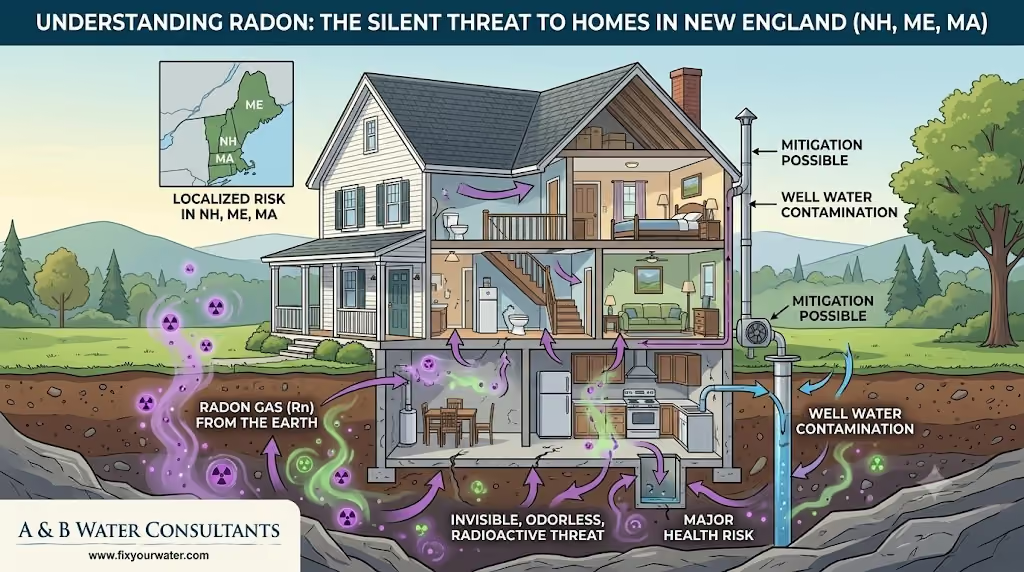
Radon enters homes through several pathways, and understanding each one is critical for complete protection. The most commonly recognized entry points include:
- Cracks in foundation walls and floors
- Sump pits and sump pump openings
- Crawl spaces with exposed soil
- Gaps around service pipes and utility penetrations
- Private well water drawn directly from radon-bearing bedrock
That last entry point — private well water — is the one most homeowners in New England overlook entirely. When well water is drawn from granite-rich bedrock, it can carry dissolved radon directly into the home. Every time that water is used for showering, cooking, or running a faucet, radon gas is released into the indoor air. This creates a dual exposure pathway that standard air-only mitigation systems do not address.
Radon in Well Water: The Exposure Risk New England Homeowners Often Overlook
Radon in well water is a distinct and serious exposure pathway that receives far less attention than airborne radon. Municipal water supplies treat water before it reaches homes, which significantly reduces radon levels. Private well owners, however, receive water directly from the aquifer, with no treatment in between. In New Hampshire alone, studies have found radon concentrations in private well water that far exceed EPA guidance levels.
When radon-laden water is used in the home, the gas volatilizes rapidly into the air. Research has shown that radon in water contributes meaningfully to overall indoor radon air concentrations. Showering is one of the highest-risk activities, as hot water and agitation accelerate the release of radon gas into a small, often poorly ventilated space. Cooking, dishwashing, and even running a bathroom faucet all contribute to this release.
Beyond inhalation, there is also a risk from ingesting radon through drinking water, which is associated with an increased risk of internal organ cancers. For this reason, a complete radon assessment for any New England home on a private well must include both an air test and a water test. Contact A&B Water Consultants for a free radon air and water treatment quote if you are on a private well and have not yet tested your water.
Why New Hampshire, Maine, and Massachusetts Have Elevated Radon Levels
New England's geology is the primary reason radon is such a significant concern in this region. Much of New Hampshire, southern Maine, and parts of Massachusetts sit on granite bedrock, one of the most uranium-rich rock types on earth. As that uranium slowly decays, it generates radon in concentrations far above what is found in regions underlain by sedimentary rock.
The EPA has designated large portions of New Hampshire and Maine as Zone 1 radon areas, meaning the predicted average indoor radon level exceeds 4 pCi/L (picocuries per liter), the EPA's established action level for air. New Hampshire consistently ranks among the highest-radon states in the country. The New Hampshire Department of Environmental Services has long recommended that all homeowners test for radon, and the data from thousands of tests across the state confirm that elevated levels are common rather than exceptional.
For homeowners in the Seacoast region, the Lakes Region, and communities throughout southern Maine and northeastern Massachusetts, the combination of granite bedrock and widespread reliance on private wells creates a uniquely elevated risk profile that demands professional evaluation.
Radon Health Risks: What Long-Term Exposure Actually Means
Radon is the second leading cause of lung cancer in the United States and the leading cause of lung cancer among non-smokers, according to the EPA. Approximately 21,000 lung cancer deaths per year are attributed to radon exposure. These are not immediate, acute effects. Radon health risks develop over years and decades of exposure to elevated concentrations, which is precisely what makes the gas so deceptive.
When radon decays inside the lungs, it releases radioactive particles that damage lung tissue at the cellular level. Over time, this damage can lead to cancerous changes. Smokers exposed to elevated radon face a dramatically higher risk than non-smokers, as the two hazards compound each other. Children and the elderly are also considered more vulnerable populations due to higher respiratory rates and reduced cellular repair capacity.
There are no symptoms of radon exposure in the short term. By the time radon-related illness becomes apparent, significant damage has already occurred. This is why testing is the only responsible approach.
How to Test for Radon in Your Home and Water
Testing for radon requires two separate tests: one for air and one for water. Many homeowners complete an air test and stop there, not realizing that their well water may be contributing significantly to the radon levels they breathe every day.
Air testing options include short-term test kits (typically two to seven days) and long-term test kits (90 days or more). Long-term tests provide a more accurate picture because radon levels fluctuate based on season, weather patterns, ventilation, and time of day. A single short-term reading during an unusual weather period may not reflect typical conditions. The EPA action level for radon in air is 4 pCi/L; levels at or above this threshold warrant mitigation.
Water testing requires a separate laboratory analysis. The EPA recommends action when radon in water exceeds 4,000 pCi/L, though many water quality professionals recommend treatment at lower thresholds given the contribution water radon makes to overall indoor air levels. Professional water testing provides accurate, defensible results that guide the selection of the appropriate treatment system. Contact A&B Water Consultants for a radon air and water treatment quote to get started with accurate, professional testing for your home.
Radon Water Treatment Options: Aeration vs. Granular Activated Carbon Filtration
When radon is detected in well water above action levels, two primary point-of-entry treatment technologies are used: Aeration Systems and Granular Activated Carbon (GAC) Filtration. Both treat water as it enters the home, protecting every tap, shower, and appliance.
Aeration Systems: Aeration works by exposing the water to air, which causes dissolved radon to volatilize and escape before the water is distributed through the home. These systems are highly effective, capable of removing 95 to 99 percent of radon from water. The released radon gas is vented to the outdoors, preventing it from accumulating indoors. Aeration systems require proper installation and ongoing maintenance to perform reliably.
Granular Activated Carbon (GAC) Filtration: GAC filters remove radon by adsorbing it onto activated carbon media as water passes through the tank. These systems are effective and relatively compact, making them a practical choice for many homes. However, because radon accumulates in the carbon media over time, spent GAC filters must be handled and disposed of carefully, as they can become mildly radioactive. Professional installation and scheduled maintenance are essential for GAC systems.
The right choice between aeration and GAC depends on the radon concentration in the water, the home's plumbing configuration, available space, and budget. A water treatment professional with specific radon experience can assess these factors and recommend the most appropriate system. With over 25 years of experience serving New England homeowners, A&B Water Consultants designs custom radon water treatment solutions tailored to each property's unique conditions.
Radon Mitigation for Airborne Radon
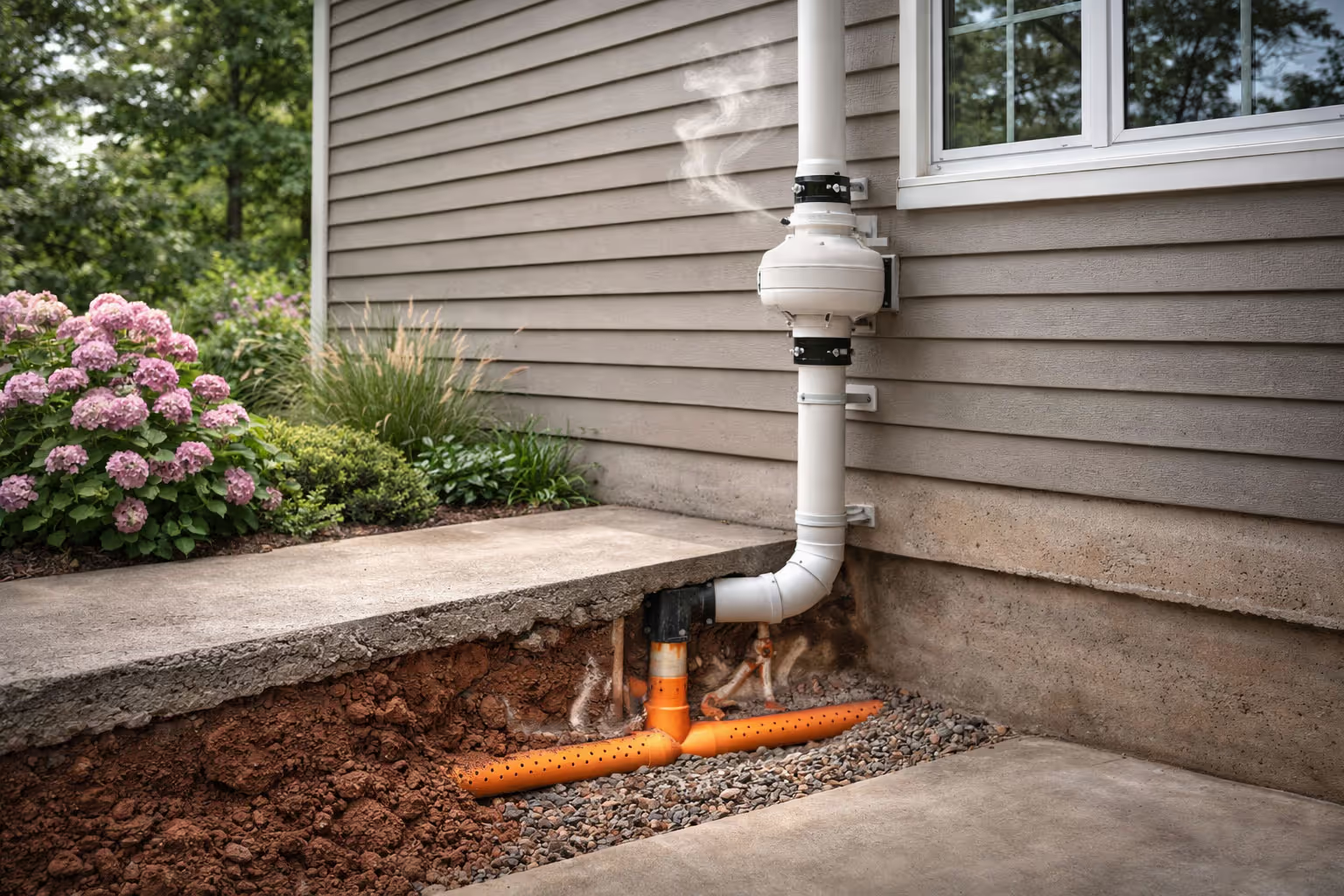
For radon entering through the foundation, sub-slab depressurization is the most widely used and effective mitigation method. This system involves inserting a pipe through the foundation slab and using a continuously running fan to draw radon from beneath the home and vent it safely outdoors before it can accumulate inside. Sealing foundation cracks and sump pit openings is a useful supplementary measure but is not sufficient as a standalone solution.
It is important to recognize that sub-slab depressurization addresses airborne radon entry through the foundation only. It does nothing to treat radon dissolved in well water. Homes with both elevated air radon and elevated water radon require both a mitigation system and a water treatment system for comprehensive protection.
Radon Testing When Buying or Selling a Home in New England
Real estate transactions in New Hampshire, Maine, and Massachusetts increasingly involve radon testing as a standard part of the home inspection process. Buyers routinely request radon air tests, and in some transactions, water testing is also required, particularly for homes on private wells. Sellers who disclose known radon issues without having addressed them may face negotiation challenges or requests for remediation credits.
For buyers, a high radon test result during the inspection period is an opportunity to negotiate for professional mitigation before closing. For sellers, proactively testing and addressing radon before listing a home can streamline the sale process and demonstrate a commitment to buyer safety. Contact A&B Water Consultants for a radon air and water treatment quote before listing your home or making an offer on a property with known radon concerns.
What to Do If Your Radon Test Comes Back High: Next Steps
Receiving a high radon test result can feel alarming, but it is important to approach the situation methodically. The following steps represent the professional pathway forward:
- Confirm the result. If a short-term test returned elevated levels, consider a follow-up long-term test or a second short-term test to confirm before investing in mitigation.
- Test both air and water. If only an air test has been completed, arrange a water test as well. Both exposure pathways must be evaluated.
- Consult a qualified professional. A licensed radon mitigation contractor can assess your home's specific conditions and recommend the appropriate air mitigation system. For water treatment, a water quality specialist with radon experience should design and install the appropriate point-of-entry system.
- Install and verify. After treatment systems are installed, conduct post-mitigation testing to confirm that radon levels have been reduced to acceptable levels in both air and water.
- Schedule ongoing maintenance. Both air mitigation systems and water treatment systems require periodic inspection and maintenance to continue performing effectively.
Contact A&B Water Consultants for a radon air and water treatment quote and get professional guidance on the right next steps for your specific situation.
Frequently Asked Questions About Radon
Is it safe to live in a house with radon?
Living in a home with elevated radon levels above the EPA action level of 4 pCi/L carries a meaningful long-term health risk. However, radon can be effectively mitigated in both air and water. Once professional treatment systems are installed and verified, the risk is substantially reduced and the home is safe to occupy.
What causes radon in a house?
Radon forms naturally from the decay of uranium in soil and rock. It enters homes through foundation cracks, sump pits, crawl spaces, and private well water. In New England, granite bedrock geology makes radon particularly common.
Can you shower in water with radon?
Showering with radon-contaminated well water is one of the primary ways radon enters indoor air. The heat and agitation of a shower accelerates radon release from the water. If your well water contains elevated radon, a point-of-entry water treatment system should be installed to address this exposure pathway.
Where is radon most commonly found in homes?
Radon concentrations are typically highest in basements and lower levels of a home, where it accumulates after entering through foundation openings. In homes with private wells, it is also present throughout the plumbing system until treated.
Which states are worst for radon?
New Hampshire consistently ranks among the highest-radon states in the country. Maine and parts of Massachusetts also have elevated radon levels due to their granite bedrock geology. Much of New England falls within EPA Zone 1 or Zone 2 radon designations.
Do air purifiers get rid of radon?
Standard air purifiers do not effectively remove radon gas. Radon is a gas, not a particulate, and conventional filtration technology is not designed to capture it. The only effective approaches for airborne radon are sub-slab depressurization systems and, for water-sourced radon, point-of-entry water treatment systems.