Orange or Reddish-Brown Stains
Iron commonly leaves orange, rust-colored, or reddish-brown stains in toilets, sinks, tubs, showers, and appliances. Staining may become more noticeable after water sits or dries on a surface.
CUSTOM WELL-WATER FILTRATION FOR NEW ENGLAND HOMES
Reduce orange, brown, or black staining, metallic taste, discolored water, and mineral buildup with a whole-house filtration system designed around your water-test results and household demand.
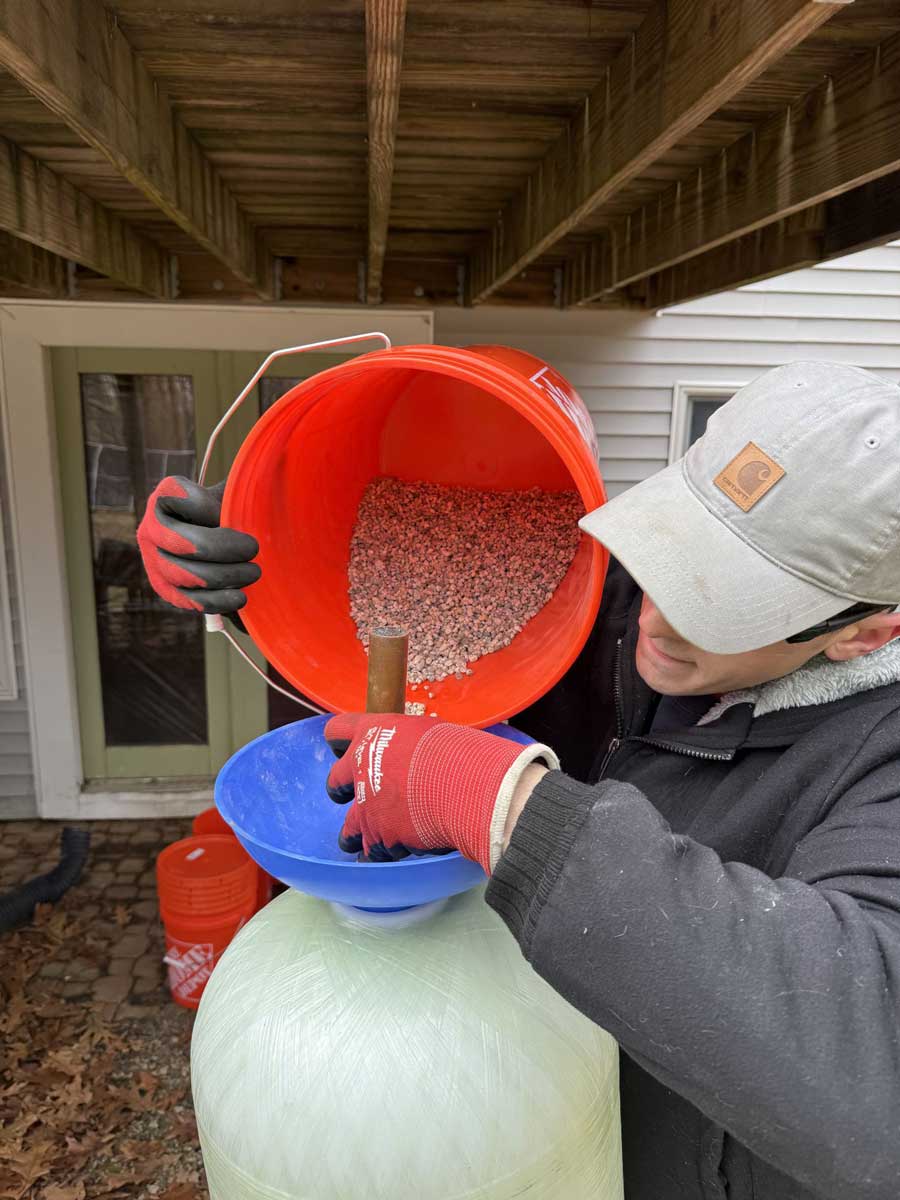
Iron and manganese are naturally occurring minerals frequently found in private well water. They may enter groundwater as water moves through soil, rock, and mineral deposits. The water can look clear when it first leaves the faucet, then turn yellow, orange, brown, gray, or black after it is exposed to air or allowed to stand.
The right treatment depends on more than the color of the stain. Effective iron and manganese removal begins by identifying which minerals are present, their measured concentrations, the form in which they occur, and the other conditions that affect filtration. pH, hardness, sediment, flow rate, odor, and the presence of additional contaminants may all influence system selection.
A & B Water Consultants designs and installs whole-house iron and manganese filtration systems for private-well homes in New Hampshire, southern Maine, and Essex County, Massachusetts. Recommendations are based on the home's water profile, plumbing requirements, and expected demand—not on a one-size-fits-all filter.
DISCUSS YOUR WELL-WATER STAINING PROBLEM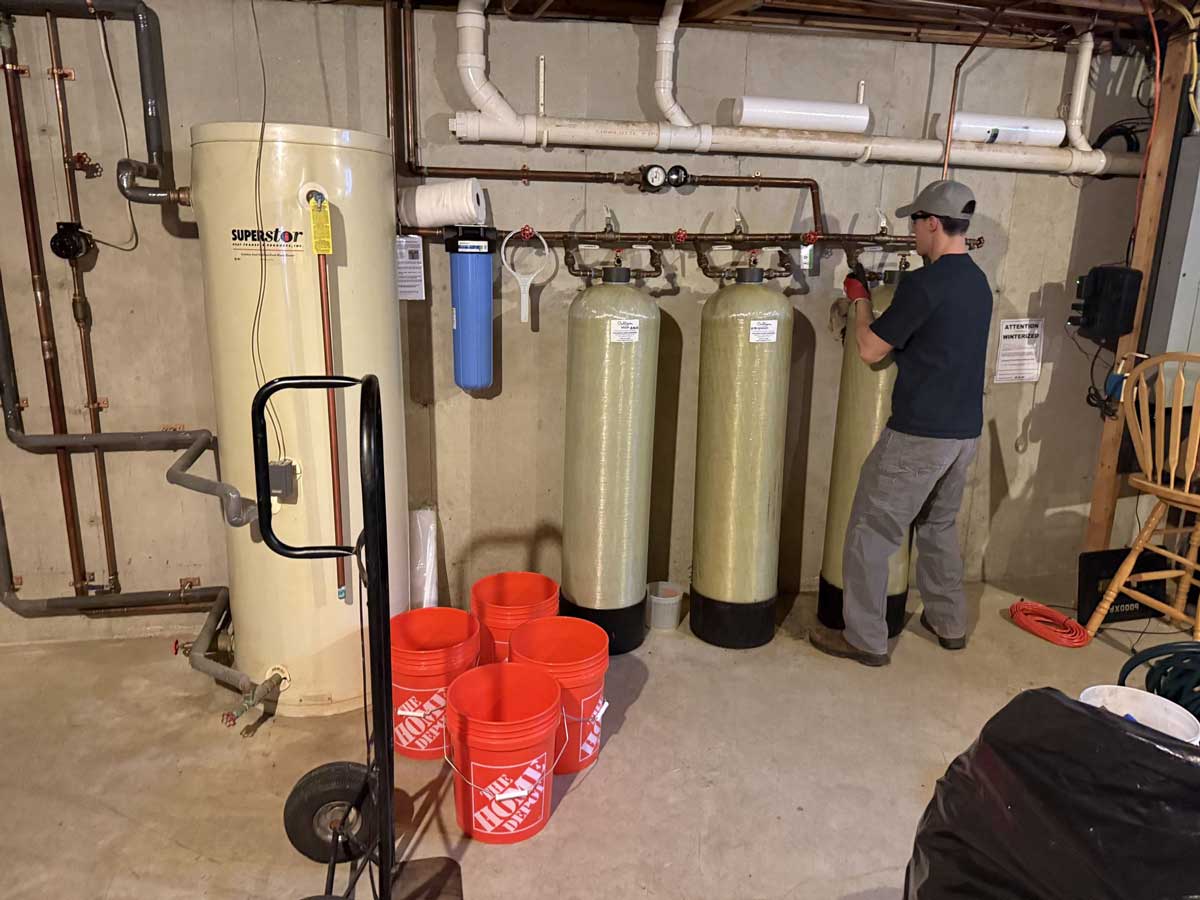
Iron and manganese are commonly removed by converting dissolved minerals into particles and then filtering those particles from the water. Depending on the water chemistry, a system may use air, an oxidizing treatment, catalytic filtration media, or another treatment method to support that process.
The proper approach depends on the test results. A system that works well for a moderate concentration of dissolved iron may not be appropriate for higher levels, manganese, low-pH water, iron bacteria, or water that also contains hardness, arsenic, sediment, sulfur odor, or other conditions.
This is why equipment should be selected from laboratory data and system requirements rather than from staining alone. The goal is not simply to install an “iron filter.” It is to create a treatment sequence that can address the measured problem while maintaining appropriate household flow and providing a practical maintenance plan.
Iron commonly leaves orange, rust-colored, or reddish-brown stains in toilets, sinks, tubs, showers, and appliances. Staining may become more noticeable after water sits or dries on a surface.
Manganese is often associated with black, charcoal, or dark gray staining. It can discolor plumbing fixtures, laundry, dishware, and other surfaces that regularly contact the water.
Dissolved minerals may initially be invisible. After exposure to oxygen, they can oxidize and form colored particles, causing clear water to become cloudy, yellow, orange, brown, or dark.
Iron and manganese can contribute to metallic, bitter, or otherwise objectionable tastes. Taste alone cannot identify the mineral or determine the concentration, so testing is still needed.
Mineral-bearing water may leave laundry looking dingy or stained and can create spots or discoloration on dishes, glassware, and plumbing fixtures.
Oxidized particles can collect in toilet tanks, water-heater drains, filters, aerators, and plumbing components. Accumulation may affect appearance and system performance.
Rust-colored or dark slime may indicate biological activity such as iron-related bacteria rather than dissolved minerals alone. A sulfur-like, swampy, or musty odor can also point to a more complex water-quality condition that requires additional evaluation.
| Condition | Common Signs | Why Testing Matters |
|---|---|---|
| Iron | Orange, rust-colored, or reddish-brown staining; metallic taste; sediment | The result helps distinguish a low-level nuisance problem from concentrations or forms that require more robust oxidation and filtration. |
| Manganese | Black, dark brown, or gray staining; bitter or metallic taste; dark particles | Manganese can be more difficult to remove under some water conditions and deserves careful review because elevated exposure may also raise health concerns. |
| Iron-related bacteria | Slime, recurring deposits, oily-looking film, or odor | Biological fouling may require a different response than mineral filtration alone, including well or plumbing evaluation and possible disinfection. |
| Hardness with iron or manganese | Scale plus colored stains, soap scum, spotting, or reduced cleaning efficiency | A home may need both mineral filtration and water softening in a properly planned treatment sequence. |
The U.S. Environmental Protection Agency lists secondary drinking-water guidelines of 0.3 mg/L for iron and 0.05 mg/L for manganese. These secondary values address qualities such as staining, color, taste, and odor rather than serving as federal primary drinking-water standards. Manganese should still be reviewed carefully because guidance concerning potential health effects may apply at higher concentrations or for more sensitive household members.
Homeowners should not assume that a color, taste, or odor identifies the entire problem. A certified laboratory test provides the data needed to evaluate both aesthetic concerns and possible health-related contaminants that may be present at the same time.
Visible staining is useful information, but it is not a complete system specification. Before recommending iron or manganese treatment, A & B reviews current test results and the practical conditions of the home.
Important information may include:
Testing also helps prevent a narrow solution from interfering with a more important treatment need. Arsenic, PFAS, radon, uranium, nitrate, bacteria, and other contaminants cannot be confirmed or ruled out by the appearance of the water. If they are present, the complete treatment system must be planned around the full water profile.
If you already have recent laboratory results, send them with your inquiry. A & B can review the reported conditions and explain whether additional information is needed before a final recommendation is made.
SEND YOUR WATER TEST RESULTSThere is no single filter that is ideal for every private well. The appropriate method depends on mineral concentration, water chemistry, household demand, and any conditions that could affect treatment performance.
Dissolved iron and manganese may need to be oxidized so they become particles that can be captured by filtration media. The source of oxidation and the type of media are selected according to the water conditions and required performance.
Some systems introduce air to help oxidize dissolved minerals before the water passes through a filtration tank. Air-assisted treatment can be effective in suitable conditions, but pH, mineral levels, odor, flow, and maintenance requirements must be considered.
Certain filtration media support oxidation and capture of iron, manganese, or related particles. Media choice, bed depth, backwash requirements, and service flow must be matched to the home's water profile.
Higher concentrations, difficult manganese conditions, odors, or biological fouling may require an oxidizing feed and sufficient contact time before filtration. This type of system requires careful configuration and ongoing maintenance.
A water softener may reduce certain forms of low-level dissolved iron when conditions are appropriate. It is not automatically the best iron treatment and should not be expected to solve significant manganese, heavy staining, sediment, odor, or iron-bacteria problems. A separate filtration stage may be needed before the softener.
If the water contains sand, silt, oxidized particles, or other sediment, pre-filtration may be included to protect downstream equipment and support reliable performance.
The final recommendation may use one treatment stage or a coordinated combination of technologies. A & B explains what each component is intended to accomplish, how the system should operate, and what routine service it will require.
Measured mineral levels and supporting water chemistry provide the starting point. Color alone is not enough to size or configure a dependable system.
The system must support the home's anticipated service flow. The number of residents, bathrooms, fixtures, and simultaneous water use can influence tank size, valve selection, and treatment capacity.
Available pressure, pump performance, pipe size, installation space, drainage, electrical access, and the location of existing equipment all affect the installation plan.
Many mineral filters periodically backwash to clean the media bed and discharge accumulated particles. The system must have adequate flow and an appropriate discharge arrangement.
When the water also contains hardness, acidity, arsenic, PFAS, radon, sulfur odor, or sediment, equipment must be installed in a logical order. Treatment sequence can affect performance, maintenance, and the life of downstream media.
Homeowners should understand whether a system uses consumable treatment products, requires periodic replenishment, needs professional service, or relies primarily on automatic backwashing. The most appropriate system is one the household can operate and maintain correctly.
A properly selected whole-house filtration system can reduce the targeted iron or manganese before the water reaches toilets, sinks, showers, laundry equipment, and other fixtures. The intended benefits may include:
An iron or manganese filter is not a universal contaminant-removal system. It should not be assumed to remove:
Some homes need more than one treatment stage. The purpose of testing and system design is to identify those needs before equipment is selected.
REVIEW YOUR COMPLETE WATER PROFILEPrivate-well water frequently contains overlapping conditions. Treating one symptom without considering the rest of the water can lead to poor performance, unnecessary maintenance, or a system that does not address the homeowner's main concern.
Colored stains may appear alongside white scale, soap scum, spotting, and reduced soap performance. In that situation, mineral filtration and water softening may both be appropriate.
Acidic water can affect plumbing and may also influence the performance of certain filtration media. pH correction may need to occur before or as part of the treatment plan.
A rotten-egg or sulfur-like odor can come from conditions that are not solved by a standard iron filter alone. The odor source, mineral concentrations, and biological conditions should be evaluated together.
Water can contain arsenic, PFAS, radon, uranium, nitrate, or bacteria even when the obvious complaint is staining. These contaminants require specific testing and treatment methods. A visibly improved glass of water does not confirm that the water is free of invisible contaminants.
Slime, heavy fouling, or recurring odor may point to a condition involving the well or plumbing system. Filtration may be only one part of the response. Well service, cleaning, or disinfection may need to be considered by the appropriate professional.
Tell us what you are seeing, where stains appear, whether the water changes color after standing, and whether you notice particles, slime, taste, or odor.
Send existing laboratory results when available. We review the reported iron, manganese, pH, hardness, and other relevant conditions. Additional testing may be recommended when the information is incomplete or outdated.
We consider household size, bathrooms, service flow, plumbing configuration, well conditions, installation space, drainage, electrical access, and existing treatment equipment.
The proposal identifies the equipment, intended treatment function, installation approach, and expected maintenance. If multiple conditions are present, the sequence is designed as a coordinated system.
The equipment is professionally connected to the home's water supply and configured for the known water conditions and household requirements.
We explain how the system operates, what routine homeowner tasks are required, which settings should remain unchanged, and when professional service or media replacement may be needed.
Maintenance depends on the treatment method, mineral loading, water use, and system design. A typical plan may include:
A sudden return of staining does not always mean that the filtration media has failed. Changes in well chemistry, increased water use, a blocked injector, interrupted backwashing, depleted treatment product, plumbing work, or a mechanical issue can all affect performance.
Homeowners should avoid changing programming or bypassing treatment components without understanding how the system is intended to operate. If water quality changes, document the symptoms and contact A & B for guidance.
Reducing the minerals before they move through the home can decrease orange, brown, gray, and black staining on fixtures, surfaces, laundry, and dishware.
Treatment can improve clarity and reduce the color or particles associated with oxidized iron and manganese.
When iron or manganese is contributing to a metallic or unpleasant taste, targeted treatment can make the water more acceptable for household use.
Removing mineral particles can reduce accumulation in toilet tanks, fixtures, aerators, appliances, and downstream treatment equipment.
Less staining can reduce the time and cleaning products required to maintain sinks, tubs, showers, toilets, and laundry areas.
Proper sizing helps maintain household flow while providing the backwash and treatment capacity needed for the measured water conditions.
Equipment is selected after reviewing the reported mineral levels, supporting chemistry, household demand, and installation requirements.
New England private wells can contain several overlapping water-quality conditions. A & B considers how iron, manganese, hardness, pH, sediment, odors, and other contaminants interact.
Capacity, filtration media, controls, backwash requirements, plumbing sequence, and maintenance are matched to the home rather than pulled from a standard equipment package.
The system is installed and configured for the home's plumbing and known water conditions, followed by a homeowner walkthrough.
Homeowners receive a practical explanation of what each treatment stage is intended to do, what it does not treat, and how it should be maintained.
A & B serves homeowners throughout its established New Hampshire, southern Maine, and Essex County, Massachusetts service area.
A & B Water Consultants provides iron and manganese filtration and residential well-water treatment in:
Rockingham County, Strafford County, Hillsborough County, Merrimack County, Belknap County, and Carroll County.
York County and Cumberland County.
Essex County.
If you are unsure whether your property is within the service area, contact A & B with the town and state.
If your well water is leaving orange, brown, gray, or black stains—or if it has a metallic taste, visible particles, slime, or unusual odor—A & B Water Consultants can help determine the next step.
Tell us where the property is located, what symptoms you are seeing, whether the water is clear or discolored when first drawn, and whether you already have laboratory results. We will review the available information and recommend an appropriate testing or treatment path.
Copyright 2022 A & B Water Consultants | All Rights Reserved | Sitemap | Website by Plumb Development a Digital Marketing Agency
X