Water Softener Installation & Hard Water Treatment
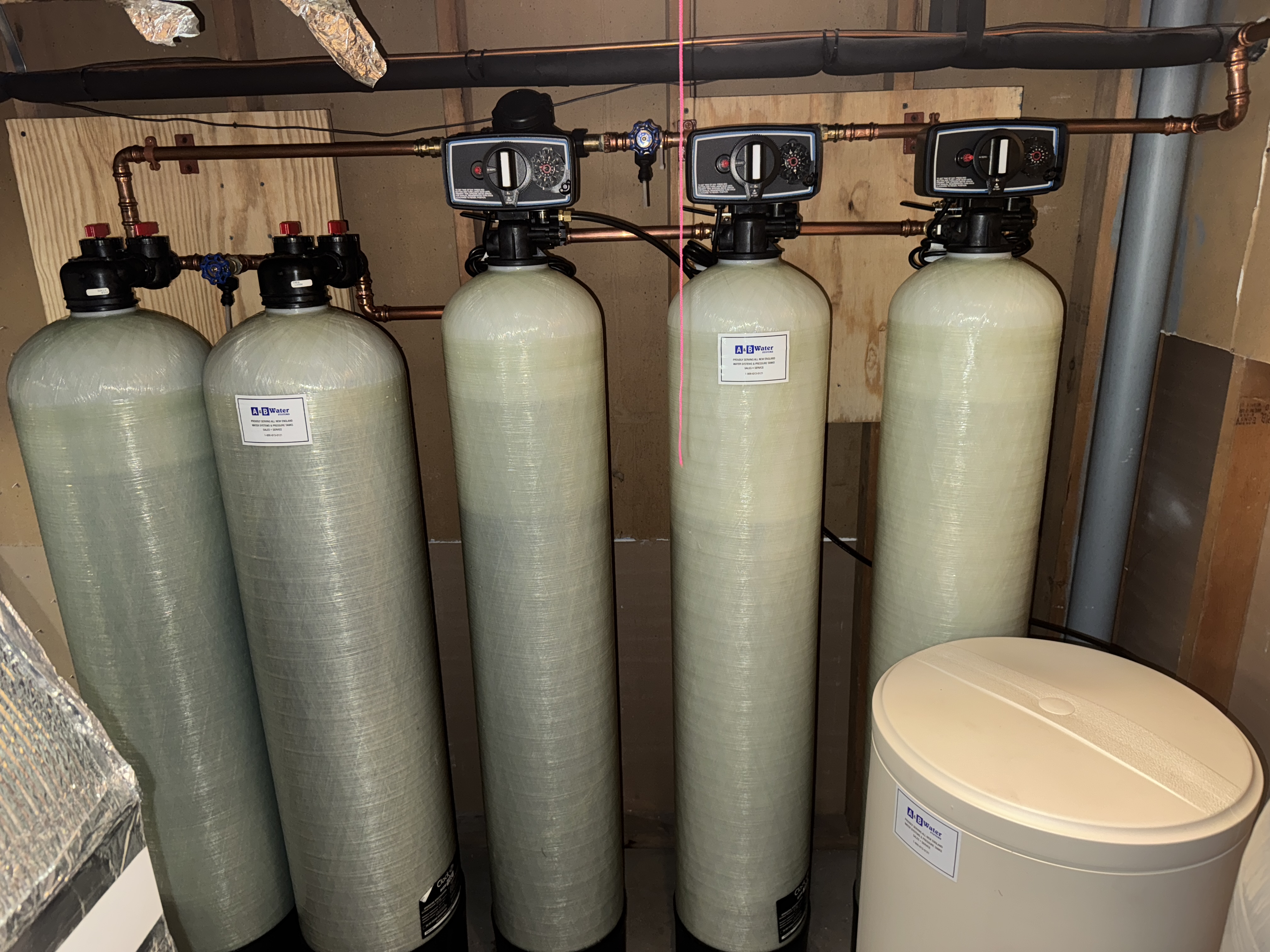
Water softeners are designed primarily to reduce hardness minerals such as calcium and magnesium. Correct system sizing depends on hardness level, water usage, flow requirements, and whether iron or other conditions must be addressed before or alongside softening.
A well-planned softening system can help reduce scale accumulation, soap scum, mineral spotting, and hardness-related buildup in plumbing fixtures and water-using appliances.
EXPLORE WATER SOFTENER SOLUTIONSIron & Manganese Removal From Well Water
Iron and manganese can discolor water and leave orange, brown, or black stains on sinks, tubs, toilets, laundry, and fixtures. Treatment options vary according to the mineral type, concentration, pH, dissolved oxygen, and other aspects of the water chemistry.
A & B designs iron and manganese filtration systems around the specific water conditions rather than assuming that every staining problem has the same cause.
EXPLORE IRON & MANGANESE TREATMENTWell Water Testing & Treatment Evaluation
Reliable treatment decisions depend on reliable information. Existing laboratory reports can identify health-related contaminants and provide useful measurements for minerals, pH, hardness, and other water-quality indicators.
If you already have current test results, send them with your inquiry. We can review the reported conditions and explain what information may still be needed to develop an appropriate treatment recommendation. When specialized testing is needed, sampling and analysis should follow the instructions of an appropriately certified laboratory.
SEND YOUR WATER TEST RESULTSReverse Osmosis Drinking-Water Systems
Reverse osmosis is commonly used as a point-of-use treatment method for water at a kitchen sink, dedicated drinking-water faucet, refrigerator, or ice maker. The system uses several treatment stages, including a membrane, to reduce certain dissolved substances and improve drinking water based on the system's specifications.
Pre-treatment may be needed when the source water contains hardness, iron, manganese, sediment, or other conditions that could reduce membrane performance or service life.
EXPLORE REVERSE OSMOSIS SYSTEMSArsenic Removal & Well Water Treatment
Arsenic can occur naturally in groundwater and cannot be reliably detected by sight, smell, or taste. Treatment selection depends on laboratory results, arsenic form, concentration, pH, competing contaminants, water usage, and whether treatment is needed at the point of entry or point of use.
A & B designs arsenic treatment systems for the home's water chemistry and follows installation with the appropriate performance-verification plan.
EXPLORE ARSENIC TREATMENT SYSTEMSPFAS & PFOA Water Filtration
PFAS treatment requires careful review of laboratory results and system objectives. Depending on the compounds detected, water chemistry, household flow, and applicable requirements, treatment may involve granular activated carbon, ion-exchange media, reverse osmosis, or a combination of technologies.
A & B helps homeowners understand the differences between point-of-entry and point-of-use PFAS treatment and designs systems around the property's reported conditions.
EXPLORE PFAS REMOVAL & FILTRATIONRadon Treatment for Water & Air
Radon in well water is commonly addressed with a properly designed aeration or carbon-based treatment system, depending on test results and site conditions. Radon in indoor air is generally mitigated through a separate system designed to reduce the movement of soil gas into the home.
Because these are distinct problems, A & B evaluates radon-water treatment and radon-air mitigation separately while helping homeowners understand how the two may relate at their property.
COMPARE RADON WATER & AIR SOLUTIONS