Most homeowners searching for the best water filter for home use end up on pages full of pitcher rankings and countertop gadget reviews. Those resources are fine if your only concern is chlorine taste. But if you live in New Hampshire, southern Maine, or Massachusetts, and your household draws water from a private well, the stakes are considerably higher. Arsenic in granite bedrock, radon dissolved in groundwater, and PFAS compounds migrating from legacy industrial sites are not problems that a $40 pitcher filter is designed to solve.
This guide takes a different approach. Rather than ranking retail products by user ratings, it walks New England homeowners through the water filtration decisions that actually matter: understanding what is in your water, matching the right treatment technology to your specific contaminant profile, and investing in a professionally installed system that performs reliably over time. With over 25 years of experience serving families across New Hampshire and the broader New England region, A&B Water Consultants has developed this resource to give homeowners the depth of information they deserve before making one of the most important health decisions for their household.
Why New England Homeowners Need More Than a Standard Water Filter
The geography of New England creates water quality challenges that are genuinely different from those faced by homeowners in other parts of the country. The region sits atop some of the oldest granite bedrock in North America. That geology is beautiful, but it also means that groundwater passing through it picks up naturally occurring contaminants that most standard filtration products were never designed to address.
Arsenic, Radon, and PFAS in NH, ME, and MA Well Water
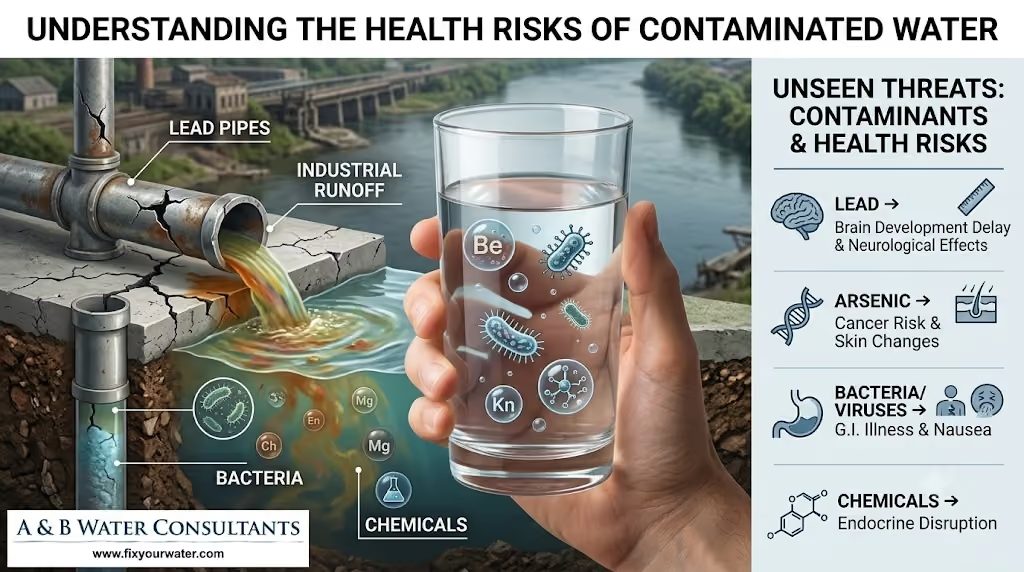
Arsenic is perhaps the most well-documented concern for private well owners in New Hampshire. The state has one of the highest rates of arsenic-contaminated well water in the United States, with studies consistently showing that a significant percentage of private wells in Rockingham, Hillsborough, and Merrimack counties exceed the EPA maximum contaminant level of 10 micrograms per liter. The arsenic does not come from industrial pollution in most cases. It leaches naturally from the granite and feldspar minerals in bedrock as groundwater moves through fractures and fissures over time. Learn about our arsenic contamination treatment systems.
Radon presents a parallel challenge. New Hampshire and Maine rank among the states with the highest radon concentrations in both air and water. When radon-laden groundwater is drawn into a home, it releases radon gas during activities like showering, running the dishwasher, or doing laundry. The EPA estimates that radon in drinking water contributes to lung cancer risk through inhalation, and the risk from ingestion, while secondary, is also recognized. This is a problem specific to private wells in granite-heavy regions, and it requires treatment technologies that most homeowners have never encountered in retail stores. Learn about our radon mitigation systems.
PFAS, or per- and polyfluoroalkyl substances, add a third layer of concern. These synthetic compounds, sometimes called forever chemicals because they do not break down naturally in the environment, have been detected in both private wells and municipal water supplies across New England. Contamination sources include military bases, industrial facilities, and sites where PFAS-containing firefighting foam was used. Communities in southern New Hampshire and parts of Massachusetts have faced particularly serious PFAS contamination events in recent years. Learn about our PFAS treatment and removal systems.
Why Off-the-Shelf Filters Fall Short for These Contaminants
Standard pitcher filters, refrigerator filters, and basic countertop units are typically certified to reduce chlorine, sediment, and certain taste-and-odor compounds. They are not designed or certified to reliably reduce arsenic to below EPA action levels, remove dissolved radon gas, or eliminate the full spectrum of PFAS compounds at the concentrations found in New England well water. Using one of these products while believing your water is safe would be a costly and potentially dangerous mistake.
The case for professionally assessed, custom-installed systems is straightforward: the contaminants present in New England groundwater require treatment technologies that are sized, configured, and installed by people who understand both the chemistry of the water and the engineering of the equipment.
Why a Certified Water Test Should Always Come Before Choosing a Filter System
This point cannot be overstated, and it is one that virtually every retail-focused water filter guide skips entirely. No one should purchase a filtration system before completing a certified laboratory water test. This is not a precaution. It is a prerequisite.
Water quality varies dramatically from one well to the next, even on the same street. Two neighbors in the same town in New Hampshire might have completely different contaminant profiles based on well depth, the specific bedrock formation their well penetrates, and the local geology. A homeowner who installs an arsenic removal system without testing first might have a radon problem that goes entirely unaddressed, or vice versa.
What a Certified Water Test Covers
A comprehensive well water analysis from a state-certified laboratory will typically include testing for coliform bacteria, nitrates, pH, hardness, iron, manganese, arsenic, radon, lead, and in areas of known concern, PFAS compounds. New Hampshire's Department of Environmental Services recommends that private well owners test their water at least every three to five years, and more frequently if there are changes in taste, odor, or color, or if a neighbor's well has shown contamination.
The test results form the foundation of any responsible filtration recommendation. A professional water quality consultant uses those results to design a system that addresses the actual contaminants present at the concentrations found in that specific home's water supply. This is fundamentally different from reading a product review and ordering something online.
Contact A&B Water Consultants for a free water treatment quote, and ask about their comprehensive water testing services to start the process correctly.
New Hampshire and New England Water Quality Standards: What Homeowners Are Required to Know
Understanding the regulatory framework around private well water in New England is important for homeowners, because the rules governing private wells are different from those that apply to public water systems.
Private Wells Are Not Regulated the Way Municipal Water Is
Public water systems in New Hampshire, Maine, and Massachusetts are regulated by their respective state environmental agencies and must comply with EPA National Primary Drinking Water Regulations. These systems are tested regularly, and results are publicly available. Private well owners, however, are responsible for testing and treating their own water. There is no government agency routinely monitoring what comes out of a residential well.
New Hampshire's Department of Environmental Services has published guidance recommending testing for arsenic and radon specifically, given the state's known geology. Maine's Center for Disease Control and Prevention offers similar guidance for well owners in that state. Massachusetts has enacted some of the country's most aggressive PFAS standards, with a maximum contaminant level of 20 parts per trillion for six PFAS compounds in public water systems. Private well owners in Massachusetts near known contamination sites are strongly encouraged to test for PFAS as well.
What These Standards Mean for Filter Selection
Knowing the regulatory thresholds helps homeowners evaluate whether their water treatment system is actually performing. A properly installed and maintained reverse osmosis system, for example, should reduce arsenic to well below the EPA's 10 microgram per liter standard. A professionally sized aeration system should reduce radon in water to levels consistent with EPA guidance. These performance benchmarks are only meaningful when you start with a certified water test and follow up with periodic retesting after installation.
Matching the Right Filter Technology to Your Water Contaminant Profile
One of the most useful things a water quality professional can do is help a homeowner understand which technology is actually designed to address their specific problem. Below is a practical matching guide based on the contaminants most commonly found in New England private wells.
Arsenic: Reverse Osmosis and Adsorptive Media
Arsenic in well water occurs in two primary forms: arsenate (As V) and arsenite (As III). Arsenate is more easily removed by most treatment technologies. Arsenite often requires oxidation first to convert it to arsenate before filtration. Reverse osmosis systems with NSF/ANSI 58 certification are highly effective at reducing arsenic, typically achieving removal rates above 95 percent. Adsorptive media filters, which use materials like iron-based granular media, are also effective and are commonly used in whole-house configurations where higher flow rates are needed.
Radon: Aeration and Granular Activated Carbon
Radon in water requires one of two primary treatment approaches. Aeration systems work by introducing air into the water and allowing the dissolved radon gas to escape before the water enters the home's distribution system. These systems are highly effective and are the preferred method for high radon concentrations. Granular activated carbon (GAC) filters can also remove radon, but they are better suited to lower concentration levels. GAC systems used for radon require careful management because the radon decays within the carbon bed, and the spent media must be disposed of properly by a licensed professional.
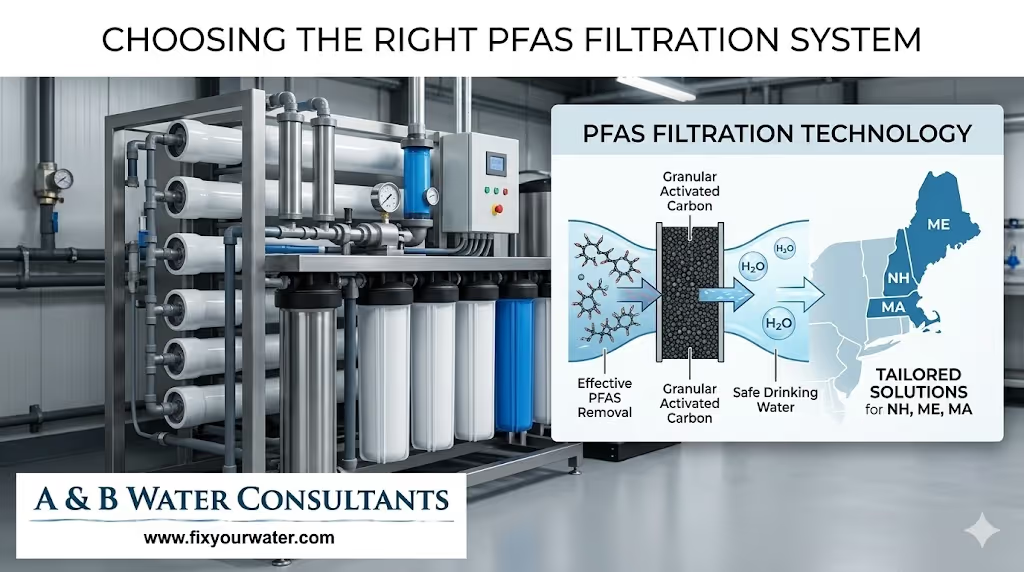
PFAS: Reverse Osmosis and High-Contact-Time Activated Carbon
PFAS removal requires either reverse osmosis or activated carbon with sufficient contact time. Not all activated carbon filters are equal in this regard. A properly designed carbon block or GAC system with adequate bed depth and flow rate control can achieve significant PFAS reduction, but the configuration matters enormously. Reverse osmosis systems certified to NSF/ANSI 58 for PFAS removal are currently the most reliable technology for bringing PFAS concentrations below regulatory thresholds. Homeowners near known PFAS contamination sites in New Hampshire or Massachusetts should prioritize RO as part of their treatment solution. Learn about our PFAS treatment and removal systems.
Iron, Manganese, and Sediment: Oxidizing Filters and Sediment Pre-Filters
Many New England wells also contain elevated iron and manganese, which cause staining, odor, and taste problems. These contaminants are typically addressed with oxidizing filters, often using greensand or similar media, sometimes combined with an air injection system. Sediment pre-filters protect downstream equipment from particulate matter and extend the life of more sophisticated treatment components.
PFAS Contamination in New England Water: Which Filtration Systems Actually Remove It
PFAS contamination has become one of the most pressing water quality concerns in New England, and it deserves dedicated attention in any water filter buying guide aimed at this region. Per- and polyfluoroalkyl substances include thousands of individual compounds, and their presence in drinking water has been linked to serious health effects including certain cancers, immune system disruption, and developmental issues in children.
Where PFAS Contamination Is Found in New England
In New Hampshire, PFAS contamination has been documented near Pease Air Force Base in Portsmouth, where PFAS-containing firefighting foam was used for decades. Communities in Merrimack, Litchfield, and Bedford have also dealt with PFAS in both public water supplies and private wells linked to industrial sources. In Massachusetts, communities near military installations and manufacturing facilities have faced similar challenges. Southern Maine has seen PFAS contamination tied to the application of PFAS-containing sludge on agricultural land, which has affected both wells and surface water in farming communities. Learn about our PFAS treatment and removal systems.
Which Technologies Actually Work for PFAS
The EPA and NSF International have both evaluated filtration technologies for PFAS removal. The two technologies with the strongest and most consistent performance records are reverse osmosis and granular activated carbon. However, not all GAC systems are configured to achieve adequate PFAS removal. The key variables are the type of carbon used, the flow rate through the carbon bed, and the frequency of media replacement. A GAC system that is undersized or has exhausted its capacity will not reliably remove PFAS, and there is no visible or taste-based indicator that it has stopped working.
Reverse osmosis systems certified to NSF/ANSI 58 with specific PFAS reduction claims offer the most verifiable performance guarantee. For homeowners with confirmed PFAS contamination, an under-sink RO system at the primary drinking and cooking water source is a minimum recommendation. Whole-house RO may be warranted in cases of severe contamination where PFAS exposure through bathing and laundry is also a concern.
Contact A&B Water Consultants for a free water treatment quote if you have concerns about PFAS in your well water or if your community has been identified as having a known contamination source nearby.
Radon in Drinking Water: A Hidden Hazard in New England Homes and How to Remove It
Radon is a topic that receives significant attention in the context of indoor air quality, but its presence in drinking water is far less understood by the general public, and almost entirely absent from mainstream water filter guides. For homeowners in New Hampshire and Maine, this is a serious oversight.
How Radon Gets Into Well Water
Radon is a naturally occurring radioactive gas produced by the decay of uranium in rock and soil. In granite-rich regions like most of New Hampshire and western Maine, uranium concentrations in bedrock are relatively high, which means radon production is correspondingly elevated. When groundwater moves through fractured granite, it absorbs dissolved radon. That radon stays dissolved in the water until it is released into the air inside the home.
The EPA has estimated that radon in drinking water is responsible for approximately 168 cancer deaths per year in the United States, with lung cancer from inhalation of radon released during household water use accounting for the vast majority of that risk. Ingestion of radon in water contributes to stomach cancer risk as well, though at lower rates.
New Hampshire and Maine Radon Statistics
New Hampshire consistently ranks in the top tier of states for radon concentrations in both air and water. Studies conducted by the New Hampshire Department of Environmental Services have found that a substantial proportion of private wells in the state contain radon above 2,000 picocuries per liter, which is the EPA's proposed action level for radon in drinking water. In some parts of the state, levels exceeding 10,000 picocuries per liter have been documented. Maine's geology presents similar conditions, particularly in the western and central parts of the state.
Aeration and GAC Treatment Options
Aeration systems, also called packed tower aerators or diffused bubble aerators, are the gold standard for radon removal in water. These systems introduce large volumes of air into the water stream, allowing dissolved radon gas to volatilize and be vented safely outside the home. Properly designed aeration systems can achieve radon removal efficiencies of 95 to 99 percent, making them highly effective even for wells with very high radon concentrations.
Granular activated carbon systems are an alternative for wells with moderate radon concentrations. GAC removes radon by adsorption, but the radon decays within the carbon bed over time, producing radioactive decay products. This means that spent GAC media used for radon removal must be handled and disposed of as low-level radioactive material by a licensed contractor. This is not a DIY maintenance task, and it is one of the most important reasons why professional installation and ongoing service contracts matter for radon treatment systems.
The Best Water Filtration Systems for New Hampshire and New England Homes
With a clear understanding of the contaminants at stake, it becomes much easier to evaluate filtration system options. The following overview covers the system types most relevant to New England homeowners with private wells.
Whole-House Filtration vs. Point-of-Use Systems
A whole-house filtration system, also called a point-of-entry (POE) system, treats all water entering the home before it reaches any tap, appliance, or fixture. This is the appropriate solution when contamination affects all household water use, which is the case for radon, iron, manganese, and in some PFAS scenarios. A point-of-use (POU) system treats water at a specific location, most commonly under the kitchen sink, and is appropriate for contaminants like arsenic and PFAS where the primary concern is drinking and cooking water.
In many New England homes, the optimal solution involves both: a whole-house system to address radon, sediment, iron, and pH, combined with an under-sink reverse osmosis system to address arsenic and PFAS at the drinking water tap. This layered approach is more sophisticated than anything available in a retail store, and it requires professional design and installation to function correctly.
Reverse Osmosis for PFAS and Arsenic Removal
Reverse osmosis works by forcing water under pressure through a semipermeable membrane that blocks contaminants while allowing water molecules to pass through. The technology is highly effective against a wide range of dissolved contaminants, including arsenic, PFAS compounds, nitrates, lead, and many other substances. Modern RO systems include pre-filters to protect the membrane from sediment and chlorine, the RO membrane itself, and post-filters to polish the water before it reaches the tap.
Under-sink RO systems are the most common configuration for residential use and are appropriate for addressing arsenic and PFAS at the primary drinking and cooking water source. Whole-house RO systems are available for situations where whole-home protection from dissolved contaminants is warranted, but they require significantly more infrastructure, higher water pressure, and professional sizing to function properly.
Matching System Types to Specific Contaminant Profiles
A home with elevated arsenic and no radon concern might be best served by an under-sink RO system with NSF/ANSI 58 certification. A home with high radon and moderate iron would likely need a whole-house aeration system combined with an iron removal filter. A home with arsenic, radon, and PFAS, which is not uncommon in parts of New Hampshire, requires a carefully sequenced multi-stage treatment train designed by a professional who understands how each component interacts with the others.
How to Choose the Right Home Water Filter for Your Specific Contaminants
Choosing a filtration system is a process, not a product decision. The following steps reflect the approach that professional water quality consultants use when working with New England homeowners.
Start with a Certified Water Test, Not a Product
As discussed earlier, a certified laboratory water test is the essential first step. The results will tell you exactly what is in your water and at what concentrations, which is the only basis on which a responsible system recommendation can be made.
Matching Filter Technology to Contaminant Type
Once you have test results in hand, a professional consultant can match the appropriate technology to each contaminant identified. This matching process considers not just the contaminant type but also its concentration, the presence of other contaminants that might interfere with treatment, the household's water usage patterns, and the existing plumbing infrastructure.
Key Certifications to Look For
NSF International and ANSI have developed a series of standards that validate the performance claims of water treatment products. The most important for New England homeowners are:
- NSF/ANSI 53: Covers health-based contaminant reduction, including arsenic, lead, and certain volatile organic compounds. A filter certified to NSF 53 for arsenic reduction has been independently tested to demonstrate that it actually reduces arsenic to below the EPA standard.
- NSF/ANSI 58: Covers reverse osmosis systems and validates their ability to reduce a specific list of contaminants, which now includes PFAS compounds for systems that have been tested and certified for that claim.
- NSF/ANSI 61: Covers materials safety, ensuring that filter components do not leach harmful substances into the treated water. This certification is important for all plumbing components and filter housings.
When evaluating any filtration system, homeowners should verify that the specific contaminant reduction claims are backed by NSF certification, not just marketing language. A product that says it "reduces contaminants" without NSF certification for the specific contaminants of concern is not a reliable choice for serious health protection.
Whole-House Water Filtration: What It Does and Why It Matters
Whole-house water filtration provides protection at every tap in the home, not just the kitchen sink. This distinction is particularly important for contaminants like radon, where the primary exposure route is inhalation of gas released during showering and other water-intensive activities.
Protection at Every Tap
A point-of-entry system treats all water entering the home before it reaches the water heater, bathrooms, laundry, and any other point of use. This means that the water used for bathing, washing vegetables, making ice, and running the dishwasher is all treated. For radon, this comprehensive protection is essential. For sediment and iron, whole-house treatment also protects appliances, plumbing fixtures, and water heaters from damage and staining.
How Whole-House Systems Handle Sediment, Iron, and Chemical Contaminants
A professionally designed whole-house system for a New England home might include a sediment pre-filter to remove particulate matter, an iron and manganese removal stage using oxidizing filtration media, a pH correction stage if the water is acidic (which is common in New Hampshire and Maine), an aeration system for radon removal, and a GAC stage for additional organic compound reduction. Each component is sized to match the home's water demand and the specific characteristics of the well water.
Long-Term Cost and Health Value
The upfront investment in a professionally installed whole-house system is higher than purchasing a retail pitcher filter. But the comparison is not meaningful when the contaminants involved are arsenic, radon, and PFAS. The long-term health costs of chronic exposure to these substances, and the liability implications for property value and resale, far outweigh the cost of a properly designed treatment system. Professionally installed systems also last considerably longer than retail products when maintained correctly, with many whole-house systems providing reliable service for 15 to 20 years or more with appropriate media replacement and servicing.
Reverse Osmosis Systems for Arsenic and PFAS Removal in New England Homes
Reverse osmosis is the most versatile and well-validated technology available for removing the dissolved chemical contaminants that concern New England homeowners most. Understanding how it works and what to expect from a professionally installed system helps homeowners make informed decisions.
How RO Technology Removes Arsenic and PFAS Compounds
The RO membrane has pores small enough to block dissolved ions and molecular compounds while allowing water molecules to pass. Arsenic in its arsenate form (As V) is effectively blocked by RO membranes, with removal rates typically in the 90 to 99 percent range. PFAS compounds, which are relatively large molecules, are also effectively blocked by RO membranes. Studies have consistently shown that RO systems certified to NSF/ANSI 58 can reduce PFAS concentrations to below detection limits in many cases.
One important consideration is water chemistry. If arsenic is present primarily as arsenite (As III), pre-oxidation may be needed before the RO stage to convert it to the arsenate form, which is more effectively removed. A professional water quality consultant will evaluate this based on the water test results.
Under-Sink vs. Whole-House RO Configurations
Under-sink RO systems are installed at a single point of use, typically the kitchen sink, and provide treated water through a dedicated faucet. They are appropriate when the primary concern is drinking and cooking water quality. Modern under-sink RO systems are compact, efficient, and capable of producing high-quality water at flow rates sufficient for household drinking and cooking needs.
Whole-house RO systems treat all water entering the home and are appropriate in cases of severe chemical contamination where exposure through bathing is also a concern. These systems require higher water pressure, a larger physical footprint, and more sophisticated installation than under-sink units. They also produce a concentrate stream (reject water) that must be managed appropriately. Professional sizing and installation are non-negotiable for whole-house RO.
What to Expect from a Professionally Installed RO System
A professionally installed RO system will be sized to match the household's water demand, configured with appropriate pre-filtration to protect the membrane, and equipped with a post-filter to ensure water quality at the tap. The installer should provide documentation of the system's NSF certifications and a baseline water quality test after installation to confirm performance. Ongoing maintenance, including sediment pre-filter replacement, membrane inspection, and periodic water retesting, should be part of the service relationship.
Contact A&B Water Consultants for a free water treatment quote and to learn more about professionally installed RO systems designed for New Hampshire and New England well water conditions.
Why Retail Water Filters Are Not Enough for Arsenic, Radon, and PFAS Removal
This is a point that deserves direct and honest treatment, because the consequences of relying on an inadequate filter for serious health contaminants are significant.
The Limitations of Pitcher Filters and Countertop Units
Pitcher filters like those sold by major retail brands are typically certified to NSF/ANSI 42, which covers aesthetic contaminants like chlorine taste and odor. Some pitcher filters carry NSF/ANSI 53 certification for lead reduction, and a small number have been tested for limited PFAS reduction. However, none of the common retail pitcher filters are certified for arsenic removal to below the EPA standard, and none are capable of addressing radon in water at all.
The flow rate through a pitcher filter is also inherently limited, which means the contact time between water and filter media is short. Effective PFAS removal with activated carbon requires sufficient contact time. A pitcher filter, by design, cannot provide the contact time needed for reliable PFAS reduction at the concentrations found in contaminated New England wells.
Refrigerator Filters and Basic Under-Sink Units
Refrigerator filters are typically designed to address chlorine, sediment, and taste. They are not designed or certified for arsenic, radon, or PFAS removal. Basic under-sink filters without RO membranes may improve taste and reduce some contaminants, but they are not a substitute for a properly designed treatment system when serious health contaminants are present.
The Risk of False Confidence
Perhaps the most serious problem with relying on retail filters for serious contaminants is the false sense of security they can create. A homeowner who installs a pitcher filter believing it is protecting their family from arsenic is not just unprotected. They are actively unaware of their exposure. This is why professional water testing and professional system design are not optional extras. They are the foundation of genuine water safety for New England well owners.
Professional Installation vs. DIY Water Filters: What New England Homeowners Should Know
The appeal of DIY water filtration is understandable. Products are widely available, installation videos are plentiful, and the upfront cost appears lower. But for homeowners dealing with arsenic, radon, or PFAS, the DIY approach carries risks that are not present with professionally installed water treatment systems.
Why Professional Sizing and Installation Matters for Performance
Every component of a water treatment system must be sized to match the specific conditions of the installation: the water flow rate, the contaminant concentrations, the water chemistry, and the household's usage patterns. An undersized carbon filter will exhaust its capacity quickly and stop performing. An oversized aeration system may be inefficient and difficult to maintain. An RO membrane that is not matched to the incoming water pressure will not perform to its rated specifications.
Professional installers also understand how different treatment components interact. For example, if a home has both high iron and high arsenic, the iron must be addressed before the arsenic removal stage, because iron can foul RO membranes and adsorptive media. Getting the sequence wrong means the downstream components will fail prematurely or perform poorly.
Ongoing Maintenance and Monitoring with a Professional Service
A professional water treatment service relationship includes not just installation but ongoing maintenance and monitoring. Filter media has a finite capacity and must be replaced on schedule. RO membranes need periodic inspection and replacement. Annual water retesting confirms that the system is still performing as designed and that no new contaminants have appeared in the water supply. This ongoing relationship is a key differentiator between professional service and a one-time retail purchase.
Filter Maintenance and Service: What Homeowners Should Expect
Understanding the maintenance requirements of a professionally installed system helps homeowners budget appropriately and set realistic expectations for the long-term relationship with their water treatment provider.
Realistic Maintenance Schedules
Sediment pre-filters typically require replacement every three to six months, depending on the sediment load in the source water. GAC media used for organic compound reduction generally needs replacement every one to three years. RO membranes in residential under-sink systems typically last two to five years under normal conditions. Aeration systems require periodic inspection of the blower, air injection components, and storage tank. Iron removal media needs periodic backwashing and eventual replacement, with service intervals varying by system design and iron concentration.
Annual Water Retesting
Annual water retesting is an essential component of responsible water treatment management. Well water quality can change over time due to changes in the aquifer, nearby land use changes, or shifts in water table levels. Annual testing confirms that the treatment system is still performing correctly and alerts homeowners to any new concerns that may require system adjustment. This is a service that professional water treatment companies provide as part of their ongoing client relationships.
Contact A&B Water Consultants for a free water treatment quote and to discuss a comprehensive maintenance and monitoring plan for your home's water treatment system.
Cost and Investment Considerations for New England Homeowners
Providing realistic cost guidance is an important part of any honest water filter buying guide. The following ranges reflect typical professionally installed system costs for New England homes and are intended to help homeowners plan appropriately.
Under-Sink Reverse Osmosis Systems
A professionally installed under-sink RO system for arsenic and PFAS removal typically ranges from $800 to $2,500 or more, depending on the system's configuration, the number of filtration stages, and the complexity of the installation. This investment covers equipment, installation labor, and initial water testing confirmation. Annual maintenance costs for filter and membrane replacement typically run $150 to $400 per year.
Whole-House Filtration Systems
Whole-house systems vary considerably in cost depending on the contaminants being addressed and the complexity of the treatment train required. A whole-house system for sediment, iron, and pH correction might range from $1,500 to $4,000 installed. Adding a radon aeration system to the treatment train increases the investment, with aeration systems for residential applications typically ranging from $3,000 to $8,000 or more depending on the radon concentration and flow rate requirements. Multi-stage systems addressing radon, iron, pH, and arsenic can represent a total investment in the $6,000 to $15,000 range for comprehensive treatment.
Framing the Investment Against Long-Term Value
These figures may seem significant, but they should be evaluated against the alternative. Chronic exposure to arsenic at levels above the EPA standard is associated with increased risk of bladder, kidney, lung, and skin cancers. Radon exposure is the second leading cause of lung cancer in the United States. PFAS exposure has been linked to immune system disruption, thyroid disease, and certain cancers. The health costs associated with these exposures, both in human terms and in medical expense terms, far exceed the cost of a properly installed treatment system. Additionally, homes with documented water quality problems and no treatment system face real challenges at the time of sale, while homes with professionally installed and maintained treatment systems can present this as an asset.
Frequently Asked Questions About Home Water Filtration in New England
What is the healthiest water filtration system for a home?
The healthiest water filtration system is the one that most effectively addresses the specific contaminants present in your water supply. For New England homeowners with private wells, this often means a combination of whole-house treatment for radon, iron, and sediment, combined with an under-sink reverse osmosis system for arsenic and PFAS at the drinking water tap. The answer is always based on a certified water test, not a product rating.
What is the best water filter for arsenic removal in well water?
Reverse osmosis systems certified to NSF/ANSI 58 for arsenic reduction are among the most effective technologies available. Adsorptive media filters using iron-based granular media are also effective, particularly in whole-house configurations. The appropriate choice depends on the arsenic concentration, the form of arsenic present (arsenate vs. arsenite), and other water quality characteristics. A professional water quality assessment is the right starting point.
Do home water filters remove PFAS forever chemicals?
Not all home water filters remove PFAS effectively. Reverse osmosis systems certified to NSF/ANSI 58 with specific PFAS reduction claims are the most reliable technology. High-contact-time granular activated carbon systems can also achieve significant PFAS reduction when properly designed and maintained. Standard pitcher filters and basic under-sink units without RO membranes are generally not effective for PFAS removal at the concentrations found in contaminated New England well water.
What is the best water filter for radon in drinking water?
Aeration systems are the most effective technology for radon removal from drinking water, achieving removal efficiencies of 95 to 99 percent. Granular activated carbon systems are an alternative for lower radon concentrations but require careful management of the spent media by a licensed professional. Both options require professional installation and ongoing service. No retail pitcher or countertop filter is effective for radon removal.
Which brand water filter is best for home use with private well water?
For New England homeowners with private wells facing arsenic, radon, and PFAS contamination, the question of brand is secondary to the question of system design and professional installation. The best outcome comes from working with a licensed water quality consultant who designs a custom treatment system based on your specific water test results, rather than selecting a retail brand based on online reviews.
Are there any drawbacks to using a whole-house water filter?
Whole-house filtration systems require a larger upfront investment than point-of-use products, and they need ongoing professional maintenance to perform correctly. Some systems, such as aeration units for radon removal, require dedicated space and proper venting. However, for the contaminants most common in New England well water, the benefits of whole-house treatment far outweigh these considerations. A professional consultant can help homeowners understand the space and infrastructure requirements before installation.
Working with a Professional Water Quality Consultant in New England
The value of working with an experienced, licensed water quality consultant cannot be overstated for homeowners dealing with the complex water quality challenges common in New Hampshire, southern Maine, and Massachusetts. A professional consultant brings not just product knowledge but diagnostic expertise, regional experience with local geology and contamination patterns, and the ability to design a system that addresses the full spectrum of concerns present in a specific home's water supply.
A&B Water Consultants has spent over 25 years working with families across New England to solve exactly these kinds of challenges. The company specializes in arsenic and radon filtration treatment and brings deep expertise in the contaminants most relevant to the region's private well owners. From initial water testing through system design, installation, and ongoing maintenance, the goal is to provide homeowners with confidence that their water is genuinely safe, not just filtered.
The process begins with a comprehensive water quality assessment, which forms the basis for all system recommendations. No two homes are identical, and no responsible water treatment professional should recommend a system without first understanding what is actually in the water. From there, a custom-designed solution is developed that addresses the specific contaminants present at the concentrations found in that home's water supply.
Contact A&B Water Consultants for a free water treatment quote and take the first step toward genuinely safe water for your family. Whether the concern is arsenic in New Hampshire bedrock, radon dissolved in a Maine well, or PFAS compounds migrating from a nearby contamination source, the right solution starts with the right conversation.
Conclusion: The Right Water Filter Starts with the Right Information
Choosing the best water filter for your home in New England is not a decision that should be made based on retail product rankings or online reviews. The contaminants present in New Hampshire, Maine, and Massachusetts private wells, specifically arsenic, radon, and PFAS, require treatment technologies and professional expertise that go well beyond what any retail store can offer.
The path to safe water begins with a certified laboratory water test, continues with a professional assessment by an experienced water quality consultant, and results in a custom-designed, properly installed treatment system that is maintained and monitored over time. This is the approach that actually protects families, and it is the approach that A&B Water Consultants has been delivering to New England homeowners for more than 25 years.
If you are a homeowner in New Hampshire, southern Maine, or Massachusetts with concerns about your private well water quality, the most important step you can take today is to get your water tested and speak with a professional who understands the specific challenges of this region. Contact A&B Water Consultants for a free water treatment quote and begin the process of knowing exactly what is in your water and what it will take to make it genuinely safe for your family.