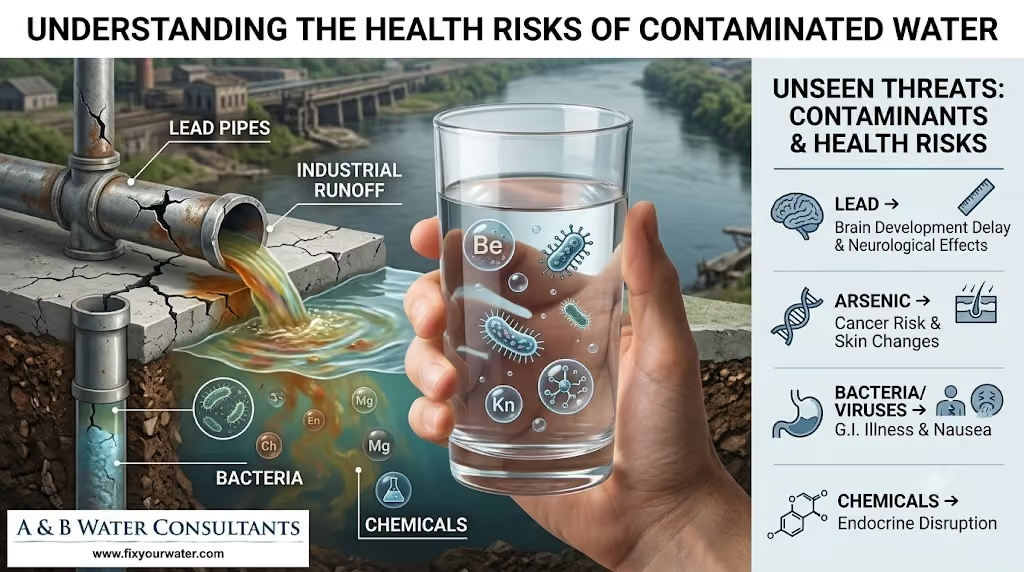
Contaminated water poses a wide range of health risks, from immediate gastrointestinal illnesses to long term problems such as cancer, developmental harm, and organ damage. Understanding the health risks of contaminated water helps homeowners make informed decisions about testing, treatment, and ongoing protection for their families. This article examines the most common contaminants in New Hampshire, Southern Maine, and Massachusetts, compares home water filtration technologies, and gives clear guidance on choosing systems that address PFAS, arsenic, and radon.
Because local geology, private wells, and community sources vary across New England, a tailored approach works best. Homeowners who want professional guidance can Contact A&B Water Consultants for a free water filtration system quote. A & B Water Consultants brings more than 25 years of experience designing arsenic and radon filtration systems for families in the region.
Why Contaminated Water Is a Serious Health Concern
Not all contaminated water looks, smells, or tastes bad. Some contaminants cause obvious illness quickly, but many create health effects that accumulate over months or years. The water quality health impact depends on the contaminant type, concentration, daily consumption, age, and individual health. Children, pregnant women, and people with weakened immune systems face the highest risk.
Acute Risks
- Bacterial and viral contamination can cause diarrhea, vomiting, dehydration, and, in severe cases, death. Well water can be susceptible to bacterial contamination from surface runoff or failed septic systems.
- High nitrate levels—often from fertilizer or septic leachate—can cause methemoglobinemia in infants, a dangerous condition sometimes called blue baby syndrome.
Chronic Risks
- Certain chemicals and metals, when consumed over years, increase cancer risk. Arsenic is a well-known carcinogen linked to skin, bladder, and lung cancer.
- Per- and polyfluoroalkyl substances, or PFAS,
- Radon in water poses inhalation risks when it off-gasses during showers and cooking. Long term exposure to radon increases lung cancer risk.
Understanding these risks illustrates the importance of water filtration for homeowners who rely on private wells or want added protection beyond municipal treatment.
Which Contaminants Are Most Common in New England Homes?
New Hampshire, Southern Maine, and Massachusetts each have areas with specific water threats. Local geology and historical land use shape the contamination profile.
PFAS
PFAS are a group of persistent industrial chemicals used in firefighting foam, nonstick coatings, and many consumer products. They resist breakdown in the environment and can accumulate in groundwater near airports, military sites, and industrial facilities.
Arsenic
Arsenic occurs naturally in some bedrock and groundwater across New England. Private wells in certain areas can have arsenic above safe levels. Because arsenic is tasteless and odorless, testing is the only way to know if it's present.
Radon
New Hampshire ranks among the states with higher residential radon potential, but radon levels vary neighborhood to neighborhood. Radon can dissolve into groundwater and release into indoor air during water use, adding to inhalation exposure.
Other Contaminants
- Bacteria and coliforms from surface contamination or failing septic systems
- Nitrates from agricultural runoff
- Iron and manganese causing staining and taste issues
- Hardness minerals that impact appliances and soap performance
How Contaminants Affect Health: A Closer Look
Understanding the way contaminants act inside the body helps homeowners prioritize treatment. The most concerning mechanisms are carcinogenicity, endocrine disruption, organ toxicity, and infectious disease.
Carcinogens and Long Term Exposure
Arsenic and some PFAS are associated with increased cancer risk following chronic exposure. Carcinogenesis often follows many years of ingestion at elevated concentrations, which is why routine testing and mitigation are essential for private-water households.
Endocrine and Developmental Effects
PFAS can interfere with hormone systems and have been linked to developmental delays and decreased vaccine responses in children. Pregnant women exposed to high PFAS levels may face increased risks of adverse birth outcomes.
Respiratory Risks From Radon
Unlike most water contaminants that act through ingestion, radon in water increases lung cancer risk mainly through inhalation when gas is released into indoor air during normal water usage.
Point-of-Use Versus Point-of-Entry: Where to Filter
Before selecting a technology, homeowners should decide whether they need whole-house treatment or protection only at drinking and cooking taps.
- Point-of-Use (POU) systems treat water at a single tap, commonly under the kitchen sink. POU is cost-effective for targeting contaminants found primarily in drinking water, such as PFAS and lead.
- Point-of-Entry (POE) or whole-house systems treat incoming water for all household uses. POE is recommended when contaminants affect more than ingestion risks, for example when arsenic or radon levels justify treatment for bathing and laundry in addition to drinking.
Choosing POE or POU depends on contaminant type, concentration, and budget. Homeowners often combine both approaches: a POE softener or sediment filter plus a dedicated RO system at the kitchen sink for drinking water.
Common Filtration Technologies and How They Perform
Each filtration technology targets specific contaminants and comes with tradeoffs in cost, maintenance, and installation. The following sections compare the methods most relevant to PFAS, arsenic, and radon.
Granular Activated Carbon (GAC)
GAC filters work by adsorption, trapping organic molecules on the surface of carbon particles. They are widely used for taste and odor issues and can reduce many organic contaminants.
- Effectiveness: GAC reduces many PFAS compounds, especially longer-chain PFAS, and can lower certain volatile organic compounds. It also reduces chlorine and improves taste.
- Radon: GAC can remove radon, but it concentrates radioactivity in the carbon, creating disposal concerns and safety considerations for higher radon levels.
- Maintenance: Carbon must be replaced periodically. Effectiveness drops as media becomes saturated.
- Best Use: Whole-house GAC or point-of-entry units for PFAS pre-treatment, and point-of-use cartridges for drinking water when PFAS levels are moderate.
Reverse Osmosis (RO)
RO uses a semipermeable membrane to remove a wide range of dissolved contaminants by forcing water through under pressure. It is one of the most effective POU technologies for a broad contaminant profile.
- Effectiveness: RO systems remove up to 95 to 99 percent of many contaminants, including arsenic, nitrates, and most PFAS when configured correctly.
- Radon: RO is not a practical primary treatment for radon gas because radon can pass through membranes and because RO systems are typically POU.
- Wastewater: RO produces a concentrate or brine. For households on septic systems or wells with limited water, homeowners should consider wastewater implications.
- Maintenance: Regular membrane and filter changes are essential. Professional installation ensures correct prefiltration to protect the membrane from fouling.
- Best Use: Under-sink RO for drinking and cooking water, often paired with a POE prefilter for sediment.
Ion Exchange
Ion exchange replaces problematic ions in water with more desirable ones via resin beds. Examples include water softeners and anion exchange systems.
- Effectiveness: Anion exchange resins can remove arsenic V and specialized resins or fresh regenerated resins can remove certain PFAS compounds. Cation exchange (softening) addresses hardness minerals.
- Maintenance: Some ion exchange systems require salt regeneration. For PFAS, specific resins may need professional regeneration or replacement.
- Best Use: Large-scale POE systems for arsenic or PFAS when properly specified, and common in whole-house water softening applications.
Adsorptive Media and Iron Oxide Filters
Specialized media containing iron oxide or other adsorptive materials bind arsenic and remove it from the water through chemical adsorption and oxidation.
- Effectiveness: Very effective for arsenic, especially arsenic III and V when the media and system design match the water chemistry.
- Maintenance: Media replacement and proper backwashing or regeneration schedules are required. Disposal of spent media must follow guidelines.
- Best Use: Whole-house arsenic removal in areas with naturally elevated arsenic in groundwater.
Aeration and Air Stripping
Aeration adds air to water to force volatile contaminants like radon out of solution so they can vent outdoors. Commercially, packed tower aeration or spray aeration is used for effective radon removal.
- Effectiveness: Highly effective for radon and other volatile organic compounds.
- Installation: Typically installed as POE systems because they treat water before it enters the home plumbing.
- Best Use: Homes with radon in water at levels where inhalation risk is significant. Aeration vents the gas safely outside.
Distillation
Distillation boils water and condenses steam, leaving many contaminants behind. It removes many salts, metals, and organics but is slow and energy intensive.
- Effectiveness: Good for many contaminants but not ideal for volatile compounds that boil near 100 degrees Celsius unless system includes additional carbon polishing.
- Use Case: Point-of-use for small-scale needs where high purity is required.
UV Disinfection
UV systems inactivate bacteria and viruses but do not remove chemical contaminants. UV is an important component in a treatment train for private wells with microbial issues.
- Effectiveness: Excellent for microbes, not for metals or PFAS.
- Best Use: Combined with filtration for sediment-free water where coliforms are a concern.
Comparing Technologies Against PFAS, Arsenic, and Radon
Here is a concise guide to match contaminants with reliable treatment approaches:
- PFAS: Best treated with a combination of GAC, specialized ion exchange resins, and reverse osmosis at the point of use. For many New England homeowners, an under-sink RO plus whole-house GAC prefiltration balances cost and protection.
- Arsenic: Adsorptive iron oxide media, anion exchange, or RO are effective. Whole-house arsenic systems are common when well water shows elevated levels across multiple uses.
- Radon: Aeration or air stripping is the preferred method for waterborne radon because it vents gas out of the water safely. GAC can be used for low-level radon, but it concentrates radioactivity and requires careful handling.
For tailored system design, homeowners can Contact A&B Water Consultants for a free water filtration system quote. A & B Water Consultants evaluates water chemistry and recommends systems that suit household priorities and budgets.
Testing, Regulations, and Local Considerations in New Hampshire, Southern Maine, and Massachusetts
Private well owners in New England are responsible for testing and mitigating water issues. Regular testing is critical because contaminants like arsenic and PFAS do not always produce detectable tastes or odors.
Testing Frequency and What to Test
- Annual tests for bacteria and nitrates are a good baseline for private wells.
- Test for arsenic once, and repeat every few years or if water chemistry changes. Arsenic is stable but testing verifies levels.
- Test for PFAS if the property is near known PFAS sources such as airports, military installations, or certain industrial sites.
- Test for radon in air and, if radon in air is high or well type suggests risk, test well water for radon as well.
Regulatory Benchmarks
Homeowners should be familiar with guidance and standards. The U.S. Environmental Protection Agency has a maximum contaminant level for arsenic at 10 parts per billion. For PFAS and other emerging contaminants, the EPA and state environmental agencies have issued advisories and regulations that are evolving. Local state agencies in New Hampshire, Maine, and Massachusetts provide testing resources and guidance specific to the region.
Local Geology
New Hampshire's granite bedrock and glacial deposits can contribute to radon and arsenic presence. Southern Maine and Massachusetts have varied geology that can also affect groundwater vulnerability. A & B Water Consultants uses local knowledge to design systems appropriate to regional conditions.
Installation, Maintenance, and Cost Considerations
Filtration systems range from inexpensive cartridge filters to more substantial installations that require professional design and ongoing service. Homeowners should budget not only for installation but also for annual maintenance.
Typical Cost Ranges
- Point-of-use RO systems: $500 to $2,500 installed depending on features
- Whole-house GAC or iron oxide systems: $2,000 to $10,000 depending on flow and media volume
- Aeration systems for radon: $3,000 to $8,000 depending on tower size and installation complexity
Costs fluctuate based on home size, water usage, pre-treatment needs, and whether plumbing modifications are required. For accurate estimates, homeowners should request a site visit and water analysis. Contact A&B Water Consultants for a free water filtration system quote. The firm provides on-site evaluations and transparent proposals tailored to New Hampshire and Southern Maine homes.
Maintenance Needs
- Replace carbon cartridges and RO membranes on schedule; frequency depends on contaminant loads and usage.
- Backwash and regenerate ion exchange systems as recommended by the manufacturer and service technician.
- Dispose of spent GAC that has accumulated radon or other contaminants following local regulations and vendor guidance.
- Schedule annual inspections to ensure pumps, tanks, and venting systems function properly, especially for aeration units.
Real-World Examples: How Systems Solve Problems
The following case studies illustrate practical solutions for New England homeowners. Names are omitted for privacy, but the scenarios reflect real challenges.
Case Study 1: Arsenic in a New Hampshire Well
A family in rural New Hampshire discovered arsenic at 20 parts per billion after a routine test. They wanted a solution that treated all household water. A & B Water Consultants designed a whole-house adsorptive iron oxide system sized for the home’s flow rate, plus an under-sink RO for additional polishing of drinking water. The system eliminated arsenic to below detectable levels, and a service plan helps the family maintain media performance.
Case Study 2: PFAS Near a Former Military Site in Southern Maine
A homeowner near a closed training facility found PFAS in their private well at levels above state guidance. The recommended approach combined a whole-house granular activated carbon system to protect appliances and bathing water and an under-sink RO system for drinking water. Regular media replacement schedules keep the system effective while balancing cost.
Case Study 3: Radon in Massachusetts Well Water
A household in central Massachusetts had elevated indoor air radon and detectable radon in well water. The radon in air required a mitigation system for the home structure, and water testing showed levels high enough to justify water treatment. A packed column aeration unit was installed at the point of entry to strip radon from the water and vent it outdoors, reducing the inhalation risk from waterborne radon.
For help designing similar solutions, homeowners should Contact A&B Water Consultants for a free water filtration system quote. Local expertise ensures systems are sized correctly and comply with regional best practices.
How to Choose the Right System: A Practical Checklist
- Test the water with a certified lab to identify specific contaminants and concentrations.
- Prioritize health risks. If results show arsenic above 10 ppb, address it promptly. If PFAS are present, focus on drinking water treatment.
- Decide between POE and POU based on whether contaminants affect ingestion only or other household uses.
- Compare technologies by effectiveness, ongoing maintenance, and lifecycle costs.
- Confirm certifications. Look for NSF/ANSI standards relevant to contaminant claims and system performance.
- Request a site visit and a written proposal. Professional water consultants will consider well yield, plumbing layout, and household needs.
- Plan for maintenance. Understand filter replacement intervals, regeneration needs, and long term media disposal requirements.
When the checklist feels overwhelming, reach out for expert help. Contact A&B Water Consultants for a free water filtration system quote. Their technicians work with homeowners across New Hampshire, Southern Maine, and Massachusetts to design practical systems that protect health and property.
Practical Tips for New England Homeowners
- Keep an annual testing schedule for bacterial contaminants and reactive testing for chemical contaminants after events such as heavy storms or nearby construction.
- When buying a home with a private well, request a full water analysis and review historical test results. Include arsenic, nitrates, and PFAS if the property is near potential sources.
- Combine technologies when needed. For example, use a POE sediment filter to protect an RO membrane at the kitchen sink.
- Budget for both capital expense and ongoing service. A well-maintained system delivers reliable protection and lowers long term risks to health.
Conclusion
The health risks of contaminated water range from immediate infections to serious long term conditions caused by chemicals like arsenic, radon, and PFAS. For homeowners in New Hampshire, Southern Maine, and Massachusetts, local geology and historical land use make testing and targeted treatment essential. Filtration technologies such as granular activated carbon, reverse osmosis, adsorptive media, ion exchange, and aeration each play a role depending on the contaminant.
Assessing water quality, choosing between point-of-use and point-of-entry systems, and committing to proper maintenance protects families and preserves home systems. Professional consultation ensures the selected solution fits the home, the contaminants, and the owner’s priorities. For personalized, regionally informed recommendations. Their 25 years of experience with arsenic and radon treatment in New England makes them a practical resource for homeowners seeking reliable protection. Contact A&B Water Consultants for a free water filtration system quote.
Frequently Asked Questions
How often should private wells be tested?
Private wells should be tested annually for bacteria and nitrates. Testing for arsenic, PFAS, and other chemical contaminants should occur at least once when moving into a home and repeated periodically or if conditions change. Consult a certified lab and a water treatment professional for a testing schedule tailored to local risks.
Can a single system remove PFAS, arsenic, and radon?
No single system reliably removes all three. PFAS respond well to GAC, specialized ion exchange, or RO. Arsenic often requires adsorptive media, ion exchange, or RO. Radon is best treated with aeration. Combining POE and POU technologies often provides the most practical and cost effective protection.
Is whole-house treatment necessary?
Whole-house treatment is necessary when contaminants affect non-drinking water uses or when widespread exposure presents a risk. For substances that primarily cause harm through ingestion and when budget is limited, point-of-use solutions for drinking and cooking water are effective first steps.
How can homeowners find trustworthy installers?
Look for companies with local experience, proper licensing, references, and service plans. Certifications from industry organizations and adherence to NSF/ANSI standards are good indicators. For homeowners in New Hampshire, Maine, and Massachusetts, A & B Water Consultants offers on-site evaluations and custom systems. Contact A&B Water Consultants for a free water filtration system quote.
What should homeowners do right now if they suspect contamination?
Stop using the water for drinking and cooking if contamination is suspected and bottled water is a temporary alternative. Arrange for prompt testing with a certified lab. Based on results, contact a qualified water treatment professional to discuss mitigation strategies and next steps.