Per- and polyfluoroalkyl substances, commonly known as PFAS, have become one of the most pressing water quality concerns for homeowners across New Hampshire, southern Maine, and Massachusetts. These synthetic chemicals are extraordinarily persistent in the environment and in the human body, earning the nickname "forever chemicals." For families relying on private wells, the risk is not abstract. It is measured in parts per trillion in their drinking water, and the health stakes are real.
Understanding the available PFAS removal technologies is the first step toward protecting your household. This guide breaks down each proven method, compares their performance for residential well water, and explains how to move from water testing to an installed system that genuinely works. Contact A&B Water Consultants for a free PFAS treatment quote and get expert guidance tailored to your specific water chemistry and household needs.
PFAS Contamination in New Hampshire, Maine, and Massachusetts: What Local Homeowners Need to Know
New England has not escaped the national PFAS contamination crisis. In fact, several communities across the region have faced some of the most significant documented cases in the country. In New Hampshire, contamination linked to military installations, industrial facilities, and the historical use of aqueous film-forming foam (AFFF) has affected private wells in towns including Merrimack, Pease, and areas surrounding the former Pease Air Force Base in Portsmouth. The Pease site remains one of the most well-documented PFAS contamination zones in the northeastern United States.
In southern Maine, communities near former manufacturing operations and military sites have also reported elevated PFAS levels in both public water supplies and private wells. Massachusetts has its own clusters of concern, particularly around former military installations and industrial discharge sites in the central and eastern parts of the state.
New Hampshire has established some of the strictest PFAS drinking water standards in the country. The state set maximum contaminant levels (MCLs) for PFOA at 12 parts per trillion (ppt) and for PFOS at 15 ppt, which are more protective than the federal EPA limits. Massachusetts has similarly adopted aggressive standards. The federal EPA's current MCLs for PFOA and PFOS are set at 4 ppt each, which themselves reflect a dramatic tightening of federal oversight. For homeowners on private wells, these regulatory thresholds matter because well water is not tested by a public utility. The responsibility for testing and treatment falls entirely on the homeowner.
Health Risks That Make PFAS Treatment Urgent
The urgency behind PFAS removal technologies is not driven by regulatory paperwork alone. Documented health effects associated with chronic PFAS exposure include increased risk of certain cancers (including kidney and testicular cancer), thyroid disruption, immune system suppression, developmental effects in children, and elevated cholesterol levels. Families with young children, pregnant women, and individuals with existing health conditions face heightened concern. For New England homeowners on private wells, where no municipal treatment system provides a safety net, the case for professional residential treatment is straightforward.
Overview of Proven PFAS Removal Technologies
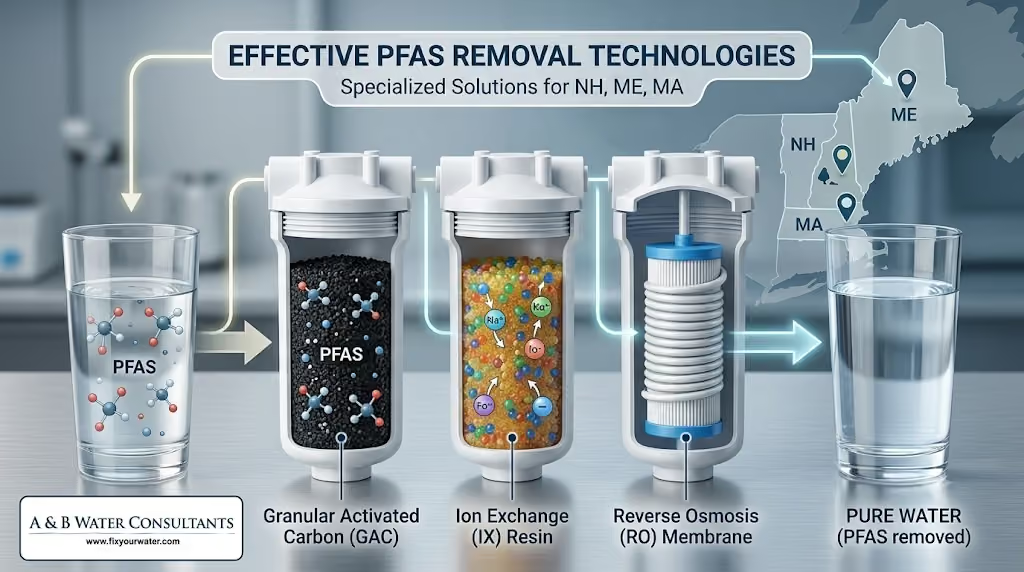
Three technologies have been validated by the EPA and independent research as effective for residential PFAS removal: granular activated carbon (GAC), reverse osmosis (RO) membrane filtration, and ion exchange (IX) resins. Each operates differently, performs at different efficiency levels across PFAS compound types, and carries distinct cost and maintenance profiles. Emerging destruction technologies also exist but remain outside the scope of practical residential application at this time.
Granular Activated Carbon (GAC)
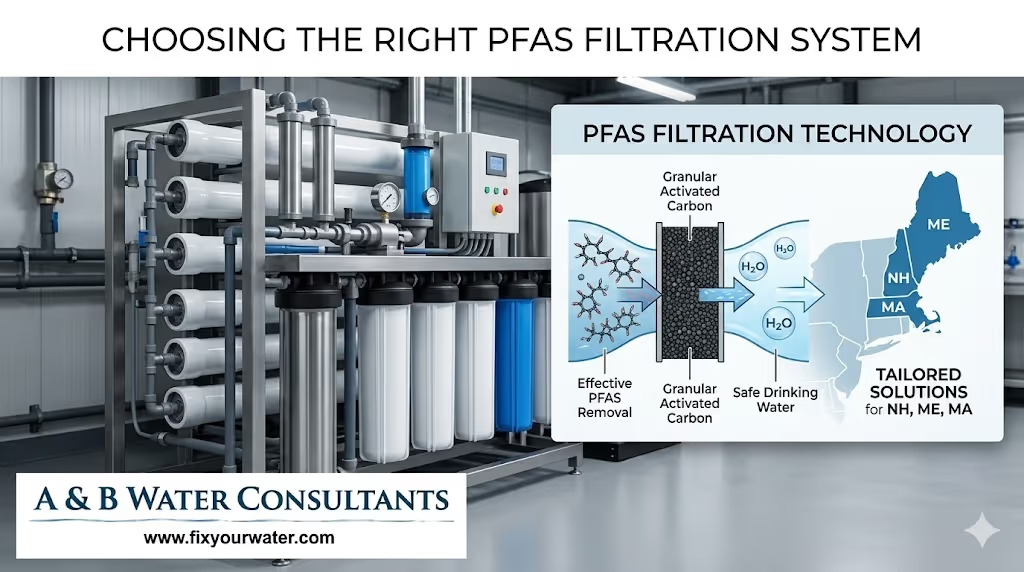
Granular activated carbon (GAC) works through a process called adsorption, in which PFAS molecules bind to the large surface area of porous carbon material as water passes through the filter bed. GAC is well-suited for long-chain PFAS compounds such as PFOA and PFOS and is commonly deployed as a point-of-entry (POE) whole-house system, treating all water entering the home before it reaches any tap.
The primary limitation of GAC is its reduced effectiveness against short-chain PFAS compounds such as PFBS and PFBA, which have a lower affinity for carbon surfaces. The performance of a GAC system also depends heavily on proper sizing relative to flow rate and PFAS concentration. An undersized carbon bed will exhaust prematurely, allowing PFAS to pass through untreated. This is why professional sizing and installation are critical, not optional.
Reverse Osmosis (RO) Membrane Filtration
Reverse osmosis systems use a semi-permeable membrane to physically reject PFAS molecules, along with other contaminants, based on molecular size. RO systems are highly effective, typically achieving PFAS removal rates of 90 percent or greater for a broad range of compounds, including both long-chain and short-chain variants. They are most commonly installed as under-sink point-of-use (POU) systems serving kitchen drinking water and cooking water.
The trade-offs for RO include water waste (RO systems produce a concentrate stream that is discharged), reduced flow rates at the tap, and the need for periodic membrane replacement. For households with high PFAS concentrations in their well water, an under-sink RO system provides a reliable barrier at the point of consumption, though it does not protect shower water or other household uses the way a whole-house POE system does.
Ion Exchange Resins
Ion exchange systems use specially engineered anion exchange resins that selectively attract and capture PFAS molecules. Single-use resins are replaced when exhausted, while regenerable resins can be processed off-site and reused. A key advantage of IX technology is its effectiveness against short-chain PFAS compounds that GAC systems tend to miss, making it a strong option when water testing reveals a complex PFAS compound profile.
Ion exchange systems require professional sizing, installation, and management. The resin must be matched to the specific PFAS compounds present in the source water, and spent resin handling involves regulatory considerations that make professional service essential.
PFAS Removal Technology Comparison: GAC, Reverse Osmosis, and Ion Exchange for Residential Use
The table below summarizes how each of the three proven PFAS removal technologies compares across the criteria that matter most to New England homeowners making a purchase decision.
Contact A&B Water Consultants for a free PFAS treatment quote to find out which technology, or combination of technologies, matches your well water chemistry.
Emerging PFAS Destruction Technologies: What Homeowners Should Know
Research into PFAS destruction methods has accelerated significantly in recent years. Technologies under investigation include ultrasound treatment, plasma-based processes, supercritical water oxidation, and electron beam irradiation. The goal of these approaches is PFAS mineralization, meaning the actual chemical breakdown of the fluorine-carbon bonds that make these compounds so persistent.
However, none of these emerging technologies are currently viable for residential application. They require industrial-scale equipment, significant energy input, and controlled operating conditions that are not compatible with a home water treatment setting. For New Hampshire and New England homeowners seeking protection today, proven point-of-entry and point-of-use systems using GAC, RO, or IX remain the appropriate and effective standard. Emerging destruction methods are worth monitoring for future developments, but they should not delay a homeowner from installing a proven system now.
Why Store-Bought Filters Are Not Enough for PFAS-Contaminated Well Water
It is tempting to reach for a pitcher filter or a refrigerator filter cartridge when PFAS contamination is discovered in a well. These products are accessible, inexpensive, and familiar. However, for households with meaningful PFAS concentrations in their well water, off-the-shelf filters present serious limitations that homeowners need to understand before relying on them.
Most pitcher filters and standard refrigerator cartridges are not certified for PFAS removal. Those that do carry NSF/ANSI 58 or NSF/ANSI 53 certification for PFAS reduction are tested under standardized laboratory conditions that may not reflect the actual PFAS compound profile, concentration, or competing contaminants present in a private well. A retail filter has no knowledge of what is in your water. It is a one-size-fits-all product applied to a problem that demands a custom solution.
Furthermore, pitcher filters and under-sink cartridges treat only drinking water at a single tap. They provide no protection for bathing, which is a relevant exposure pathway, particularly for children. For well water with confirmed PFAS contamination above regulatory thresholds, a professionally designed and installed system is not a luxury. It is the appropriate response to a documented health risk.
From Water Test to Installed System: How the PFAS Treatment Process Works
Many homeowners know they need to address PFAS but are uncertain where to begin. The process is straightforward when guided by an experienced water treatment professional, and it follows a logical sequence from diagnosis to installation to ongoing protection.
Step 1: Certified Laboratory Water Testing
No treatment decision should be made without a certified laboratory water test. A proper PFAS screening identifies which compounds are present and at what concentrations. This is critical because different PFAS compounds respond differently to different treatment technologies. A test result showing primarily PFOA and PFOS points toward one solution set, while a result showing a mixture of short-chain and long-chain compounds may call for a different approach. New Hampshire and Massachusetts both have certified laboratories that can process residential well water samples for PFAS panels.
Step 2: Technology Selection Based on Water Chemistry
Once the PFAS compound profile is known, a licensed water treatment professional can recommend the appropriate technology or combination of technologies. This step also accounts for other water quality factors common in New England wells, including hardness, iron content, pH, and the possible presence of arsenic or radon, all of which can influence system performance and design.
Step 3: System Sizing and Custom Design
A professional assessment of household flow rate, daily water usage, and PFAS concentration levels determines the correct system size. An undersized GAC bed or an improperly configured IX system will not deliver consistent protection. Custom-designed systems are engineered to the specific conditions of the home and well, not to a generic average.
Step 4: Professional Installation
Point-of-entry systems require integration with the home's plumbing at the water supply entry point. Professional installation ensures proper bypass configurations, pressure management, and compliance with local plumbing codes. In New Hampshire and Maine, licensed contractors are required for certain water treatment installations, and working with an experienced local provider protects both the homeowner and the system's performance warranty.
Step 5: Verification Testing and Ongoing Monitoring
After installation, a follow-up water test confirms that the system is performing as designed and that PFAS levels at the tap have been reduced to below regulatory thresholds. Ongoing monitoring at scheduled intervals ensures the system continues to perform as media ages and well water chemistry shifts seasonally.
Contact A&B Water Consultants for a free PFAS treatment quote and begin the process with a consultation from a team that has been designing custom water treatment solutions for New England families for over 25 years.
What Happens to PFAS After Filtration: Spent Media Disposal and Ongoing Compliance
One aspect of PFAS treatment that receives almost no attention in general consumer resources is what happens to the PFAS after it has been captured by a filter. The answer matters, both practically and legally, for homeowners in New Hampshire and Maine.
When GAC or IX resin reaches the end of its service life, it is saturated with the PFAS compounds it has removed from the water. This spent media is classified as PFAS-laden waste, and its disposal is subject to state and federal regulations that are evolving rapidly. In New Hampshire, the Department of Environmental Services has guidance on the handling of PFAS-contaminated materials, and improper disposal can create liability for property owners.
For homeowners, this means that spent carbon and resin should never be treated as ordinary household waste. Professional service providers who manage filter replacement are responsible for ensuring that spent media is handled in compliance with applicable regulations, whether through licensed waste disposal facilities or through resin regeneration services that process the material off-site. This is another reason why professional service agreements are worth their cost. They transfer the burden of compliance from the homeowner to the licensed professional, ensuring that the back end of the treatment process is managed as carefully as the front end.
Filter Replacement and Long-Term Maintenance
Every PFAS removal technology requires scheduled maintenance to maintain performance. GAC systems typically require carbon replacement every one to three years, depending on PFAS concentration, flow rate, and the size of the carbon bed. RO membranes generally need replacement every two to three years, with pre-filter cartridges replaced more frequently. Ion exchange resins have variable service lives depending on whether single-use or regenerable media is used and on the PFAS loading from the source water.
Skipping scheduled maintenance is not a neutral choice. A GAC bed that has exceeded its capacity will allow PFAS to pass through, potentially at concentrations higher than the influent water due to a phenomenon called chromatographic peaking. A professional service agreement with a local provider ensures that replacement schedules are tracked, media is changed on time, and performance verification testing is conducted at appropriate intervals.
Frequently Asked Questions About PFAS Removal Technologies
What is the most effective technology for removing PFAS from drinking water?
Reverse osmosis consistently achieves the highest removal rates across the broadest range of PFAS compounds, often exceeding 90 percent. Ion exchange resins are also highly effective, particularly for short-chain PFAS. In many residential applications, a combination approach, such as a whole-house GAC or IX system paired with an under-sink RO at the kitchen tap, provides the most comprehensive protection.
Does reverse osmosis remove PFAS from well water?
Yes. Reverse osmosis is one of the most effective PFAS removal technologies available for residential use. RO membranes physically reject PFAS molecules based on size, achieving high removal rates for both long-chain and short-chain compounds. The limitation is that standard under-sink RO systems treat only the water at a single tap, not the whole house.
How much does a PFAS water treatment system cost for a home?
Costs vary significantly based on the technology selected, the size of the system, and the complexity of the installation. Under-sink RO systems are generally the most affordable entry point. Whole-house GAC or ion exchange systems involve higher upfront investment but provide broader household protection. Contact A&B Water Consultants for a free PFAS treatment quote to receive a cost estimate based on your specific well water conditions and household needs.
Is PFAS contamination a problem in New Hampshire and Maine?
Yes. Both states have documented PFAS contamination in private wells and public water supplies, particularly in areas near former military installations, industrial sites, and locations where AFFF firefighting foam was historically used. New Hampshire has established some of the strictest PFAS drinking water standards in the country in response to documented contamination.
How do I know if my well water has PFAS?
The only way to know is through a certified laboratory water test. PFAS contamination has no taste, odor, or color. A comprehensive PFAS panel test from a state-certified laboratory is the starting point for any treatment decision.
How often do PFAS filters need to be replaced?
Replacement frequency depends on the technology, the PFAS concentration in the source water, and the household flow rate. GAC media typically requires replacement every one to three years. RO membranes are generally replaced every two to three years. Ion exchange resins vary by type and loading. A professional service provider will establish a replacement schedule based on your specific system and water conditions.
Working With a Local Expert: Why It Matters for New England Homeowners
Generic online resources about PFAS removal technologies are useful for building awareness, but they cannot account for the specific geology, well construction, and water chemistry conditions that vary across New Hampshire, southern Maine, and Massachusetts. A well in Merrimack, NH, does not behave the same as a well in York County, ME, or Middlesex County, MA. The PFAS compounds present, the concentrations, and the competing water quality factors all differ.
With over 25 years of experience designing custom water treatment solutions for New England families, A&B Water Consultants brings local expertise that generic providers simply cannot match. From certified water testing through system design, installation, and long-term service, the process is managed by professionals who understand the regulatory environment, the local geology, and the water quality challenges specific to this region.
Contact A&B Water Consultants for a free PFAS treatment quote and take the first step toward water you can trust from every tap in your home.