Radon systems are not a one-time installation and done. For homeowners across New Hampshire, southern Maine, and Massachusetts, a radon mitigation system represents a critical investment in long-term health protection, and like any mechanical system in a home, it requires consistent attention to keep performing as intended. Many homeowners assume that once a system is installed and initial radon levels drop, the job is finished. That assumption can be costly, and in some cases, dangerous.
New England's granite bedrock geology creates one of the highest regional radon risks in the country. New Hampshire consistently ranks among the top states for elevated indoor radon levels, and Maine and Massachusetts are not far behind. With private wells serving a significant portion of rural and suburban homes in this region, the radon concern extends beyond soil gas into the water supply itself. Maintaining a radon mitigation system in this environment requires a professional, informed approach, not a set-it-and-forget-it mindset.
Does a Radon Mitigation System Actually Require Maintenance?
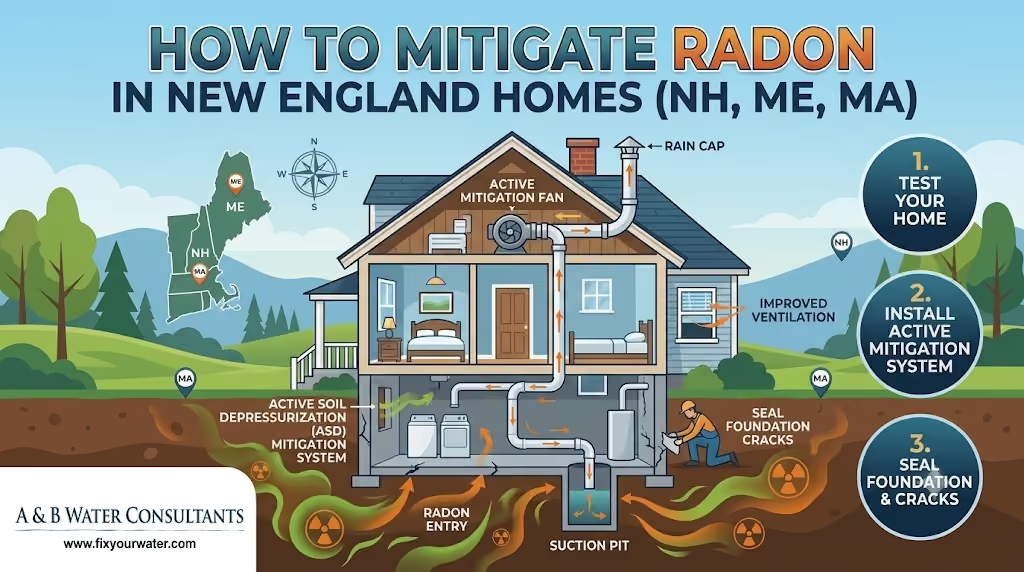
The short answer is yes, and more than most homeowners realize. A radon mitigation system typically consists of a fan motor, PVC piping, a manometer or warning device, slab penetrations, and exterior vent components. Each of these elements is subject to wear, corrosion, blockage, and degradation over time.
The fan motor, which is the heart of most active sub-slab depressurization systems, has a typical lifespan of five to ten years depending on the model, operating conditions, and maintenance history. Pipe seals can crack as a home settles. Exterior vent pipes can become blocked by debris, ice, or bird nests. A system that looked functional during installation may be operating at a fraction of its original efficiency just a few years later.
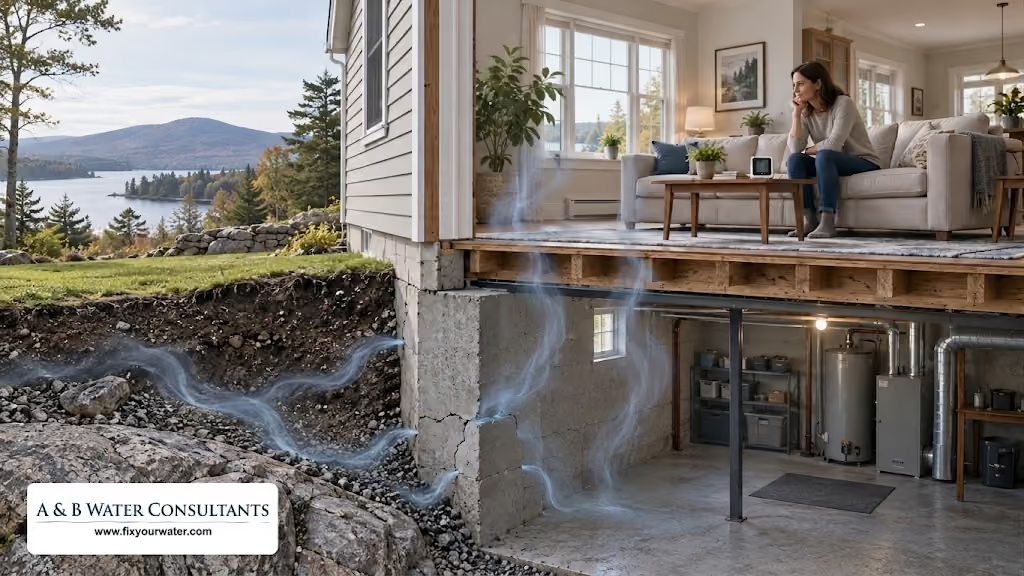
New England homes face compounding challenges. Freeze-thaw cycles stress pipe connections. High humidity summers can accelerate corrosion in fan housings and electrical components. Homes built on ledge or shallow soil over granite present unique sub-slab pressure dynamics that can shift as soil conditions change seasonally. These are not hypothetical risks; they are routine findings during professional radon system inspections in New Hampshire and surrounding states.
How to Check Your Radon System's Warning Device or Manometer
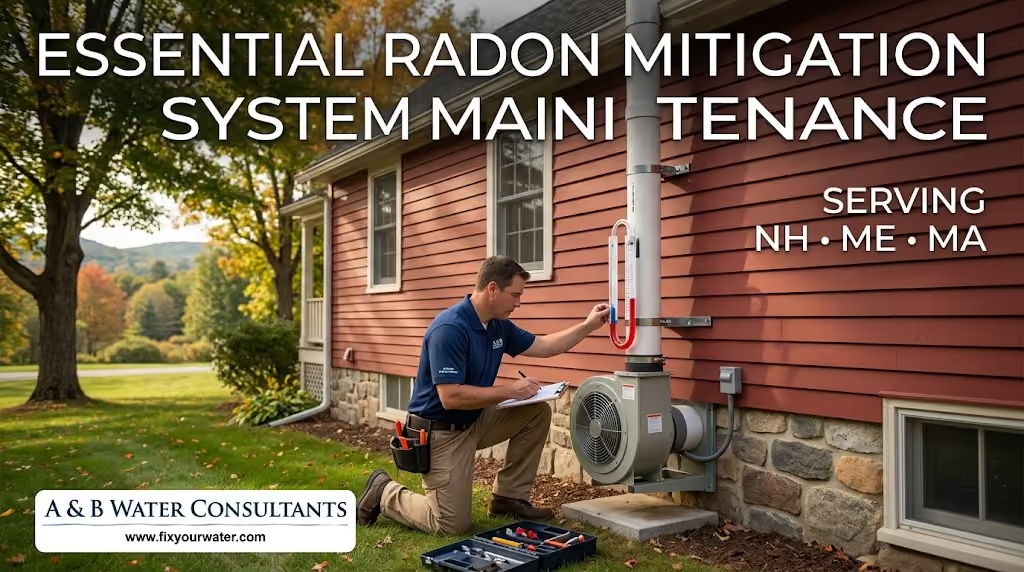
The manometer is the small U-shaped tube, usually filled with colored fluid, mounted on the radon pipe inside the home. It serves as a visual pressure gauge, indicating whether the system is actively drawing air from beneath the slab. Under normal operation, the fluid in one side of the tube should be visibly lower than the other, confirming that negative pressure is being maintained.
If the fluid levels are equal on both sides, that is a warning sign. It typically indicates the fan has failed, a pipe seal has broken, or the system has otherwise lost suction. Some systems use an electronic alarm instead of a fluid manometer; if this alarm is triggered, it should never be ignored or silenced without investigation.
Homeowners can and should check the manometer monthly. However, interpreting what an abnormal reading means, and diagnosing its cause, is a task for a certified radon professional. Do not assume a visual check alone confirms system health. Contact A&B Water Consultants for a free radon system treatment quote if your manometer is showing anything out of the ordinary.
Ensuring Your Radon Mitigation Fan Is Performing Correctly
The mitigation fan should run continuously, 24 hours a day, seven days a week. Turning it off, even briefly on a regular basis, allows radon to accumulate beneath the slab and eventually migrate indoors. If a fan is cycling on and off unexpectedly, that is a sign of an electrical or motor problem that warrants immediate professional attention.
Homeowners can listen for signs of fan trouble. A healthy fan produces a low, consistent hum. Rattling, grinding, or intermittent sounds suggest bearing wear or debris interference. Vibration that was not previously present is another indicator of motor degradation. These sounds should be documented and reported to a radon contractor rather than dismissed.
Fan replacement, when needed, typically runs between $200 and $350 including parts and labor, depending on the fan model and accessibility. Delaying replacement when a fan is clearly failing risks a complete system shutdown, leaving the home unprotected and requiring retesting to confirm radon levels have returned to safe ranges after repair.
Routine Inspection Checklist for Radon System Components
A thorough radon system inspection covers more than just the fan and manometer. The following components should be evaluated as part of any professional service visit:
- Exterior vent pipe: Inspect for physical damage, blockages, and proper clearance from windows, doors, and HVAC intakes. The EPA requires a minimum clearance to prevent radon from re-entering the home.
- Pipe seals and slab penetrations: Check all points where the radon pipe enters the sub-slab area. Cracks or gaps here allow radon to bypass the system entirely.
- Electrical connections: Fan wiring and connections should be checked for corrosion, loose terminals, and proper grounding. This is strictly a professional task and should never be attempted by a homeowner without electrical expertise.
- PVC pipe joints and fittings: Inspect for separation or leaks throughout the interior run of the system.
- Fan housing: Look for moisture intrusion, rust, or physical damage to the fan casing.
How Often Should a Radon System Be Professionally Serviced?
The EPA recommends retesting radon levels every two years after a mitigation system is installed. This retesting is the only definitive way to confirm that a system is still reducing indoor radon to below the 4 pCi/L action level. A functioning fan does not guarantee effective radon reduction; only a post-mitigation test provides that confirmation.
Beyond retesting, an annual professional inspection is the standard of care for most New England homes with active mitigation systems. Given the regional climate and the prevalence of older homes with complex foundation types, yearly inspections allow professionals to catch degradation before it becomes a health risk. Fan replacement, when a unit reaches the end of its service life, should be performed by a certified contractor to ensure proper sizing and installation.
Radon in Water vs. Radon in Air: Why New Hampshire Homeowners Need to Address Both
Most homeowners associate radon exclusively with soil gas entering through foundation cracks and slab penetrations. That is only part of the picture, particularly in New Hampshire and Maine, where private well water drawn from granite aquifers can carry significant concentrations of dissolved radon.
When radon-laden well water is used for showering, cooking, or washing, it releases radon gas into the indoor air. This waterborne radon creates a secondary exposure pathway that a standard sub-slab depressurization system does nothing to address. Studies have found that in homes with high radon in water, the water source can contribute meaningfully to total indoor radon levels.
Maintaining radon water filters, specifically point-of-entry granular activated carbon or aeration treatment systems, is a distinct and equally important part of radon mitigation upkeep. These systems require periodic media replacement, flow rate verification, and water quality retesting to remain effective. Contact A&B Water Consultants for a free radon system treatment quote to learn how water-based radon treatment integrates with your existing air mitigation strategy.
What Happens If You Ignore Radon System Maintenance?
Radon is the second leading cause of lung cancer in the United States, responsible for approximately 21,000 deaths annually according to the EPA. Prolonged exposure to radon above the 4 pCi/L action level increases lung cancer risk substantially, with the risk compounding over years of exposure. A mitigation system that is silently failing provides a false sense of security while radon levels quietly climb.
Beyond health risks, neglected radon systems create real estate complications. In New Hampshire and Massachusetts, radon testing is increasingly standard in home purchase transactions. A system that cannot produce service records, shows a failing manometer, or tests above action level during a home inspection can delay or derail a sale, or force a seller into costly last-minute remediation under unfavorable negotiating conditions.
The cost of proactive maintenance is modest compared to the cost of deferred action. An annual inspection, periodic retesting, and timely fan replacement are far less expensive than emergency remediation, home sale complications, or the medical consequences of long-term radon exposure.
How New England Winters Affect Your Radon Mitigation System
This is a maintenance consideration that rarely gets discussed but matters considerably in New Hampshire, Maine, and northern Massachusetts. Winter conditions create specific risks for radon mitigation systems that homeowners and inspectors in warmer climates never encounter.
Ice can form inside or around exterior vent pipes, restricting airflow or creating back pressure that stresses the fan motor. Snow accumulation around exterior pipe terminations can partially block exhaust. Freeze-thaw cycling stresses pipe joints and slab penetrations, accelerating seal degradation. In homes where the radon fan is installed in an unconditioned space such as an attached garage or crawl space, extreme cold can affect motor performance and shorten fan lifespan.
A pre-winter inspection in October or early November, combined with a post-winter check in April, is a sound practice for New England homeowners. These seasonal checkpoints allow professionals to clear any blockages, reseal compromised joints, and confirm that the fan is operating correctly after months of cold-weather stress.
Annual Radon System Maintenance Checklist for New Hampshire Homeowners
Use the following checklist as a reference for what should be evaluated each year. Tasks marked as professional require a certified radon contractor.
- Monthly (homeowner): Visually check manometer fluid levels; confirm fan is running by listening for hum; note any unusual sounds or vibrations.
- Seasonally (homeowner): Check exterior vent pipe for visible blockages, ice buildup, or physical damage after major storms.
- Annually (professional): Full inspection of all pipe joints, seals, and slab penetrations.
- Annually (professional): Electrical connection and fan wiring inspection for corrosion and integrity.
- Annually (professional): Fan motor assessment including suction pressure measurement and sound evaluation.
- Annually (professional): Exterior vent pipe clearance verification per EPA guidelines.
- Every two years (professional): Post-mitigation radon air test to confirm levels remain below 4 pCi/L.
- Every two years or per manufacturer schedule (professional): Radon water filter media evaluation and replacement if applicable.
- Every five to ten years (professional): Fan replacement evaluation based on age, performance data, and motor condition.
How Radon System Maintenance Affects Your Home's Resale Value in New Hampshire
New Hampshire's real estate market has become increasingly radon-aware. Buyers, particularly those relocating from urban areas with strong environmental health awareness, frequently request radon testing as a contingency. A home with a properly maintained, documented radon mitigation system is a marketable asset. A home with a system that has no service history, a failed manometer, or a test result above action level is a negotiating liability.
Real estate attorneys and inspectors in southern New Hampshire and the seacoast region are familiar with radon as a transaction issue. Sellers who can produce annual inspection records, current radon test results below 4 pCi/L, and documentation of fan service or replacement are in a substantially stronger negotiating position than those who cannot. In competitive markets, this documentation can be the difference between a clean offer and a price reduction demand.
Maintaining radon mitigation upkeep is not just a health decision; it is a financial one. Contact A&B Water Consultants for a free radon system treatment quote and get ahead of this issue before it becomes a problem at closing.
Professional Radon System Maintenance vs. DIY Checks: What New England Homeowners Should Know
There is a clear and important boundary between what a homeowner can safely observe and what requires a certified radon professional. Homeowners can and should perform monthly visual checks on the manometer, listen for changes in fan performance, and inspect the exterior vent pipe for obvious blockages. These simple observations provide early warning that something may need professional attention.
Everything beyond those visual checks, including electrical inspection, suction pressure measurement, slab seal evaluation, and radon retesting, requires professional equipment and credentials. Certified radon mitigators carry calibrated testing instruments, understand regional system design requirements, and carry the liability insurance appropriate for this type of work. Local expertise matters in New Hampshire and southern Maine, where foundation types, bedrock conditions, and soil characteristics vary significantly by town and even by lot.
Comprehensive Radon Treatment: Addressing Both Air and Water in One Service Visit
One of the most practical advantages of working with a water treatment specialist experienced in radon is the ability to address both airborne and waterborne radon in a single, coordinated service engagement. Most radon contractors focus exclusively on sub-slab depressurization systems and have no expertise in water treatment. Most water treatment companies do not address air-side radon. This gap leaves many New Hampshire homeowners with an incomplete solution.
A&B Water Consultants bridges that gap. With over 25 years of experience in radon and arsenic filtration for New England homes, A&B can evaluate both the air mitigation system and the water treatment system, identify gaps in either, and recommend or service both within the same professional engagement. Maintaining radon water filters alongside air system maintenance ensures that every exposure pathway is addressed, not just the most visible one.
For families on private wells in New Hampshire, Maine, and Massachusetts, this integrated approach is not a luxury; it is the complete standard of care. Contact A&B Water Consultants for a free radon system treatment quote and find out what a comprehensive radon assessment looks like for your home.
Frequently Asked Questions About Radon System Maintenance
Should I leave my radon fan on all the time?
Yes. Radon mitigation fans are designed to operate continuously. Turning the fan off, even periodically, allows radon to accumulate beneath the slab and re-enter the living space. Radon fans are energy-efficient and intended for 24/7 operation throughout their service life.
How often should a radon system be serviced?
A professional inspection annually is the recommended standard for active mitigation systems in New England. Radon air testing should occur every two years. Water treatment systems should be evaluated on a schedule matching the manufacturer's recommendations for media replacement, typically every two to three years depending on water volume and radon concentration.
Can a radon system affect my water quality?
A standard air mitigation system does not directly affect water quality. However, if your home relies on a private well, radon in the water supply is a separate issue that requires its own treatment system. A point-of-entry water treatment system designed for radon removal addresses this pathway independently.
What states are worst for radon?
States with significant granite bedrock geology tend to have the highest radon concentrations. New Hampshire, Maine, Pennsylvania, Iowa, and Colorado consistently report elevated indoor radon levels. Within New England, New Hampshire has among the highest rates of homes testing above the EPA action level of 4 pCi/L.
Do air purifiers clear out radon?
Standard air purifiers do not remove radon gas. Some specialized units with activated carbon filters can reduce radon to a limited degree, but they are not a substitute for a properly designed and maintained sub-slab depressurization system. Only active mitigation systems provide reliable, long-term radon reduction.
How long before you get sick from radon?
Radon-related lung cancer risk accumulates over years of exposure, not days or weeks. There are no immediate symptoms of radon exposure, which is precisely what makes it dangerous. The EPA action level of 4 pCi/L is based on long-term cumulative risk, and the agency recommends considering mitigation even at levels between 2 and 4 pCi/L.