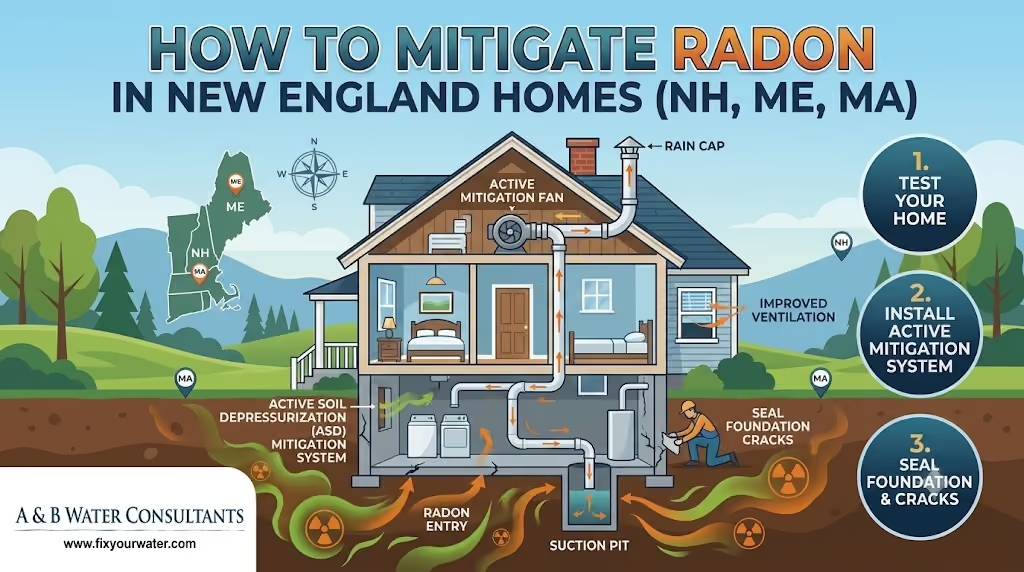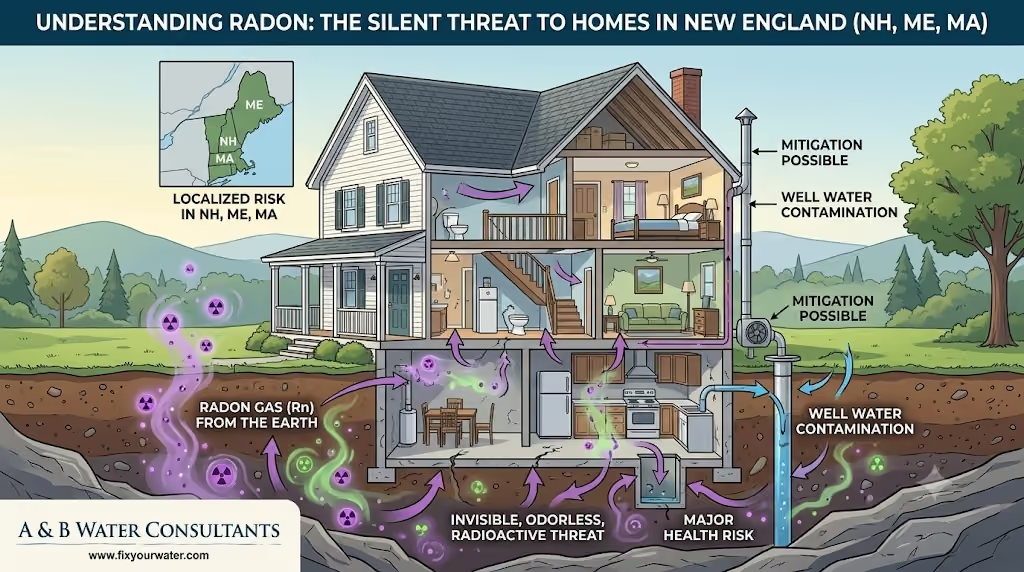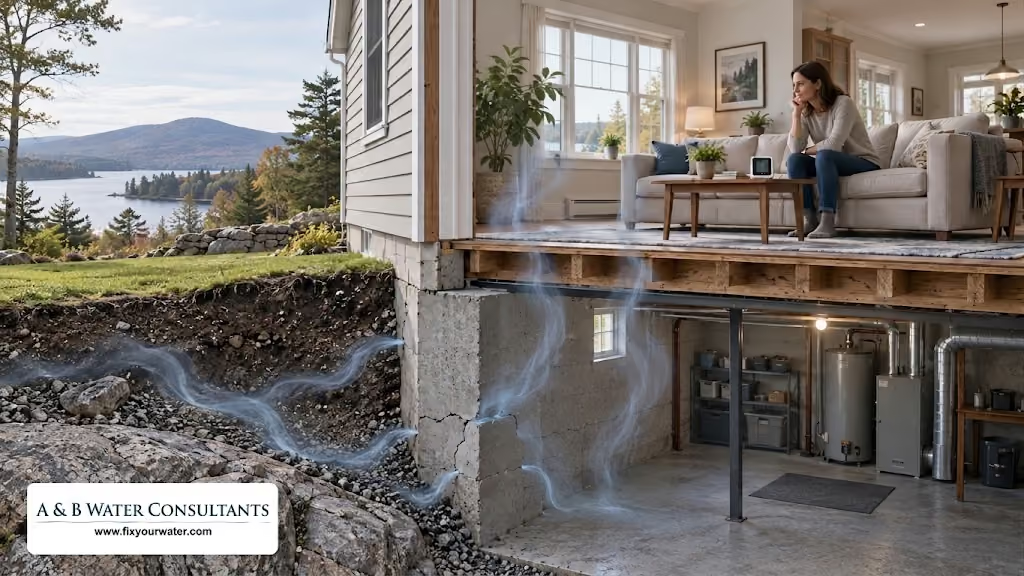
Most homeowners have heard of radon. Fewer understand exactly what it does to the body, and almost none realize that their well water may be silently delivering it into every room of their home. For families across New Hampshire, southern Maine, and Massachusetts who rely on private wells, radon is not an abstract concern. It is a measurable, manageable threat that requires professional attention before it causes irreversible harm.
This guide covers the full picture of radon health effects, with particular focus on the waterborne exposure pathway that most public health resources overlook entirely.
What Is Radon and Why Does It Matter for Your Home's Water?
Radon is a naturally occurring radioactive gas produced by the decay of uranium in soil and bedrock. It is colorless, odorless, and tasteless, which means there is no way to detect it without proper testing equipment. As uranium breaks down, it produces radium, which then decays into radon gas. That gas migrates through soil and rock, eventually finding its way into structures above.
Most people associate radon with the air inside a basement or crawl space. That pathway is real and well-documented. What receives far less attention is how radon enters private wells. When groundwater flows through uranium-bearing granite and other radon-producing rock formations, it absorbs radon gas directly. That radon-laden water then enters the home through every faucet, showerhead, and appliance connected to the well.
New England's geology makes this a particularly pressing issue. The granite bedrock that defines the landscape of New Hampshire, Maine, and Massachusetts is among the most radon-productive rock in the country. Homeowners in these states face a compounded risk that families served by municipal water systems simply do not.
How Radon Affects Your Health: The Science Behind the Risk
Radon is classified as a Group 1 carcinogen by the World Health Organization and is recognized by the U.S. Environmental Protection Agency as the second leading cause of lung cancer in the United States. According to EPA estimates, radon is responsible for approximately 21,000 lung cancer deaths every year. The former U.S. Surgeon General Richard H. Carmona issued a national health advisory specifically warning Americans about radon's cancer risk, underscoring how seriously public health authorities view this threat.
The mechanism of harm is rooted in radioactive decay. When radon gas is inhaled, it decays into solid radioactive particles called radon progeny (sometimes called radon daughters). These particles attach to the lining of the lungs and emit alpha radiation directly into lung tissue. Over years of repeated exposure, this radiation damages DNA in lung cells, increasing the probability of cancerous mutations forming.
Smokers face a dramatically elevated risk. The EPA estimates that a smoker exposed to radon at the 4 pCi/L action level faces a lung cancer risk roughly 10 times higher than a non-smoker at the same level. However, this statistic should not reassure non-smokers. A non-smoking adult exposed to 4 pCi/L over a lifetime still faces a lung cancer risk higher than almost any other environmental carcinogen regulated by the EPA. Radon lung cancer risk is real for every member of a household, regardless of smoking history.
Radon in Drinking Water: A Health Risk Specific to Well Owners
When radon-contaminated well water enters a home, it does not stay in the water. Radon is a dissolved gas, and agitation releases it into the surrounding air. A hot shower is one of the most efficient delivery mechanisms: the turbulence and heat cause radon to volatilize rapidly, flooding the bathroom with elevated concentrations of the gas. The same process occurs during dishwashing, laundry, and any other activity that agitates or heats the water.
The EPA estimates that radon water exposure through this transfer mechanism can contribute meaningfully to overall indoor air radon levels. Studies suggest that for every 10,000 pCi/L of radon in well water, indoor air radon concentrations rise by approximately 1 pCi/L. In New Hampshire and Maine, where private well radon concentrations can reach tens of thousands of pCi/L, this is not a trivial contribution.
There is also a direct ingestion risk associated with drinking radon-contaminated water, though the EPA considers this a secondary concern compared to the inhalation pathway. Ingested radon is absorbed through the gastrointestinal tract and may expose stomach tissue to radiation. Research on this pathway is ongoing, but the primary concern remains the transfer of waterborne radon into indoor air.
Municipal water customers face a different situation. By the time surface water is treated, stored, and distributed through a public system, most dissolved radon has dissipated. Private well owners receive no such buffer. Their water travels directly from the aquifer to the tap, carrying its full radon load with it.
Symptoms and Warning Signs of Long-Term Radon Exposure
One of the most dangerous characteristics of radon is that it produces no immediate symptoms. There is no rash, no headache, no nausea that signals elevated exposure. Radon sickness does not present itself in any way that a homeowner would notice in the short term. This is precisely why testing is the only reliable way to assess risk.
The health effects of radon manifest over years and decades of cumulative exposure. By the time symptoms appear, they are typically the symptoms of lung cancer itself: a persistent cough, coughing up blood, shortness of breath, chest pain, hoarseness, or recurring respiratory infections. These symptoms often appear at an advanced stage, which is part of what makes radon-related lung cancer so deadly.
Any homeowner who has lived for years in a home with untested well water or air should discuss their radon exposure history with a physician, particularly if they are experiencing unexplained respiratory symptoms. Early detection of lung cancer dramatically improves outcomes.
Radon Risk in New Hampshire, Maine, and Massachusetts
The EPA divides the country into three radon zones based on predicted average indoor radon levels. Zone 1 represents the highest risk, with predicted average levels above 4 pCi/L. Significant portions of New Hampshire, Maine, and Massachusetts fall within Zone 1 or Zone 2, reflecting the radon-producing geology that underlies much of the region.
New Hampshire is consistently cited as one of the states with the highest radon concentrations in the country. The granite formations that give the state its "Granite State" nickname are among the primary contributors. Radon testing data collected across the state shows that a substantial percentage of homes exceed the EPA's recommended action level of 4 pCi/L in air and 300 pCi/L in drinking water.
Southern Maine shares similar geology and similar risk profiles. Homeowners in York County, Cumberland County, and surrounding areas who rely on drilled wells into bedrock are at elevated risk for both airborne and waterborne radon. Massachusetts, particularly in areas underlain by granite and metamorphic rock, also shows elevated radon concentrations in testing data.
For private well owners in these states, the combination of high-radon geology and direct groundwater exposure creates a risk profile that deserves serious, professional attention. Contact A&B Water Consultants for a free radon air treatment quote and learn what your household's actual exposure level may be.
Radon in Your Well Water: The Exposure Risk Most Homeowners Overlook
The vast majority of public health information about radon focuses on airborne exposure. Test your basement. Install a sub-slab mitigation system. That advice is sound, but it is incomplete for the millions of New England families who draw their water from private wells.
Radon water exposure represents a distinct and largely underserved exposure pathway. A home can pass an air radon test and still have dangerously elevated radon concentrations in its well water. The two measurements are related but not interchangeable. A homeowner who tests only for air radon may believe their family is protected when, in fact, every shower and every glass of water is contributing to ongoing exposure.
Water-specific radon testing requires a separate sample drawn from the well and analyzed by a certified laboratory. This is not a test that a standard home inspection covers, and it is not something that can be assessed with the short-term air test kits available at hardware stores. It requires deliberate action from a homeowner who understands the risk, or guidance from a water quality professional who knows to ask the right questions.
How Radon in Air and Water Combine to Increase Your Family's Total Exposure
Understanding radon health effects in a New England home requires thinking about total exposure, not just one pathway at a time. A family may be exposed to radon through three distinct mechanisms simultaneously: radon gas seeping through foundation cracks and soil, radon volatilizing from shower and tap water into indoor air, and radon ingested directly through drinking water.
Each of these pathways adds to the household's cumulative radon load. A home with moderate air radon levels and high water radon levels may have a combined exposure profile that significantly exceeds what either measurement alone would suggest. This is why treating air and water as separate, unrelated concerns is a mistake.
A comprehensive approach to radon management accounts for both pathways. In many New Hampshire and Maine homes, addressing radon in well water is as important as, or more important than, addressing the air pathway. Families who have already installed air mitigation systems but have never tested their water may still be living with substantial ongoing exposure every time they run the tap.
Why New Hampshire and New England Homeowners Face Higher Radon Risk
The elevated radon risk in New England is not coincidental. It is a direct consequence of the region's geological history. The granite and metamorphic bedrock that underlies much of New Hampshire, Maine, and Massachusetts formed under conditions that concentrate uranium. As uranium decays over geological timescales, it produces radium and ultimately radon, which migrates through fractures in the rock and into groundwater and soil.
Drilled bedrock wells, which are common across rural and suburban New England, draw directly from this fractured granite aquifer. Unlike shallow dug wells that draw from surface soils, drilled wells penetrate deep into radon-rich rock and often produce water with substantially elevated radon concentrations.
The New Hampshire Department of Environmental Services has published guidance noting that radon is one of the most common contaminants found in private well water in the state. Testing data from across New Hampshire consistently shows that a significant proportion of private wells exceed the EPA's recommended water action level. Maine's state environmental agency has issued similar advisories. For homeowners in these states, radon is not a theoretical risk. It is a documented, regional reality that demands testing and, in many cases, treatment.
Common Myths About Radon Health Risks, Debunked
Myth: Only Old Homes Have Radon Problems
Radon does not discriminate by the age of a structure. New construction can have radon levels just as high as a century-old farmhouse. Radon enters through any opening in contact with soil or bedrock, including the foundation of a brand-new home. Well water radon has nothing to do with the age of the house at all. It is a function of the geology beneath it.
Myth: Radon in Water Is Not a Serious Concern
This misconception likely stems from the fact that most public health campaigns focus on airborne radon. The EPA, however, has established specific action levels for radon in drinking water (300 pCi/L) precisely because the risk is real. For private well owners in New England, waterborne radon can be the dominant exposure pathway in the home.
Myth: Radon Mitigation Is Too Expensive to Be Worthwhile
Professional radon water treatment is an investment in long-term health. The cost of a properly installed point-of-entry treatment system is modest relative to the potential health consequences of untreated radon water exposure over years or decades. Contact A&B Water Consultants for a free radon air treatment quote to understand what professional treatment actually costs for your specific situation.
How to Test for Radon in Your Home and Water Supply
Air radon testing and water radon testing are two separate processes that require different tools and methods. Short-term air tests using charcoal canisters can be purchased at hardware stores and provide a baseline reading over 48 to 96 hours. Long-term air tests, which remain in place for 90 days or more, provide a more accurate picture of average annual exposure.
Water radon testing requires collecting a water sample from the well and sending it to a certified laboratory for analysis. This is not a process that consumer test kits handle reliably. A water treatment professional can collect the sample correctly, ensure proper handling, and interpret the results in the context of the home's overall radon picture.
For New England well owners, the recommended approach is to test both air and water, not one or the other. Testing frequency should reflect local risk: homes in high-radon areas of New Hampshire and Maine should retest every two to five years, or following any significant changes to the home's foundation, plumbing, or well system.
Radon Filtration and Treatment Options for Your Water
Two primary technologies are used to remove radon from private well water: aeration systems and granular activated carbon (GAC) filtration.
Aeration systems work by exposing the water to air in a controlled environment, allowing radon gas to escape before the water enters the home's distribution system. These systems are highly effective at removing radon, often achieving removal rates above 95 percent. They are typically installed as point-of-entry systems, treating all water entering the home.
Activated carbon filtration uses activated carbon to adsorb radon from water as it passes through the filter media. GAC systems are effective at lower radon concentrations and are generally less expensive to install than aeration systems. However, the carbon media requires periodic replacement, and the spent media must be handled carefully because it accumulates radioactive decay products over time.
The right system for a given home depends on the measured radon concentration, household water usage, and other water quality factors. A certified water treatment professional can assess these variables and design a system that provides reliable, long-term protection. Off-the-shelf solutions are rarely adequate for homes with radon concentrations significantly above the action level.
What to Expect When You Work With a Water Treatment Professional for Radon
Homeowners who receive a high radon water test result often do not know what to do next. The process of working with a professional water treatment consultant is straightforward, but it involves several distinct steps that go well beyond simply purchasing a filter.
The engagement typically begins with a comprehensive water quality assessment. A professional will review the test results, assess the home's plumbing configuration, evaluate water flow rates and pressure, and consider any other contaminants present in the water. This assessment forms the basis for a custom treatment recommendation.
Once a treatment approach is selected, the professional designs and installs the system, ensuring it is properly sized for the home's water demand and that it integrates correctly with existing plumbing. After installation, the system is verified with follow-up water testing to confirm that radon levels have been reduced below the action threshold.
Ongoing maintenance is part of the relationship. GAC media requires replacement on a schedule determined by radon concentration and water usage. Aeration systems require periodic inspection and servicing. A reputable water treatment professional provides this ongoing support rather than walking away after installation. Contact A&B Water Consultants for a free radon air treatment quote to start this process with a team that has served New England families for over 25 years.
Radon, Arsenic, and PFAS: Why New England Well Owners Should Test for All Three
Radon is not the only contaminant that New England's geology and land use history puts into private well water. Arsenic is another naturally occurring contaminant found at elevated levels in New Hampshire and Maine wells, particularly in areas with certain granite and metamorphic rock formations. Arsenic is a known carcinogen linked to cancers of the bladder, kidney, skin, and lung, among others.
PFAS (per- and polyfluoroalkyl substances) represent a different category of concern. These synthetic chemicals, used in firefighting foam, industrial processes, and consumer products for decades, have contaminated groundwater in communities across New Hampshire, Maine, and Massachusetts. PFAS are associated with a range of health effects including immune system disruption, thyroid disease, and certain cancers.
The important point for well owners is that these contaminants can co-occur. A well with elevated radon may also have elevated arsenic. A home near a former industrial site or military base may have PFAS contamination on top of naturally occurring radon and arsenic. Testing for one contaminant without testing for others provides an incomplete picture of water quality and health risk.
A comprehensive water quality panel that includes radon, arsenic, PFAS, and other relevant parameters gives homeowners the information they need to make informed decisions about treatment. Contact A&B Water Consultants for a free radon air treatment quote and ask about comprehensive water quality testing that covers the full range of contaminants relevant to New England private wells.
Frequently Asked Questions About Radon Health Effects
How long does exposure to radon take to affect you?
Radon health effects develop over years and decades of cumulative exposure. There is no acute illness associated with radon. The damage accumulates gradually as radioactive decay products repeatedly irradiate lung tissue. Most radon-related lung cancers develop after many years of sustained exposure above the EPA action level, which is why early testing and remediation are so important.
What are the symptoms of radon sickness?
There are no symptoms of radon exposure in the short term. Radon produces no immediate signs of illness. The first symptoms a person may notice are those of lung cancer itself, which can include a persistent cough, shortness of breath, chest pain, hoarseness, or coughing up blood. By the time these symptoms appear, significant lung damage has typically already occurred. Testing is the only way to identify radon risk before symptoms develop.
Can radon damage be reversed?
Lung damage caused by radon exposure cannot be reversed. Radiation-induced DNA damage and cellular changes in lung tissue are permanent. However, stopping exposure does reduce the risk of further damage and lowers the probability of future cancer development. This is why early identification and remediation matter so much. The sooner a household's radon problem is addressed, the less cumulative damage occurs.
What should you do if you have radon in your home?
If air radon testing reveals levels at or above 4 pCi/L, the EPA recommends taking action to reduce exposure. For well owners, this means also testing water. If water radon exceeds 300 pCi/L, professional water treatment is warranted. A certified water treatment professional can assess the full scope of the problem and design an appropriate remediation strategy for the home.
Does radon cause Parkinson's disease?
Some preliminary research has explored a potential association between radon exposure and neurological conditions including Parkinson's disease, but the scientific evidence is not sufficient to establish a firm causal link. The EPA and WHO recognize lung cancer as the primary documented health effect of radon exposure. Research into other potential radon health effects beyond lung cancer is ongoing, but lung cancer remains the established and well-supported concern.
Do air purifiers remove radon?
Standard air purifiers, including HEPA filters, do not effectively remove radon gas from indoor air. Some air purifiers can capture radon decay products (the solid particles that attach to lung tissue), which may modestly reduce exposure risk, but they do not address the radon gas itself. Effective radon remediation requires source control through sub-slab depressurization for air radon or point-of-entry filtration for water radon, not air purification.
Protecting Your Family Starts With the Right Information
Radon health effects are serious, scientifically well-established, and entirely preventable with the right testing and treatment approach. For New England families on private wells, the risk is not limited to the air in the basement. It flows through every pipe in the home, every time the water runs.
Understanding the full picture of radon exposure, including the waterborne pathway that most public health resources ignore, is the first step toward protecting a household. The second step is working with a professional who understands both the local geology and the treatment options available. With over 25 years of experience serving homeowners across New Hampshire, southern Maine, and Massachusetts, A&B Water Consultants brings the expertise and local knowledge that this problem demands.
Do not wait for symptoms that will never come until it is too late. Test your water, understand your risk, and take action based on what the data shows. Contact A&B Water Consultants for a free radon air treatment quote and take the first step toward a healthier home today.