Arsenic is one of the most concerning contaminants found in private well water across New England, and it is completely invisible. It has no taste, no odor, and no color. Families can drink arsenic-contaminated water for years without any immediate symptoms, all while the cumulative health effects quietly build. For homeowners in New Hampshire, Maine, and Massachusetts, this is not a remote possibility. It is a documented regional reality rooted in the geology beneath their feet.
This guide walks through everything a well owner needs to know: why arsenic is so prevalent in New England aquifers, how to test for arsenic in water the right way, how to interpret results, and what treatment options actually work. Whether a homeowner is testing for the first time or following up on a previous result, the information here is designed to help make informed, confident decisions about their family's water safety.
Arsenic in New Hampshire and New England Well Water: What the Data Shows
New Hampshire consistently ranks among the states with the highest rates of arsenic in private well water. The reason is geological. The region sits atop ancient granite and metamorphic bedrock formations that naturally contain arsenic-bearing minerals. As groundwater moves through fractures and fissures in this bedrock, it dissolves arsenic and carries it into the aquifers that supply private wells.
According to the New Hampshire Department of Environmental Services (NH DES), approximately one in five private wells in the state has detectable arsenic levels, and roughly 10 percent exceed the EPA's maximum contaminant level (MCL) of 10 parts per billion (ppb). In certain counties, including Hillsborough, Merrimack, and Rockingham, the rates are even higher. Southern Maine and parts of eastern Massachusetts share similar bedrock geology and face comparable risks.
This is not a problem that will resolve itself over time. The arsenic in New England groundwater is geogenic, meaning it originates from natural rock dissolution rather than industrial pollution. No regulatory cleanup will address it. The responsibility falls entirely on individual homeowners to test, monitor, and treat their own water supply.
What Are the Health Risks of Arsenic in Drinking Water?
The EPA set the MCL for arsenic in public water systems at 10 micrograms per liter (10 ppb) in 2001, reducing it from the previous standard of 50 ppb. This revision was driven by mounting evidence linking long-term low-level arsenic ingestion to serious health outcomes. It is important to note that this standard applies to public water systems only. Private well owners are not legally required to meet it, which means testing and treatment are entirely voluntary, and entirely the homeowner's responsibility.
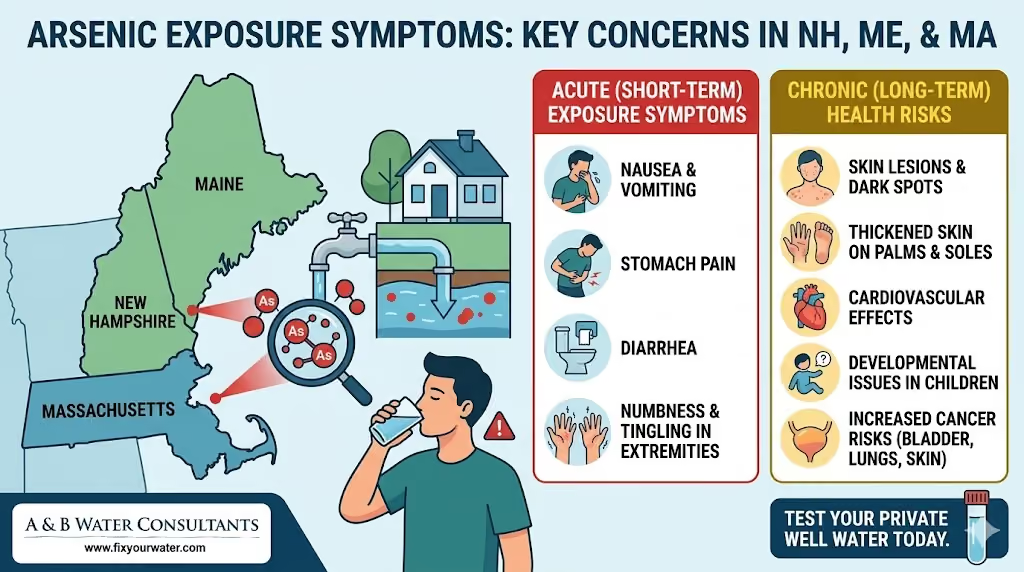
Chronic arsenic exposure through drinking water has been associated with bladder, lung, and skin cancers. Research also links it to cardiovascular disease, type 2 diabetes, and neurological effects. Children are particularly vulnerable, as developmental exposure has been connected to reduced cognitive function and impaired immune response. Even levels below 10 ppb are not considered risk-free by many public health researchers. Some studies suggest measurable health impacts at concentrations as low as 3 to 5 ppb with prolonged exposure.
Because symptoms of chronic arsenic poisoning are nonspecific and develop slowly over years or decades, many affected individuals never connect their health issues to their water supply. This makes proactive testing the only reliable protective measure.
How to Test Your Well Water for Arsenic
When it comes to arsenic water testing methods, there are two broad categories: certified laboratory analysis and field test kits. Understanding the difference is critical to getting results a homeowner can actually rely on.
Certified Laboratory Testing
Certified laboratory testing is the gold standard for how to test drinking water for arsenic. A state-certified laboratory uses inductively coupled plasma mass spectrometry (ICP-MS) or similar analytical methods capable of detecting arsenic at concentrations well below the EPA limit. These tests produce legally defensible, quantitatively accurate results with a documented chain of custody.
Professional sample collection matters more than most homeowners realize. Improper collection technique, such as using the wrong container, failing to flush the line adequately, or contaminating the sample during handling, can produce inaccurate results. A water quality professional follows standardized protocols that ensure the sample represents actual tap water conditions and that results hold up to scrutiny.
How Often Should New England Well Owners Test?
NH DES recommends that private well owners test for arsenic at least every one to three years under normal conditions. Testing should also be triggered immediately after any noticeable change in water taste, color, or odor; after nearby construction or land disturbance; after a flood or drought; and after any changes to the well itself. Newly purchased homes with private wells should be tested before occupancy regardless of any prior testing history.
Not All Arsenic Tests Are Created Equal
The Limitations of DIY Test Kits
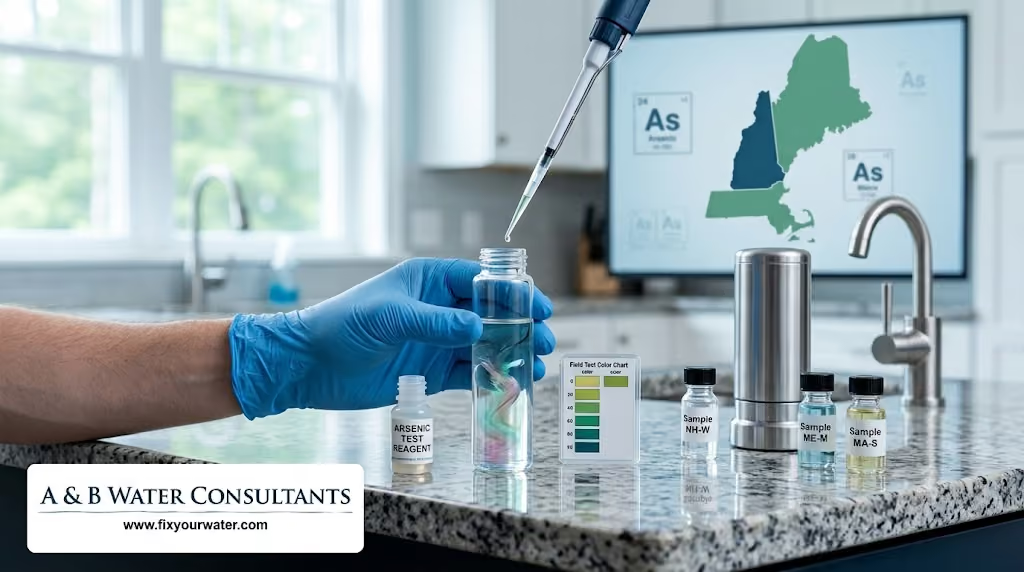
Over-the-counter arsenic strip tests and home test kits are widely available and appealing because of their low cost and convenience. However, their limitations are significant. Most consumer-grade field test kits have detection limits of 10 to 50 ppb, meaning they cannot reliably detect arsenic at concentrations that still pose real health risks. A result showing "below detectable limit" on a strip test does not mean the water is safe. It may simply mean the kit is not sensitive enough to find the problem.
For families in New Hampshire and across New England, where arsenic levels often fall in the 5 to 20 ppb range, a DIY kit can produce a false sense of security. Certified lab analysis is the only method that provides the accuracy and sensitivity needed to make sound decisions about water safety and treatment.
Choosing a State-Certified Lab
New Hampshire maintains a list of certified laboratories approved for drinking water analysis. Homeowners in Maine and Massachusetts can access similar state-certified lab directories through their respective environmental agencies. When selecting a lab, confirm it holds certification specifically for arsenic analysis in drinking water and that it follows EPA-approved analytical methods.
Why Arsenic Speciation Matters for Choosing the Right Treatment System
Most standard arsenic tests measure total arsenic, which is the combined concentration of all arsenic forms present in the water. However, arsenic exists in two primary oxidation states in groundwater: arsenite (As III) and arsenate (As V). Understanding which form predominates in a given water supply is not just an academic exercise. It has direct, practical consequences for treatment technology selection.
Arsenate (As V) is the oxidized form and is relatively straightforward to remove. It carries a negative charge in water, which makes it bind effectively to adsorptive media filters and reverse osmosis membranes. Arsenite (As III) is the reduced form, more common in low-oxygen (anoxic) groundwater conditions typical of deep bedrock wells in New Hampshire. It is uncharged in its natural state, which makes it significantly harder to remove with standard filtration. An adsorptive media system designed for As V may perform poorly against predominantly As III water.
This is why a speciated arsenic test, one that separately quantifies As III and As V, provides treatment engineers with information that a total arsenic result alone cannot. If a homeowner's water is predominantly arsenite, the treatment system must first oxidize the As III to As V before filtration can be effective. Skipping this step leads to underperforming systems and continued exposure. A water quality professional will account for speciation when designing a custom treatment solution.
Contact A&B Water Consultants for a free arsenic treatment quote, and get the right system designed for your specific water chemistry from the start.
How to Interpret Your Arsenic Test Results
When laboratory results arrive, the arsenic concentration will be reported in micrograms per liter (ug/L) or parts per billion (ppb), which are equivalent units. Here is a practical framework for interpreting those numbers:
- Below 1 ppb: Very low risk. Continue routine testing every one to three years.
- 1 to 5 ppb: Low but not negligible. Some public health guidelines recommend treatment at this level, particularly for households with young children or pregnant women. Annual testing is advisable.
- 5 to 10 ppb: Moderate concern. Treatment is strongly recommended. NH DES advises homeowners in this range to take action, especially for drinking and cooking water.
- Above 10 ppb: Exceeds the EPA MCL. Treatment is urgently recommended. Do not use this water for drinking, cooking, or preparing infant formula until a treatment system is installed and verified.
It is worth noting that New Hampshire has historically used a state action level that mirrors the federal 10 ppb standard, but NH DES guidance encourages homeowners to treat levels above 5 ppb given the cumulative exposure risks over a lifetime of consumption.
Arsenic Removal Solutions for New England Homes
Comparing Arsenic Treatment Systems: Which Option Is Right for Your Home?
There is no single treatment technology that works equally well for every well. The right system depends on arsenic concentration, speciation, water chemistry, flow rate requirements, and household size. Here is an overview of the primary options:
Adsorptive Media Filters (Whole-House)
Adsorptive media systems, often using iron-based or titanium-based granular media, are one of the most common whole-house arsenic removal solutions in New England. Water passes through a tank filled with specialized media that binds arsenic and removes it from the water stream. These systems are effective for As V and, with proper oxidation pretreatment, for As III as well. They require periodic media replacement, typically every three to five years depending on water volume and arsenic levels, and occasional backwashing. Maintenance costs are moderate and predictable.
Reverse Osmosis (Point-of-Use)
Reverse osmosis (RO) systems installed under the kitchen sink provide highly effective arsenic removal at the point of use. RO membranes reject arsenic along with a wide range of other contaminants. These systems are cost-effective for treating drinking and cooking water but do not address the rest of the home's water supply. They require membrane replacement every two to three years and pre-filter changes more frequently. For households primarily concerned about ingestion risk, a well-maintained RO system is a proven solution.
Oxidation-Filtration Systems
For water with high As III concentrations, an oxidation step, using chlorination, aeration, or catalytic media, converts arsenite to arsenate before it reaches the filtration stage. This is often combined with an adsorptive media or greensand filtration system. These setups are more complex and require professional design and installation, but they are necessary for wells where speciation analysis shows predominantly As III.
Contact A&B Water Consultants for a free arsenic treatment quote and find out which system is the right fit for your well water chemistry and household needs.
Should You Test for Other Contaminants Alongside Arsenic?
The same bedrock geology that produces arsenic in New England groundwater also generates other contaminants of concern. Radon, a radioactive gas that dissolves into groundwater from uranium-bearing granite, is extremely common in New Hampshire and Maine wells. Uranium itself can be present at elevated levels. Manganese, which causes staining and poses neurological risks at high concentrations, frequently co-occurs with arsenic in bedrock aquifers. PFAS contamination from historical industrial and agricultural sources has also been detected in wells across the region.
A comprehensive well water panel that tests for all of these contaminants simultaneously costs only marginally more than a single-analyte arsenic test, and it provides a complete picture of water quality in a single sampling event. Bundled testing saves time, reduces sampling costs, and prevents the frustrating scenario of treating arsenic only to discover a separate radon or PFAS problem months later.
Buying a Home With a Private Well in New England? Arsenic Testing Is Non-Negotiable
Real estate transactions involving homes with private wells in New Hampshire, Maine, and Massachusetts should always include arsenic testing as a non-negotiable component of due diligence. Arsenic contamination is not visible during a home inspection. A well that looks clean and produces clear water may still deliver arsenic concentrations well above safe levels.
Buyers should request arsenic testing, ideally as part of a comprehensive water quality panel, before closing. If results come back elevated, this creates an opportunity for negotiation. Sellers may agree to install a treatment system prior to closing, reduce the sale price to account for remediation costs, or escrow funds for treatment. In New Hampshire, where roughly one in ten private wells exceeds the EPA limit, this is a realistic scenario that buyers should be prepared to address.
For buyers who have already closed on a home with an untested well, scheduling professional water testing immediately after move-in is the responsible first step. Contact A&B Water Consultants for a free arsenic treatment quote and get the testing and treatment process started before the family's exposure accumulates further.
From Test to Treatment: What to Expect When You Work With a Water Quality Professional
Working with a professional water treatment company is a straightforward process, but understanding each step helps homeowners know what to expect and why each phase matters.
- Initial consultation: A water quality specialist reviews the homeowner's concerns, well history, and any prior test results. This conversation shapes the testing approach.
- Professional water sampling: A technician collects water samples using certified protocols, ensuring proper container selection, line flushing, and chain-of-custody documentation.
- Certified laboratory analysis: Samples are submitted to a state-certified lab. Results typically return within one to two weeks and include arsenic concentration and, if requested, speciation data.
- Results review and system design: The water treatment specialist reviews the lab report alongside the home's plumbing layout, water usage, and household needs. A custom treatment system is designed based on actual water chemistry, not a generic one-size-fits-all approach.
- System installation: Licensed technicians install the treatment system with minimal disruption to the home. Whole-house systems are typically installed at the point of entry, while point-of-use systems are installed under the kitchen sink.
- Post-installation verification testing: After installation, a follow-up water test confirms that the system is performing as designed and that arsenic levels in treated water meet safety standards.
- Ongoing maintenance and monitoring: The treatment company provides a maintenance schedule for media replacement, filter changes, and periodic retesting to ensure long-term performance.
Contact A&B Water Consultants for a free arsenic treatment quote and begin this process with a team that has served New England homeowners for over 25 years.
Frequently Asked Questions About Arsenic in Water
Can boiling water remove arsenic?
No. Boiling water does not remove arsenic. In fact, boiling can concentrate arsenic by evaporating water volume while leaving the arsenic behind. This is a common and dangerous misconception. The only way to remove arsenic from drinking water is through a properly designed filtration or treatment system.
Can a Brita filter remove arsenic?
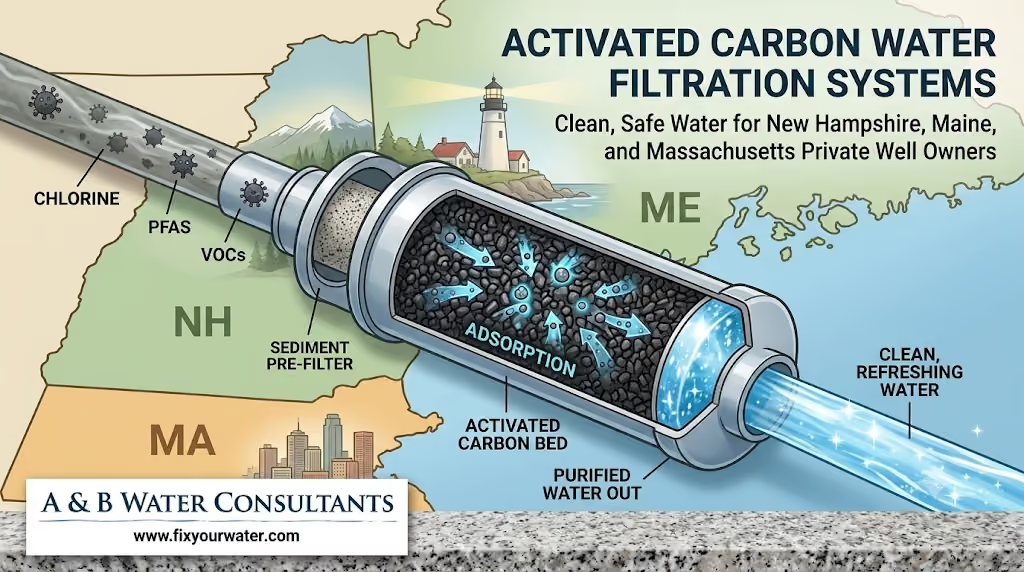
Standard pitcher filters, including Brita, are not designed or certified to remove arsenic. Activated carbon, which most pitcher filters use, is not effective against arsenic at the concentrations found in New England well water. Some specialized filters claim partial arsenic reduction, but none provide the consistent, verified removal that a certified treatment system delivers. Homeowners should not rely on pitcher filters as a solution for arsenic contamination.
Can you shower in water that has high arsenic levels?
Dermal absorption of arsenic through intact skin during bathing or showering is generally considered low risk for adults. The primary route of exposure is ingestion through drinking and cooking. However, whole-house treatment is still the recommended approach for comprehensive safety, particularly for households with young children and for eliminating any incidental ingestion during bathing. A whole-house adsorptive media system addresses both drinking water and all other household uses simultaneously.
What are the symptoms of arsenic exposure from drinking water?
Chronic low-level arsenic exposure from drinking water typically produces no immediate, recognizable symptoms. Over years or decades, it increases the risk of bladder, lung, and skin cancers, cardiovascular disease, and diabetes. Skin changes such as keratosis (thickening) or hyperpigmentation can appear with prolonged exposure. Because symptoms develop slowly and resemble other conditions, many people do not connect them to their water supply. This is precisely why testing is the only reliable way to know.
What neutralizes arsenic in water?
Arsenic cannot be "neutralized" in the chemical sense. It must be physically removed from the water through adsorption, membrane filtration, or precipitation. Effective technologies include adsorptive media filters, reverse osmosis systems, and oxidation-filtration systems. The right approach depends on arsenic concentration, speciation, and overall water chemistry, which is why professional assessment is essential before selecting a treatment system.
What happens if you drink water with arsenic in it?
A single glass of water containing arsenic at typical New England well levels will not cause acute illness. The risk comes from cumulative, long-term exposure over months and years. Drinking arsenic-contaminated water daily gradually increases cancer risk and contributes to cardiovascular and metabolic health effects. The longer the exposure continues without treatment, the greater the cumulative risk to the entire household.
Taking the Next Step Toward Safe Water
For homeowners across New Hampshire, southern Maine, and Massachusetts, arsenic in well water is a real and manageable risk. The key is knowing what is in the water, understanding what those results mean, and working with a qualified professional to implement a treatment solution that actually matches the problem.
A&B Water Consultants has spent over 25 years helping New England families navigate exactly this process, from initial testing through custom system design and long-term maintenance. With deep expertise in the region's specific geology and water chemistry, the team brings both the technical knowledge and the local experience that generic national providers simply cannot match.
Do not wait for symptoms or a neighbor's diagnosis to prompt action. Test the water, understand the results, and put a solution in place. Contact A&B Water Consultants for a free arsenic treatment quote today and take the first step toward water your family can trust.