Radon is invisible, odorless, and radioactive, and it is present in more New England homes than many families realize. As the second leading cause of lung cancer in the United States, radon is responsible for approximately 21,000 deaths each year, according to the EPA. For homeowners in New Hampshire, southern Maine, and Massachusetts, the risk is not theoretical. The region's granite bedrock geology makes it one of the higher-risk areas in the country, and homes drawing water from private wells face an additional exposure pathway that most national guides fail to address.
This guide walks through the complete process of how to mitigate radon, from understanding test results to choosing the right treatment system for your home's specific conditions. Whether the concern is radon entering through the soil beneath a basement slab or dissolving into well water before it reaches the kitchen tap, professional mitigation is the proven path to protecting your family.
Why New Hampshire and New England Homes Face Elevated Radon Risk
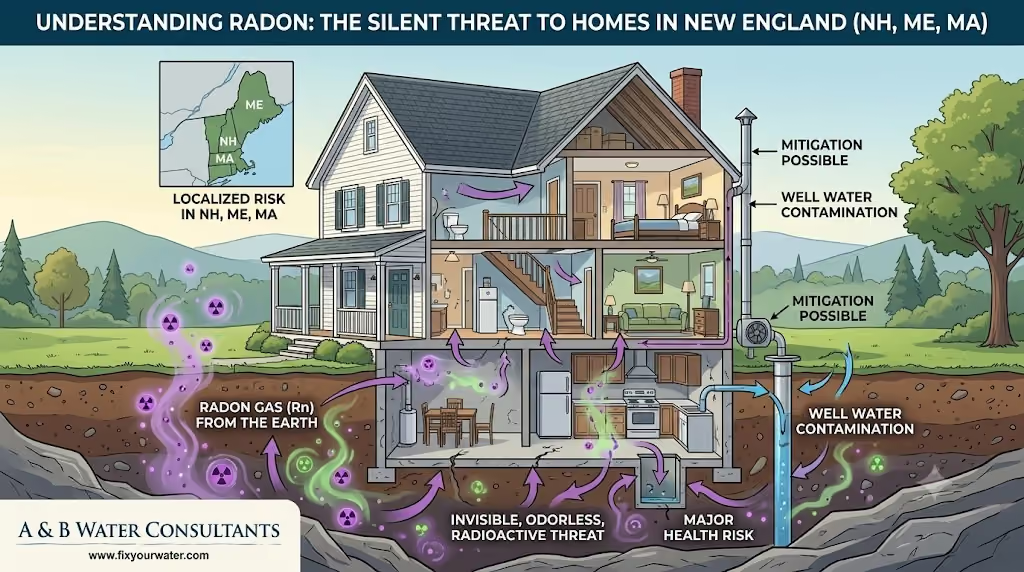
New Hampshire consistently ranks among the highest-risk states for radon in the country. Maine and parts of Massachusetts share similar geology, and the underlying reason is granite. The granite bedrock that defines so much of New England's landscape naturally contains uranium, which decays over time into radium, which in turn decays into radon gas. As that gas migrates upward through soil and rock, it finds its way into homes through foundation cracks, construction joints, sump pits, and private well water.
Studies conducted by the New Hampshire Department of Environmental Services have found that a significant percentage of tested homes in the state exceed the EPA's action level. In some counties, elevated readings are the norm rather than the exception. Southern Maine and portions of Massachusetts with similar bedrock composition carry comparable risk profiles. For homeowners in these areas, radon testing is not optional; it is a baseline health measure.
What Radon Test Results Mean and When to Take Action
Radon is measured in picocuries per liter of air (pCi/L). The EPA recommends taking action when indoor radon levels reach or exceed 4 pCi/L. Levels between 2 and 4 pCi/L are considered a gray zone where mitigation is strongly worth considering, especially for families with young children, smokers, or individuals with respiratory conditions. It is worth noting that radon exposure compounds significantly with smoking, multiplying the lung cancer risk substantially compared to either factor alone.
There are two primary testing approaches. Short-term tests, typically using charcoal canisters left in place for 2 to 7 days, provide a quick snapshot and are often used during real estate transactions. Long-term tests, conducted over 90 days or more using alpha track detectors, give a more accurate picture of average annual exposure. For New England homeowners concerned about ongoing exposure rather than a one-time transaction, a long-term test provides the most actionable data.
Radon levels tend to be highest during colder months when homes are sealed tightly, which is a particularly relevant point for New Hampshire and Maine homeowners who experience long, cold winters. If a short-term test is conducted in summer, results may underrepresent the annual average. A follow-up long-term test or a winter retest gives a fuller picture.
How Radon Enters Your Home Through Water and Soil
Understanding radon entry pathways helps homeowners grasp why mitigation often requires addressing more than one source. Soil gas is the most widely discussed pathway. Radon produced in the ground beneath a home creates pressure differentials that draw the gas upward into the living space through:
- Cracks and gaps in basement floors and walls
- Construction joints where the floor meets the foundation wall
- Sump pits and floor drains
- Openings around utility penetrations
The second pathway, waterborne radon, receives far less attention in national guides but is critically important for New England homeowners on private wells. When groundwater passes through radon-bearing granite, it absorbs dissolved radon gas. That water then enters the home through every tap, shower, and appliance connected to the plumbing. When hot water is used, radon volatilizes and releases into indoor air. Even cold water use contributes to radon loading in the home's air supply.
Radon in Your Well Water: A Hidden Risk for New England Homeowners
Homes served by municipal water systems have minimal waterborne radon risk because radon dissipates during water treatment and distribution. Private well owners in New Hampshire, Maine, and Massachusetts have no such buffer. The water drawn directly from bedrock wells can carry radon concentrations high enough to meaningfully elevate indoor air levels even after soil gas mitigation has been addressed.
The EPA has proposed a maximum contaminant level of 300 pCi/L for radon in drinking water, with an alternative maximum of 4,000 pCi/L for states with multimedia mitigation programs. In New Hampshire, well water radon concentrations frequently exceed 2,000 pCi/L and can reach significantly higher levels in granite-heavy areas. At these concentrations, waterborne radon contributes a measurable and dangerous share of total household radon exposure.
Homeowners who install air mitigation systems without testing their well water may see indoor air levels improve but not reach the sub-2 pCi/L range that a well-designed system should achieve. This is why water testing is an essential component of any comprehensive radon assessment for private well households.
Contact A&B Water Consultants for a free radon mitigation treatment quote and find out whether your well water is contributing to elevated indoor radon levels in your home.
Proven Methods to Mitigate Radon in Your Home
Sub-Slab Depressurization for Soil Gas
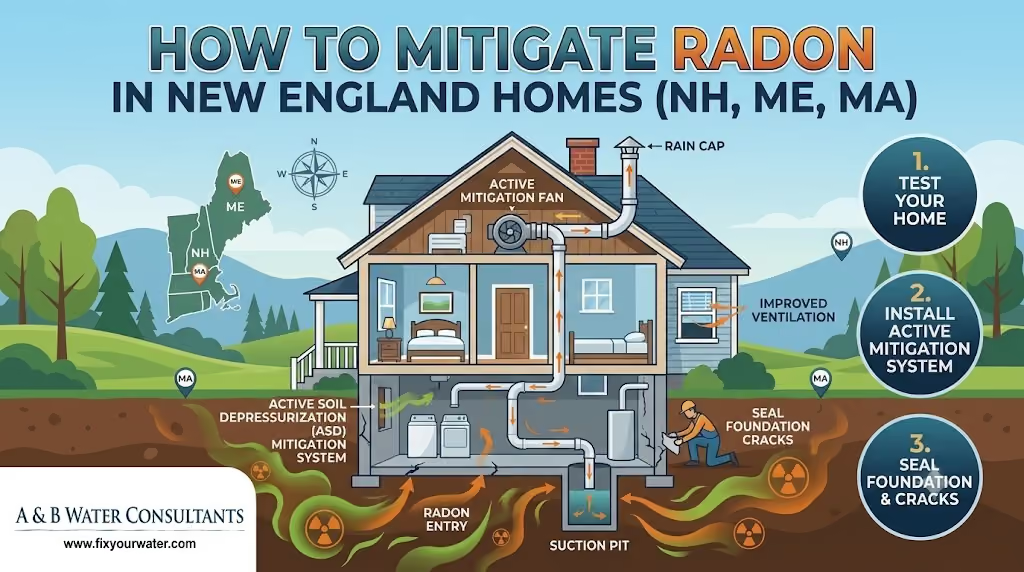
Active soil depressurization (ASD), also called sub-slab depressurization, is the most effective and widely used method for reducing radon entering through the foundation. A licensed contractor drills one or more suction points through the basement slab, inserts a PVC vent pipe, and connects it to a continuously operating fan. The fan creates negative pressure beneath the slab, drawing radon-laden soil gas away from the home and exhausting it safely above the roofline before it can enter the living space.
For most New Hampshire and southern Maine homes with poured concrete basements, ASD systems are highly effective and can reduce radon levels by 50 to 99 percent. A properly designed system installed by a certified contractor should bring levels well below 4 pCi/L and ideally below 2 pCi/L.
Crawl Space Mitigation
Many older New England homes have partial or full crawl spaces rather than finished basements. These require a different approach. Sub-membrane depressurization involves laying a heavy-duty polyethylene barrier across the crawl space floor and drawing radon from beneath it using a fan and vent pipe system, similar in principle to sub-slab depressurization. Crawl space encapsulation, which seals the entire crawl space including walls and floor, can also reduce radon infiltration while improving moisture control and energy efficiency.
Waterborne Radon Treatment
For private well owners, treating radon in water requires one of two primary approaches:
- Aeration systems: Water is sprayed or agitated in a chamber that allows dissolved radon gas to escape before the treated water enters the home's plumbing. Aeration is highly effective and can remove 95 to 99 percent of waterborne radon. These systems require proper installation and periodic maintenance.
- Granular activated carbon (GAC) filtration: Water passes through a tank filled with activated carbon, which adsorbs radon from the water. GAC systems are effective for lower radon concentrations but require more frequent media replacement at higher radon levels. The carbon itself becomes mildly radioactive over time and must be disposed of properly by a licensed professional.
The appropriate system depends on the radon concentration in the well water, the household's water usage, and the home's plumbing configuration. A professional assessment is essential for selecting the right approach.
Air Mitigation vs. Water Treatment: What New England Homes Often Need Both
This is a distinction that national radon guides consistently overlook. For homeowners in New Hampshire and southern Maine who rely on private wells, radon enters the home through two separate pathways simultaneously. Addressing only one of them produces incomplete results.
A home might have a properly functioning sub-slab depressurization system that successfully manages soil gas entry while still having well water delivering radon concentrations above 1,000 pCi/L directly into the indoor environment. Post-mitigation air testing in such a home might show levels that are improved but still above the 2 pCi/L target, leaving the family with a false sense of security.
The integrated approach, combining air mitigation for soil gas with a water treatment system for waterborne radon, is the standard of care for New England private well households with elevated readings in both categories. This is precisely the kind of custom-designed, dual-pathway solution that A&B Water Consultants has been providing to New England families for over 25 years.
ontact A&B Water Consultants for a free radon mitigation treatment quote and learn whether your home requires a combined air and water treatment strategy.
What Happens During a Professional Radon Assessment and System Design
Many homeowners are unsure what to expect when they call a radon mitigation specialist. Understanding the process removes uncertainty and helps families make confident decisions. A professional assessment typically includes:
- Review of existing test results: The specialist evaluates any radon air and water test data already available, or arranges for testing if none has been conducted.
- Foundation inspection: The contractor examines the foundation type, slab construction, presence of sump pits, and any visible entry points to determine the most effective suction point locations.
- Well water evaluation: For private well homes, water radon concentrations are assessed to determine whether a water treatment system is needed and which technology is appropriate.
- Diagnostic testing: A communication test using smoke or a vacuum gauge helps determine how air moves beneath the slab, which directly influences fan sizing and pipe placement.
- Custom system design: Based on all findings, the specialist designs a system scaled to the home's specific conditions rather than applying a one-size-fits-all approach.
- Post-installation testing: After system installation, a follow-up radon test confirms that levels have been reduced to the target range.
This structured, diagnostic approach is what separates a professionally designed mitigation system from a generic installation. It is also why working with an experienced regional specialist, one who understands New England geology, construction styles, and water quality conditions, produces better long-term outcomes.
How to Select a Qualified Radon Mitigation Specialist in New England
New Hampshire, Maine, and Massachusetts each have certification requirements for radon mitigation contractors. Homeowners should verify that any contractor they hire holds current state certification and, ideally, national credentials through the National Radon Proficiency Program (NRPP) or the National Radon Safety Board (NRSB).
Before hiring a contractor, ask the following questions:
- Are you certified for radon mitigation in this state?
- Do you conduct a diagnostic assessment before designing the system?
- Do you test well water for radon as part of your evaluation?
- What post-installation testing do you provide?
- Can you provide references from completed projects in this area?
A contractor who skips the diagnostic phase, does not test well water, or cannot explain why a particular system design was chosen should raise concerns. Quality mitigation is not a commodity installation; it is a custom solution based on the specific conditions of each home.
Factors That Affect Radon Mitigation Cost
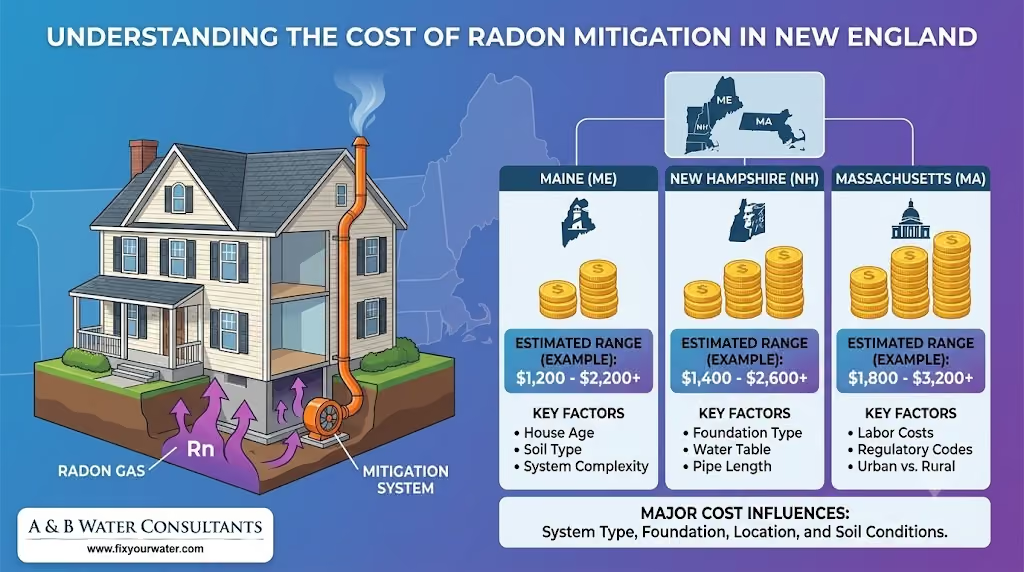
Several variables influence the total cost of a radon mitigation project for New England homeowners:
- Foundation type: Full basements, slab-on-grade, and crawl spaces each require different approaches with varying labor and materials costs.
- Radon concentration: Higher levels may require multiple suction points or higher-capacity fans.
- Home size and layout: Larger homes or those with complex foundation configurations may require more extensive systems.
- Water treatment needs: Adding a water treatment system for waterborne radon increases the total project cost but may be necessary for comprehensive protection.
- Existing conditions: Homes with significant foundation cracks, unfinished crawl spaces, or high-volume sump pits may require additional preparation work.
Air mitigation systems for a standard New England basement home typically range from $800 to $2,500. Water treatment systems vary based on technology and radon concentration but represent an additional investment that is essential for private well households with elevated water radon levels. ontact A&B Water Consultants for a free radon mitigation treatment quote that reflects the specific conditions of your home.
Living with a Radon Reduction System: Maintenance and Monitoring
A properly installed radon mitigation system is designed to operate continuously with minimal intervention. The vent fan, which runs around the clock, is the component most likely to require attention over time. Quality fans are rated for 10 to 20 years of continuous operation, but periodic professional inspections help catch any performance decline before it affects radon levels.
Post-mitigation testing should be conducted within 24 to 30 days after system installation to confirm effectiveness. After that, the EPA recommends retesting every two years or after any significant renovation, change in HVAC systems, or structural modification. Many homeowners in New Hampshire and Maine choose to retest annually given the region's elevated baseline risk.
For water treatment systems, aeration units require periodic inspection of mechanical components and air filters. GAC systems require media replacement on a schedule determined by water radon concentration and household water usage. A service agreement with a qualified water treatment professional ensures these maintenance intervals are not overlooked.
Radon Mitigation and Home Sales in New Hampshire, Maine, and Massachusetts
Radon has become a standard concern in real estate transactions across New England. Buyers routinely request radon testing as part of the home inspection process, and elevated results can affect negotiations, delay closings, or require sellers to fund mitigation before the sale proceeds.
For sellers, having a professionally installed and documented radon mitigation system in place before listing can be a genuine selling advantage. It signals to buyers that the issue has been identified and properly addressed, and it eliminates radon as a negotiating point. Buyers who are purchasing a home with an existing system should request documentation of the original installation, the post-installation test results, and any maintenance records.
In New Hampshire, radon disclosure requirements in real estate transactions continue to evolve, and buyers are increasingly sophisticated about asking for both air and water radon test results. For private well homes in the state, a seller who can provide clean water radon documentation alongside a functioning air mitigation system is in a significantly stronger position than one who cannot.
Frequently Asked Questions About Radon Mitigation
Is it safe to live in a house with a radon mitigation system?
Yes. A properly installed and functioning radon mitigation system reduces indoor radon levels to safe concentrations. Post-installation testing confirming levels below 2 pCi/L provides assurance that the system is working as designed. Millions of American families live safely in homes with active mitigation systems.
Does homeowners insurance cover radon mitigation?
Standard homeowners insurance policies do not cover radon mitigation costs. Radon is treated as a naturally occurring environmental condition rather than a covered peril. Some home warranty programs offer limited coverage, but homeowners should not rely on insurance to offset mitigation costs.
What month is radon the highest?
Radon levels tend to be highest during the winter months in New England, when homes are tightly sealed and ventilation is minimal. January and February typically see the highest indoor readings. This makes winter testing a useful approach for capturing peak exposure conditions.
Can I mitigate radon myself?
While DIY radon mitigation kits exist, they are not recommended for most New England homes. The complex foundation types, varying soil conditions, and frequent need for dual air and water treatment in this region require professional diagnostic assessment and system design. An improperly installed system may not reduce levels adequately and could create other issues. Professional installation by a certified mitigator is the reliable path to documented, effective results.
What percentage of homes have high radon?
Nationally, approximately 1 in 15 homes has elevated radon levels. In New Hampshire and Maine, that proportion is considerably higher due to granite bedrock geology. Some New Hampshire counties report that a majority of tested homes exceed the EPA action level of 4 pCi/L.
What states are worst for radon?
New Hampshire, Maine, Pennsylvania, Iowa, and Minnesota consistently rank among the states with the highest radon levels. New Hampshire in particular has some of the highest average indoor radon concentrations in the nation, making professional testing and mitigation especially important for homeowners in the state.
Take the Next Step Toward a Safer Home
Radon is a serious but entirely manageable health risk. New England homeowners, particularly those in New Hampshire, southern Maine, and Massachusetts with private wells, face a dual exposure challenge that requires expert evaluation and a custom-designed solution. Whether the concern is soil gas entering through a basement slab, waterborne radon flowing through the kitchen tap, or both, professional mitigation delivers measurable, documented protection for families.
With over 25 years of experience serving New England homeowners, A&B Water Consultants brings the regional expertise, diagnostic thoroughness, and technical capability to design systems that work. ontact A&B Water Consultants for a free radon mitigation treatment quote and take the first step toward knowing your family is protected.