For the roughly 500,000 households in New Hampshire, southern Maine, and Massachusetts that rely on private wells, the quality of drinking water is entirely their own responsibility. Unlike municipal water customers who receive regular utility reports, private well owners operate without a safety net. No government agency tests their water. No utility sends alerts. The only way to know whether the water coming out of the tap is safe for a family to drink, cook with, and bathe in is through water testing for contaminants conducted by a qualified professional.
This guide walks New England homeowners through everything they need to understand: which contaminants pose the greatest regional risk, how professional testing works, how to interpret results, and what treatment options exist when problems are found. The goal is not to alarm, but to equip homeowners with the knowledge to make informed decisions about one of the most fundamental aspects of home health and safety.
Why Water Testing for Contaminants Matters for New England Homeowners
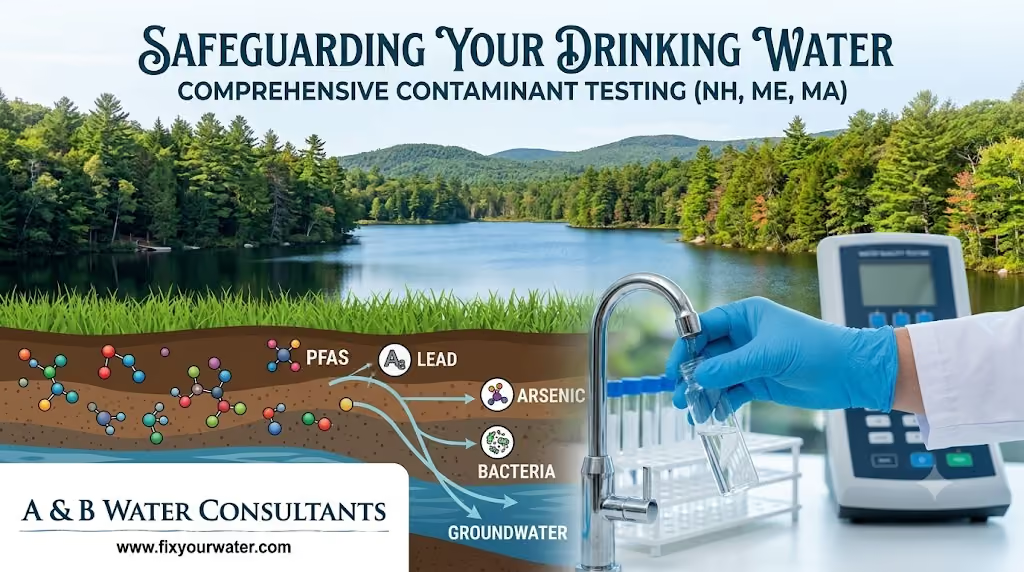
The bedrock geology of New Hampshire, Maine, and Massachusetts is beautiful, ancient, and in some areas, a source of naturally occurring contaminants that have no taste, no color, and no odor. Arsenic, radon, and uranium leach from granite and other metamorphic rock formations directly into groundwater. PFAS compounds from decades of industrial and military activity have migrated into aquifers across the region. Bacterial contamination from aging septic systems and agricultural activity adds another layer of risk.
The health consequences of long-term exposure to these contaminants are serious and well-documented. Arsenic is a known human carcinogen. Dissolved radon in well water contributes to lung cancer risk through inhalation during showering. PFAS compounds, often called "forever chemicals," are linked to immune suppression, thyroid disruption, and developmental effects in children. None of these contaminants announce themselves. Families can be exposed for years without any obvious sign.
Water testing for contaminants is not a precaution for the overly cautious. It is the baseline standard of care for any private well owner in this region. Contact A&B Water Consultants for a free whole house water treatment quote and take the first step toward knowing exactly what is in your water.
Which Contaminants Are Most Common in New Hampshire, Maine, and Massachusetts Well Water
Understanding the regional geology helps explain why certain contaminants appear at elevated rates across New England. The following are the primary threats that well owners in this region should be testing for.
Arsenic in New Hampshire and Southern Maine Bedrock
New Hampshire consistently ranks among the states with the highest rates of arsenic in private well water. The NH Department of Health and Human Services (DHHS) has documented that a significant percentage of tested private wells in the state exceed the EPA Maximum Contaminant Level (MCL) of 10 parts per billion (ppb). The source is geological: arsenic occurs naturally in the granite, schist, and other bedrock formations that underlie much of the state and extend into southern Maine and parts of Massachusetts.
Chronic low-level arsenic exposure is associated with bladder, lung, and skin cancers, as well as cardiovascular disease and diabetes. Because arsenic has no taste or smell, families living with elevated arsenic levels have no way of knowing without a laboratory test. This is especially concerning for children, whose developing bodies are more vulnerable to toxic exposures.
Radon in Well Water
New Hampshire has among the highest radon levels in the country, both in soil and in groundwater. Dissolved radon in well water is a distinct concern from airborne radon in basements, though the two are related. When well water containing dissolved radon is used for showering, cooking, or running the dishwasher, radon gas is released into the indoor air. Inhalation of that gas is the primary health risk, and it contributes meaningfully to the lung cancer burden associated with radon exposure.
The EPA has proposed a guidance level of 300 picocuries per liter (pCi/L) for radon in drinking water, and many New Hampshire wells test well above this threshold. Unlike airborne radon, which is tested with passive canisters, dissolved radon in water requires a water-specific laboratory analysis using a certified testing protocol.
PFAS Contamination
Per- and polyfluoroalkyl substances (PFAS) have emerged as one of the most pressing water quality concerns in New England. These synthetic compounds were used for decades in firefighting foam, non-stick coatings, and industrial processes. They do not break down in the environment or in the human body, which is why they earned the name "forever chemicals."
In New Hampshire, areas near Pease Air National Guard Base in Portsmouth have received significant attention for PFAS contamination in groundwater. Maine and Massachusetts have documented PFAS plumes near military installations, airports, and industrial facilities. Private well owners in surrounding communities may be affected even if they are not immediately adjacent to a known source.
In 2024, the EPA finalized the first-ever enforceable federal Maximum Contaminant Levels for PFAS in drinking water. The new rule set individual MCLs for PFOA and PFOS at 4 parts per trillion (ppt) each, with additional limits for other PFAS compounds. These are among the strictest drinking water standards ever established by the federal government, reflecting the growing scientific consensus that even very low levels of PFAS exposure carry health risks.
Here is the critical point for private well owners: federal MCLs apply to public water systems, not private wells. That means the regulatory protection that applies to municipal customers does not extend to families on private wells. Private well owners in New Hampshire, Maine, and Massachusetts must take it upon themselves to test for PFAS and act on results. State agencies in all three states have issued guidance encouraging private well testing in areas near known PFAS sources, but testing remains voluntary and the responsibility of the homeowner.
For families near military bases, airports, industrial parks, or areas where firefighting foam was historically used, PFAS testing is not optional, it is urgent. Contact A&B Water Consultants for a free whole house water treatment quote and find out whether your well may be at risk.
Other Contaminants Worth Testing
Beyond the three primary concerns, a comprehensive water test for New England well owners should include coliform bacteria, nitrates (particularly in agricultural areas), pH, hardness, iron, manganese, and total dissolved solids. Each of these can affect health, plumbing longevity, or water aesthetics in ways that matter to a family's daily quality of life.
New PFAS Drinking Water Standards and What They Mean for Private Well Owners in New England
In 2024, the EPA finalized the first-ever enforceable federal Maximum Contaminant Levels for PFAS in drinking water. The new rule set individual MCLs for PFOA and PFOS at 4 parts per trillion (ppt) each, with additional limits for other PFAS compounds. These are among the strictest drinking water standards ever established by the federal government, reflecting the growing scientific consensus that even very low levels of PFAS exposure carry health risks.
Here is the critical point for private well owners: federal MCLs apply to public water systems, not private wells. That means the regulatory protection that applies to municipal customers does not extend to families on private wells. Private well owners in New Hampshire, Maine, and Massachusetts must take it upon themselves to test for PFAS and act on results. State agencies in all three states have issued guidance encouraging private well testing in areas near known PFAS sources, but testing remains voluntary and the responsibility of the homeowner.
For families near military bases, airports, industrial parks, or areas where firefighting foam was historically used, PFAS testing is not optional, it is urgent. Contact A&B Water Consultants for a free whole house water treatment quote and find out whether your well may be at risk.
How Often Should You Test Your Well Water
The CDC and state health agencies in New Hampshire, Maine, and Massachusetts recommend that private well owners test their water at minimum once per year for bacterial contamination and other core indicators. For contaminants like arsenic and radon, which originate from stable geological sources, annual retesting may not be necessary once a baseline is established and a treatment system is in place. However, the initial baseline test is non-negotiable, and periodic retesting every three to five years is advisable to confirm that conditions have not changed.
The frequency question also depends on the specific contaminant. Bacterial contamination can change seasonally, particularly in spring when snowmelt can introduce surface water into well casings. Nitrates can fluctuate with agricultural activity. Arsenic and radon, by contrast, tend to be stable over time because they come from the surrounding bedrock rather than surface sources.
Warning Signs and Events That Mean You Should Test Your Water Right Away
Annual testing is a baseline, not a ceiling. Certain events should trigger immediate retesting regardless of when the last test was conducted. This is one of the most underappreciated aspects of well water management, and it is a gap that leaves many homeowners exposed.
- Flooding or heavy surface runoff near the wellhead: Surface water can introduce bacteria, nitrates, and other contaminants directly into a well, particularly if the well casing is older or the wellhead is not properly sealed.
- Nearby land use changes: A new industrial facility, a neighbor applying large quantities of fertilizer or pesticides, or construction activity near a known contamination site can all alter the groundwater chemistry reaching a private well.
- Plumbing work or well repairs: Any disturbance to the well system, including pump replacement, pipe work, or pressure tank service, can introduce bacteria or disturb sediment in ways that affect water quality.
- A new home purchase: Never assume the previous owner tested the water, or that results from years ago reflect current conditions. A comprehensive test at the time of purchase is essential.
- Changes in water appearance, taste, or odor: Cloudiness, a sulfur smell, a metallic taste, or staining on fixtures are all signals that something in the water chemistry has shifted.
- Illness in the household: If family members experience gastrointestinal symptoms that cannot be explained by another cause, water contamination should be considered and tested for promptly.
- A new baby or pregnancy in the home: Infants are particularly vulnerable to nitrates, and pregnant women face elevated risk from several water contaminants. A fresh comprehensive test is warranted before a new baby arrives.
Steps to Get Your Water Professionally Tested
Understanding how to test water quality begins with choosing the right testing pathway. For serious contaminants like arsenic, radon, and PFAS, the only reliable option is a state-certified laboratory. These labs operate under strict accreditation standards that ensure their analytical methods meet EPA requirements for accuracy and precision.
A professional water consultant, such as A&B Water Consultants, works with accredited laboratories and manages the entire testing process on behalf of the homeowner. This is meaningfully different from purchasing a mail-in kit online or picking up a test strip at a hardware store. The consultant knows which tests are appropriate for the specific region and well type, ensures proper sample collection protocols are followed, and can interpret results in the context of what treatment options are available.
Proper Sample Collection Protocols
Sample collection is not as simple as filling a bottle from the kitchen tap. Laboratories typically require specific containers that they supply, and the collection procedure varies depending on what is being tested. For bacterial testing, a first-draw sample collected before the tap has been run is often required. For some chemical contaminants, a flushed sample after running the water for several minutes may be more appropriate. Using the wrong container, failing to follow the prescribed collection procedure, or allowing the sample to sit too long before reaching the lab can all invalidate results. A professional consultant eliminates this risk by guiding or performing the collection process correctly.
What Comprehensive Testing Costs
A basic bacterial and nitrate test may cost as little as $50 to $100 through a state-certified lab. A comprehensive panel covering arsenic, radon, PFAS, bacteria, nitrates, heavy metals, pH, and other parameters typically ranges from $300 to $600 or more depending on the number of analytes included. This cost is minimal when measured against the health consequences of untreated contamination or the cost of treating a serious illness caused by years of exposure. For homeowners considering a treatment system, the cost of comprehensive testing is also a practical investment: it ensures the system is designed to address the actual contaminants present rather than assumed ones.
How to Interpret Your Water Test Results
Understanding water test results requires familiarity with a few key terms. The EPA's Maximum Contaminant Level (MCL) is the highest concentration of a contaminant that is legally allowed in public drinking water. For private wells, MCLs serve as reference points rather than enforceable limits, but they represent the threshold above which health risk is considered unacceptable.
For arsenic, the MCL is 10 ppb. For PFOA and PFOS individually, the new 2024 MCL is 4 ppt. For radon, there is currently a proposed guidance level of 300 pCi/L for water. State agencies in New Hampshire, Maine, and Massachusetts may have their own guidance levels that differ from federal standards, and a qualified water consultant will be familiar with both.
Elevated results do not always mean a family must stop using their water immediately. The appropriate response depends on the contaminant, the concentration, and the household's specific situation. A professional consultant can provide context that a laboratory report alone cannot: whether a result is borderline or significantly elevated, what health risk it represents over time, and which treatment technology is best suited to address it.
Water Treatment Options After Testing Reveals Contaminants
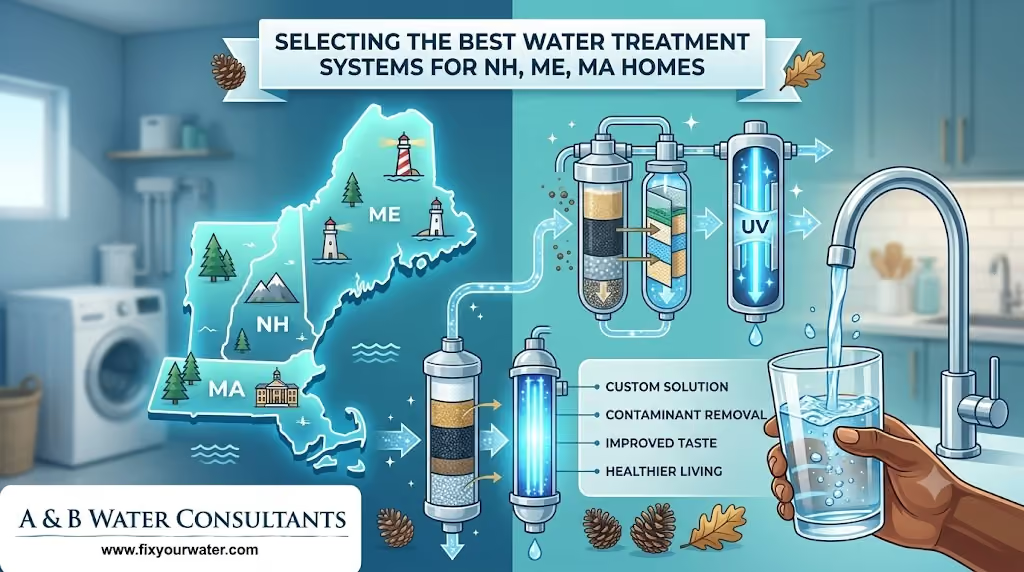
Once testing identifies a problem, treatment is the solution. The technology selected depends entirely on what the water test reveals, which is precisely why testing must come first. Generic treatment systems installed without testing data may address some contaminants while missing others entirely.
Arsenic Filtration
The two primary technologies for arsenic removal are adsorptive media filtration and reverse osmosis. Adsorptive media systems, often using iron-based or titanium-based media, are effective for whole-house (point-of-entry) arsenic removal. Reverse osmosis systems are highly effective at the point of use, typically under the kitchen sink, and reduce arsenic along with many other dissolved contaminants. The choice between point-of-entry and point-of-use depends on the arsenic concentration, the household's water usage patterns, and budget considerations.
Radon Treatment for Well Water
Aeration is the most effective technology for removing dissolved radon from well water. Aeration systems expose the water to air, allowing radon gas to escape before the water enters the home's distribution system. Granular activated carbon (GAC) is another option for lower radon concentrations, though it requires careful management because the carbon media can accumulate radioactivity over time. A water consultant with experience in radon treatment will recommend the appropriate technology based on the measured radon concentration.
PFAS Removal
High-performance activated carbon filtration and reverse osmosis are the two most effective technologies for PFAS removal. Not all carbon filters are equally effective against PFAS; the carbon type, contact time, and system design all matter. A properly designed whole-house PFAS treatment system can reduce PFAS concentrations to below detection limits, providing comprehensive protection for every tap in the home.
From Test Results to a Custom Treatment Solution: What the Process Looks Like
Many homeowners understand that testing is important but are uncertain what happens next. The path from test results to an installed treatment system is straightforward when working with an experienced water consultant.
After results are received, the consultant reviews the findings and identifies which contaminants require treatment and at what concentrations. A site assessment of the home's plumbing, water pressure, flow rate, and available installation space informs the system design. The consultant then proposes a custom-designed treatment solution matched to the specific contaminant profile and the household's water usage needs. Installation is performed by qualified technicians, and post-installation testing confirms that the system is performing as designed.
A&B Water Consultants has followed this process for over 25 years, working with families throughout New Hampshire, southern Maine, and Massachusetts. The company's approach is not to sell a product off the shelf but to design a solution around what the water test actually reveals. Contact A&B Water Consultants for a free whole house water treatment quote and learn how this process works for your specific situation.
Why Professional Water Testing Beats DIY Kits for Serious Contaminants
Hardware store test strips and basic mail-in kits have a place for simple screening, but they are not adequate for detecting arsenic, radon, or PFAS at health-relevant concentrations. Strip tests for arsenic, for example, are not sensitive enough to reliably detect concentrations near the 10 ppb MCL. A strip that reads "negative" could easily miss a concentration of 8 ppb, which still represents a meaningful health risk over years of exposure.
For radon in water, the analytical method requires specialized laboratory equipment that no consumer kit can replicate. For PFAS, the testing method (EPA Method 533 or 537.1) requires sophisticated instrumentation available only in accredited laboratories. A DIY kit that claims to test for PFAS is almost certainly not using a validated method capable of detecting the compounds at the ppt levels that matter.
Beyond analytical accuracy, a professional water consultant provides something a kit cannot: interpretation and a path forward. Knowing a number means little without understanding what it means for a specific family and what to do about it.
What to Ask a Water Treatment Consultant Before You Commit to a System
Choosing a water treatment provider is a significant decision. The following questions help homeowners evaluate any consultant they are considering.
- Do you work with state-certified laboratories for your testing? The answer should be yes, with specifics about which labs and their accreditation status.
- How long have you been working with arsenic and radon treatment specifically? These contaminants require specialized expertise. General plumbing experience is not equivalent.
- Will the system be custom-designed based on my test results, or is it a standard package? A reputable consultant designs around the data, not around a product catalog.
- What post-installation testing do you perform to verify performance? Any serious provider will confirm the system is working before considering the job complete.
- What does ongoing maintenance look like, and what are the costs? Treatment systems require periodic media replacement, filter changes, or servicing. Understanding the long-term cost is essential.
- Are you familiar with NH DHHS guidelines and the current PFAS regulatory landscape? A consultant working in New England should be current on state and federal guidance.
- Can you provide references from homeowners in this region? Local experience with New England geology and well conditions is a meaningful differentiator.
Contact A&B Water Consultants for a free whole house water treatment quote. With over 25 years of experience serving families in New Hampshire, southern Maine, and Massachusetts, the team is prepared to answer every one of these questions with specifics.
Frequently Asked Questions About Water Testing for Contaminants
How can I test my drinking water for contaminants?
The most reliable approach for private well owners is to work with a professional water consultant who uses a state-certified laboratory. The consultant will identify which tests are appropriate for the region and well type, ensure proper sample collection, and interpret results in the context of available treatment options.
How do I test if my water is contaminated?
Visual inspection and taste testing are not reliable indicators of contamination. Many serious contaminants, including arsenic, radon, and PFAS, are completely undetectable by human senses. A laboratory analysis is the only way to determine whether specific contaminants are present and at what concentrations.
What are the health effects of contaminated drinking water?
The health effects depend on the contaminant. Arsenic is linked to bladder, lung, and skin cancers, as well as cardiovascular disease. Dissolved radon in water contributes to lung cancer risk through inhalation of released gas. PFAS compounds are associated with immune system suppression, thyroid dysfunction, elevated cholesterol, and developmental effects in children. Bacterial contamination can cause acute gastrointestinal illness. Nitrates at elevated levels are dangerous to infants and can cause methemoglobinemia.
What is the best water tester for drinking water?
For serious contaminants like arsenic, radon, and PFAS, the best option is a state-certified laboratory analysis arranged through a professional water consultant. Consumer test kits and strips are not validated for detecting these contaminants at the concentrations that matter for health decisions.
How do I know if I am sick from contaminated water?
This is a question best answered in consultation with a physician. Symptoms from bacterial contamination often appear within hours to days and include nausea, diarrhea, and stomach cramps. Symptoms from chronic chemical exposure, such as arsenic or PFAS, develop over years and may not be obviously connected to water quality without a medical history review. If water contamination is suspected, testing the water and consulting a healthcare provider are both important steps.
Does testing through a hardware store cover private well contaminants like arsenic or radon?
No. Hardware store test kits are generally designed for basic water quality indicators and are not validated for detecting arsenic, radon, or PFAS at health-relevant concentrations. For private well owners in New Hampshire, Maine, and Massachusetts, a state-certified laboratory analysis is the appropriate standard.
Taking Action: The Cost of Waiting Is Too High
Water testing for contaminants is not a complex or burdensome process when approached with the right professional support. For New England families on private wells, it is the single most important step in protecting household health. The geological reality of this region, with its arsenic-bearing bedrock, its high radon concentrations, and its documented PFAS contamination near military and industrial sites, makes comprehensive testing not just advisable but essential.
A&B Water Consultants has spent over 25 years helping families in New Hampshire, southern Maine, and Massachusetts understand their water and protect their homes. The process begins with a conversation and a test. The outcome is the confidence of knowing exactly what is in the water and having a professionally designed system to address it. Contact A&B Water Consultants for a free whole house water treatment quote today.