For homeowners across New Hampshire, southern Maine, and Massachusetts, understanding the indicators of water quality is not an abstract environmental exercise. It is a practical health responsibility. Unlike municipal water customers who rely on public utilities to monitor and treat their supply, private well owners bear full responsibility for knowing what is in their water. And in New England, where bedrock geology, legacy industrial activity, and aging infrastructure create a uniquely complex contamination landscape, that responsibility carries real stakes.
This guide explains the key chemical, physical, and biological indicators that define drinking water quality, why certain contaminants are particularly prevalent in this region, and how professional testing and treatment translate raw data into safer water for your family.
What Are Indicators of Water Quality?
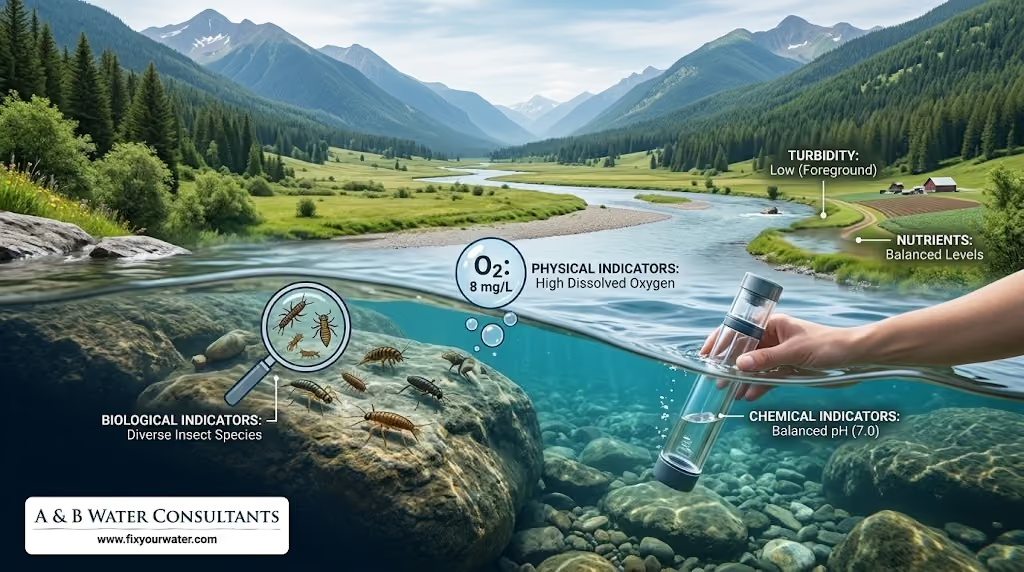
Water quality indicators are measurable parameters used to assess whether water is safe for drinking, cooking, bathing, and other household uses. These indicators fall into several broad categories: chemical, physical, biological, and radiological. Each category reveals different aspects of water safety and helps guide decisions about treatment.
It is important to distinguish between environmental water quality monitoring, which tracks the health of rivers, lakes, and aquifers at a regional scale, and household drinking water safety testing, which evaluates what actually comes out of your tap. For homeowners, the latter is what matters most. Environmental agencies may report that a watershed is generally healthy while a specific private well on your property draws from a contaminated aquifer pocket in local bedrock.
New England's geology, with its granite formations, glacial deposits, and naturally occurring mineral concentrations, creates conditions where certain contaminants appear at elevated levels even in the absence of any industrial activity. That regional context makes understanding water quality measurements especially important for anyone relying on a private well in New Hampshire, Maine, or Massachusetts.
The Key Chemical Indicators of Drinking Water Quality
pH and Corrosivity
pH measures how acidic or basic water is on a scale from 0 to 14, with 7 being neutral. New England groundwater is frequently acidic, often registering between 5.5 and 6.5, due to the region's naturally low-mineral bedrock and acidic rainfall. Low pH water is corrosive, meaning it actively leaches metals from pipes and plumbing fixtures. Lead and copper contamination in older homes often traces back not to the water source itself, but to acidic water dissolving pipe materials over time. Correcting pH through neutralization is a foundational step in many treatment plans.
Heavy Metals: Arsenic, Lead, and Iron
Heavy metals represent some of the most serious chemical water quality indicators for private well owners. Arsenic, lead, iron, and manganese are all commonly detected in New England well water. Arsenic deserves particular attention given its prevalence in the region's granite bedrock. Iron and manganese, while less acutely dangerous at typical levels, cause discoloration, staining, and unpleasant taste, and their presence can indicate broader mineral loading in a water supply.
Nitrates
Nitrate contamination typically originates from agricultural runoff, lawn fertilizers, and septic system leachate. The EPA maximum contaminant level (MCL) for nitrates is 10 milligrams per liter. Elevated nitrate levels pose a serious risk to infants and pregnant women, as nitrates interfere with blood oxygen transport, a condition historically called blue baby syndrome. Rural New Hampshire and Maine properties near farmland or with older septic systems should include nitrate testing as a standard part of any water quality panel.
Why New England Geology Makes Certain Water Quality Indicators More Critical
No two regions face identical water quality risks, and New England's geology creates a distinct set of concerns that homeowners here simply cannot ignore. The granite and metamorphic bedrock underlying much of New Hampshire and Maine naturally contains elevated concentrations of arsenic, uranium, and radon. As groundwater moves through fractures in this bedrock, it dissolves these minerals and carries them into private wells.
The New Hampshire Geological Survey has documented elevated arsenic levels across a broad swath of the state, with particular concentrations in Hillsborough, Merrimack, and Rockingham counties. Southern Maine communities draw from similar bedrock formations, and parts of Massachusetts, particularly in areas with older industrial history, face additional PFAS and heavy metal concerns layered on top of the geological baseline.
This is not a uniform statewide problem. A neighbor's well testing clean does not guarantee your well is safe. Bedrock contamination is highly localized, which is exactly why town-level or neighborhood-level testing cannot substitute for testing your specific well. Contact A&B Water Consultants for a free water filtration and treatment quote and a professional assessment of the contaminant risks specific to your property and region.
Arsenic in Drinking Water: A Critical Indicator for New Hampshire and Maine Homeowners
Arsenic is a naturally occurring heavy metal found in the granite bedrock common throughout New Hampshire and Maine. The EPA has set an MCL of 10 parts per billion (ppb) for arsenic in drinking water, but research suggests that health risks begin accumulating at levels below that threshold. Long-term exposure to arsenic in drinking water is associated with bladder, lung, and skin cancers, as well as cardiovascular disease and neurological effects.
Private well owners are most at risk because they have no regulatory requirement to test and no utility monitoring their supply. Many families have consumed arsenic-contaminated water for years without knowing it, simply because the water looked, smelled, and tasted completely normal. Arsenic is odorless, colorless, and tasteless, which makes laboratory testing the only reliable detection method.
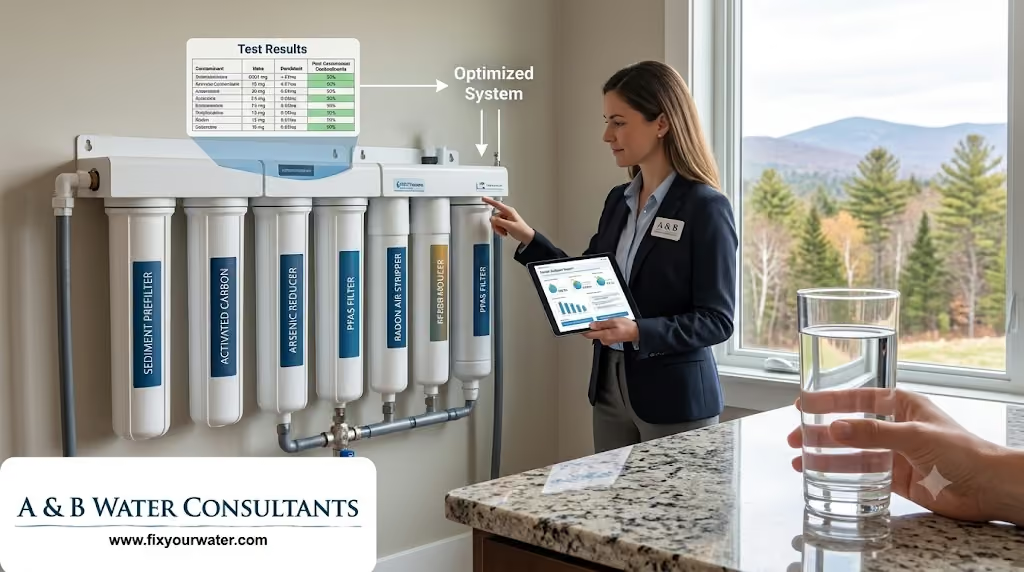
Treatment options for arsenic include activated alumina filtration, reverse osmosis systems, and oxidation-filtration media. The right solution depends on arsenic concentration, co-occurring contaminants, and household water usage patterns, all factors that a professional assessment can address.
Radon in Water: An Often-Overlooked Quality Indicator
Radon is a radioactive gas produced by the decay of uranium in bedrock. In New England, where uranium-bearing granite is widespread, dissolved radon in groundwater is a significant water quality indicator that most homeowners have never tested for. When radon-laden well water is used for showering, cooking, or running appliances, the gas volatilizes into indoor air, where it can be inhaled. The EPA estimates that waterborne radon contributes meaningfully to indoor radon levels, adding to the radon entering homes through soil and foundation cracks.
New Hampshire has some of the highest radon levels in the country, both in soil and in groundwater. The EPA has proposed a guidance level of 300 picocuries per liter (pCi/L) for radon in drinking water, though no federal MCL has been finalized. New Hampshire's own guidance recommends treatment when waterborne radon exceeds 2,000 pCi/L, though many water quality professionals recommend action at lower levels given the cumulative inhalation risk.
Aeration systems are the most effective treatment for radon in well water, physically stripping dissolved radon from the water before it enters the home's distribution system. This is a specialized technology that requires professional design and installation. Contact A&B Water Consultants for a free water filtration and treatment quote if you have never tested your well water for radon.
PFAS: The Emerging Water Quality Indicator Now Regulated in New Hampshire and Massachusetts
Per- and polyfluoroalkyl substances, commonly called PFAS or "forever chemicals," represent one of the most significant emerging water quality indicators in the country, and New England is at the forefront of regulatory response. These synthetic chemicals were used for decades in firefighting foam, non-stick cookware, and industrial processes. They do not break down in the environment or in the human body, and they have been linked to cancer, immune system disruption, thyroid disease, and developmental effects in children.
New Hampshire has established MCLs for several individual PFAS compounds, including PFOA and PFOS, at 12 parts per trillion (ppt). Massachusetts has set similarly stringent standards. Both states have identified contaminated sites near military installations, airports, and former industrial facilities where PFAS have migrated into groundwater and private wells.
Detection of PFAS requires specialized laboratory analysis. Standard water test panels do not include PFAS unless specifically requested. Treatment options include granular activated carbon (GAC) filtration and reverse osmosis, both of which can effectively reduce PFAS concentrations when properly sized and maintained. Given the complexity of PFAS chemistry and the evolving regulatory landscape, professional guidance is essential for homeowners navigating this issue.
Physical Indicators: What Your Water Looks, Smells, and Tastes Like
Physical indicators such as turbidity, color, odor, and taste serve as first-alert signals that something may be wrong with a water supply. Turbidity refers to water clarity; cloudy or murky water suggests suspended particles, which may indicate sediment intrusion, bacterial activity, or treatment system failure. Discolored water, whether yellow, brown, or orange, often points to iron, manganese, or tannins. A rotten egg smell typically indicates hydrogen sulfide, while a chlorine-like odor in well water may signal contamination from nearby treated sources.
These sensory indicators are useful starting points, but they are unreliable as standalone safety assessments.
Why You Cannot Rely on Sight, Smell, or Taste to Detect the Most Dangerous Contaminants
This point deserves its own emphasis: the most dangerous contaminants affecting New England private wells are completely undetectable through human senses. Arsenic is colorless, odorless, and tasteless. Radon dissolved in water has no perceptible presence. PFAS compounds produce no odor, color, or flavor change whatsoever. Nitrates at dangerous concentrations look and taste identical to clean water.
Homeowners who rely on sensory assessment to gauge water safety are operating with a false sense of security. A glass of water can look crystal clear, smell fresh, and taste fine while containing arsenic at five times the EPA limit. This is precisely why laboratory testing is not optional for private well owners. It is the only way to know what is actually in the water your family drinks every day. Contact A&B Water Consultants for a free water filtration and treatment quote and learn what a comprehensive professional water test panel includes for your specific location.
Biological Indicators: Bacteria and Coliform in Private Wells
Total coliform bacteria and E. coli are the primary biological indicators of water quality for drinking water purposes. Total coliform serves as an indicator organism; its presence suggests that the water has been exposed to fecal matter or surface contamination, even if E. coli itself is not detected. A positive E. coli result is a more serious finding, indicating direct fecal contamination and an immediate health risk.
Private wells in rural New England are vulnerable to bacterial contamination from several sources: aging or improperly sealed well casings, nearby septic systems, agricultural runoff, and seasonal flooding. Spring snowmelt in New Hampshire and Maine is a particularly high-risk period, as surface water can infiltrate wells with compromised seals. Annual bacterial testing is the minimum recommended frequency for private well owners, with additional testing after flooding events or any changes to the well or surrounding land use.
How to Measure Water Quality: Professional Testing vs. DIY Kits
Understanding how to measure water quality accurately is as important as knowing which indicators to test for. Home test kits are available for a handful of basic parameters, including pH, hardness, and chlorine, but they are not capable of detecting arsenic, radon, PFAS, or most other critical contaminants at the concentrations that matter for health decisions.
State-certified laboratory testing is the professional standard. A comprehensive water quality test panel for a New Hampshire or Maine private well should include, at minimum: total coliform and E. coli, arsenic, radon, pH, hardness, iron, manganese, nitrates, and PFAS. Depending on the property's history and location, uranium, lead, and volatile organic compounds may also warrant inclusion.
A&B Water Consultants works with certified laboratories and interprets test results in the context of your specific home, well depth, geology, and household needs. The goal is not just to identify what is present, but to recommend a treatment system precisely matched to your water chemistry.
Matching Water Quality Indicators to the Right Treatment Solution
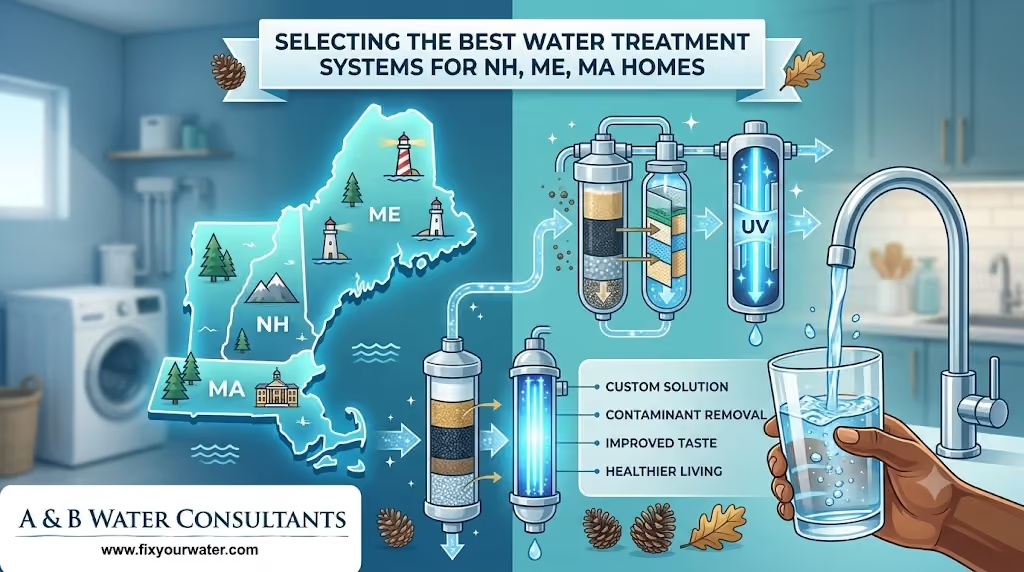
One of the most practical questions homeowners ask after receiving a water test result is: what do I do now? The answer depends entirely on which indicators are elevated and by how much. The table below provides a general framework for matching common contaminant indicators to appropriate treatment technologies.
Custom-designed systems that address multiple co-occurring contaminants are often the most practical solution for New England homes, where arsenic, low pH, iron, and radon may all be present simultaneously. Off-the-shelf filters are rarely adequate for these complex water chemistries.
What Private Well Owners in New Hampshire and Maine Need to Know About Testing Frequency
Unlike municipal water customers, who receive annual water quality reports and benefit from continuous utility monitoring, private well owners in New Hampshire, Maine, and Massachusetts are entirely on their own. There is no government agency testing your well. No notification system will alert you if contamination levels rise. The responsibility falls entirely to the homeowner.
As a general guideline, private well owners should test for bacteria annually, ideally in spring after snowmelt. A comprehensive chemical panel including arsenic, radon, PFAS, pH, nitrates, iron, and manganese should be conducted at least every three to five years, or immediately if there are any changes to the well system, surrounding land use, or if a new family member with elevated vulnerability (infants, pregnant women, immunocompromised individuals) moves into the home. Testing is also strongly recommended at the time of any real estate transaction.
Contact A&B Water Consultants for a free water filtration and treatment quote and to discuss which testing panel is appropriate for your property, location, and household circumstances.
Frequently Asked Questions About Water Quality Indicators
What are the 5 main indicators of water quality?
The five most commonly referenced indicators are pH, turbidity, dissolved oxygen (relevant primarily for surface water), biological oxygen demand, and coliform bacteria. For private drinking water wells, the most practically important indicators are pH, biological contamination (coliform and E. coli), heavy metals (particularly arsenic), nitrates, and radiological contaminants such as radon.
What are the six indicators of water quality?
A common six-indicator framework adds temperature and conductivity to the five listed above. For household drinking water purposes, a more relevant six-indicator set for New England well owners would include pH, bacteria, arsenic, radon, PFAS, and nitrates.
How do I know if my well water is safe to drink?
The only reliable way to know is through certified laboratory testing. Sensory evaluation is not sufficient because the most dangerous contaminants in New England well water, including arsenic, radon, and PFAS, are completely undetectable by sight, smell, or taste.
What are the most dangerous water quality indicators for private wells?
For private wells in New Hampshire, Maine, and Massachusetts, arsenic, radon, PFAS, and coliform bacteria represent the highest-priority concerns. Nitrates are also a serious risk for households with infants or pregnant women.
How often should homeowners in New Hampshire test their well water?
Annual bacterial testing is the minimum recommendation. A comprehensive chemical and radiological panel should be conducted every three to five years, or more frequently if land use, well conditions, or household circumstances change.
What water quality parameters should I test for if I have a private well?
A comprehensive private well panel should include total coliform and E. coli, arsenic, radon, pH, hardness, iron, manganese, nitrates, and PFAS. Additional parameters such as uranium, lead, and volatile organic compounds may be warranted depending on location and well history.
Taking the Next Step: Professional Water Quality Assessment
Understanding the indicators of water quality is the foundation of protecting your family's health. But knowledge alone does not make water safe. Acting on that knowledge, by testing, interpreting results accurately, and installing the right treatment system, is what produces real outcomes.
A&B Water Consultants has spent over 25 years helping families across New Hampshire, southern Maine, and Massachusetts navigate exactly this process. From initial testing through custom system design and long-term monitoring, the team brings regional expertise and certified laboratory partnerships to every project. Contact A&B Water Consultants for a free water filtration and treatment quote and take the first step toward knowing exactly what is in your water and what to do about it.